%22%3E%0A%3Cpath%20d%3D%22M412%20101.2H393.7C393.1%20101.2%20392.3%20100.9%20391.8%20100.5C377.3%2087.6004%20362.9%2074.6004%20348.4%2061.6004C344.8%2058.4004%20341.3%2055.2004%20337.7%2052.0004C337.1%2051.5004%20336.2%2051.1004%20335.5%2051.0004C334.2%2050.8004%20333%2051.0004%20331.5%2051.0004V101.1H316.7V0.100391H331.4V44.3004C331.9%2044.3004%20332.2%2044.4004%20332.5%2044.4004C334.9%2044.4004%20337.2%2044.5004%20339.6%2044.4004C340.4%2044.4004%20341.3%2044.0004%20341.8%2043.5004C351.6%2034.4004%20361.4%2025.2004%20371.1%2016.0004C376.5%2010.9004%20381.9%205.90039%20387.3%200.800391C387.9%200.200391%20388.5%200.000390626%20389.3%200.000390626H400.9C384.2%2015.8004%20367.8%2031.3004%20351.2%2047.0004C371.5%2065.0004%20391.8%2082.9004%20412.1%20100.9C412.1%20101%20412.1%20101.1%20412%20101.2ZM180.9%20101.2C184.1%2094.9004%20187.2%2088.9004%20190.3%2082.8004C198.3%2067.3004%20206.2%2051.8004%20214.2%2036.2004C220.3%2024.4004%20226.4%2012.5004%20232.4%200.700391C232.7%200.100391%20233%20-0.0996094%20233.7%20-0.0996094H248.1C248.8%20-0.0996094%20249.2%200.100391%20249.6%200.800391C256%2013.3004%20262.4%2025.7004%20268.8%2038.2004C279.3%2058.6004%20289.8%2079.0004%20300.3%2099.5004C300.5%20100%20300.8%20100.4%20301.1%20101.1C300.5%20101.1%20300.1%20101.2%20299.7%20101.2H286.5C285.6%20101.2%20285.1%20100.9%20284.7%20100.2C280.1%2091.3004%20275.4%2082.4004%20270.8%2073.4004C270.1%2072.1004%20269.3%2071.6004%20267.8%2071.6004H209.9C208.7%2071.6004%20208.1%2072.0004%20207.5%2073.1004C202.9%2082.1004%20198.2%2091.0004%20193.6%20100C193.1%20101%20192.6%20101.3%20191.5%20101.3C188.4%20101.2%20185.3%20101.3%20182.3%20101.3C182%20101.2%20181.6%20101.2%20180.9%20101.2ZM239.1%2011.4004C230%2029.2004%20221.1%2046.7004%20212.1%2064.3004H266.4C257.2%2046.7004%20248.2%2029.2004%20239.1%2011.4004ZM0%200.000390626H43.4C51.2%200.000390626%2058.7%201.20039%2065.7%204.80039C75.9%2010.0004%2078.9%2018.0004%2078.6%2027.4004C78.3%2034.3004%2076%2040.5004%2071.2%2045.5004C67.3%2049.6004%2062.4%2052.3004%2057.1%2054.3004C50.6%2056.7004%2043.9%2058.0004%2037.1%2058.6004C30.1%2059.2004%2023.1%2059.4004%2016.2%2059.7004C15.8%2059.7004%2015.3%2059.8004%2014.8%2059.8004V101.1H0.1C0%2067.4004%200%2033.8004%200%200.000390626ZM14.8%207.10039V52.2004C23.7%2052.4004%2032.6%2052.3004%2041.2%2050.1004C44.4%2049.3004%2047.6%2048.2004%2050.6%2046.7004C58.4%2043.0004%2062.3%2036.7004%2062.7%2028.0004C63%2019.9004%2059.5%2014.1004%2052.4%2010.5004C47.6%208.00039%2042.5%207.10039%2037.2%207.10039H14.8ZM95.9%20101.1V0.100391H167.3V7.20039H110.7V44.7004H158.1V51.9004H110.8V93.9004H171.1V101C146.1%20101.1%20121%20101.1%2095.9%20101.1Z%22%20fill%3D%22black%22%2F%3E%0A%3Cpath%20d%3D%22M35.0004%2025.7996H42.5004V20.6996H44.8004V33.1996H42.6004V27.5996H34.9004V33.2996H32.7004V20.7996H35.0004V25.7996ZM54.4004%2025.8996V27.2996H48.9004V31.6996H55.9004C55.9004%2032.1996%2056.0004%2032.5996%2056.0004%2033.0996H46.5004V20.5996H55.5004V21.8996H49.0004V25.7996C50.7004%2025.8996%2052.5004%2025.8996%2054.4004%2025.8996ZM25.9004%2033.0996H23.5004V21.9996H17.9004V20.6996H31.6004V22.0996H27.1004C26.2004%2022.0996%2025.9004%2022.2996%2025.9004%2023.1996C26.0004%2026.0996%2025.9004%2028.9996%2025.9004%2031.7996V33.0996Z%22%20fill%3D%22black%22%2F%3E%0A%3C%2Fg%3E%0A%3Cdefs%3E%0A%3CclipPath%20id%3D%22clip0_388_462%22%3E%0A%3Crect%20width%3D%22411%22%20height%3D%22101.2%22%20fill%3D%22white%22%2F%3E%0A%3C%2FclipPath%3E%0A%3C%2Fdefs%3E%0A%3C%2Fsvg%3E%0A)
APAC most cautious of AI in finance, yet ranks second in projected investor adoption
Even as confidence in AI in finance remains low in APAC, investor adoption continues to rise, with APAC AI set to see the second-fastest growth globally in the coming year.
By Jamie Wong JM /
Share this article
Usage of artificial intelligence (AI) has increased over the last few years, particularly among students and those looking for new ways to code. Increasingly, individuals are also using it to aid their financial investments, with notable differences in scale of adoption across regions. In a recent study conducted by Bridgewise, a financial analyst software company, examined the ways that artificial intelligence is used in researching, analysing, and acting on financial opportunities. With finances at stake, most are primarily using it to automate processes, though the Middle East stands out for its high levels of trust in AI.
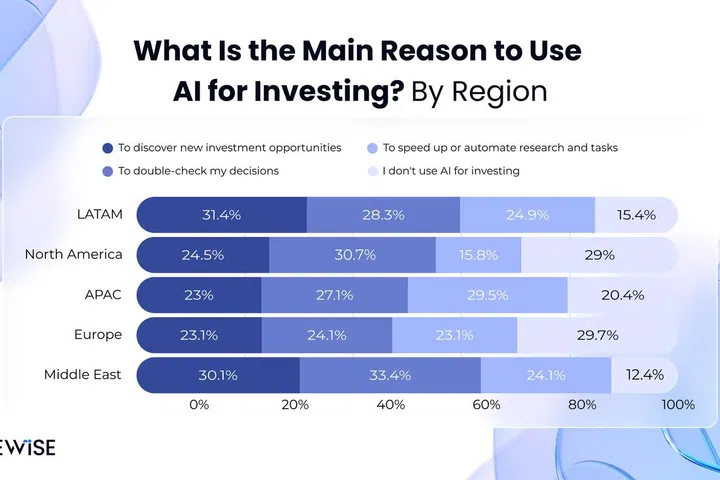
This report, titled the State of AI For Wealth 2026, reveals that a majority of respondents are using AI. 78% of respondents globally are using AI in some part of their investment journey. 65% of respondents are also likely to replace manual investment research with AI-driven tools within the next year. At present, the majority uses it to double check their decisions.
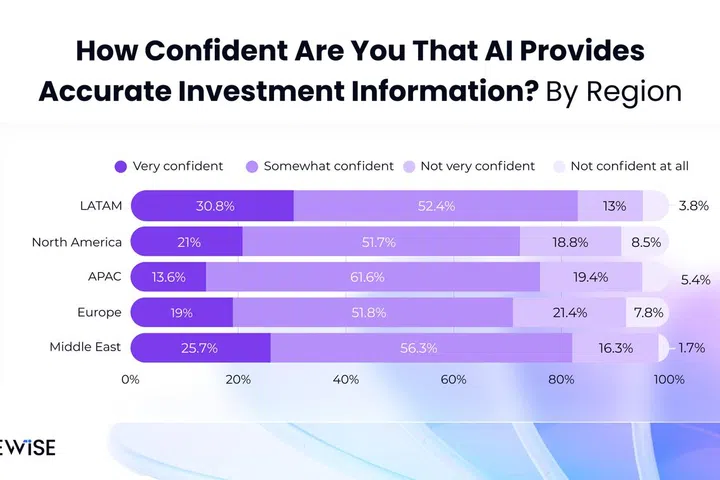
The Asian Pacific (APAC) region is particularly noted for its wariness around AI. Only 14% of respondents said they were very confident in AI’s accuracy, the smallest proportion of all the regions, while a fourth were not very or not confident at all. Correspondingly, 53% of respondents do not use AI regularly.
With that said, those in the APAC region who do use AI primarily do so at the research stage, in order to speed up or even automate research and other early stage tasks. It is likely used for tasks such as summarising reports, screening stocks or aggregating data.
Interestingly, investors has already been using technology in a similar manner, often coding their own bots to facilitate these tasks. AI may reduce the barrier to entry during this stage of investment research, particularly for independent investors who may not have the expertise required to code tools for investment tasks. In other words, investors in APAC treat AI primarily as a tool for efficiency, and not as a decision making tool.
In contrast, the Middle East stands out for its enthusiastic embrace of the new technology. Three in five respondents from the region use AI always or often while investing, and four in five respondents are confident that AI provides accurate investment information. Correspondingly, 30% of respondents from the Middle East use it to discover new investment opportunities and 33% use it to verify their decisions.
Despite the APAC region being the most cautious, it ranks third overall on the report’s Global AI Maturity Map, just behind the Middle East and Latin America. However, in terms of momentum, APAC places second, suggesting that adoption is set to accelerate significantly in the coming year, likely as its usefulness in streamlining workflow cannot be ignored.
While attitudes towards AI’s reliability and usage differ across regions, its adoption will continue to grow in a large scale. However, in the investment stake where individuals put their own money at risk, AI is primarily valued for its utility, not for analytical or decision making purposes. In the spaces where individuals put their own income at risk, it seems investors look to AI as a tool to improve workflows and not to replace human judgement. Perhaps this speaks to the value of analytical skills as the world enters a new stage of technological development.