%22%3E%0A%3Cpath%20d%3D%22M412%20101.2H393.7C393.1%20101.2%20392.3%20100.9%20391.8%20100.5C377.3%2087.6004%20362.9%2074.6004%20348.4%2061.6004C344.8%2058.4004%20341.3%2055.2004%20337.7%2052.0004C337.1%2051.5004%20336.2%2051.1004%20335.5%2051.0004C334.2%2050.8004%20333%2051.0004%20331.5%2051.0004V101.1H316.7V0.100391H331.4V44.3004C331.9%2044.3004%20332.2%2044.4004%20332.5%2044.4004C334.9%2044.4004%20337.2%2044.5004%20339.6%2044.4004C340.4%2044.4004%20341.3%2044.0004%20341.8%2043.5004C351.6%2034.4004%20361.4%2025.2004%20371.1%2016.0004C376.5%2010.9004%20381.9%205.90039%20387.3%200.800391C387.9%200.200391%20388.5%200.000390626%20389.3%200.000390626H400.9C384.2%2015.8004%20367.8%2031.3004%20351.2%2047.0004C371.5%2065.0004%20391.8%2082.9004%20412.1%20100.9C412.1%20101%20412.1%20101.1%20412%20101.2ZM180.9%20101.2C184.1%2094.9004%20187.2%2088.9004%20190.3%2082.8004C198.3%2067.3004%20206.2%2051.8004%20214.2%2036.2004C220.3%2024.4004%20226.4%2012.5004%20232.4%200.700391C232.7%200.100391%20233%20-0.0996094%20233.7%20-0.0996094H248.1C248.8%20-0.0996094%20249.2%200.100391%20249.6%200.800391C256%2013.3004%20262.4%2025.7004%20268.8%2038.2004C279.3%2058.6004%20289.8%2079.0004%20300.3%2099.5004C300.5%20100%20300.8%20100.4%20301.1%20101.1C300.5%20101.1%20300.1%20101.2%20299.7%20101.2H286.5C285.6%20101.2%20285.1%20100.9%20284.7%20100.2C280.1%2091.3004%20275.4%2082.4004%20270.8%2073.4004C270.1%2072.1004%20269.3%2071.6004%20267.8%2071.6004H209.9C208.7%2071.6004%20208.1%2072.0004%20207.5%2073.1004C202.9%2082.1004%20198.2%2091.0004%20193.6%20100C193.1%20101%20192.6%20101.3%20191.5%20101.3C188.4%20101.2%20185.3%20101.3%20182.3%20101.3C182%20101.2%20181.6%20101.2%20180.9%20101.2ZM239.1%2011.4004C230%2029.2004%20221.1%2046.7004%20212.1%2064.3004H266.4C257.2%2046.7004%20248.2%2029.2004%20239.1%2011.4004ZM0%200.000390626H43.4C51.2%200.000390626%2058.7%201.20039%2065.7%204.80039C75.9%2010.0004%2078.9%2018.0004%2078.6%2027.4004C78.3%2034.3004%2076%2040.5004%2071.2%2045.5004C67.3%2049.6004%2062.4%2052.3004%2057.1%2054.3004C50.6%2056.7004%2043.9%2058.0004%2037.1%2058.6004C30.1%2059.2004%2023.1%2059.4004%2016.2%2059.7004C15.8%2059.7004%2015.3%2059.8004%2014.8%2059.8004V101.1H0.1C0%2067.4004%200%2033.8004%200%200.000390626ZM14.8%207.10039V52.2004C23.7%2052.4004%2032.6%2052.3004%2041.2%2050.1004C44.4%2049.3004%2047.6%2048.2004%2050.6%2046.7004C58.4%2043.0004%2062.3%2036.7004%2062.7%2028.0004C63%2019.9004%2059.5%2014.1004%2052.4%2010.5004C47.6%208.00039%2042.5%207.10039%2037.2%207.10039H14.8ZM95.9%20101.1V0.100391H167.3V7.20039H110.7V44.7004H158.1V51.9004H110.8V93.9004H171.1V101C146.1%20101.1%20121%20101.1%2095.9%20101.1Z%22%20fill%3D%22black%22%2F%3E%0A%3Cpath%20d%3D%22M35.0004%2025.7996H42.5004V20.6996H44.8004V33.1996H42.6004V27.5996H34.9004V33.2996H32.7004V20.7996H35.0004V25.7996ZM54.4004%2025.8996V27.2996H48.9004V31.6996H55.9004C55.9004%2032.1996%2056.0004%2032.5996%2056.0004%2033.0996H46.5004V20.5996H55.5004V21.8996H49.0004V25.7996C50.7004%2025.8996%2052.5004%2025.8996%2054.4004%2025.8996ZM25.9004%2033.0996H23.5004V21.9996H17.9004V20.6996H31.6004V22.0996H27.1004C26.2004%2022.0996%2025.9004%2022.2996%2025.9004%2023.1996C26.0004%2026.0996%2025.9004%2028.9996%2025.9004%2031.7996V33.0996Z%22%20fill%3D%22black%22%2F%3E%0A%3C%2Fg%3E%0A%3Cdefs%3E%0A%3CclipPath%20id%3D%22clip0_388_462%22%3E%0A%3Crect%20width%3D%22411%22%20height%3D%22101.2%22%20fill%3D%22white%22%2F%3E%0A%3C%2FclipPath%3E%0A%3C%2Fdefs%3E%0A%3C%2Fsvg%3E%0A)

Share this article
The modern man lives in a very different world from his father or grandfather, but some expectations have barely shifted. He should provide. He should cope. He should keep his emotions under control. He should be dependable, economically useful and difficult to rattle. If he struggles, he should struggle privately.
For decades, this has looked less like ideology than common sense.
A new survey by AWARE, conducted with YouGov among 1,084 men in Singapore, suggests that these expectations remain deeply embedded even as the society around them has changed. The findings resist the comforting story that younger generations, higher education and greater affluence naturally produce more egalitarian attitudes. In several areas, they do not.
That is what makes this study interesting. It does not describe a country divided cleanly between traditional men and progressive ones. It describes something messier: men who have modernised unevenly.
A respondent might support equal childcare while believing that emotional vulnerability signals weakness. Another might speak the language of partnership yet still expect women to carry more of the domestic load. A highly educated man might prove more emotionally open than his peers while holding surprisingly conventional beliefs about household labour.
The old model of masculinity has not disappeared. It has become harder to see because it increasingly coexists with the vocabulary of equality.
The domestic divide
The most obvious example appears at home.
At first glance, Singaporean men sound strikingly egalitarian.
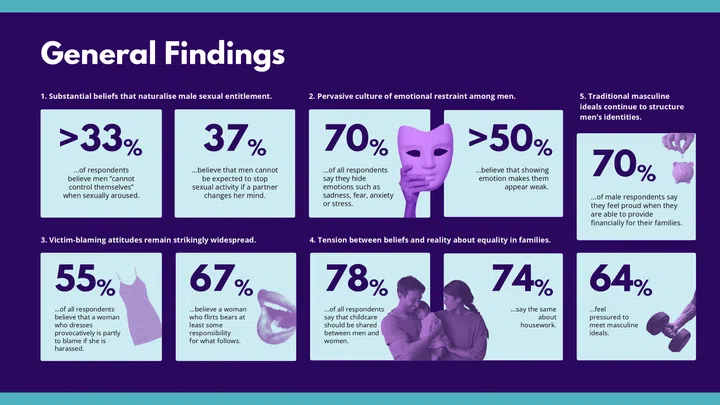
- Seventy-eight per cent of respondents said childcare should be shared between men and women
- 74 per cent said the same about housework
But the demographic breakdown complicates that consensus.
Men with university degrees had higher odds than those with O-level qualifications and below of saying housework should fall more heavily on wives or women.
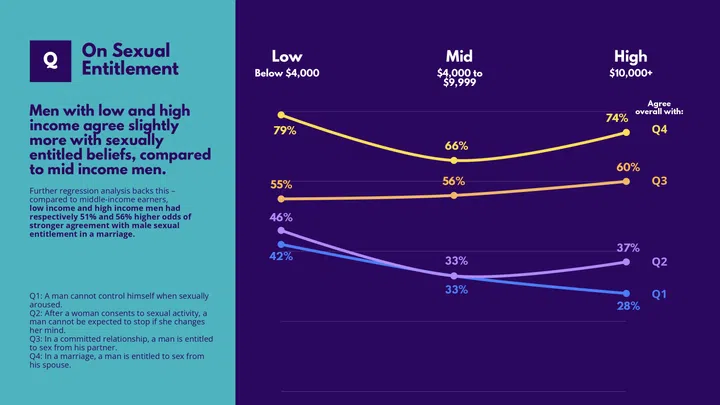
Among postgraduates, the odds were 147 per cent higher. High-income men had 78 per cent higher odds than middle-income men of preferring women-heavy housework, and 87 per cent higher odds of favouring women-heavy childcare.
Education and money, in other words, do not automatically dismantle traditional gender roles.
That matters in Singapore because education and income occupy such an exalted place in our idea of advancement. We often treat upward mobility as though it produces cultural sophistication alongside economic sophistication. Acquire the degree, secure the job, accumulate the capital, and presumably the worldview develops with it.
The survey suggests that life does not work so neatly. Economic success may even make certain traditional arrangements easier to preserve. A high-income household can outsource some domestic labour. A man who fulfils the breadwinner role spectacularly well can understand financial provision as his principal contribution to family life. The household may look contemporary while its underlying division of responsibility remains familiar.
The report does not establish why higher-income respondents held these attitudes, and it would be reckless to turn correlation into motive. But it exposes the inadequacy of using wealth or education as shorthand for social progress.
Likely a generational paradox
Age produces another uncomfortable result.
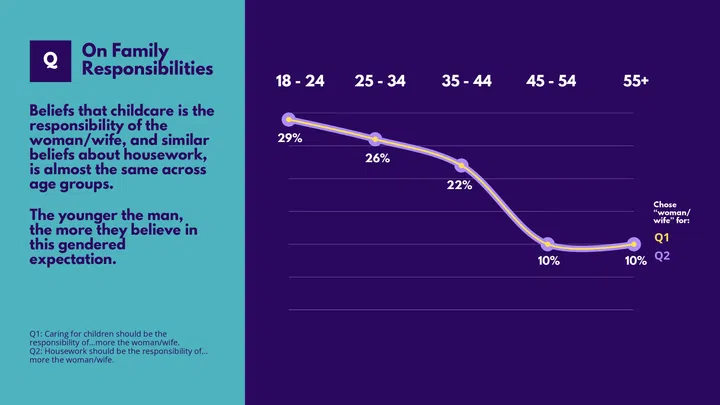
Men aged 18 to 24 were the group most likely to favour traditional divisions of childcare. Compared with them, every older age bracket showed significantly lower odds of saying childcare should fall more heavily on women.
Among men aged 45 and above, those odds were 89 per cent lower.
The youngest men in the room, apparently, are not necessarily its most progressive.
This finding should trouble anyone waiting for generational replacement to fix entrenched attitudes. The assumption that younger automatically means more liberal has become so intuitive that we rarely interrogate it.
Yet the report itself cautions against a simple generational reading and points towards the environments in which young men form their ideas: schools, peers, National Service and, increasingly, digital spaces and the manosphere.
The survey cannot tell us how much each influence matters but it can tell us that whatever cultural machinery produces masculine expectations remains very much operational.
The emotional toll
Those expectations appear particularly clearly in the way men understand themselves.
- 70% of respondents said they feel proud when they can provide financially for their families
- 64% feel pressure to meet masculine ideals
- Around seven in 10 said they hide emotions such as sadness, fear, anxiety or stress, while more than half believe showing emotion makes them appear weak
There is nothing inherently pathological about wanting to provide. For many men, financial responsibility represents care in its most concrete form. The trouble begins when providing becomes synonymous with worth.
A man who measures himself by his ability to earn becomes unusually vulnerable to unemployment, stagnation and professional failure. A father who understands his role primarily through income may find it harder to recognise caregiving as equally constitutive of fatherhood. A leader taught that competence means never appearing shaken can eventually lose the vocabulary required to say that he is struggling.
The survey found a striking association here. Each one-unit increase in its emotional suppression index corresponded with 188 per cent higher odds of stronger agreement with feeling anxious or depressed while trying to meet expectations of being a man. The study does not establish causation, but the relationship is difficult to dismiss.
Perhaps more surprising is who appears most constrained. Men aged 55 and above had significantly lower odds than men aged 18 to 24 of saying they needed to hide fear, sadness and stress.
Younger men, rather than having escaped the emotional strictures of previous generations, appear in some respects to feel them more acutely.
Impact on the workplace
This is where masculinity stops being a private matter. The traits we reward in men at home travel with them into offices, institutions and boardrooms.
Local corporate culture has traditionally admired stamina. Long hours signal commitment. Availability signals seriousness. Calm under pressure signals leadership. The employee who can remain permanently reachable, travel at short notice, and subordinate domestic obligations to professional demands enjoys an obvious structural advantage.
For men, that model of professional availability can be easier to sustain when someone else carries more of the caregiving load at home. Yes. companies now offer flexible work, parental leave and wellbeing programmes, but formal policy only travels so far. Culture remains encoded in what senior people model.
Still, if fathers technically receive leave but senior men rarely take it, younger employees absorb the message. If executives discuss mental wellbeing but still valorise the leader who operates indefinitely under strain, employees absorb that too. If domestic labour remains disproportionately female, companies continue benefiting from an invisible subsidy: somebody outside the office enables somebody inside it to appear endlessly available.
The survey’s findings therefore sit squarely inside any serious conversation about leadership. A modern organisation cannot claim to rethink work while leaving its model of the ideal man untouched.
Unsettling cultural scripts
There are more disturbing findings in the report.
- More than a third of respondents believed men “cannot control themselves” when sexually aroused
- Thirty-seven per cent believed men cannot be expected to stop sexual activity if a partner changes her mind
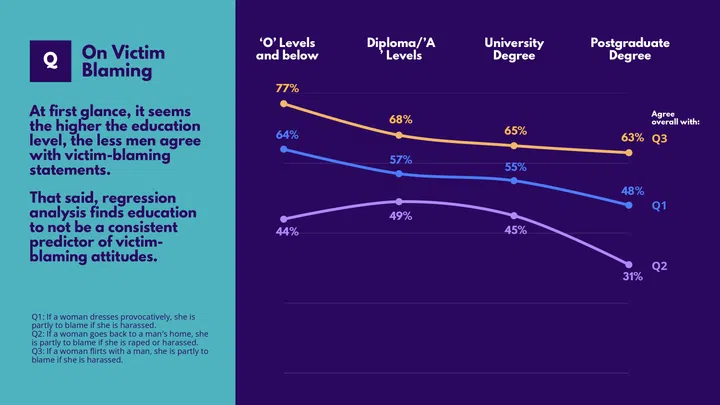
- Fifty-five per cent believed a woman who dresses provocatively bears some blame if she is harassed
- 67 per cent assigned at least some responsibility to a woman who flirts
These numbers deserve attention in their own right. They also reveal something broader about how persistent cultural scripts can survive alongside outward modernity.
A society can become richer without becoming emotionally freer. It can educate men extensively without making every belief more egalitarian. It can put women into senior leadership while continuing to structure family life around assumptions that somebody else will take care of the home.
Perhaps the survey’s most useful contribution is this — that progress rarely arrives as a complete package. Its authors repeatedly reject the idea of a single spectrum running from traditional to progressive. Different norms respond differently to age, education, income, relationship status and life stage.
The result is a man many of us will recognise. He believes in equality, but perhaps not everywhere. He values family, but understands his role within it differently from his partner. He is financially responsible, professionally accomplished, and privately exhausted. He has inherited an older definition of strength while living in a society that increasingly demands another kind.
Institutions, workplaces and family structures have changed quickly. Ideas about masculinity, on the other hand, tend to move more slowly. Because unlike an obsolete technology or an ageing business model, an idea of manhood rarely announces that it has become outdated.
It survives comfortably inside habits. It hides inside praise. It disguises itself as responsibility, discipline, ambition, and tradition. And sometimes, old ideas of manhood survive most easily in men who otherwise look thoroughly modern.