%22%3E%0A%3Cpath%20d%3D%22M412%20101.2H393.7C393.1%20101.2%20392.3%20100.9%20391.8%20100.5C377.3%2087.6004%20362.9%2074.6004%20348.4%2061.6004C344.8%2058.4004%20341.3%2055.2004%20337.7%2052.0004C337.1%2051.5004%20336.2%2051.1004%20335.5%2051.0004C334.2%2050.8004%20333%2051.0004%20331.5%2051.0004V101.1H316.7V0.100391H331.4V44.3004C331.9%2044.3004%20332.2%2044.4004%20332.5%2044.4004C334.9%2044.4004%20337.2%2044.5004%20339.6%2044.4004C340.4%2044.4004%20341.3%2044.0004%20341.8%2043.5004C351.6%2034.4004%20361.4%2025.2004%20371.1%2016.0004C376.5%2010.9004%20381.9%205.90039%20387.3%200.800391C387.9%200.200391%20388.5%200.000390626%20389.3%200.000390626H400.9C384.2%2015.8004%20367.8%2031.3004%20351.2%2047.0004C371.5%2065.0004%20391.8%2082.9004%20412.1%20100.9C412.1%20101%20412.1%20101.1%20412%20101.2ZM180.9%20101.2C184.1%2094.9004%20187.2%2088.9004%20190.3%2082.8004C198.3%2067.3004%20206.2%2051.8004%20214.2%2036.2004C220.3%2024.4004%20226.4%2012.5004%20232.4%200.700391C232.7%200.100391%20233%20-0.0996094%20233.7%20-0.0996094H248.1C248.8%20-0.0996094%20249.2%200.100391%20249.6%200.800391C256%2013.3004%20262.4%2025.7004%20268.8%2038.2004C279.3%2058.6004%20289.8%2079.0004%20300.3%2099.5004C300.5%20100%20300.8%20100.4%20301.1%20101.1C300.5%20101.1%20300.1%20101.2%20299.7%20101.2H286.5C285.6%20101.2%20285.1%20100.9%20284.7%20100.2C280.1%2091.3004%20275.4%2082.4004%20270.8%2073.4004C270.1%2072.1004%20269.3%2071.6004%20267.8%2071.6004H209.9C208.7%2071.6004%20208.1%2072.0004%20207.5%2073.1004C202.9%2082.1004%20198.2%2091.0004%20193.6%20100C193.1%20101%20192.6%20101.3%20191.5%20101.3C188.4%20101.2%20185.3%20101.3%20182.3%20101.3C182%20101.2%20181.6%20101.2%20180.9%20101.2ZM239.1%2011.4004C230%2029.2004%20221.1%2046.7004%20212.1%2064.3004H266.4C257.2%2046.7004%20248.2%2029.2004%20239.1%2011.4004ZM0%200.000390626H43.4C51.2%200.000390626%2058.7%201.20039%2065.7%204.80039C75.9%2010.0004%2078.9%2018.0004%2078.6%2027.4004C78.3%2034.3004%2076%2040.5004%2071.2%2045.5004C67.3%2049.6004%2062.4%2052.3004%2057.1%2054.3004C50.6%2056.7004%2043.9%2058.0004%2037.1%2058.6004C30.1%2059.2004%2023.1%2059.4004%2016.2%2059.7004C15.8%2059.7004%2015.3%2059.8004%2014.8%2059.8004V101.1H0.1C0%2067.4004%200%2033.8004%200%200.000390626ZM14.8%207.10039V52.2004C23.7%2052.4004%2032.6%2052.3004%2041.2%2050.1004C44.4%2049.3004%2047.6%2048.2004%2050.6%2046.7004C58.4%2043.0004%2062.3%2036.7004%2062.7%2028.0004C63%2019.9004%2059.5%2014.1004%2052.4%2010.5004C47.6%208.00039%2042.5%207.10039%2037.2%207.10039H14.8ZM95.9%20101.1V0.100391H167.3V7.20039H110.7V44.7004H158.1V51.9004H110.8V93.9004H171.1V101C146.1%20101.1%20121%20101.1%2095.9%20101.1Z%22%20fill%3D%22black%22%2F%3E%0A%3Cpath%20d%3D%22M35.0004%2025.7996H42.5004V20.6996H44.8004V33.1996H42.6004V27.5996H34.9004V33.2996H32.7004V20.7996H35.0004V25.7996ZM54.4004%2025.8996V27.2996H48.9004V31.6996H55.9004C55.9004%2032.1996%2056.0004%2032.5996%2056.0004%2033.0996H46.5004V20.5996H55.5004V21.8996H49.0004V25.7996C50.7004%2025.8996%2052.5004%2025.8996%2054.4004%2025.8996ZM25.9004%2033.0996H23.5004V21.9996H17.9004V20.6996H31.6004V22.0996H27.1004C26.2004%2022.0996%2025.9004%2022.2996%2025.9004%2023.1996C26.0004%2026.0996%2025.9004%2028.9996%2025.9004%2031.7996V33.0996Z%22%20fill%3D%22black%22%2F%3E%0A%3C%2Fg%3E%0A%3Cdefs%3E%0A%3CclipPath%20id%3D%22clip0_388_462%22%3E%0A%3Crect%20width%3D%22411%22%20height%3D%22101.2%22%20fill%3D%22white%22%2F%3E%0A%3C%2FclipPath%3E%0A%3C%2Fdefs%3E%0A%3C%2Fsvg%3E%0A)
City Developments Limited (CDL) is one of Singapore’s largest property empires, long helmed by the Kwek family. Over decades, patriarch Kwek Leng Beng transformed CDL from a struggling builder in the 1960s into a global real estate conglomerate under the Hong Leong Group.
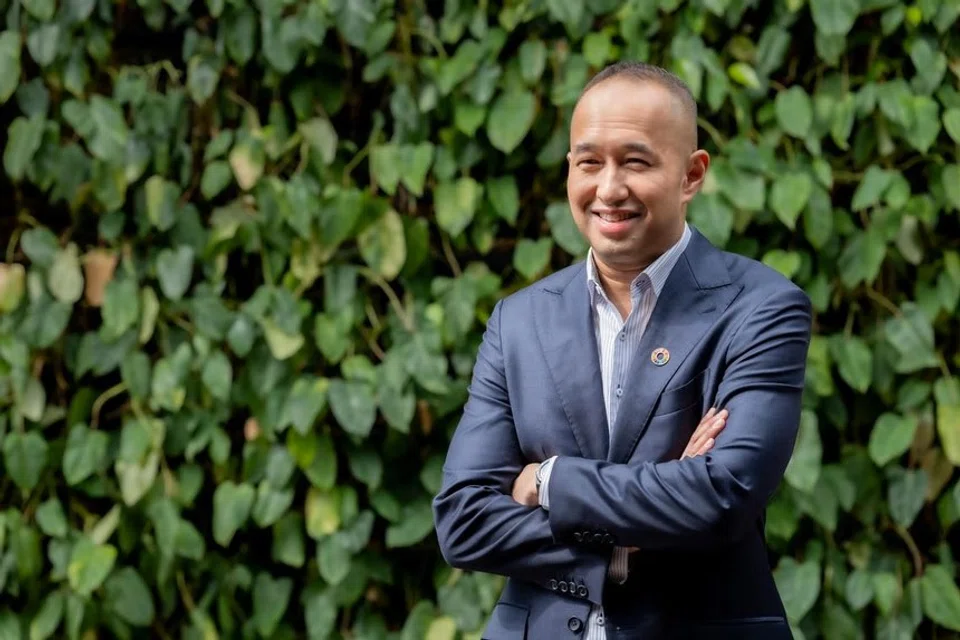
His son, Sherman Kwek, took over as Group CEO in 2018, inheriting the crown of this family-run empire. With that transition came bold ambitions — a push to expand CDL’s footprint far beyond Singapore’s shores.
But as in a Shakespearean saga, towering ambition would sow the seeds of internal discord and set the stage for a tragic conflict within the house of Kwek.
In 2019, CDL undertook what was billed as its most ambitious expansion into China: an investment in Chongqing-based developer Sincere Property Group. Spearheaded by Sherman Kwek, this high-stakes venture was meant to catapult CDL into China’s booming real estate market.
The timing, however, could not have been worse. China’s property sector soon stumbled under regulatory crackdowns, and the COVID-19 pandemic struck, turning the Sincere deal into a calamitous misadventure. By 2020, CDL was forced to write off virtually the entire investment — a S$1.9 billion loss in FY2020. In a fire-sale exit, CDL sold its stake in Sincere for just US$1 in 2021, underscoring the magnitude of the failure.
What was meant to be a triumphant foray became an “ill-fated” folly, as one analyst described it — a “misstep” driven by the urge to quickly scale up in China.
The fallout from this blunder went beyond balance-sheet damage. It triggered internal dissent within CDL’s board, a precursor to the deeper rift to come.
In October 2020, Kwek Leng Peck — a cousin of Kwek Leng Beng and a CDL director for over 30 years — abruptly resigned from the board in protest. He openly cited disagreements over the Sincere investment, which he felt was too risky. Two other directors followed suit by the end of 2020, making three board resignations linked to the Sincere saga.
This exodus of long-time insiders was an unmistakable red flag. A once-united family enterprise was now cracking at the seams, as veterans balked at the younger Kwek’s aggressive gambits. The ambition that drove CDL’s China expansion began to look like hubris, and it planted the first seeds of betrayal — a sense that prudence had been sacrificed, leaving some insiders feeling misled or unheard.
Boardroom strife and the seeds of betrayal
The Sincere fiasco strained family and board relations, but it was only Act I of the unfolding tragedy. By the early 2020s, CDL also faced stumbles in other markets — including poor returns from UK property ventures that Sherman Kwek had backed. These missteps contributed to a staggering 94% collapse in CDL’s profits in the first half of 2023, sharpening questions about the CEO’s strategic judgment.
Patience among some stakeholders was wearing thin. The patriarch Kwek Leng Beng later alluded to “a long series of missteps” under his son’s leadership — a pointed reference to both the Chinese foray and other costly decisions.
It was becoming clear that father and son differed in vision. Kwek Leng Beng, 84, represents the old guard’s cautious stewardship, while Sherman, 45, personified a new generation’s hunger for rapid growth. This generational divergence set the stage for an extraordinary boardroom confrontation.
Tensions finally erupted into open conflict in February 2025, exposing a rift seldom seen in Singapore’s corporate circles. Kwek Leng Beng accused his son Sherman of orchestrating an “attempted coup” in the boardroom.
In a Feb 26 statement, the elder Kwek claimed Sherman and a faction of directors bypassed CDL’s nomination committee to install hand-picked allies on the board. Two new independent directors were appointed on Feb 7, 2025, via an unusual written resolution — effectively sidestepping the usual vetting process. With those new members in place, the group swiftly moved to reconstitute key board committees and governance structures, allegedly consolidating power in Sherman’s favor.
To the patriarch, it appeared that his son was stacking the deck and undermining established corporate governance for personal advantage. The feeling of betrayal was palpable. “This attempted coup at the board level” cannot stand, Kwek Leng Beng declared, as he moved to legally oust his own son.
Sherman Kwek and his camp tell a different story, denying any treachery. The CEO characterized his father’s actions as “extreme” and insisted the board changes were “never about ousting our esteemed chairman”, but merely aimed at strengthening governance and rejuvenating the board. He noted that the legal action to remove him was “not authorised by the majority of the board” — a pointed reminder that most directors sided with him, not his father.
In Sherman’s view, he was modernizing CDL’s leadership, not mounting an insurrection. This stark divide — a father convinced of his son’s betrayal, a son professing innocent intentions — echoes the core of Shakespearean tragedy, where miscommunication and mistrust between close kin lead to ruinous consequences.
The power struggle unfolds
As the feud escalated, CDL’s normally staid corporate facade was thrust into chaos. On Feb 26, 2025, just hours before announcing annual results, CDL took the dramatic step of halting trading of its shares on the Singapore Exchange. The company also cancelled its results briefing without warning.
These moves stunned investors and signaled that an unprecedented leadership crisis was unfolding at the blue-chip firm. Kwek Leng Beng had filed a lawsuit in Singapore’s High Court seeking to remove Sherman as CEO for alleged governance lapses. “As a father, firing my son was certainly not an easy decision,” the 84-year-old patriarch lamented, underscoring the personal anguish behind the boardroom drama. But he maintained that “circumventing corporate governance laws is a red line” he could not tolerate.
Kwek accused the CEO of violating SGX listing rules and the Code of Corporate Governance in his attempt to reshape the board. To “restore corporate integrity,” he said he had no choice but to act decisively.
The legal battle that ensued was swift and intense. Initial salvos revealed that this was more than a simple family spat — it raised serious questions about corporate governance at a publicly listed company. “Requesting the removal of a CEO over a nominating committee lapse is rare,” observed NUS Professor Lawrence Loh in an interview with CNA, noting this saga was likely just “the tip of the iceberg”.
Indeed, behind the governance technicalities lay years of frustration with strategic missteps. Kwek Leng Beng’s court filings listed concrete grievances: the Sincere debacle, botched UK investments, and CDL’s flagging performance under Sherman. In essence, the patriarch was making a broader indictment of his heir’s leadership, not just a procedural quibble. “We intend to replace the CEO at the appropriate time… to vigorously defend and protect the interests of CDL and its shareholders,” the elder Kwek proclaimed, resolute in dethroning his son.
In a poignant twist, even as the Kweks lawyered up against each other, they were keenly aware of the stakes beyond the family. Kwek Leng Beng emphasized that he acted in the interest of CDL’s shareholders, choosing company over blood. “The stakes are simply too high to allow reckless power grabs to destabilize the company,” he said, stressing that his duty as chairman overrides familial bonds.
It was a dramatic inversion of the usual family business script — the patriarch casting aside succession ties to save the corporate “kingdom” from what he saw as a usurper’s folly. On the other side, Sherman Kwek maintained that everything he did was for the company’s long-term good, even if it meant defying his father. Caught in this clash of egos and visions, CDL’s fate hung in the balance like a realm awaiting the outcome of a civil war.
Fallout — Investor angst and consequences
The public power tussle at CDL has sent shockwaves through Singapore’s financial community. Investors, who prefer predictability and trust in blue-chip governance, were greeted with volatility and uncertainty. CDL’s stock, which last traded at S$5.12 on Feb 25 before the halt, had already lost about 60% of its value since early 2018.
This multi-year slump — from the highs around the time Sherman became CEO — speaks to eroding confidence amid the company’s troubles. Market watchers braced for a knee-jerk selloff once trading resumed, even as analysts noted that CDL’s underlying operations (spanning property development and hotels) remain sound for now.
“Over the long term, share price movements will depend on how convincingly governance issues are resolved and how confident investors feel about the company’s strategic outlook and financial performance,” noted one corporate governance expert. In the immediate term, CDL’s reputation has taken a hit. A rare public feud in a family-controlled firm raises concerns about what’s happening behind closed doors, and whether shareholder value is being jeopardized by internecine conflict.
Key facts illustrate the financial struggles and consequences now facing CDL’s stakeholders:
1. Massive losses: CDL incurred a S$1.9 billion loss in FY2020 due to the Sincere Property debacle. This one venture wiped out years of profits and strained the company’s finances.
2. Profit collapse: The company saw a 94% plunge in net profit in the first half of 2023, attributed in part to poor investment decisions in the UK property market. Such a collapse in earnings underscored the depth of its strategic missteps.
3. Share slump: CDL’s share price today languishes far below its peak — roughly 60% lower than in 2018. It has also underperformed its industry peers since Sherman took the helm, reflecting a loss of investor confidence.
4. Debt worries: To navigate the tough times, CDL increased borrowing. Its gearing (debt-to-equity) ratio surged to 117% as of 2024, an elevated level that heightens risk and limits financial flexibility. The company has been selling assets (over $600 million worth in 2024) to bolster liquidity.
For investors, these numbers paint a picture as sobering as any tragedy: a venerable firm pushed to the brink of a financial precipice by overreach and internal strife. Unsurprisingly, corporate governance advocates have voiced alarm. The Securities Investors Association (Singapore) (SIAS) publicly urged all parties to seek an amicable resolution in the best interests of shareholders.
Governance experts are watching closely to see if CDL can swiftly and transparently resolve its internal discord. The Singapore Exchange and regulators have not intervened publicly, but the elder Kwek’s invocation of possible breaches of listing rules suggests that authorities could scrutinize the situation if governance norms were indeed flouted.
The very fact that CDL’s chairman had to resort to court action indicates a breakdown in normal governance processes — a situation regulators and investors find deeply unsettling.
There have been some moves to stabilize the situation. After an initial court hearing on Feb 26, Sherman Kwek and the directors aligned with him agreed to cease further contentious actions pending legal proceedings. The two hastily appointed independent directors were sidelined for now — they undertook not to act as directors until the court gives further direction. Moreover, Sherman and his allies agreed not to implement any changes to board committees or management of subsidiaries for the time being.
Kwek Leng Beng declared that, as a result, the “serious lapses of corporate governance” had been halted and the board could “function normally… without unwarranted interference” — at least for now.
This temporary truce may calm the markets slightly, but it is far from a permanent resolution. The fundamental rift between father and son remains, and the leadership question at CDL is still unresolved. The optics alone can erode confidence, and the true reconciliation or reckoning is yet to play out
Epilogue — Lessons from a corporate tragedy
The saga at City Developments Limited has all the elements of a modern corporate tragedy. Ambition and hubris pushed the company into perilous ventures; betrayal and mistrust fractured its leadership; and now a proud dynasty faces the prospect of downfall or at least a painful reckoning. In Shakespearean terms, the Kwek family is learning that the costs of overweening ambition and internal strife can be devastating.
The tragedy is tempered by a hopeful theme of accountability — the patriarch’s stance that “between company and family… the company takes precedence” sends a signal that principles of good governance must triumph over nepotism or loyalty gone awry. It is a sobering lesson that even in family-run firms, no leader is above oversight and no bond is immune to the consequences of failed stewardship.
For CDL’s stakeholders and the broader corporate community, several cautionary lessons emerge.
First, unchecked ambition — whether expanding aggressively overseas or concentrating power internally — can backfire catastrophically. Second, robust corporate governance and dissenting voices are crucial to prevent exuberance from turning into expensive folly; sidelining these mechanisms, as alleged in CDL’s case, invites disaster. Third, when internal conflicts do erupt, transparency and swift resolution are vital to containing the damage. As analysts noted, the long-term health of CDL will depend on how convincingly it resolves governance issues and rebuilds investor confidence.
In the end, the fate of CDL now hinges on whether its leaders can heed these lessons. Will humility and accountability restore what hubris and division have wrought? The final act has yet to be written. But for now, the house of Kwek stands as a dramatic example of how ambition can lead to downfall, and how the consequences of internal betrayal can echo far beyond the boardroom, affecting shareholders, employees, and the legacy of a once-unassailable empire.
The curtain falls on this chapter of City Developments Limited’s story with many a cautionary tale for others: that in business, as in literature, fortunes can reverse with stunning speed when pride and principle collide, and that the true measure of leadership is how one navigates the tempest of consequence that inevitably follows.