%22%3E%0A%3Cpath%20d%3D%22M412%20101.2H393.7C393.1%20101.2%20392.3%20100.9%20391.8%20100.5C377.3%2087.6004%20362.9%2074.6004%20348.4%2061.6004C344.8%2058.4004%20341.3%2055.2004%20337.7%2052.0004C337.1%2051.5004%20336.2%2051.1004%20335.5%2051.0004C334.2%2050.8004%20333%2051.0004%20331.5%2051.0004V101.1H316.7V0.100391H331.4V44.3004C331.9%2044.3004%20332.2%2044.4004%20332.5%2044.4004C334.9%2044.4004%20337.2%2044.5004%20339.6%2044.4004C340.4%2044.4004%20341.3%2044.0004%20341.8%2043.5004C351.6%2034.4004%20361.4%2025.2004%20371.1%2016.0004C376.5%2010.9004%20381.9%205.90039%20387.3%200.800391C387.9%200.200391%20388.5%200.000390626%20389.3%200.000390626H400.9C384.2%2015.8004%20367.8%2031.3004%20351.2%2047.0004C371.5%2065.0004%20391.8%2082.9004%20412.1%20100.9C412.1%20101%20412.1%20101.1%20412%20101.2ZM180.9%20101.2C184.1%2094.9004%20187.2%2088.9004%20190.3%2082.8004C198.3%2067.3004%20206.2%2051.8004%20214.2%2036.2004C220.3%2024.4004%20226.4%2012.5004%20232.4%200.700391C232.7%200.100391%20233%20-0.0996094%20233.7%20-0.0996094H248.1C248.8%20-0.0996094%20249.2%200.100391%20249.6%200.800391C256%2013.3004%20262.4%2025.7004%20268.8%2038.2004C279.3%2058.6004%20289.8%2079.0004%20300.3%2099.5004C300.5%20100%20300.8%20100.4%20301.1%20101.1C300.5%20101.1%20300.1%20101.2%20299.7%20101.2H286.5C285.6%20101.2%20285.1%20100.9%20284.7%20100.2C280.1%2091.3004%20275.4%2082.4004%20270.8%2073.4004C270.1%2072.1004%20269.3%2071.6004%20267.8%2071.6004H209.9C208.7%2071.6004%20208.1%2072.0004%20207.5%2073.1004C202.9%2082.1004%20198.2%2091.0004%20193.6%20100C193.1%20101%20192.6%20101.3%20191.5%20101.3C188.4%20101.2%20185.3%20101.3%20182.3%20101.3C182%20101.2%20181.6%20101.2%20180.9%20101.2ZM239.1%2011.4004C230%2029.2004%20221.1%2046.7004%20212.1%2064.3004H266.4C257.2%2046.7004%20248.2%2029.2004%20239.1%2011.4004ZM0%200.000390626H43.4C51.2%200.000390626%2058.7%201.20039%2065.7%204.80039C75.9%2010.0004%2078.9%2018.0004%2078.6%2027.4004C78.3%2034.3004%2076%2040.5004%2071.2%2045.5004C67.3%2049.6004%2062.4%2052.3004%2057.1%2054.3004C50.6%2056.7004%2043.9%2058.0004%2037.1%2058.6004C30.1%2059.2004%2023.1%2059.4004%2016.2%2059.7004C15.8%2059.7004%2015.3%2059.8004%2014.8%2059.8004V101.1H0.1C0%2067.4004%200%2033.8004%200%200.000390626ZM14.8%207.10039V52.2004C23.7%2052.4004%2032.6%2052.3004%2041.2%2050.1004C44.4%2049.3004%2047.6%2048.2004%2050.6%2046.7004C58.4%2043.0004%2062.3%2036.7004%2062.7%2028.0004C63%2019.9004%2059.5%2014.1004%2052.4%2010.5004C47.6%208.00039%2042.5%207.10039%2037.2%207.10039H14.8ZM95.9%20101.1V0.100391H167.3V7.20039H110.7V44.7004H158.1V51.9004H110.8V93.9004H171.1V101C146.1%20101.1%20121%20101.1%2095.9%20101.1Z%22%20fill%3D%22black%22%2F%3E%0A%3Cpath%20d%3D%22M35.0004%2025.7996H42.5004V20.6996H44.8004V33.1996H42.6004V27.5996H34.9004V33.2996H32.7004V20.7996H35.0004V25.7996ZM54.4004%2025.8996V27.2996H48.9004V31.6996H55.9004C55.9004%2032.1996%2056.0004%2032.5996%2056.0004%2033.0996H46.5004V20.5996H55.5004V21.8996H49.0004V25.7996C50.7004%2025.8996%2052.5004%2025.8996%2054.4004%2025.8996ZM25.9004%2033.0996H23.5004V21.9996H17.9004V20.6996H31.6004V22.0996H27.1004C26.2004%2022.0996%2025.9004%2022.2996%2025.9004%2023.1996C26.0004%2026.0996%2025.9004%2028.9996%2025.9004%2031.7996V33.0996Z%22%20fill%3D%22black%22%2F%3E%0A%3C%2Fg%3E%0A%3Cdefs%3E%0A%3CclipPath%20id%3D%22clip0_388_462%22%3E%0A%3Crect%20width%3D%22411%22%20height%3D%22101.2%22%20fill%3D%22white%22%2F%3E%0A%3C%2FclipPath%3E%0A%3C%2Fdefs%3E%0A%3C%2Fsvg%3E%0A)
KPMG and SCS offer roadmap for businesses to align digital strategies with sustainability goals
Sustainability is no longer a separate agenda — it must be woven into the fabric of every business operation. KPMG’s Advancing Digital Sustainable Talent for the Future provides a practical framework for consideration.
By Zat Astha /
Share this article
In an era where the digital economy is evolving at breakneck speed, the twin forces of technological advancement and sustainability are reshaping the way businesses operate.
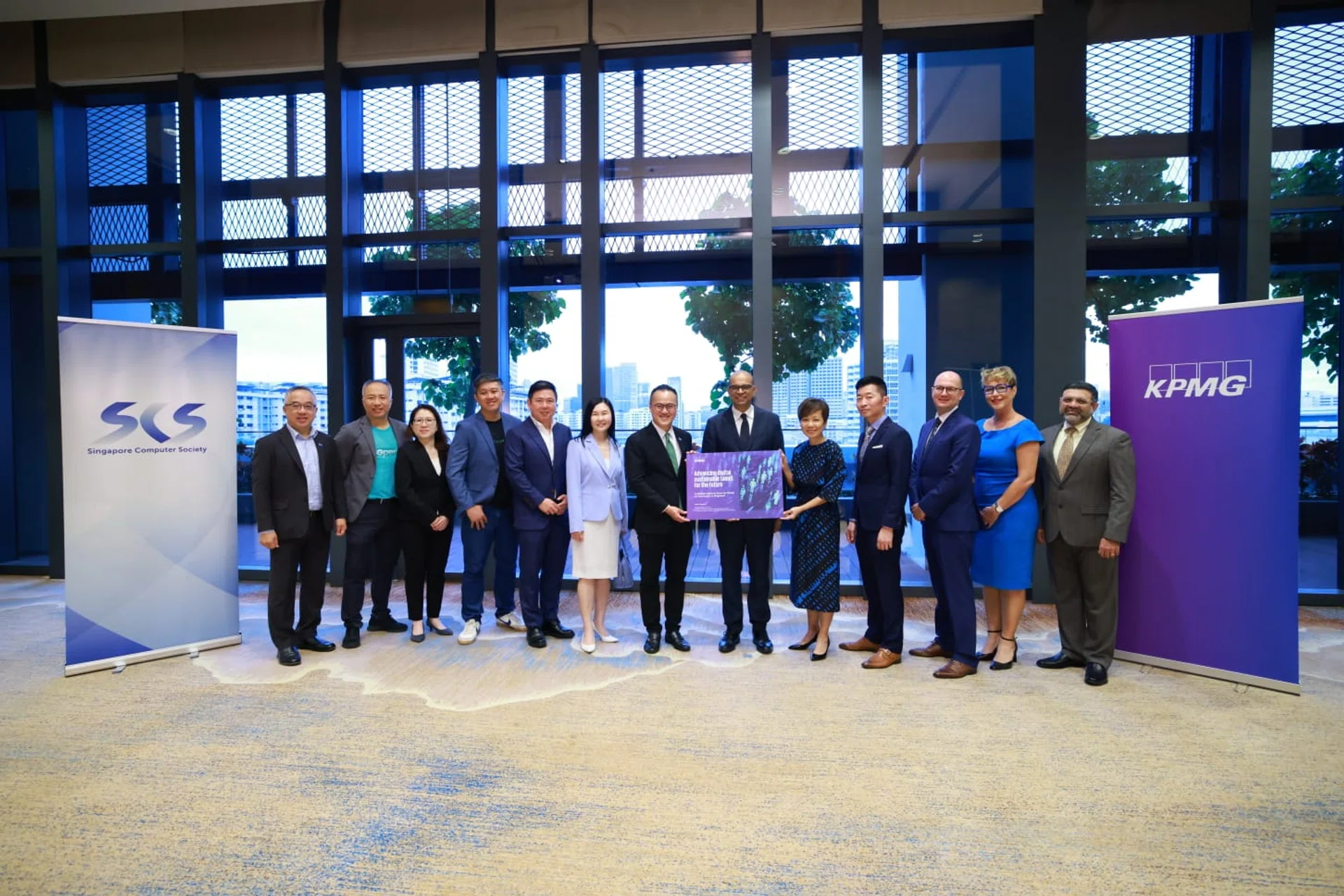
Singapore, with its relentless pursuit of innovation, is stepping up to lead this transformation through KPMG’s newly launched strategic guide, Advancing Digital Sustainable Talent for the Future. This guide, developed in collaboration with the Infocomm Media Development Authority (IMDA) and the Singapore Computer Society (SCS), presents a comprehensive approach for businesses to embed sustainability into their digital strategies.
“The green transition is a strategic inflection point for Singapore businesses,” says Lyon Poh, Partner and Head of Corporate Transformation at KPMG in Singapore. “To succeed, companies must embed sustainability into their core strategies, not as an afterthought, but as a foundation for innovation and growth.”
A new framework
Green by Design, the framework championed by this guide, draws inspiration from Singapore’s well-established “Secure by Design” philosophy. It calls for a proactive approach where sustainability considerations are incorporated into every aspect of business operations, from procurement to software development and network architecture. With sustainability becoming a global imperative, businesses that fail to integrate environmental responsibility into their core functions risk being left behind.
Singapore’s advantage lies in its talent pool. The country already possesses a robust digital workforce, including AI specialists, software developers, and network engineers. However, as sustainability takes centre stage, these professionals must acquire new competencies to drive meaningful change. The guide provides a roadmap to achieve this by highlighting the need to upskill existing roles with emerging green competencies. For instance, software engineers can be trained to optimise algorithms for energy efficiency, while network specialists can design systems that minimise environmental impact.
Joey Tan, Chairman of SCS Sustainable Tech SIG, underscores the importance of multidisciplinary knowledge in achieving sustainability goals. “For a successful sustainability transformation, practitioners need to combine specialised knowledge with multidisciplinary skill sets. Green skills, including those related to green software, are essential for building a sustainable future and supporting Singapore’s transition to a resource-efficient society.”
Key areas of focus
The strategic guide outlines practical recommendations to help businesses align their operations with national sustainability goals such as the Singapore Green Plan 2030. It advocates for fostering a culture of green innovation, advancing cross-sector collaborations, and integrating eco-conscious design principles at every level of an organisation. These steps are crucial for companies looking to achieve long-term economic resilience while contributing to the nation’s sustainability ambitions.

The guide offers four key focus areas:
Landscape Analysis – Evaluates Singapore’s digital and green initiatives within the context of global commitments such as the Paris Agreement and Sustainable Development Goals. It identifies workforce gaps and proposes tailored solutions to align talent development with sustainability strategies.
Green by Design Principles – Encourages embedding sustainability from the earliest stages of business operations, ensuring eco-conscious practices become a fundamental part of procurement, systems development, and operational processes.
Digital Talent Roadmap – Provides actionable frameworks to upskill existing digital roles with emerging green competencies. The roadmap offers clear pathways for businesses to develop capabilities in areas such as energy-efficient coding, sustainable infrastructure management, and the application of AI for green innovation.
Recommendations for Businesses – Offers practical steps for businesses to foster a culture of sustainability, scale sustainable solutions across industries, and align with national initiatives like the Singapore Green Plan 2030.
Still, sustainability is not only an economic imperative; it is a societal one. The shift towards greener business practices promotes social equity by creating opportunities for diverse talent and fostering a more inclusive workforce. By embedding sustainability into digital strategies, businesses can unlock new growth opportunities and solidify their role as responsible corporate citizens.
Singapore’s policy landscape provides a strong foundation for this transition. Government initiatives, such as the Enterprise Sustainability Programme and SkillsFuture, offer support to businesses in their journey towards sustainability. These programmes not only reduce the financial burden of adopting green technologies but also provide the necessary resources to upskill the workforce, ensuring that businesses remain competitive in a rapidly evolving global market.
Looking ahead, businesses that embrace Green by Design today will be better positioned to navigate future challenges and seize new opportunities. As Lyon Poh aptly puts it, “Singapore’s strong policy environment and tech-capable workforce uniquely position it to lead in this space, creating economic value while ensuring long-term resilience.” The message is clear: the time to act is now. Businesses must take decisive steps to integrate sustainability into their digital transformation strategies or risk falling behind.
Ultimately, the guide is a roadmap and a call to action. It presents a vision where digital innovation and sustainability are not competing priorities but complementary forces that drive long-term success. For businesses operating in Singapore and beyond, the future is green, and it is digital—but only if they are designed that way from the start.