%22%3E%0A%3Cpath%20d%3D%22M412%20101.2H393.7C393.1%20101.2%20392.3%20100.9%20391.8%20100.5C377.3%2087.6004%20362.9%2074.6004%20348.4%2061.6004C344.8%2058.4004%20341.3%2055.2004%20337.7%2052.0004C337.1%2051.5004%20336.2%2051.1004%20335.5%2051.0004C334.2%2050.8004%20333%2051.0004%20331.5%2051.0004V101.1H316.7V0.100391H331.4V44.3004C331.9%2044.3004%20332.2%2044.4004%20332.5%2044.4004C334.9%2044.4004%20337.2%2044.5004%20339.6%2044.4004C340.4%2044.4004%20341.3%2044.0004%20341.8%2043.5004C351.6%2034.4004%20361.4%2025.2004%20371.1%2016.0004C376.5%2010.9004%20381.9%205.90039%20387.3%200.800391C387.9%200.200391%20388.5%200.000390626%20389.3%200.000390626H400.9C384.2%2015.8004%20367.8%2031.3004%20351.2%2047.0004C371.5%2065.0004%20391.8%2082.9004%20412.1%20100.9C412.1%20101%20412.1%20101.1%20412%20101.2ZM180.9%20101.2C184.1%2094.9004%20187.2%2088.9004%20190.3%2082.8004C198.3%2067.3004%20206.2%2051.8004%20214.2%2036.2004C220.3%2024.4004%20226.4%2012.5004%20232.4%200.700391C232.7%200.100391%20233%20-0.0996094%20233.7%20-0.0996094H248.1C248.8%20-0.0996094%20249.2%200.100391%20249.6%200.800391C256%2013.3004%20262.4%2025.7004%20268.8%2038.2004C279.3%2058.6004%20289.8%2079.0004%20300.3%2099.5004C300.5%20100%20300.8%20100.4%20301.1%20101.1C300.5%20101.1%20300.1%20101.2%20299.7%20101.2H286.5C285.6%20101.2%20285.1%20100.9%20284.7%20100.2C280.1%2091.3004%20275.4%2082.4004%20270.8%2073.4004C270.1%2072.1004%20269.3%2071.6004%20267.8%2071.6004H209.9C208.7%2071.6004%20208.1%2072.0004%20207.5%2073.1004C202.9%2082.1004%20198.2%2091.0004%20193.6%20100C193.1%20101%20192.6%20101.3%20191.5%20101.3C188.4%20101.2%20185.3%20101.3%20182.3%20101.3C182%20101.2%20181.6%20101.2%20180.9%20101.2ZM239.1%2011.4004C230%2029.2004%20221.1%2046.7004%20212.1%2064.3004H266.4C257.2%2046.7004%20248.2%2029.2004%20239.1%2011.4004ZM0%200.000390626H43.4C51.2%200.000390626%2058.7%201.20039%2065.7%204.80039C75.9%2010.0004%2078.9%2018.0004%2078.6%2027.4004C78.3%2034.3004%2076%2040.5004%2071.2%2045.5004C67.3%2049.6004%2062.4%2052.3004%2057.1%2054.3004C50.6%2056.7004%2043.9%2058.0004%2037.1%2058.6004C30.1%2059.2004%2023.1%2059.4004%2016.2%2059.7004C15.8%2059.7004%2015.3%2059.8004%2014.8%2059.8004V101.1H0.1C0%2067.4004%200%2033.8004%200%200.000390626ZM14.8%207.10039V52.2004C23.7%2052.4004%2032.6%2052.3004%2041.2%2050.1004C44.4%2049.3004%2047.6%2048.2004%2050.6%2046.7004C58.4%2043.0004%2062.3%2036.7004%2062.7%2028.0004C63%2019.9004%2059.5%2014.1004%2052.4%2010.5004C47.6%208.00039%2042.5%207.10039%2037.2%207.10039H14.8ZM95.9%20101.1V0.100391H167.3V7.20039H110.7V44.7004H158.1V51.9004H110.8V93.9004H171.1V101C146.1%20101.1%20121%20101.1%2095.9%20101.1Z%22%20fill%3D%22black%22%2F%3E%0A%3Cpath%20d%3D%22M35.0004%2025.7996H42.5004V20.6996H44.8004V33.1996H42.6004V27.5996H34.9004V33.2996H32.7004V20.7996H35.0004V25.7996ZM54.4004%2025.8996V27.2996H48.9004V31.6996H55.9004C55.9004%2032.1996%2056.0004%2032.5996%2056.0004%2033.0996H46.5004V20.5996H55.5004V21.8996H49.0004V25.7996C50.7004%2025.8996%2052.5004%2025.8996%2054.4004%2025.8996ZM25.9004%2033.0996H23.5004V21.9996H17.9004V20.6996H31.6004V22.0996H27.1004C26.2004%2022.0996%2025.9004%2022.2996%2025.9004%2023.1996C26.0004%2026.0996%2025.9004%2028.9996%2025.9004%2031.7996V33.0996Z%22%20fill%3D%22black%22%2F%3E%0A%3C%2Fg%3E%0A%3Cdefs%3E%0A%3CclipPath%20id%3D%22clip0_388_462%22%3E%0A%3Crect%20width%3D%22411%22%20height%3D%22101.2%22%20fill%3D%22white%22%2F%3E%0A%3C%2FclipPath%3E%0A%3C%2Fdefs%3E%0A%3C%2Fsvg%3E%0A)
Milken Institute Asia Summit highlights: philanthropy, health, and cross-border economies
In a time of geopolitical uncertainty, the Milken Institute Asia Summit turns its focus to regional priorities and the value of partnership.
By Jamie Wong JM /
Share this article
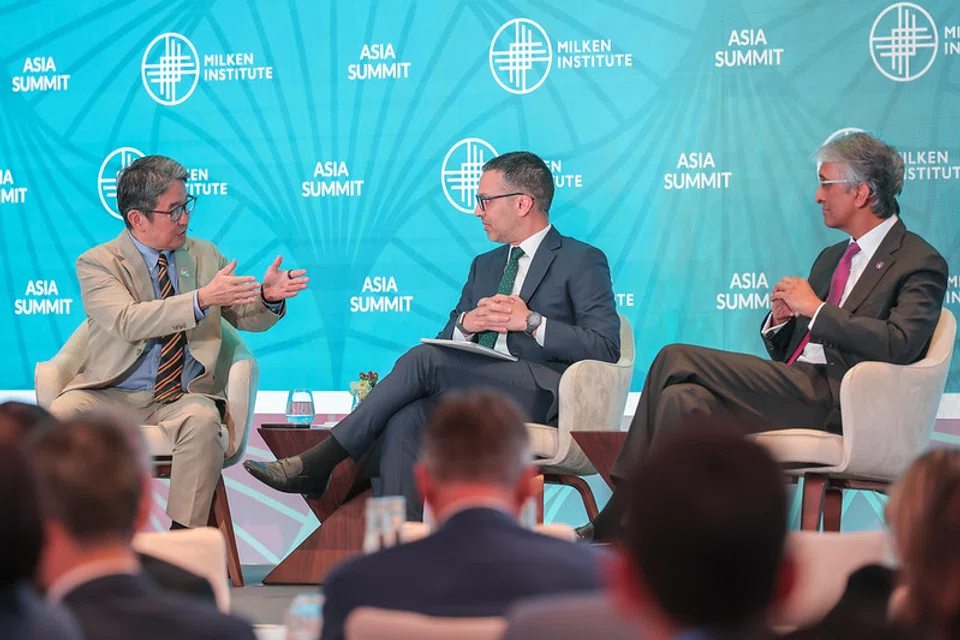
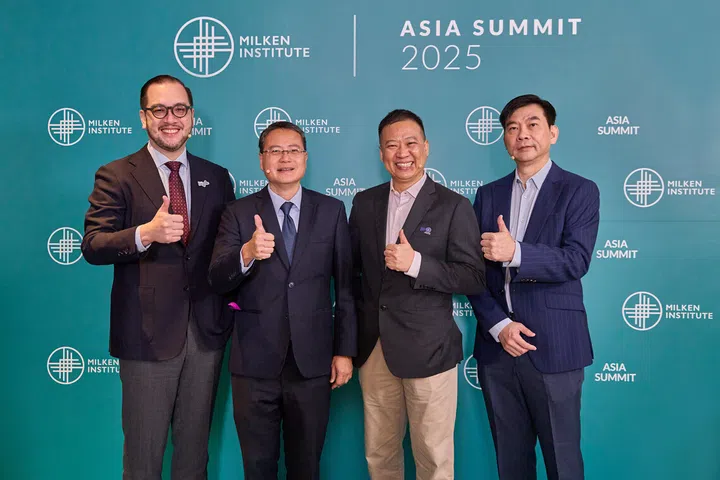
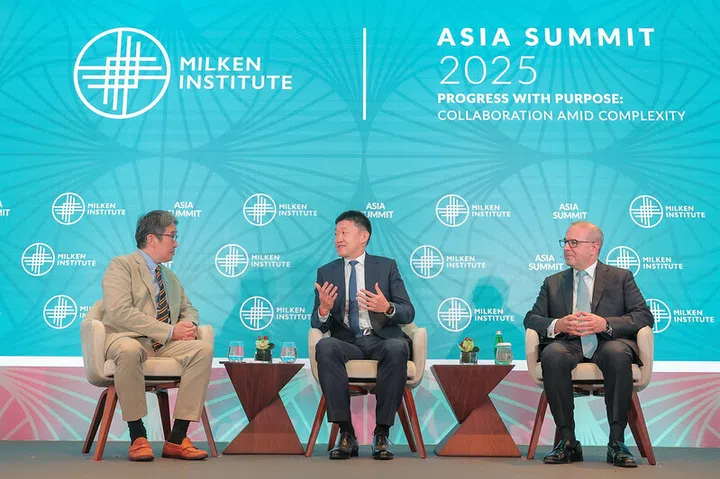
At the 12th Milken Institute Asia Summit, over 1,200 business leaders, policymakers, and investors gathered at Singapore’s Four Seasons Hotel for three days of discussion on how collaboration can endure amid global fragmentation. Under the theme Progress with Purpose: Collaboration Amid Complexity, the conversations ranged widely — from digital finance and sovereign wealth funds, to even the creator economy — but the most enduring threads reflected a regional preoccupation with philanthropy, health, and the future of the global economy, especially its trickle down effects to the Asia region.
All public panel discussions were broadcasted live on the Milken Institute’s website, and is available to audiences around the world.
In an era where corporations are expected to create social as well as financial value, philanthropy emerged as a defining theme across the summit. Programmes ranged from meal talks with artist Saweetie and actress Shefali Shah to invite-only roundtables on corporate giving and climate financing.
Across these sessions, participants explored how private capital can be mobilised to address structural challenges such as education gaps, inequality, and the climate crisis. This spotlight seemed to indicate that philanthropy is becoming a key driver of economic growth in Asia as cities mature and collaborate.
Health and wellness formed another major pillar of the summit’s agenda, underscoring Asia’s growing role in biomedical innovation and healthcare manufacturing. The event opened with a private dinner co-hosted with the Swiss Embassy titled Catalyzing Biomedical Breakthroughs: Investing in Innovation and Impact, which set the tone for discussions on the intersection of technology, wellness, and public policy.
Panels on the potential of artificial intelligence in healthcare and the development of new technologies for women’s health reflected both optimism and urgency, acknowledging the uneven quality and accessibility of healthcare across the region. Overall, the emphasis on health pointed toward a broader understanding of how longevity and preventive health contribute to economic resilience in the long-term.

The final large theme was the future of global economies. Against a backdrop of global realignments and slowing growth in major economies, participants examined how Asia can maintain stability and progress amidst these shifting global dynamics. Sessions on the Indo-Pacific highlighted India and China’s influence as regional growth leaders, while broader conversations on globalisation and capital flows considered how changing political and trade conditions are reshaping investment strategies.
The topic’s consensus tied back to the summit’s theme of collaboration. Partnership, not overwhelming protectionism, will define the next phase of growth. Collaboration — whether through sustainable energy financing, cross-border innovation, or philanthropic cooperation — is presented as a strategic necessity.
Across finance, health, and philanthropy, the Milken Institute Asia Summit distilled one overarching message: in an increasingly complex world, progress will depend less on competition and more on connection.