%22%3E%0A%3Cpath%20d%3D%22M412%20101.2H393.7C393.1%20101.2%20392.3%20100.9%20391.8%20100.5C377.3%2087.6004%20362.9%2074.6004%20348.4%2061.6004C344.8%2058.4004%20341.3%2055.2004%20337.7%2052.0004C337.1%2051.5004%20336.2%2051.1004%20335.5%2051.0004C334.2%2050.8004%20333%2051.0004%20331.5%2051.0004V101.1H316.7V0.100391H331.4V44.3004C331.9%2044.3004%20332.2%2044.4004%20332.5%2044.4004C334.9%2044.4004%20337.2%2044.5004%20339.6%2044.4004C340.4%2044.4004%20341.3%2044.0004%20341.8%2043.5004C351.6%2034.4004%20361.4%2025.2004%20371.1%2016.0004C376.5%2010.9004%20381.9%205.90039%20387.3%200.800391C387.9%200.200391%20388.5%200.000390626%20389.3%200.000390626H400.9C384.2%2015.8004%20367.8%2031.3004%20351.2%2047.0004C371.5%2065.0004%20391.8%2082.9004%20412.1%20100.9C412.1%20101%20412.1%20101.1%20412%20101.2ZM180.9%20101.2C184.1%2094.9004%20187.2%2088.9004%20190.3%2082.8004C198.3%2067.3004%20206.2%2051.8004%20214.2%2036.2004C220.3%2024.4004%20226.4%2012.5004%20232.4%200.700391C232.7%200.100391%20233%20-0.0996094%20233.7%20-0.0996094H248.1C248.8%20-0.0996094%20249.2%200.100391%20249.6%200.800391C256%2013.3004%20262.4%2025.7004%20268.8%2038.2004C279.3%2058.6004%20289.8%2079.0004%20300.3%2099.5004C300.5%20100%20300.8%20100.4%20301.1%20101.1C300.5%20101.1%20300.1%20101.2%20299.7%20101.2H286.5C285.6%20101.2%20285.1%20100.9%20284.7%20100.2C280.1%2091.3004%20275.4%2082.4004%20270.8%2073.4004C270.1%2072.1004%20269.3%2071.6004%20267.8%2071.6004H209.9C208.7%2071.6004%20208.1%2072.0004%20207.5%2073.1004C202.9%2082.1004%20198.2%2091.0004%20193.6%20100C193.1%20101%20192.6%20101.3%20191.5%20101.3C188.4%20101.2%20185.3%20101.3%20182.3%20101.3C182%20101.2%20181.6%20101.2%20180.9%20101.2ZM239.1%2011.4004C230%2029.2004%20221.1%2046.7004%20212.1%2064.3004H266.4C257.2%2046.7004%20248.2%2029.2004%20239.1%2011.4004ZM0%200.000390626H43.4C51.2%200.000390626%2058.7%201.20039%2065.7%204.80039C75.9%2010.0004%2078.9%2018.0004%2078.6%2027.4004C78.3%2034.3004%2076%2040.5004%2071.2%2045.5004C67.3%2049.6004%2062.4%2052.3004%2057.1%2054.3004C50.6%2056.7004%2043.9%2058.0004%2037.1%2058.6004C30.1%2059.2004%2023.1%2059.4004%2016.2%2059.7004C15.8%2059.7004%2015.3%2059.8004%2014.8%2059.8004V101.1H0.1C0%2067.4004%200%2033.8004%200%200.000390626ZM14.8%207.10039V52.2004C23.7%2052.4004%2032.6%2052.3004%2041.2%2050.1004C44.4%2049.3004%2047.6%2048.2004%2050.6%2046.7004C58.4%2043.0004%2062.3%2036.7004%2062.7%2028.0004C63%2019.9004%2059.5%2014.1004%2052.4%2010.5004C47.6%208.00039%2042.5%207.10039%2037.2%207.10039H14.8ZM95.9%20101.1V0.100391H167.3V7.20039H110.7V44.7004H158.1V51.9004H110.8V93.9004H171.1V101C146.1%20101.1%20121%20101.1%2095.9%20101.1Z%22%20fill%3D%22black%22%2F%3E%0A%3Cpath%20d%3D%22M35.0004%2025.7996H42.5004V20.6996H44.8004V33.1996H42.6004V27.5996H34.9004V33.2996H32.7004V20.7996H35.0004V25.7996ZM54.4004%2025.8996V27.2996H48.9004V31.6996H55.9004C55.9004%2032.1996%2056.0004%2032.5996%2056.0004%2033.0996H46.5004V20.5996H55.5004V21.8996H49.0004V25.7996C50.7004%2025.8996%2052.5004%2025.8996%2054.4004%2025.8996ZM25.9004%2033.0996H23.5004V21.9996H17.9004V20.6996H31.6004V22.0996H27.1004C26.2004%2022.0996%2025.9004%2022.2996%2025.9004%2023.1996C26.0004%2026.0996%2025.9004%2028.9996%2025.9004%2031.7996V33.0996Z%22%20fill%3D%22black%22%2F%3E%0A%3C%2Fg%3E%0A%3Cdefs%3E%0A%3CclipPath%20id%3D%22clip0_388_462%22%3E%0A%3Crect%20width%3D%22411%22%20height%3D%22101.2%22%20fill%3D%22white%22%2F%3E%0A%3C%2FclipPath%3E%0A%3C%2Fdefs%3E%0A%3C%2Fsvg%3E%0A)
The new guideline of travel marketing, according to impact.com
As demand for travel decreases, travel marketeers should prioritise trust-based strategies to retain retention and build their brands.
By Jamie Wong JM /
Share this article
A new report by partnership management platform impact.com examines changing consumer expectations, and how brands can pivot their marketing strategies. Developed in collaboration with Digital Travel Insights (by WBR), Beyond the Booking: Where APAC Travel Brands are Investing for Growth surveys 100 marketing leaders and 1,200 travellers across Singapore, Australia, and China to show that, as travel demand cools, brands are prioritising retention, and should prioritise building trust to do so.
Falling demand
Following a global surge in travel demand after the pandemic, the industry is seeing a natural slowdown. However, rising inflation, geopolitical tentions, and general travel fatigue is increasingly dampening enthusiasm. In response, 65% of brands are prioritising on retention, while 64% aim to focus on brand-building.
Despite these short-term challenges, long-term projections remain optimistic. By 2043, passengers from Asia are expected to account for half of global air travel demand, giving brands a strong incentive to start pivoting their marketing strategies.
How people are travelling
The report first examines how consumers discover and book travel experiences, to help brands understand consumer preferences. The traditional linear journey — from exposure via an advertisement to booking — has given way to a more complex process.
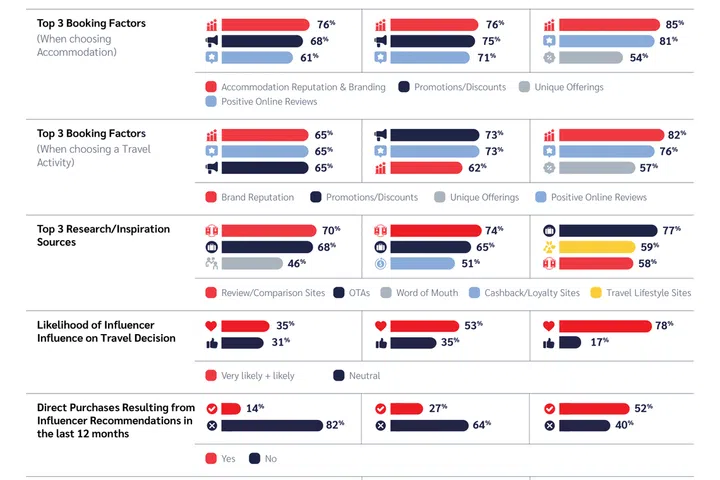
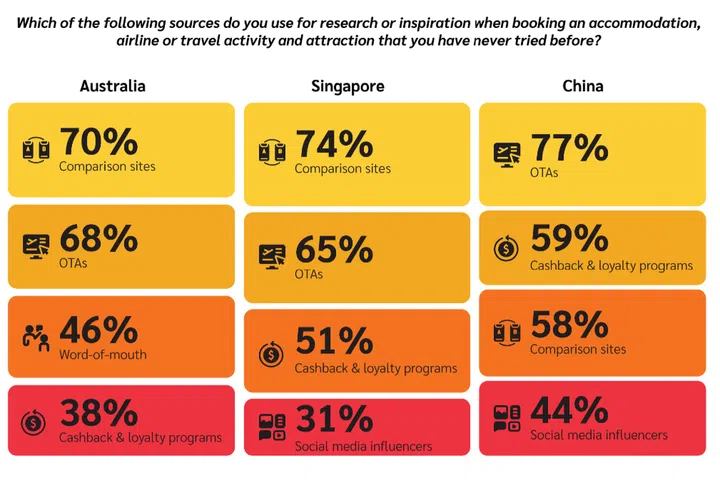
Travellers now consult a range of platforms before making a decision. Comparison sites such as Kayak and Skyscanner (74%), OTAs like Booking.com and Trip.com (66%), loyalty programmes (51%), and social media platforms (31%) all influence the purchase journey. The report thus encourages brands to maintain visibility across multiple channels to guide travellers along their decision making process.
This is especially the case in Singapore, where individuals seem to aim to maximise their spending. As a result, travelers in Singapore are often swayed by brands with promotions or discounts, as compared to unique experiences offered.
How marketeers should adapt
This shift in behaviour calls for a corresponding shift in strategy. In Singapore, 76% of travellers make bookings through OTAs, while only 57% book through a brand’s website, and just 37% through a brand’s app. Furthermore, 27% of Singaporeans have made a purchase based on influencer recommendations. For marketers, this suggests that partnerships could yield better returns and may be most effective for travel marketers to prioritise.
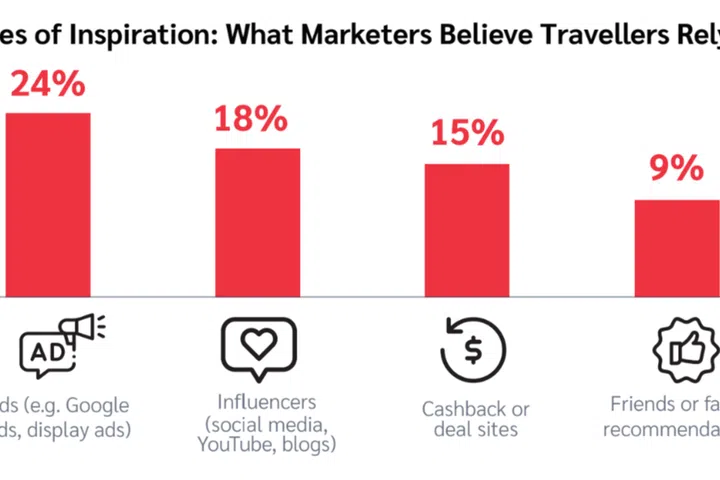
Affiliate marketing is gaining traction, with 25% of marketers highlighting it as a growing priority. Favoured for its performance-based structure, affiliate marketing lets brands reward partners only when bookings occur — preserving control over the customer relationship while mitigating financial risk. Cashback and loyalty programmes are also options for brands, as they may appeal to price-conscious Singaporean consumers.
Influencer marketing is an avenue with lots of potential. Though only 11% of marketers rank it as a top channel, it seems to kickstart interest in a location, accommodation, or experience. In Singapore, 63% of travellers trust influencers, compared to 45% who trust affiliates. The trend is even more pronounced in China, where 75% of travellers are influenced by influencer recommendations, and more than half say they’re willing to try new airlines or accommodations solely based on such endorsements.
Difficulties in collaboration
However, partnerships aren’t without challenges. Some partners, such as OTAs, charge high commission fees of up to 30%; marketing through partners like influencers may pose difficulties in measuring ROI; and overall, scaling campaigns proves difficult.
Despite that, the report seems to believe that the benefits outweigh these drawbacks. When executed strategically, partnerships can become powerful tools for both visibility and conversion.
“The modern consumer demands trust, transparency, and authenticity, and they turn to their communities and trusted sources of information to guide their purchasing decisions,” said Adam Furness, Managing Director Asia Pacific Japan at impact.com. “The brands that thrive are balancing acquisition with retention and community-building through partnerships with affiliates, influencers, publishers, customer advocates, and more.”
Embedding affiliate links in travel content, collaborating with trusted creators, and investing in exclusive partnerships can help brands influence decisions earlier in the booking process and remain top of mind throughout the customer journey. What’s left is to prove themselves as a reliable brand to create memorable travel experiences for consumers.