%22%3E%0A%3Cpath%20d%3D%22M412%20101.2H393.7C393.1%20101.2%20392.3%20100.9%20391.8%20100.5C377.3%2087.6004%20362.9%2074.6004%20348.4%2061.6004C344.8%2058.4004%20341.3%2055.2004%20337.7%2052.0004C337.1%2051.5004%20336.2%2051.1004%20335.5%2051.0004C334.2%2050.8004%20333%2051.0004%20331.5%2051.0004V101.1H316.7V0.100391H331.4V44.3004C331.9%2044.3004%20332.2%2044.4004%20332.5%2044.4004C334.9%2044.4004%20337.2%2044.5004%20339.6%2044.4004C340.4%2044.4004%20341.3%2044.0004%20341.8%2043.5004C351.6%2034.4004%20361.4%2025.2004%20371.1%2016.0004C376.5%2010.9004%20381.9%205.90039%20387.3%200.800391C387.9%200.200391%20388.5%200.000390626%20389.3%200.000390626H400.9C384.2%2015.8004%20367.8%2031.3004%20351.2%2047.0004C371.5%2065.0004%20391.8%2082.9004%20412.1%20100.9C412.1%20101%20412.1%20101.1%20412%20101.2ZM180.9%20101.2C184.1%2094.9004%20187.2%2088.9004%20190.3%2082.8004C198.3%2067.3004%20206.2%2051.8004%20214.2%2036.2004C220.3%2024.4004%20226.4%2012.5004%20232.4%200.700391C232.7%200.100391%20233%20-0.0996094%20233.7%20-0.0996094H248.1C248.8%20-0.0996094%20249.2%200.100391%20249.6%200.800391C256%2013.3004%20262.4%2025.7004%20268.8%2038.2004C279.3%2058.6004%20289.8%2079.0004%20300.3%2099.5004C300.5%20100%20300.8%20100.4%20301.1%20101.1C300.5%20101.1%20300.1%20101.2%20299.7%20101.2H286.5C285.6%20101.2%20285.1%20100.9%20284.7%20100.2C280.1%2091.3004%20275.4%2082.4004%20270.8%2073.4004C270.1%2072.1004%20269.3%2071.6004%20267.8%2071.6004H209.9C208.7%2071.6004%20208.1%2072.0004%20207.5%2073.1004C202.9%2082.1004%20198.2%2091.0004%20193.6%20100C193.1%20101%20192.6%20101.3%20191.5%20101.3C188.4%20101.2%20185.3%20101.3%20182.3%20101.3C182%20101.2%20181.6%20101.2%20180.9%20101.2ZM239.1%2011.4004C230%2029.2004%20221.1%2046.7004%20212.1%2064.3004H266.4C257.2%2046.7004%20248.2%2029.2004%20239.1%2011.4004ZM0%200.000390626H43.4C51.2%200.000390626%2058.7%201.20039%2065.7%204.80039C75.9%2010.0004%2078.9%2018.0004%2078.6%2027.4004C78.3%2034.3004%2076%2040.5004%2071.2%2045.5004C67.3%2049.6004%2062.4%2052.3004%2057.1%2054.3004C50.6%2056.7004%2043.9%2058.0004%2037.1%2058.6004C30.1%2059.2004%2023.1%2059.4004%2016.2%2059.7004C15.8%2059.7004%2015.3%2059.8004%2014.8%2059.8004V101.1H0.1C0%2067.4004%200%2033.8004%200%200.000390626ZM14.8%207.10039V52.2004C23.7%2052.4004%2032.6%2052.3004%2041.2%2050.1004C44.4%2049.3004%2047.6%2048.2004%2050.6%2046.7004C58.4%2043.0004%2062.3%2036.7004%2062.7%2028.0004C63%2019.9004%2059.5%2014.1004%2052.4%2010.5004C47.6%208.00039%2042.5%207.10039%2037.2%207.10039H14.8ZM95.9%20101.1V0.100391H167.3V7.20039H110.7V44.7004H158.1V51.9004H110.8V93.9004H171.1V101C146.1%20101.1%20121%20101.1%2095.9%20101.1Z%22%20fill%3D%22black%22%2F%3E%0A%3Cpath%20d%3D%22M35.0004%2025.7996H42.5004V20.6996H44.8004V33.1996H42.6004V27.5996H34.9004V33.2996H32.7004V20.7996H35.0004V25.7996ZM54.4004%2025.8996V27.2996H48.9004V31.6996H55.9004C55.9004%2032.1996%2056.0004%2032.5996%2056.0004%2033.0996H46.5004V20.5996H55.5004V21.8996H49.0004V25.7996C50.7004%2025.8996%2052.5004%2025.8996%2054.4004%2025.8996ZM25.9004%2033.0996H23.5004V21.9996H17.9004V20.6996H31.6004V22.0996H27.1004C26.2004%2022.0996%2025.9004%2022.2996%2025.9004%2023.1996C26.0004%2026.0996%2025.9004%2028.9996%2025.9004%2031.7996V33.0996Z%22%20fill%3D%22black%22%2F%3E%0A%3C%2Fg%3E%0A%3Cdefs%3E%0A%3CclipPath%20id%3D%22clip0_388_462%22%3E%0A%3Crect%20width%3D%22411%22%20height%3D%22101.2%22%20fill%3D%22white%22%2F%3E%0A%3C%2FclipPath%3E%0A%3C%2Fdefs%3E%0A%3C%2Fsvg%3E%0A)
PERSOL report outlines five forces reshaping hiring, with workers valuing progression and purpose alongisde pay
Increasing demand for ESG-ready talent, candidate expectations for transparency and values alignment, and a widening skills gap are among factors that PERSOL highlights in their 2025 Asia Pacific Industry Insight Report.
By Jamie Wong JM /

Share this article
Singapore’s labour market is undergoing one of its most significant transitions in recent years, shaped by digital acceleration, stricter sustainability regulation and a growing emphasis on meaningful work. Workforce solutions company, PERSOL’s latest Industry Insight Report, draws on findings from 12 markets and four major sectors, Manufacturing, Consumer, Professional Services, and Supply Chain, and identifies five structural shifts that are now redefining how companies hire, and how workers evaluate opportunities across the region.
The first and most visible trend is the accelerating demand for digital and sustainability-ready talent. As businesses race to digitalise, the need for workers skilled in e-commerce operations, data analytics and supply chain optimisation has surged. Layered on top of this is a newer pressure: expanding environment, social, and governance (ESG) reporting requirements. Companies are searching for people who can interpret, analyse and communicate sustainability outcomes using digital tools, which the report refers to as hybrid digital-ESG talent. With tighter foreign manpower controls, employers are competing for a limited pool of these candidates.
In the same vein, rising expectations for ESG reporting results in companies increasingly prioritising ESG. The second trend observed is that companies are favouring candidates with sustainability and compliance literacy, even in roles outside of dedicated sustainability teams. Finance fields, operations, and supply chain functions are all looking for people with ESG literacy to improve workflow.
The third shift involves employees. The report refers to this trend as Candidates as Consumers. Candidates are approaching employees with greater skepticism; candidates now prefer companies with clear values, a favourable company culture, and potentials for long-term growth. During the hiring process, this manifests in candidates placing a greater emphasis on transparency, mobile-first engagement and organisational values.

Expectations for the role itself are also different. While competitive compensation continues to rank as the most important factor across all sectors, the report notes that professionals are increasingly prioritising opportunities for career progression, work life balance, and learning potentials. This trend is most notable among millennial and Gen Z professionals. With this said, it should still be emphasised that favourable competition is still a baseline necessary.
For example, in Corporate and Professional Services, employers increasingly favour candidates with highly specific experience, reflecting a landscape where hiring is tied more closely to restructuring and replacement than to new growth headcount. This has given specialised candidates greater bargaining power, with many expecting salary increases of 20-30% when moving roles. Companies must minimally have competitive compensation and benefits to attract talent. Only then will factors such as progression, learning potential, and work life balance make a difference to candidates.
The final trend identified by the report is the widening skills gap. PERSOL calls for deeper collaboration between businesses, educational institutions and government to align workforce development with national priorities in digital transformation, sustainability and advanced manufacturing. Strengthening these partnerships will be essential not only for closing shortages but for giving workers more pathways to find roles that better match their aspirations.
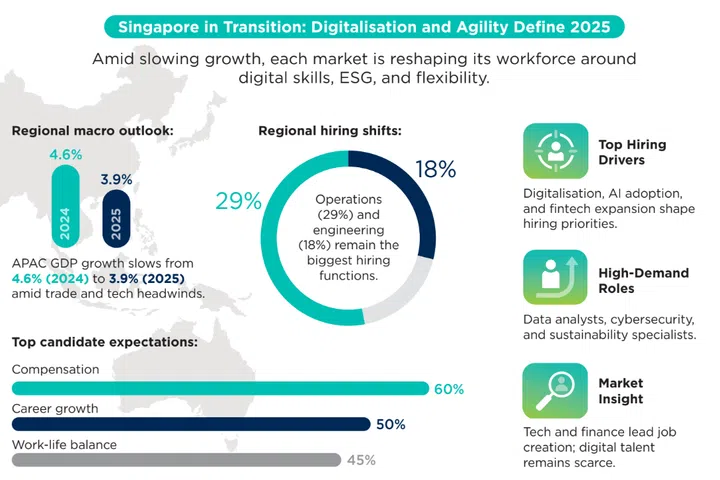
Taken together, these five shifts underscore a labour market in the midst of recalibration: one where digital and ESG capabilities are rising in value, employee priorities are evolving, and employers must fully understand these dynamic changes and respond swiftly to attract and retain talent.