%22%3E%0A%3Cpath%20d%3D%22M412%20101.2H393.7C393.1%20101.2%20392.3%20100.9%20391.8%20100.5C377.3%2087.6004%20362.9%2074.6004%20348.4%2061.6004C344.8%2058.4004%20341.3%2055.2004%20337.7%2052.0004C337.1%2051.5004%20336.2%2051.1004%20335.5%2051.0004C334.2%2050.8004%20333%2051.0004%20331.5%2051.0004V101.1H316.7V0.100391H331.4V44.3004C331.9%2044.3004%20332.2%2044.4004%20332.5%2044.4004C334.9%2044.4004%20337.2%2044.5004%20339.6%2044.4004C340.4%2044.4004%20341.3%2044.0004%20341.8%2043.5004C351.6%2034.4004%20361.4%2025.2004%20371.1%2016.0004C376.5%2010.9004%20381.9%205.90039%20387.3%200.800391C387.9%200.200391%20388.5%200.000390626%20389.3%200.000390626H400.9C384.2%2015.8004%20367.8%2031.3004%20351.2%2047.0004C371.5%2065.0004%20391.8%2082.9004%20412.1%20100.9C412.1%20101%20412.1%20101.1%20412%20101.2ZM180.9%20101.2C184.1%2094.9004%20187.2%2088.9004%20190.3%2082.8004C198.3%2067.3004%20206.2%2051.8004%20214.2%2036.2004C220.3%2024.4004%20226.4%2012.5004%20232.4%200.700391C232.7%200.100391%20233%20-0.0996094%20233.7%20-0.0996094H248.1C248.8%20-0.0996094%20249.2%200.100391%20249.6%200.800391C256%2013.3004%20262.4%2025.7004%20268.8%2038.2004C279.3%2058.6004%20289.8%2079.0004%20300.3%2099.5004C300.5%20100%20300.8%20100.4%20301.1%20101.1C300.5%20101.1%20300.1%20101.2%20299.7%20101.2H286.5C285.6%20101.2%20285.1%20100.9%20284.7%20100.2C280.1%2091.3004%20275.4%2082.4004%20270.8%2073.4004C270.1%2072.1004%20269.3%2071.6004%20267.8%2071.6004H209.9C208.7%2071.6004%20208.1%2072.0004%20207.5%2073.1004C202.9%2082.1004%20198.2%2091.0004%20193.6%20100C193.1%20101%20192.6%20101.3%20191.5%20101.3C188.4%20101.2%20185.3%20101.3%20182.3%20101.3C182%20101.2%20181.6%20101.2%20180.9%20101.2ZM239.1%2011.4004C230%2029.2004%20221.1%2046.7004%20212.1%2064.3004H266.4C257.2%2046.7004%20248.2%2029.2004%20239.1%2011.4004ZM0%200.000390626H43.4C51.2%200.000390626%2058.7%201.20039%2065.7%204.80039C75.9%2010.0004%2078.9%2018.0004%2078.6%2027.4004C78.3%2034.3004%2076%2040.5004%2071.2%2045.5004C67.3%2049.6004%2062.4%2052.3004%2057.1%2054.3004C50.6%2056.7004%2043.9%2058.0004%2037.1%2058.6004C30.1%2059.2004%2023.1%2059.4004%2016.2%2059.7004C15.8%2059.7004%2015.3%2059.8004%2014.8%2059.8004V101.1H0.1C0%2067.4004%200%2033.8004%200%200.000390626ZM14.8%207.10039V52.2004C23.7%2052.4004%2032.6%2052.3004%2041.2%2050.1004C44.4%2049.3004%2047.6%2048.2004%2050.6%2046.7004C58.4%2043.0004%2062.3%2036.7004%2062.7%2028.0004C63%2019.9004%2059.5%2014.1004%2052.4%2010.5004C47.6%208.00039%2042.5%207.10039%2037.2%207.10039H14.8ZM95.9%20101.1V0.100391H167.3V7.20039H110.7V44.7004H158.1V51.9004H110.8V93.9004H171.1V101C146.1%20101.1%20121%20101.1%2095.9%20101.1Z%22%20fill%3D%22black%22%2F%3E%0A%3Cpath%20d%3D%22M35.0004%2025.7996H42.5004V20.6996H44.8004V33.1996H42.6004V27.5996H34.9004V33.2996H32.7004V20.7996H35.0004V25.7996ZM54.4004%2025.8996V27.2996H48.9004V31.6996H55.9004C55.9004%2032.1996%2056.0004%2032.5996%2056.0004%2033.0996H46.5004V20.5996H55.5004V21.8996H49.0004V25.7996C50.7004%2025.8996%2052.5004%2025.8996%2054.4004%2025.8996ZM25.9004%2033.0996H23.5004V21.9996H17.9004V20.6996H31.6004V22.0996H27.1004C26.2004%2022.0996%2025.9004%2022.2996%2025.9004%2023.1996C26.0004%2026.0996%2025.9004%2028.9996%2025.9004%2031.7996V33.0996Z%22%20fill%3D%22black%22%2F%3E%0A%3C%2Fg%3E%0A%3Cdefs%3E%0A%3CclipPath%20id%3D%22clip0_388_462%22%3E%0A%3Crect%20width%3D%22411%22%20height%3D%22101.2%22%20fill%3D%22white%22%2F%3E%0A%3C%2FclipPath%3E%0A%3C%2Fdefs%3E%0A%3C%2Fsvg%3E%0A)
Singapore’s nightlife revival gains momentum with Formula 1 but challenges remain ahead
Interest from the Formula 1 night race and support from STB has supercharged the city’s bars, festivals, and precincts. But with shifting lifestyles and tighter wallets, the real challenge is what happens after the grandstand goes down.
By Jamie Wong JM /
Singapore’s nightlife industry has been under pressure in recent years, which some believe are caused by tighter regulations, rising prices, and changing consumer habits. In 2015, the sector generated S$674.7 million; by 2022, that figure had more than halved to S$284.7 million. Against this backdrop, the Formula 1 Singapore Grand Prix offers an interesting contrast. The race is synonymous with high-octane nightlife, and energy and resources are channelled into creating a vibrant after-hours scene. However, whether this is the start of a revival, or a short-lived boost in sales driven by an event is hard to see.
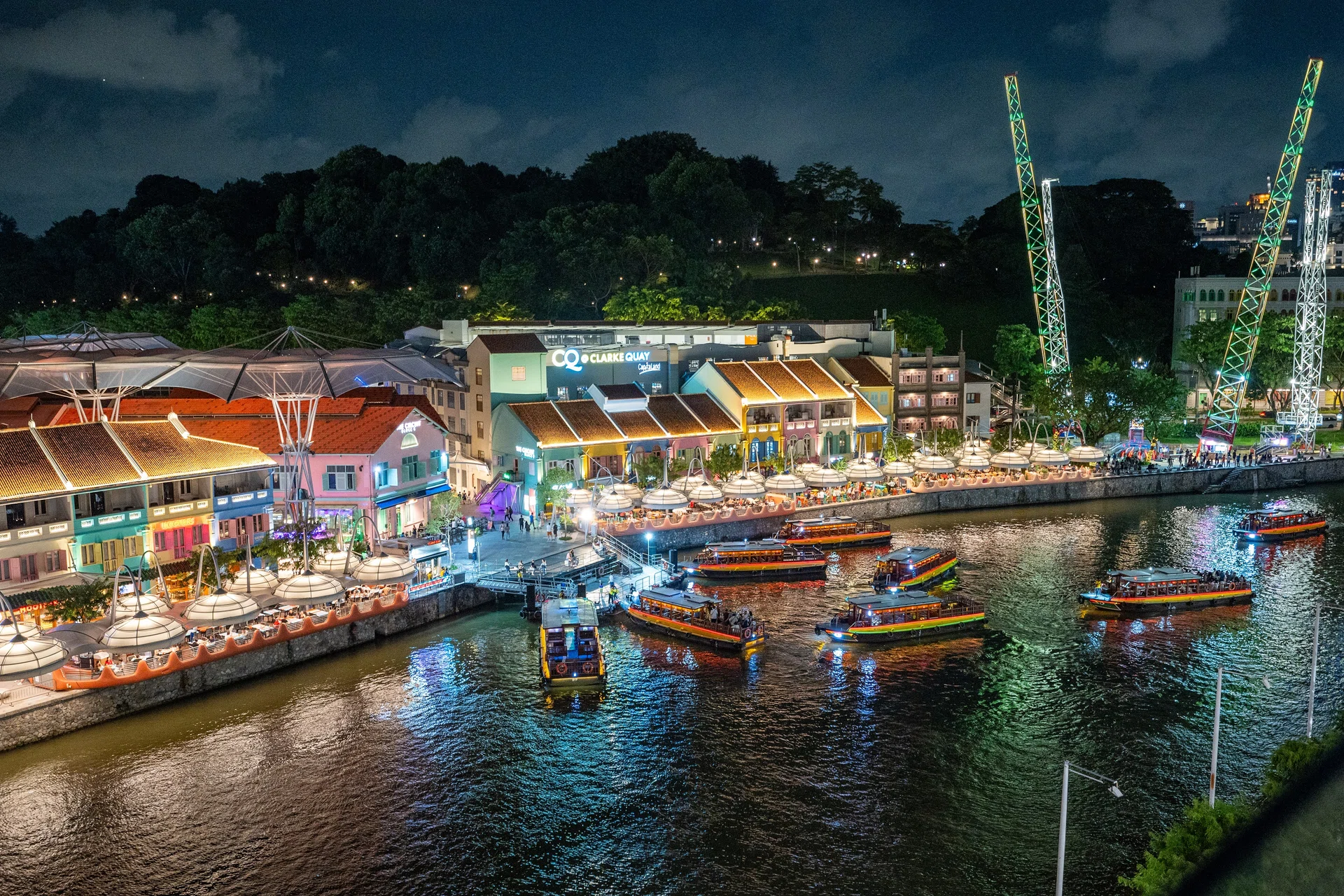
Unsurprisingly, one of the organisations placing a lot of energy into nightlife is Clarke Quay, which has historically been synonymous with Singapore’s nightlife. Under the Grand Prix Season Singapore (GPSS) — a series of programmes curated by Singapore Tourism Board (STB) to complement the Grand Prix — the precinct is trying to branch out to daytime programming as well to accommodate changing consumer habits.
With headliner pop-up Hit The Apex, CQ @ Clarke Quay has brought live music programming such as Music Matters Live, which brought free performances from artists all across the region, starting as early as 4pm. Other programmes include Beats and Coffee, where local DJs spin while guests sip caffeinated drinks; and a Hot Wheels pop-up with a photobooth to target general audiences.
“Global events such as GPSS reinforce Clarke Quay’s position as Singapore’s iconic riverfront destination, re-energising the precinct as a vibrant hub where nightlife, culture, dining and entertainment converge,” said Nicholas Lee, Acting Centre Manager of CQ @ Clarke Quay. To support late-night revellers, the precinct even introduced Grab promotions, offering $8 discounts on rides departing Clarke Quay between 2am and 5am.
When asked how Clarke Quay intends to sustain this momentum beyond the race weekend, Lee added: “Looking beyond GPSS, CQ @ Clarke Quay will keep the momentum going with more exciting programmes throughout the year, including more day-to-night parties and a New Year’s Eve countdown.”
Although the answer lacks specificity, it does seem to indicate a strategy to reposition Clarke Quay as a lifestyle destination rather than a cluster of bars and clubs. With that, it suggests an acknowledgement that that nightlife alone may no longer be enough to attract consistent audiences.
Beyond the riverfront
Other businesses have been pooling together to capitalise on the excitement around the country with GPSS. One case was how eight of Singapore’s independent craft breweries collaborated to brew a F1 inspired beer. Called Beyond the Circuit, the beer is a jasmine-rice lager, with Brewerkz leading the development. Music festivals such as Jam Off at Sentosa and GrooveDriver Festival at Marina Central spotlight local, regional, and international talent.
According to STB, GPSS programmes are deliberately varied to cater to Singaporeans first — hence the local spotlight with all the music events, and its wide roster of programmes.
“Nightlife programming plays an important role in extending the excitement and energy of the iconic F1 Singapore night race beyond the circuit, creating a vibrant atmosphere that complements our cosmopolitan character,” said Lilian Chee, Director of Sports, Singapore Tourism Board. “However, nightlife represents just one element of the bespoke lifestyle festivities we have curated for GPSS.”
The overall emphasis on day-to-night and varied activities reflects what many others have already said: changing lifestyle habits are signalling a decreasing interest in late-night activities. Whether this is growing interest in health and wellness, or more flexible working hours that give people the ability to enjoy daytime activities, or even tightening budgets that make people disinclined to spend on the daily, this all seems to indicate that nightlife itself is no longer a reliable draw outside of special events, like holidays or F1 season. Clarke Quay’s Grab vouchers, for instance, implicitly highlight the long-standing issue of late-night transport, a barrier that continues to limit spontaneous after-hours activity.
During F1 season, with the right conditions, Singapore can feel like a nightlife capital. However, sustaining that atmosphere in ordinary months, when economic pressures and changing consumer habits weigh more heavily, is far more difficult. GPSS shows what is possible under the right conditions. What remains to be seen is whether that feeling can endure once the grandstands come down — and whether Singaporeans even want it to.