%22%3E%0A%3Cpath%20d%3D%22M412%20101.2H393.7C393.1%20101.2%20392.3%20100.9%20391.8%20100.5C377.3%2087.6004%20362.9%2074.6004%20348.4%2061.6004C344.8%2058.4004%20341.3%2055.2004%20337.7%2052.0004C337.1%2051.5004%20336.2%2051.1004%20335.5%2051.0004C334.2%2050.8004%20333%2051.0004%20331.5%2051.0004V101.1H316.7V0.100391H331.4V44.3004C331.9%2044.3004%20332.2%2044.4004%20332.5%2044.4004C334.9%2044.4004%20337.2%2044.5004%20339.6%2044.4004C340.4%2044.4004%20341.3%2044.0004%20341.8%2043.5004C351.6%2034.4004%20361.4%2025.2004%20371.1%2016.0004C376.5%2010.9004%20381.9%205.90039%20387.3%200.800391C387.9%200.200391%20388.5%200.000390626%20389.3%200.000390626H400.9C384.2%2015.8004%20367.8%2031.3004%20351.2%2047.0004C371.5%2065.0004%20391.8%2082.9004%20412.1%20100.9C412.1%20101%20412.1%20101.1%20412%20101.2ZM180.9%20101.2C184.1%2094.9004%20187.2%2088.9004%20190.3%2082.8004C198.3%2067.3004%20206.2%2051.8004%20214.2%2036.2004C220.3%2024.4004%20226.4%2012.5004%20232.4%200.700391C232.7%200.100391%20233%20-0.0996094%20233.7%20-0.0996094H248.1C248.8%20-0.0996094%20249.2%200.100391%20249.6%200.800391C256%2013.3004%20262.4%2025.7004%20268.8%2038.2004C279.3%2058.6004%20289.8%2079.0004%20300.3%2099.5004C300.5%20100%20300.8%20100.4%20301.1%20101.1C300.5%20101.1%20300.1%20101.2%20299.7%20101.2H286.5C285.6%20101.2%20285.1%20100.9%20284.7%20100.2C280.1%2091.3004%20275.4%2082.4004%20270.8%2073.4004C270.1%2072.1004%20269.3%2071.6004%20267.8%2071.6004H209.9C208.7%2071.6004%20208.1%2072.0004%20207.5%2073.1004C202.9%2082.1004%20198.2%2091.0004%20193.6%20100C193.1%20101%20192.6%20101.3%20191.5%20101.3C188.4%20101.2%20185.3%20101.3%20182.3%20101.3C182%20101.2%20181.6%20101.2%20180.9%20101.2ZM239.1%2011.4004C230%2029.2004%20221.1%2046.7004%20212.1%2064.3004H266.4C257.2%2046.7004%20248.2%2029.2004%20239.1%2011.4004ZM0%200.000390626H43.4C51.2%200.000390626%2058.7%201.20039%2065.7%204.80039C75.9%2010.0004%2078.9%2018.0004%2078.6%2027.4004C78.3%2034.3004%2076%2040.5004%2071.2%2045.5004C67.3%2049.6004%2062.4%2052.3004%2057.1%2054.3004C50.6%2056.7004%2043.9%2058.0004%2037.1%2058.6004C30.1%2059.2004%2023.1%2059.4004%2016.2%2059.7004C15.8%2059.7004%2015.3%2059.8004%2014.8%2059.8004V101.1H0.1C0%2067.4004%200%2033.8004%200%200.000390626ZM14.8%207.10039V52.2004C23.7%2052.4004%2032.6%2052.3004%2041.2%2050.1004C44.4%2049.3004%2047.6%2048.2004%2050.6%2046.7004C58.4%2043.0004%2062.3%2036.7004%2062.7%2028.0004C63%2019.9004%2059.5%2014.1004%2052.4%2010.5004C47.6%208.00039%2042.5%207.10039%2037.2%207.10039H14.8ZM95.9%20101.1V0.100391H167.3V7.20039H110.7V44.7004H158.1V51.9004H110.8V93.9004H171.1V101C146.1%20101.1%20121%20101.1%2095.9%20101.1Z%22%20fill%3D%22black%22%2F%3E%0A%3Cpath%20d%3D%22M35.0004%2025.7996H42.5004V20.6996H44.8004V33.1996H42.6004V27.5996H34.9004V33.2996H32.7004V20.7996H35.0004V25.7996ZM54.4004%2025.8996V27.2996H48.9004V31.6996H55.9004C55.9004%2032.1996%2056.0004%2032.5996%2056.0004%2033.0996H46.5004V20.5996H55.5004V21.8996H49.0004V25.7996C50.7004%2025.8996%2052.5004%2025.8996%2054.4004%2025.8996ZM25.9004%2033.0996H23.5004V21.9996H17.9004V20.6996H31.6004V22.0996H27.1004C26.2004%2022.0996%2025.9004%2022.2996%2025.9004%2023.1996C26.0004%2026.0996%2025.9004%2028.9996%2025.9004%2031.7996V33.0996Z%22%20fill%3D%22black%22%2F%3E%0A%3C%2Fg%3E%0A%3Cdefs%3E%0A%3CclipPath%20id%3D%22clip0_388_462%22%3E%0A%3Crect%20width%3D%22411%22%20height%3D%22101.2%22%20fill%3D%22white%22%2F%3E%0A%3C%2FclipPath%3E%0A%3C%2Fdefs%3E%0A%3C%2Fsvg%3E%0A)
What 700 Double Tree by Hilton properties says about the hotel industry
This milestone suggests that the future of hospitality may hinge on upscale and midscale hotels.
By Jamie Wong JM /
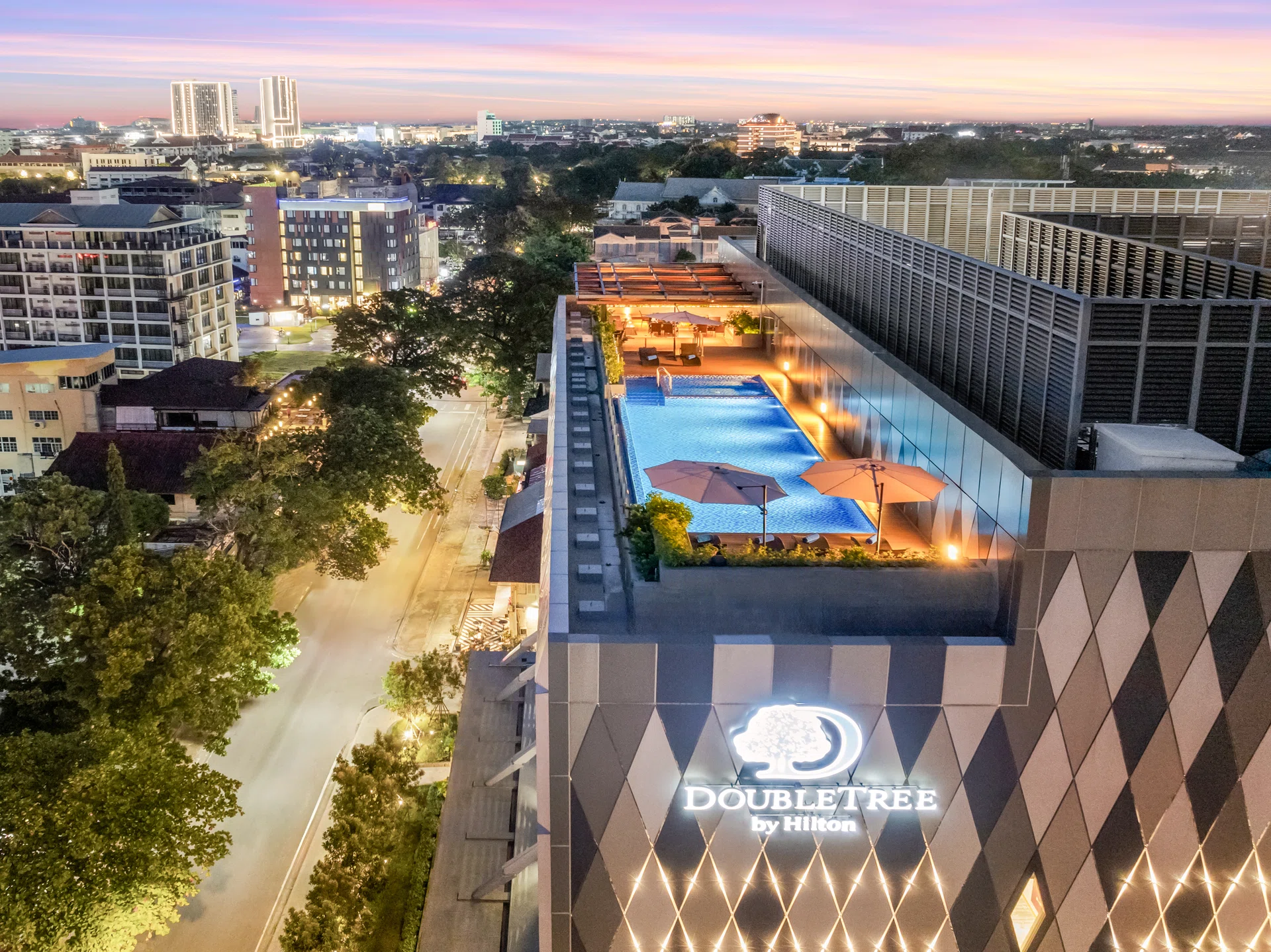
Just last week, Hilton announced the opening of its 700th DoubleTree by Hilton property, across 60 countries and territories. This offers a window into the pace and pressure behind the global hotel industry’s race to scale, and how brands below the luxury tier are increasingly doing the heavy lifting.
Elevated comfort
Like Hilton’s better-known luxury brands like the Waldorf Astoria or the Conrad, DoubleTree is a full-service hotel. However, it is meant to be more casual. DoubleTree branches typically rank between 4 to 5 stars but are more accessible, with a more casual touch. This is best encapsulated by the brand’s hallmark warm chocolate chip cookie, offered to each guest upon arrival and (in my experience) on request.
On the Chain Scale segment — which categorises hotels by their average room rates — DoubleTree falls into the Upscale category, beneath Hilton’s flagship hotel at Upper Upscale, or Luxury properties like the Waldorf and Conrad.
“With each new opening, we look forward to delighting comfort-seeking guests with memorable moments of care from our signature warm DoubleTree chocolate chip cookie upon arrival to comfortable accommodation that promises a great night’s sleep and thoughtful amenities,” said Vincent Ong, Vice President of Brand Management, Full Service, Asia Pacific, Hilton.
Ease of expansion
At 700 branches, Doubletree is one of the, if not the largest brand under the Hilton portfolio, outpacing even the flagship Hilton itself by 83 branches. Part of this success lies in how Hilton is choosing to expand it. Rather than relying on new builds, Hilton is accelerating growth by converting existing hotels into the DoubleTree brand.
In the first quarter of 2025, 40% of Hilton’s nearly 200 openings came from such conversions. These transitions offer a relatively low-cost, low-friction path to scale, making the brand especially appealing to independent hotel owners seeking access to Hilton’s booking engine, existing deals with online travel agents, and of course, its extensive loyalty program, while the Hilton doesn’t have to deal with the time and difficulties of real estate.
This model has worked particularly well in the Asia-Pacific region, where DoubleTree has grown from a single hotel in Kuala Lumpur in 2010 to 115 properties across the region today. That’s 16.4% of the brand’s global footprint, suggesting that emerging markets are playing a central role in Hilton’s room expansion strategy.
Above average
What’s striking is not just the rate of DoubleTree’s growth, but the scale it now represents. While DoubleTree accounts for around 9% of Hilton’s 8,000-plus properties, DoubleTree contributes over 12% of total room inventory, with approximately 155,000 rooms. That means DoubleTree is delivering above-average returns on property count, as if all of Hilton’s 24 properties provided equal returns, DoubleTree would only account for 4.17% in rooms and returns.
Hilton currently has more than 240 additional DoubleTree hotels in development, including first-in-country debuts across nine new markets. This pipeline suggests that the brand’s momentum is far from slowing.
What this all means
From the growth of DoubleTree, we may be able to extrapolate how the global hospitality industry is evolving. Luxury brands are crucial in larger brand positioning and to capture attention, but they are costly to operate, and compete for a small proportion of the population.
Upscale hotels, specifically adaptable, franchise-friendly ones like DoubleTree, then appear as more valuable resources for brand expansion. Such brands can move quickly, meet middle-market demand, and scale across borders with less friction.
These factors matter in an industry where the top ten hotel groups already control nearly 75% of the global market. As hotel giants race to secure territory, brands like DoubleTree are becoming essential tools for growth. Whether the endgame is to market share or simply survival, its clear that the upcoming chapter in hospitality may be decided not just in flagship luxury towers, but in multiplying upscale and midscale hotels around the world.