%22%3E%0A%3Cpath%20d%3D%22M412%20101.2H393.7C393.1%20101.2%20392.3%20100.9%20391.8%20100.5C377.3%2087.6004%20362.9%2074.6004%20348.4%2061.6004C344.8%2058.4004%20341.3%2055.2004%20337.7%2052.0004C337.1%2051.5004%20336.2%2051.1004%20335.5%2051.0004C334.2%2050.8004%20333%2051.0004%20331.5%2051.0004V101.1H316.7V0.100391H331.4V44.3004C331.9%2044.3004%20332.2%2044.4004%20332.5%2044.4004C334.9%2044.4004%20337.2%2044.5004%20339.6%2044.4004C340.4%2044.4004%20341.3%2044.0004%20341.8%2043.5004C351.6%2034.4004%20361.4%2025.2004%20371.1%2016.0004C376.5%2010.9004%20381.9%205.90039%20387.3%200.800391C387.9%200.200391%20388.5%200.000390626%20389.3%200.000390626H400.9C384.2%2015.8004%20367.8%2031.3004%20351.2%2047.0004C371.5%2065.0004%20391.8%2082.9004%20412.1%20100.9C412.1%20101%20412.1%20101.1%20412%20101.2ZM180.9%20101.2C184.1%2094.9004%20187.2%2088.9004%20190.3%2082.8004C198.3%2067.3004%20206.2%2051.8004%20214.2%2036.2004C220.3%2024.4004%20226.4%2012.5004%20232.4%200.700391C232.7%200.100391%20233%20-0.0996094%20233.7%20-0.0996094H248.1C248.8%20-0.0996094%20249.2%200.100391%20249.6%200.800391C256%2013.3004%20262.4%2025.7004%20268.8%2038.2004C279.3%2058.6004%20289.8%2079.0004%20300.3%2099.5004C300.5%20100%20300.8%20100.4%20301.1%20101.1C300.5%20101.1%20300.1%20101.2%20299.7%20101.2H286.5C285.6%20101.2%20285.1%20100.9%20284.7%20100.2C280.1%2091.3004%20275.4%2082.4004%20270.8%2073.4004C270.1%2072.1004%20269.3%2071.6004%20267.8%2071.6004H209.9C208.7%2071.6004%20208.1%2072.0004%20207.5%2073.1004C202.9%2082.1004%20198.2%2091.0004%20193.6%20100C193.1%20101%20192.6%20101.3%20191.5%20101.3C188.4%20101.2%20185.3%20101.3%20182.3%20101.3C182%20101.2%20181.6%20101.2%20180.9%20101.2ZM239.1%2011.4004C230%2029.2004%20221.1%2046.7004%20212.1%2064.3004H266.4C257.2%2046.7004%20248.2%2029.2004%20239.1%2011.4004ZM0%200.000390626H43.4C51.2%200.000390626%2058.7%201.20039%2065.7%204.80039C75.9%2010.0004%2078.9%2018.0004%2078.6%2027.4004C78.3%2034.3004%2076%2040.5004%2071.2%2045.5004C67.3%2049.6004%2062.4%2052.3004%2057.1%2054.3004C50.6%2056.7004%2043.9%2058.0004%2037.1%2058.6004C30.1%2059.2004%2023.1%2059.4004%2016.2%2059.7004C15.8%2059.7004%2015.3%2059.8004%2014.8%2059.8004V101.1H0.1C0%2067.4004%200%2033.8004%200%200.000390626ZM14.8%207.10039V52.2004C23.7%2052.4004%2032.6%2052.3004%2041.2%2050.1004C44.4%2049.3004%2047.6%2048.2004%2050.6%2046.7004C58.4%2043.0004%2062.3%2036.7004%2062.7%2028.0004C63%2019.9004%2059.5%2014.1004%2052.4%2010.5004C47.6%208.00039%2042.5%207.10039%2037.2%207.10039H14.8ZM95.9%20101.1V0.100391H167.3V7.20039H110.7V44.7004H158.1V51.9004H110.8V93.9004H171.1V101C146.1%20101.1%20121%20101.1%2095.9%20101.1Z%22%20fill%3D%22black%22%2F%3E%0A%3Cpath%20d%3D%22M35.0004%2025.7996H42.5004V20.6996H44.8004V33.1996H42.6004V27.5996H34.9004V33.2996H32.7004V20.7996H35.0004V25.7996ZM54.4004%2025.8996V27.2996H48.9004V31.6996H55.9004C55.9004%2032.1996%2056.0004%2032.5996%2056.0004%2033.0996H46.5004V20.5996H55.5004V21.8996H49.0004V25.7996C50.7004%2025.8996%2052.5004%2025.8996%2054.4004%2025.8996ZM25.9004%2033.0996H23.5004V21.9996H17.9004V20.6996H31.6004V22.0996H27.1004C26.2004%2022.0996%2025.9004%2022.2996%2025.9004%2023.1996C26.0004%2026.0996%2025.9004%2028.9996%2025.9004%2031.7996V33.0996Z%22%20fill%3D%22black%22%2F%3E%0A%3C%2Fg%3E%0A%3Cdefs%3E%0A%3CclipPath%20id%3D%22clip0_388_462%22%3E%0A%3Crect%20width%3D%22411%22%20height%3D%22101.2%22%20fill%3D%22white%22%2F%3E%0A%3C%2FclipPath%3E%0A%3C%2Fdefs%3E%0A%3C%2Fsvg%3E%0A)
Younger couples are increasingly preferring lab-grown diamonds. Here’s why
Lab-grown diamonds have been surging in popularity over the last ten years as consumers look for products ethically aligned with their values and for greater personalisation.
By Jamie Wong JM /
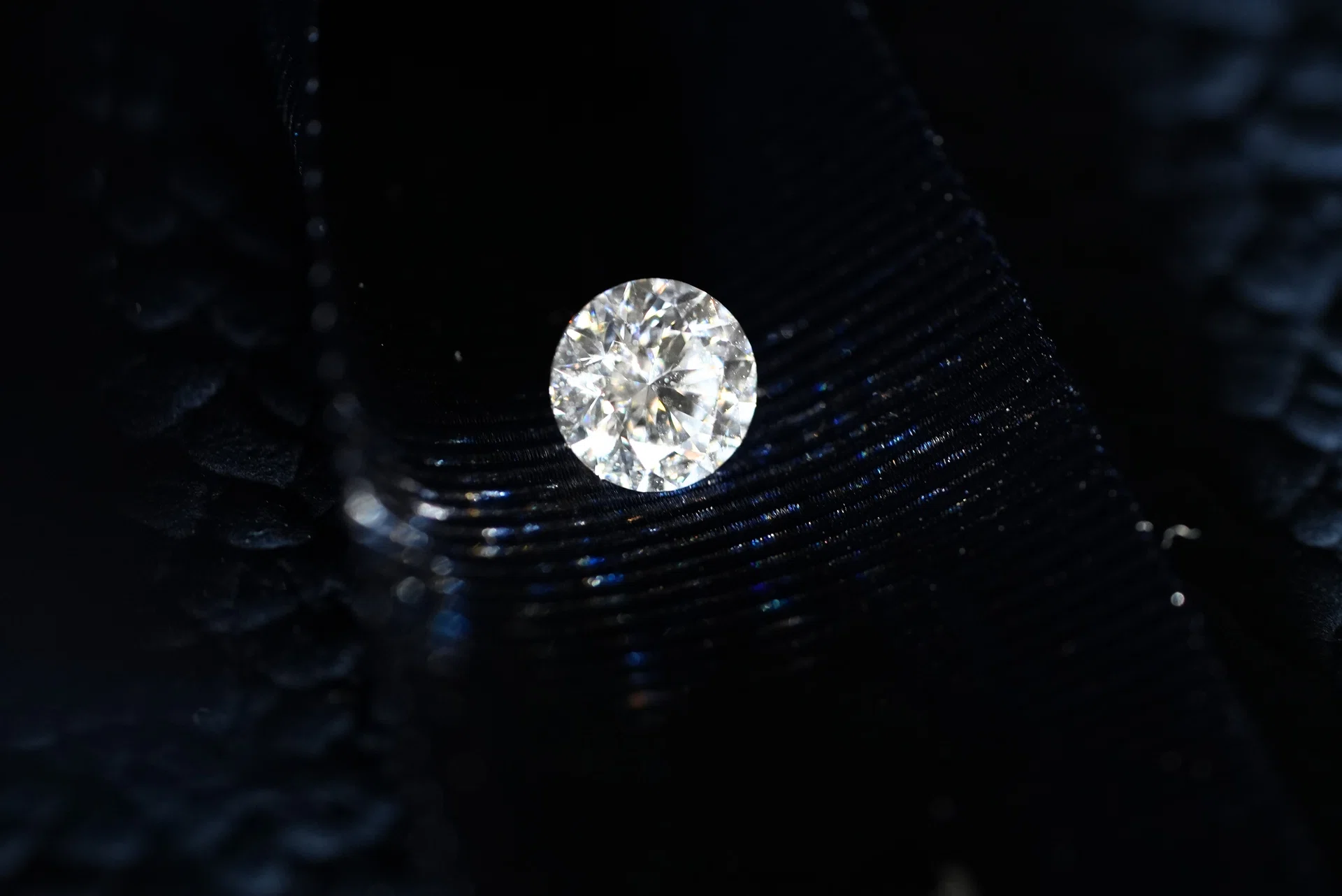
Lab-grown diamonds were once seen as the cheaper, less glamorous option, but in the present, the industry has taken a renewed shine to them. According to Business Insider, such gemstones account for around 20% of the market share in 2024, a significant jump from just 1% in 2015. This trend is also observed in Singapore, where those in the industry observe an increasing interest in lab-grown diamonds among younger customers, even for symbolic items like the engagement ring.
“When we first began, natural diamonds made up a significant portion of initial enquiries,” said Jovial Charis Victoria Koh, the founder and a jeweller at bespoke jewellery brand, Cherish & Co. Bespoke Diamonds. “Today, lab-grown diamonds account for the majority of our sales, particularly for engagement rings. Based on our internal data, lab-grown diamonds now represent approximately 90% of completed orders.”
While natural diamonds continue to hold appeal, among older clients, younger ones show a preference for lab-grown stones. One reason is price. After all, many couples are at a stage of life when they are balancing housing costs, weddings, and long-term financial planning. According to Forbes, lab-grown diamonds are typically priced 80 to 90% lower than mined equivalents.
This pricing structure gives couples room to purchase their dream pieces without compromising their budgets.
Another reason is changing values. Younger customers are approaching products with a greater consciousness about consumption and ethics. Many have grown up understanding that purchasing decisions carry ethical and environmental consequences, and seek out options that align with how they see themselves and the lives they want to build. As a result, awareness of past ethical misconduct in diamond sourcing has disincentivised some from seeking out natural stones.
For these clients, lab-grown diamonds offer a way to engage with tradition without inheriting its baggage or compromising on quality.
Beyond ethics, Koh also believes that modern customers prefer lab grown diamonds due to the personalisation they offer. She explained: “Lab-grown diamonds allow clients to prioritise cut, size, and design without compromise, while still choosing a diamond that is chemically and optically identical to a mined one.”
Notably, the preference for chemically created diamonds comes hand-in-hand with a rise in customers seeking to customise their jewellery, especially their engagement rings. More couples are seeking a unique ring that reflects their personal histories and tastes. Lab-grown diamonds enable this, offering flexibility in proportions, shapes, and settings that might otherwise be unattainable or unaffordable.
Still, lab-grown diamonds are not positioned as a replacement for natural stones. For instance, Koh emphasises that Cherish & Co. Bespoke Diamonds views the two as complementary. There are as many types of preferences as there are people, and there will always be those who resonate with the rarity and geological history of natural diamonds, just as there are those who are drawn to the accessibility and flexibility of lab-grown diamonds. The two types of diamonds merely account for different types of people.
Overall, lab-grown diamonds align closely with modern sensibilities. Valued for their perceived ethical advantages, flexibility in design, and relative affordability, they resonate with a generation navigating both shifting values and economic uncertainty. In choosing lab-grown stones, younger couples are living out a change in values, where products are no longer defined solely by its origin or status, but by intention, craftsmanship, and personal meaning.