%22%3E%0A%3Cpath%20d%3D%22M412%20101.2H393.7C393.1%20101.2%20392.3%20100.9%20391.8%20100.5C377.3%2087.6004%20362.9%2074.6004%20348.4%2061.6004C344.8%2058.4004%20341.3%2055.2004%20337.7%2052.0004C337.1%2051.5004%20336.2%2051.1004%20335.5%2051.0004C334.2%2050.8004%20333%2051.0004%20331.5%2051.0004V101.1H316.7V0.100391H331.4V44.3004C331.9%2044.3004%20332.2%2044.4004%20332.5%2044.4004C334.9%2044.4004%20337.2%2044.5004%20339.6%2044.4004C340.4%2044.4004%20341.3%2044.0004%20341.8%2043.5004C351.6%2034.4004%20361.4%2025.2004%20371.1%2016.0004C376.5%2010.9004%20381.9%205.90039%20387.3%200.800391C387.9%200.200391%20388.5%200.000390626%20389.3%200.000390626H400.9C384.2%2015.8004%20367.8%2031.3004%20351.2%2047.0004C371.5%2065.0004%20391.8%2082.9004%20412.1%20100.9C412.1%20101%20412.1%20101.1%20412%20101.2ZM180.9%20101.2C184.1%2094.9004%20187.2%2088.9004%20190.3%2082.8004C198.3%2067.3004%20206.2%2051.8004%20214.2%2036.2004C220.3%2024.4004%20226.4%2012.5004%20232.4%200.700391C232.7%200.100391%20233%20-0.0996094%20233.7%20-0.0996094H248.1C248.8%20-0.0996094%20249.2%200.100391%20249.6%200.800391C256%2013.3004%20262.4%2025.7004%20268.8%2038.2004C279.3%2058.6004%20289.8%2079.0004%20300.3%2099.5004C300.5%20100%20300.8%20100.4%20301.1%20101.1C300.5%20101.1%20300.1%20101.2%20299.7%20101.2H286.5C285.6%20101.2%20285.1%20100.9%20284.7%20100.2C280.1%2091.3004%20275.4%2082.4004%20270.8%2073.4004C270.1%2072.1004%20269.3%2071.6004%20267.8%2071.6004H209.9C208.7%2071.6004%20208.1%2072.0004%20207.5%2073.1004C202.9%2082.1004%20198.2%2091.0004%20193.6%20100C193.1%20101%20192.6%20101.3%20191.5%20101.3C188.4%20101.2%20185.3%20101.3%20182.3%20101.3C182%20101.2%20181.6%20101.2%20180.9%20101.2ZM239.1%2011.4004C230%2029.2004%20221.1%2046.7004%20212.1%2064.3004H266.4C257.2%2046.7004%20248.2%2029.2004%20239.1%2011.4004ZM0%200.000390626H43.4C51.2%200.000390626%2058.7%201.20039%2065.7%204.80039C75.9%2010.0004%2078.9%2018.0004%2078.6%2027.4004C78.3%2034.3004%2076%2040.5004%2071.2%2045.5004C67.3%2049.6004%2062.4%2052.3004%2057.1%2054.3004C50.6%2056.7004%2043.9%2058.0004%2037.1%2058.6004C30.1%2059.2004%2023.1%2059.4004%2016.2%2059.7004C15.8%2059.7004%2015.3%2059.8004%2014.8%2059.8004V101.1H0.1C0%2067.4004%200%2033.8004%200%200.000390626ZM14.8%207.10039V52.2004C23.7%2052.4004%2032.6%2052.3004%2041.2%2050.1004C44.4%2049.3004%2047.6%2048.2004%2050.6%2046.7004C58.4%2043.0004%2062.3%2036.7004%2062.7%2028.0004C63%2019.9004%2059.5%2014.1004%2052.4%2010.5004C47.6%208.00039%2042.5%207.10039%2037.2%207.10039H14.8ZM95.9%20101.1V0.100391H167.3V7.20039H110.7V44.7004H158.1V51.9004H110.8V93.9004H171.1V101C146.1%20101.1%20121%20101.1%2095.9%20101.1Z%22%20fill%3D%22black%22%2F%3E%0A%3Cpath%20d%3D%22M35.0004%2025.7996H42.5004V20.6996H44.8004V33.1996H42.6004V27.5996H34.9004V33.2996H32.7004V20.7996H35.0004V25.7996ZM54.4004%2025.8996V27.2996H48.9004V31.6996H55.9004C55.9004%2032.1996%2056.0004%2032.5996%2056.0004%2033.0996H46.5004V20.5996H55.5004V21.8996H49.0004V25.7996C50.7004%2025.8996%2052.5004%2025.8996%2054.4004%2025.8996ZM25.9004%2033.0996H23.5004V21.9996H17.9004V20.6996H31.6004V22.0996H27.1004C26.2004%2022.0996%2025.9004%2022.2996%2025.9004%2023.1996C26.0004%2026.0996%2025.9004%2028.9996%2025.9004%2031.7996V33.0996Z%22%20fill%3D%22black%22%2F%3E%0A%3C%2Fg%3E%0A%3Cdefs%3E%0A%3CclipPath%20id%3D%22clip0_388_462%22%3E%0A%3Crect%20width%3D%22411%22%20height%3D%22101.2%22%20fill%3D%22white%22%2F%3E%0A%3C%2FclipPath%3E%0A%3C%2Fdefs%3E%0A%3C%2Fsvg%3E%0A)
Share this article
Fallout explores the stories behind brands that rose quickly, captured imaginations, and then lost their footing. Each instalment traces the journey from early promise to public scrutiny, examining how ambition, changing tastes, and unforeseen challenges can upend even the brightest ventures. Through thoughtful reporting and careful reflection, the series looks at what happens after the spotlight fades—and what these stories reveal about the worlds that created them. Today, we train our sights on Youthforia.
In early August 2025, the end came quietly for makeup brand Youthforia. One subdued Instagram post from founder Fiona Co Chan, equal parts eulogy and apology, announced the closure: “We’re closing Youthforia… I made the hard decision to shut down.”
Left unsaid, but unmistakable to the brand’s once-zealous followers, was the sense of exhaustion, confusion, and bruised optimism that had trailed the company since its inception.
As the announcement rippled across the beauty world, the usual post-mortems began — think pieces on TikTok, snark-laden threads on Reddit, and a spike in search traffic for “what happened to Youthforia.” Some loyalists mourned. Most, though, simply moved on. The discount code for a 50% off fire sale was, for many, the final incentive to let go.
In the modern beauty industry, obsolescence happens fast. For a few dazzling years, Youthforia was at the centre of a youth-obsessed, social-media-driven, quasi-utopian vision of “clean” beauty: dewy faces, sleep-in makeup, and a parade of influencers blurring the line between customer and brand ambassador.
That Youthforia would end not with a bang but a whimper — its products quietly liquidated, its founder’s dream quietly extinguished — seemed, in retrospect, both tragic and entirely logical.
The Cinderella launch
In 2021, Fiona Co Chan launched the brand into a market already saturated with “disruptors,” but managed to stand out. The hook was simple: “BYO Blush,” a pH-reactive oil said to create a natural, custom flush by reacting with the wearer’s own skin.
The brand was built on a promise as audacious as it was improbable: you could “sleep in” the makeup without damaging your skin.
Early marketing blitzes leaned heavily into this unique selling proposition and the brand’s website and social platforms were thick with claims that blurred the boundaries between skincare and cosmetics.
By 2023, the Youthforia origin story had reached Shark Tank — the television altar of American entrepreneurship. Co Chan’s pitch was brisk, canny, and optimistic. Mark Cuban, the billionaire investor, was charmed enough to make his first-ever beauty brand investment.
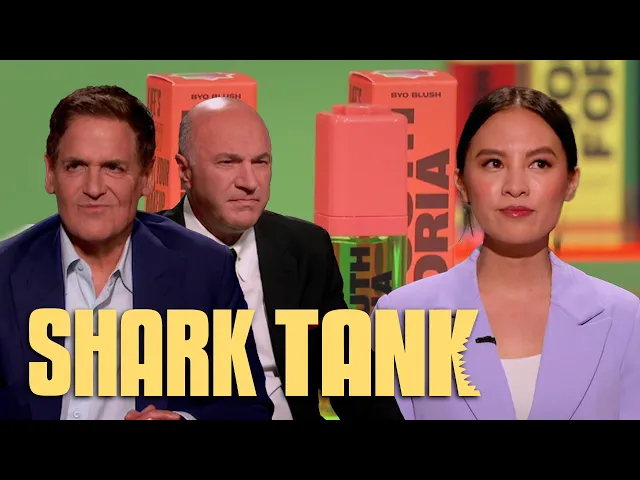
With True Beauty Ventures and Willow Growth Partners joining the roster, Youthforia found itself flush with capital, legitimacy, and ambition. The pH blush continued to sell out on Ulta, Amazon, and even in brick-and-mortar pop-ups, while TikTok creators fueled a secondary economy of tutorials, hot takes, and dramatic “first-impressions.”
On paper, Youthforia represented the new beauty vanguard — Gen Z, female-founded, and engineered for virality. In practice, the cracks were already beginning to show.
Shade gaps and early signals
When Youthforia launched its Date Night Skin Tint Serum Foundation in late 2023, anticipation was feverish. The reality: a range of fifteen shades, nearly all light to medium.
The absence of options for deeper complexions in a market where shade ranges were (or are, for that matter) limited only by sheer will and capital, was a betrayal of the inclusive rhetoric the brand had traded on since day one.
Influencers and consumers called it out immediately. TikTok creators like Golloria George and Christina Abiola dissected the shade range with clinical precision.
Their message was clear: this was a brand promising inclusivity while shipping exclusivity.
“How do you launch a foundation in 2023 with nothing for Black women?” George asked, her critique amplified across platforms. Youthforia’s response — a vague reference to a “proof of concept” launch — felt like a holdover from a less self-aware era of beauty, where apologising for erasure was standard PR.
The brand’s fanbase, especially among communities long under-served by mainstream beauty, noticed. The trust fracture was swift, and deep.
Shade 600
Attempting damage control, Youthforia expanded its foundation line to twenty-five shades by March 2024.
At the centre of the “fix” was shade 600, a product meant to answer critics and prove the brand’s commitment to inclusivity. Instead, it triggered one of the most infamous beauty scandals of the year.
Golloria George received shade 600 and, in a now-viral TikTok, compared it side-by-side with literal black paint. “It’s tar in a bottle,” she declared. “It’s giving minstrel show black.”
The video’s metrics soared, and the hashtag #Youthforia trended for all the wrong reasons. Chemist and beauty influencer Javon Ford broke down the formulation: shade 600 used only black iron oxide pigment, with no effort to create the nuanced undertones required for real-world wearability.
It was, as Ford put it, “literally straight up black” — impractical and deeply insensitive.
The reaction was immediate and unforgiving. Beauty journalists, chemists, and hundreds of thousands of viewers accused Youthforia of “performative inclusivity.” Industry press carried the story; mainstream media quickly followed.
On Reddit, users dissected not only the technical failures but the cultural ones:
“They doubled down … created basically a ‘fuck you’ shade … there’s no coming back from that,” one wrote.
Retailers flee and influence collapses
The true cost of the shade 600 debacle was measured not only in social media vitriol but in retail exile.
Within days, retailers began to sever ties. Credo Beauty, Revolve, and Thirteen Lune pulled Youthforia from their stores and online shelves. Ulta, the last major stronghold, kept products listed for a time, but insiders and customers reported that physical stores quietly stopped restocking and promoting the line.
Youthforia’s influencer and ambassador relationships, once its crown jewel, evaporated. Prominent content creators scrubbed mentions and sponsorships; some issued statements decrying the brand’s response as insufficient.
Internally, staff attrition increased and brand partnerships became fraught with reputational risk. Ambassadors and collaborators requested their names be removed from campaign lists.
For a company built on the speed and volatility of internet attention, the abrupt collapse of digital goodwill was catastrophic.
Leadership under fire
Throughout the firestorm, Fiona Co Chan’s leadership was, at best, ambivalent and, at worst, counterproductive.
Early statements tried to position Youthforia as misunderstood, with Co Chan posting (and later deleting) TikToks lamenting the impossibility of finding a model to match shade 600 — even referencing “street casting” attempts in overseas markets.
For critics, these explanations landed as performative and evasive, rather than vulnerable or solution-oriented.
The internet, as ever, is a harsh judge of perceived authenticity. Users on forums like Reddit and Twitter openly questioned Co Chan’s grasp of the product, the market, and the cultural stakes. Some referenced earlier marketing exaggerations — such as the now-infamous “sleep in your makeup” claim and questionable product demos using misleading sponges — as evidence of a broader pattern of overpromising and underdelivering.
The optics were bleak: a founder doubling down, a brand losing the very communities it sought to court, and a narrative shaped more by backlash than by aspiration.
The broader market turns
The shade scandal, however, did not occur in isolation. By late 2024, the broader beauty industry was evolving. The pandemic-fuelled boom in DTC beauty and influencer marketing had slowed.
Consumers, especially Gen Z and younger millennials, began gravitating towards smaller, indie brands — labels that prioritised authentic representation, slow product development, and founder transparency. Hype cycles accelerated on TikTok and Instagram, making once-viral products feel stale within months.
In this environment, Youthforia’s signature blush — a product once hailed as innovative — was now dismissed as a passing fad. More importantly, the brand’s trust deficit proved insurmountable.
For every customer disillusioned by the shade controversy, there were a dozen new competitors ready to take their place with promises of better R&D and genuine community involvement. Investors and retail partners, ever risk-averse, pulled back.
For all the talk of “disruption,” Youthforia was simply outpaced by a market it had helped define, but no longer understood.
Attempts at rebranding and regaining trust were hamstrung by the ongoing backlash and a mounting sense that the brand had already overstayed its welcome.
On August 4, 2025, Fiona Co Chan’s closure message did not dwell on strategy or pivot plans. Instead, it acknowledged emotional exhaustion: “It’s been a dream to create such a beautiful brand, but unfortunately, I’ve made the hard decision to shut down Youthforia.”
The remaining inventory was discounted by half — an echo of the company’s earliest flash sales, but now tinged with resignation.
Retailers finished their purge. The brand’s own website crashed intermittently under the final wave of bargain hunters.
Within days, Youthforia was, for all practical purposes, gone.
Legacy and Lessons
What does Youthforia’s collapse actually mean for beauty? Not much — if you believe the cynical take that every failed disruptor is simply grist for the next round of hype. But to ignore the lessons would be to miss a moment of genuine reckoning.
The facts are plain: Youthforia’s greatest error was not the launch of a “bad” product, but the repeated, avoidable disconnect between rhetoric and reality.
In the rush to appear inclusive, the brand fell into the classic trap of tokenism — making diversity an afterthought, rather than an organising principle.
Shade 600 was not just a technical failure; it was an emblem of how quickly brands can lose their way when they treat lived experience as a checkbox.
Meanwhile, brands like Rare Beauty and Tower28 — both cited in industry coverage as models of true inclusivity — demonstrate that it is not only possible, but increasingly necessary, to engage creators and communities from the start, building products that do not need to be “fixed” after launch.
Youthforia’s story will circulate as a warning, especially among founders who believe social media momentum is a substitute for substance. The real lesson is more prosaic: if your promise is inclusion, make it real — before the pitch deck, before the launch, and before the first crisis.
When you treat inclusion as an aesthetic, your brand becomes disposable the moment your audience recognises the performance.
In this hyper digital age, beauty brands rise and fall at algorithmic speed. Youthforia’s end was neither singular nor surprising — it followed a familiar arc from launch myth to scandal to liquidation.
Still, its rapid demise leaves a scar on the industry’s collective memory: a reminder that hype, however seductive, is never enough. There will be new disruptors, new scandals, and new apologies. But unless the next generation of brands learns to build with, not for, their audience, the cycle will continue: glow, crash, repeat.