%22%3E%0A%3Cpath%20d%3D%22M412%20101.2H393.7C393.1%20101.2%20392.3%20100.9%20391.8%20100.5C377.3%2087.6004%20362.9%2074.6004%20348.4%2061.6004C344.8%2058.4004%20341.3%2055.2004%20337.7%2052.0004C337.1%2051.5004%20336.2%2051.1004%20335.5%2051.0004C334.2%2050.8004%20333%2051.0004%20331.5%2051.0004V101.1H316.7V0.100391H331.4V44.3004C331.9%2044.3004%20332.2%2044.4004%20332.5%2044.4004C334.9%2044.4004%20337.2%2044.5004%20339.6%2044.4004C340.4%2044.4004%20341.3%2044.0004%20341.8%2043.5004C351.6%2034.4004%20361.4%2025.2004%20371.1%2016.0004C376.5%2010.9004%20381.9%205.90039%20387.3%200.800391C387.9%200.200391%20388.5%200.000390626%20389.3%200.000390626H400.9C384.2%2015.8004%20367.8%2031.3004%20351.2%2047.0004C371.5%2065.0004%20391.8%2082.9004%20412.1%20100.9C412.1%20101%20412.1%20101.1%20412%20101.2ZM180.9%20101.2C184.1%2094.9004%20187.2%2088.9004%20190.3%2082.8004C198.3%2067.3004%20206.2%2051.8004%20214.2%2036.2004C220.3%2024.4004%20226.4%2012.5004%20232.4%200.700391C232.7%200.100391%20233%20-0.0996094%20233.7%20-0.0996094H248.1C248.8%20-0.0996094%20249.2%200.100391%20249.6%200.800391C256%2013.3004%20262.4%2025.7004%20268.8%2038.2004C279.3%2058.6004%20289.8%2079.0004%20300.3%2099.5004C300.5%20100%20300.8%20100.4%20301.1%20101.1C300.5%20101.1%20300.1%20101.2%20299.7%20101.2H286.5C285.6%20101.2%20285.1%20100.9%20284.7%20100.2C280.1%2091.3004%20275.4%2082.4004%20270.8%2073.4004C270.1%2072.1004%20269.3%2071.6004%20267.8%2071.6004H209.9C208.7%2071.6004%20208.1%2072.0004%20207.5%2073.1004C202.9%2082.1004%20198.2%2091.0004%20193.6%20100C193.1%20101%20192.6%20101.3%20191.5%20101.3C188.4%20101.2%20185.3%20101.3%20182.3%20101.3C182%20101.2%20181.6%20101.2%20180.9%20101.2ZM239.1%2011.4004C230%2029.2004%20221.1%2046.7004%20212.1%2064.3004H266.4C257.2%2046.7004%20248.2%2029.2004%20239.1%2011.4004ZM0%200.000390626H43.4C51.2%200.000390626%2058.7%201.20039%2065.7%204.80039C75.9%2010.0004%2078.9%2018.0004%2078.6%2027.4004C78.3%2034.3004%2076%2040.5004%2071.2%2045.5004C67.3%2049.6004%2062.4%2052.3004%2057.1%2054.3004C50.6%2056.7004%2043.9%2058.0004%2037.1%2058.6004C30.1%2059.2004%2023.1%2059.4004%2016.2%2059.7004C15.8%2059.7004%2015.3%2059.8004%2014.8%2059.8004V101.1H0.1C0%2067.4004%200%2033.8004%200%200.000390626ZM14.8%207.10039V52.2004C23.7%2052.4004%2032.6%2052.3004%2041.2%2050.1004C44.4%2049.3004%2047.6%2048.2004%2050.6%2046.7004C58.4%2043.0004%2062.3%2036.7004%2062.7%2028.0004C63%2019.9004%2059.5%2014.1004%2052.4%2010.5004C47.6%208.00039%2042.5%207.10039%2037.2%207.10039H14.8ZM95.9%20101.1V0.100391H167.3V7.20039H110.7V44.7004H158.1V51.9004H110.8V93.9004H171.1V101C146.1%20101.1%20121%20101.1%2095.9%20101.1Z%22%20fill%3D%22black%22%2F%3E%0A%3Cpath%20d%3D%22M35.0004%2025.7996H42.5004V20.6996H44.8004V33.1996H42.6004V27.5996H34.9004V33.2996H32.7004V20.7996H35.0004V25.7996ZM54.4004%2025.8996V27.2996H48.9004V31.6996H55.9004C55.9004%2032.1996%2056.0004%2032.5996%2056.0004%2033.0996H46.5004V20.5996H55.5004V21.8996H49.0004V25.7996C50.7004%2025.8996%2052.5004%2025.8996%2054.4004%2025.8996ZM25.9004%2033.0996H23.5004V21.9996H17.9004V20.6996H31.6004V22.0996H27.1004C26.2004%2022.0996%2025.9004%2022.2996%2025.9004%2023.1996C26.0004%2026.0996%2025.9004%2028.9996%2025.9004%2031.7996V33.0996Z%22%20fill%3D%22black%22%2F%3E%0A%3C%2Fg%3E%0A%3Cdefs%3E%0A%3CclipPath%20id%3D%22clip0_388_462%22%3E%0A%3Crect%20width%3D%22411%22%20height%3D%22101.2%22%20fill%3D%22white%22%2F%3E%0A%3C%2FclipPath%3E%0A%3C%2Fdefs%3E%0A%3C%2Fsvg%3E%0A)
At Ambong-Ambong Langkawi, luxury means leaving nature unfinished
Forget manicured lawns and climate-controlled simulations. At this Langkawi retreat, luxury thrives on friction, unscripted primate encounters, and an unapologetically imperfect landscape.
By Zat Astha /
Share this article
The merambong is an unshowy plant.
It grows where land begins to lose its certainty, along coastlines exposed to salt, wind and shifting sand. Its broad leaves hold fast against conditions that would make more delicate species retreat, while its roots help bind the ground and prevent it from slipping into the sea. Across the Indian and Pacific oceans, Scaevola taccada has also accumulated associations with healing, though its most persuasive quality is less mystical than practical: it survives by adapting to instability.
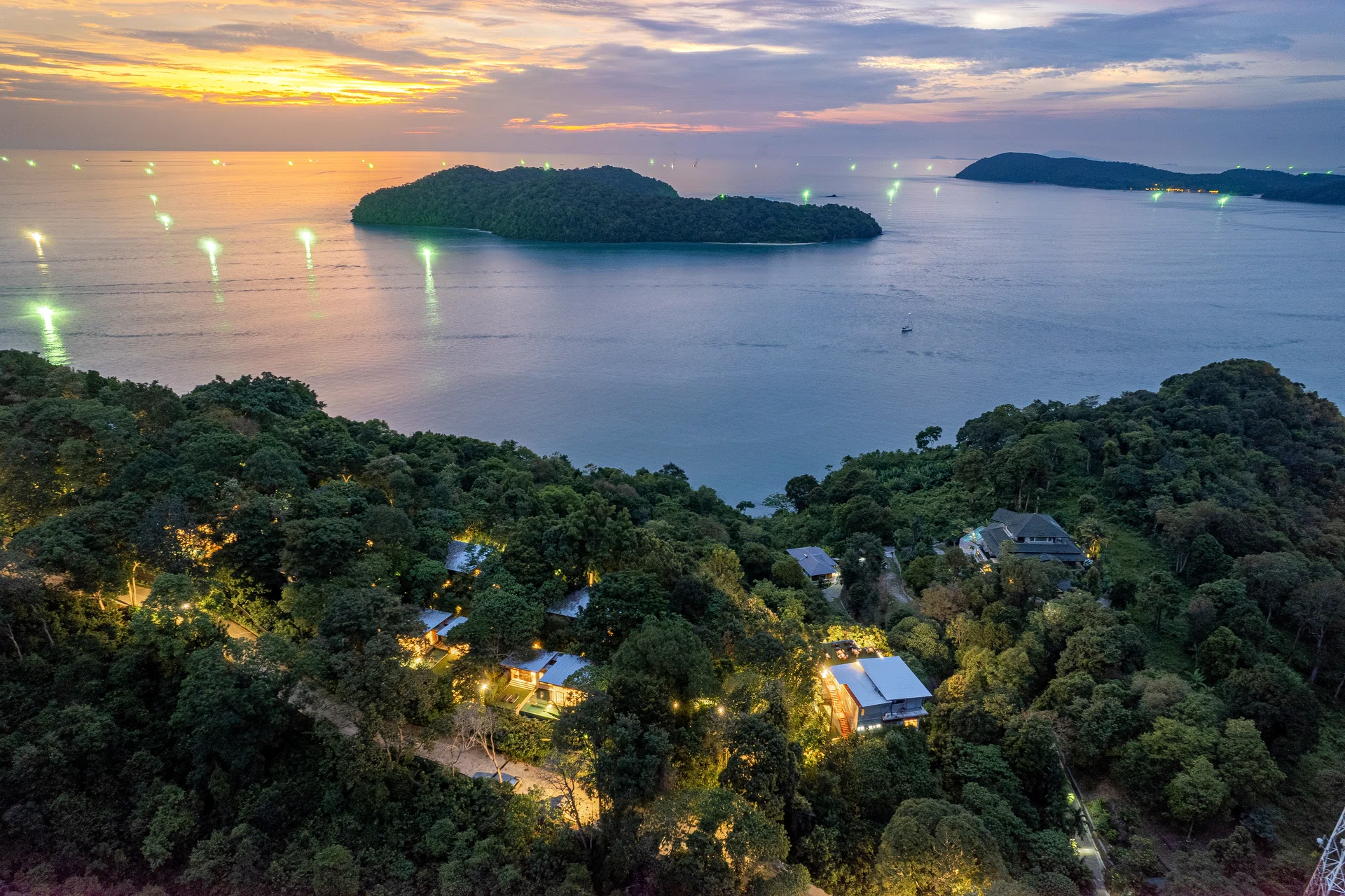
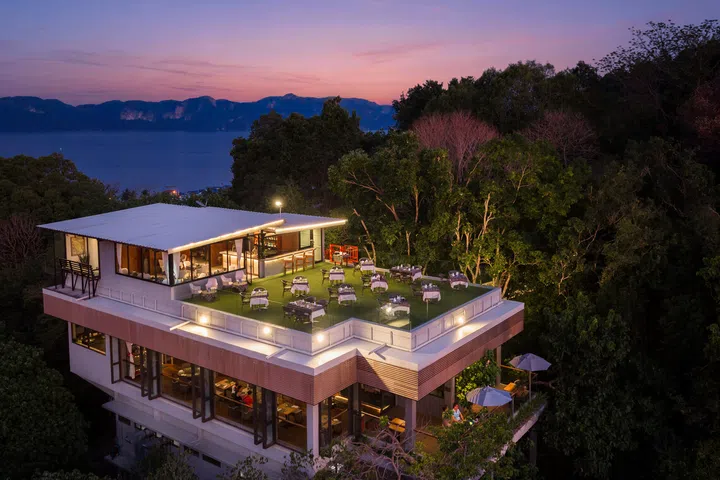
Ambong-Ambong Langkawi takes its name from the steely merambong, and the resemblance feels unusually apt. The 20-suite resort sits above Pantai Tengah, folded into a forested hillside rather than placed triumphantly upon it. Its nine pool villas face the Andaman Sea and the surrounding canopy, but the property’s strongest appeal lies in the way it allows the landscape to remain slightly in charge. The rainforest does not behave like scenery here. It moves, rustles, intrudes and occasionally stares back.
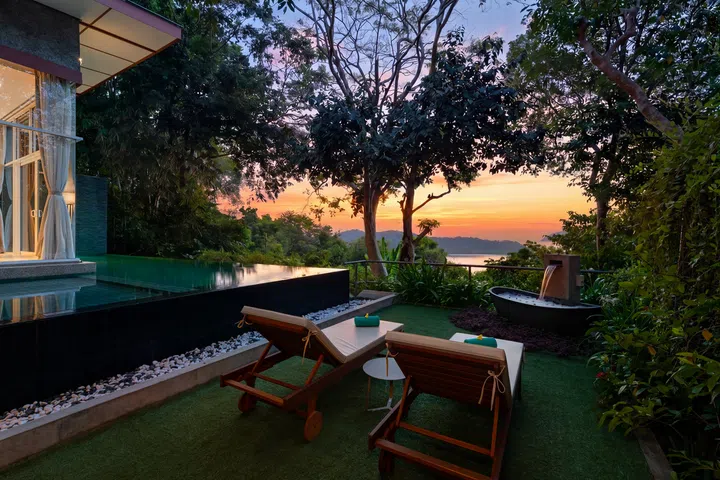
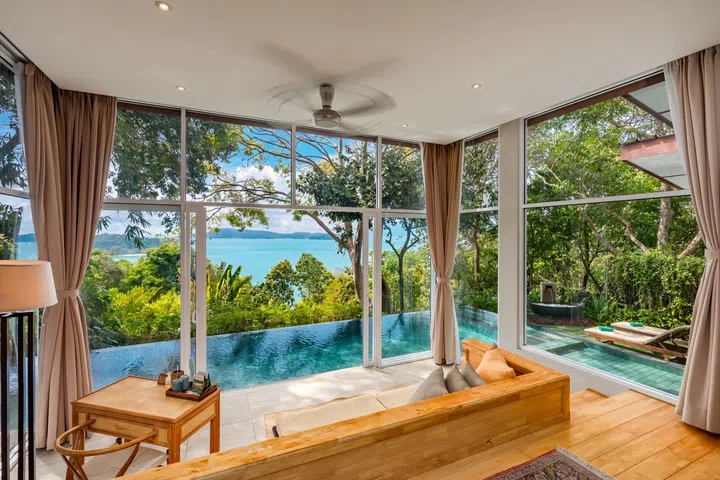
I arrive at 3 p.m. on a Monday and enter a villa divided into two distinct realms. The air-conditioned bedroom forms the interior core, while an open-air living area wraps around it almost like a throne. Beyond that is the pool, and beyond the pool, the forest.
Within minutes, while dipping my feet into the water, I saw a monkey moving from branch to branch. The leaves glittered in the afternoon sun, disturbed by a soft breeze. A nearby bush then began to shake with mysterious urgency. For a moment, it feels supernatural until I remember that I am in a forest. It was perhaps monkeys grooming, searching for food or engaged in some private simian business that required considerably more commotion than the average hotel guest.
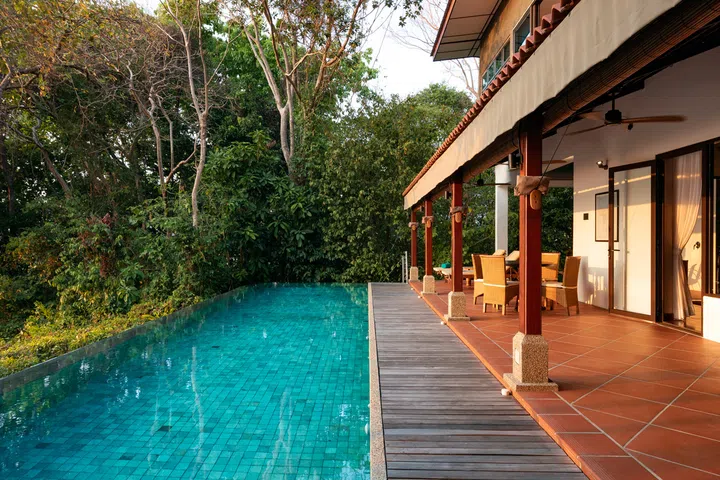
Here, the villas are polished, spacious, and deeply private, but they do not create the illusion that nature has been disciplined for human comfort. The outdoor spaces remain warm. The trees shed leaves. Monkeys appear without appointments, perched at the edge of the pool sometimes sipping water as an afternoon reprieve. Insects occasionally cross boundaries established by architects but ignored by everything else alive on the hill. The air carries moisture. The forest makes noise.
Still, none of this diminishes the indulgence. It gives the indulgence texture.
Too many luxury properties now pursue perfection so aggressively that they remove the qualities that make a place worth travelling to experience. The temperature never fluctuates. The surfaces never age. The landscape arrives trimmed, illuminated, and made obedient. Guests receive an immaculate simulation of elsewhere, complete with local timber, regional motifs, and a minibar.
Ambong-Ambong persuades because it remains slightly, romantically imperfect. Its architecture negotiates with the slope and vegetation rather than pretending they do not exist. Indoor comfort sits beside outdoor exposure. Privacy does not require complete separation from the living world.
A resort built on restraint
The family behind Ambong-Ambong first began visiting Langkawi in the early 1970s. Joan Shori and Ahmed Mazlan Othman, the parents of brothers Amran Ahmed and Adam Ahmed, returned often enough for the island to become part of the family’s private geography. By the 1980s, their stays included time at a simple house around Teluk Baru, reportedly without electricity and supplied by well water.
Years later, the family found itself considering what to do with several parcels of land that had remained largely untouched. Selling would have offered the most straightforward return. It would also have meant surrendering control over what happened next. A new owner could clear the trees, flatten the hillside, and pursue the denser development model that has transformed many once-quiet stretches of Southeast Asia.
The family instead decided to give the land a commercial purpose that might also protect it.
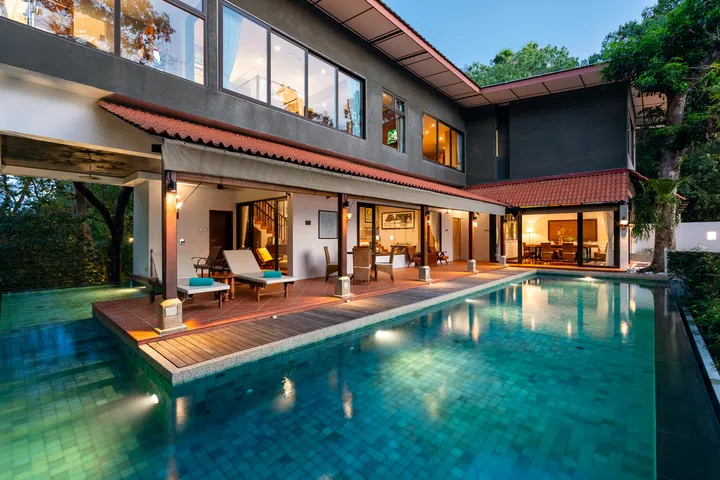
Work on what became Ambong Rainforest Retreat began around 2010. The first property opened in stages from approximately 2011, beginning with a modest collection of studios and cottages built into the hillside. The architecture followed the terrain rather than forcing the site into a convenient geometry. Buildings sat around existing vegetation; mature trees influenced where structures could stand; the slope remained a condition to negotiate rather than an inconvenience to remove.
That first retreat established the family’s central proposition: hospitality could finance preservation, provided the hospitality remained small enough to coexist with what it claimed to protect.
The idea contains an unavoidable contradiction. A resort still consumes energy, water and materials. Guests arrive by aircraft and road. Private pools require maintenance. Air-conditioning makes the tropical climate tolerable by insulating visitors from it. Luxury tourism cannot absolve itself merely by surrounding its villas with trees.
Yet degrees matter. So do decisions made before the first room opens.
Where business meets soil
In 2016, Amran left a career in banking and returned to help lead the business’s next phase. Ambong Pool Villas followed, soft-opening towards the end of 2017 with eight villas before expanding to its present collection of nine. The property increased the scale and ambition of the family enterprise while retaining an unusually low density for a resort occupying such valuable terrain.
The villas brought greater privacy, larger spaces and private pools, but they also intensified the question embedded in Ambong-Ambong’s founding: how much development can a landscape accommodate before protection becomes another vocabulary for consumption?
Ambong-Ambong has continued expanding beyond accommodation. Rimba serves contemporary Malaysian and international food, while Pegaga approaches plant-based dining through local flavours and ingredients. Amaala Spa draws upon regional healing traditions, and the resort programmes yoga and meditation alongside the more conventional machinery of luxury hospitality.
The most revealing extension of the enterprise, however, lies about 45 minutes away near the foothills of Gunung Raya.
Buluh & Tebing is Ambong-Ambong’s 12-acre farm, its name translating to “bamboo and riverbank”. The phrase evokes an old relationship of mutual dependence: bamboo roots help secure the riverbank, while the bank gives the bamboo somewhere to grow. Like the merambong, it offers the company an ecological metaphor so exact that one could reasonably suspect the marketing department of having engineered the natural world backwards.
Except that the farm is difficult to mistake for a decorative sustainability gesture.
I spent about an hour walking through Buluh & Tebing, carefully avoiding deposits of organic cow dung along the way. Here, the insecticide-free farm grows vegetables, herbs, flowers and fruit, while sections of the property accommodate orchids, mushrooms, freshwater fish and farm animals. Its herb garden contains the ingredients that structure much of Malaysian cooking: pandan, lemongrass, ginger, curry leaves, black pepper and betel leaf.
There are systems here that deserve closer scrutiny rather than unquestioning praise. Fish ponds provide nutrient-rich water for edible plants, while the farm has set out ambitions for a living bamboo collection that could eventually encompass 100 species. Spending time here made the resort’s philosophy more tangible. After the tour, the cooking class converted what had been growing in the ground into lunch. The experience linked cultivation, preparation, and consumption within one afternoon, without disguising the labour and occasional dung pile between them.
Nature on negotiated terms
The Ambong-Ambong story has already moved through several forms. What began with a family’s attachment to Langkawi became a small rainforest retreat, then a collection of private pool villas, restaurants, a spa, a farm and a cooking school. Amran has since become the enterprise’s most visible steward, extending his parents’ original instinct into a more organised hospitality business.
Growth does not automatically betray the founding idea. Nor does family ownership guarantee virtue. The more interesting question concerns whether the business can retain the friction that made it persuasive in the first place: the steep terrain, the uneven encounters, the proximity of animals, and the sense that the resort has entered the forest on negotiated terms. For the nature enthusiast, all of this leans romantic but for the unfamiliar, it can dull into an inconvenience.
Ambong-Ambong works best when it leaves that tension unresolved. It allows the rainforest to remain visible as something larger than a view. It lets luxury feel porous. Its refinement comes with leaves in the pool (housekeeping will quickly clear the pool with just one WhatsApp text), heat at the threshold, cow dung on the farm path, and the possibility that a monkey may interrupt whatever private fantasy you had planned for the afternoon.
The merambong survives because it does not demand ideal conditions. It takes the coast as it finds it, roots itself in uncertainty and holds the ground together. The best hotels often do something similar. They do not erase a place’s inconveniences until only comfort remains. Rather, they give those imperfections form, shelter, and perhaps a private pool, then let nature finish the design.