%22%3E%0A%3Cpath%20d%3D%22M412%20101.2H393.7C393.1%20101.2%20392.3%20100.9%20391.8%20100.5C377.3%2087.6004%20362.9%2074.6004%20348.4%2061.6004C344.8%2058.4004%20341.3%2055.2004%20337.7%2052.0004C337.1%2051.5004%20336.2%2051.1004%20335.5%2051.0004C334.2%2050.8004%20333%2051.0004%20331.5%2051.0004V101.1H316.7V0.100391H331.4V44.3004C331.9%2044.3004%20332.2%2044.4004%20332.5%2044.4004C334.9%2044.4004%20337.2%2044.5004%20339.6%2044.4004C340.4%2044.4004%20341.3%2044.0004%20341.8%2043.5004C351.6%2034.4004%20361.4%2025.2004%20371.1%2016.0004C376.5%2010.9004%20381.9%205.90039%20387.3%200.800391C387.9%200.200391%20388.5%200.000390626%20389.3%200.000390626H400.9C384.2%2015.8004%20367.8%2031.3004%20351.2%2047.0004C371.5%2065.0004%20391.8%2082.9004%20412.1%20100.9C412.1%20101%20412.1%20101.1%20412%20101.2ZM180.9%20101.2C184.1%2094.9004%20187.2%2088.9004%20190.3%2082.8004C198.3%2067.3004%20206.2%2051.8004%20214.2%2036.2004C220.3%2024.4004%20226.4%2012.5004%20232.4%200.700391C232.7%200.100391%20233%20-0.0996094%20233.7%20-0.0996094H248.1C248.8%20-0.0996094%20249.2%200.100391%20249.6%200.800391C256%2013.3004%20262.4%2025.7004%20268.8%2038.2004C279.3%2058.6004%20289.8%2079.0004%20300.3%2099.5004C300.5%20100%20300.8%20100.4%20301.1%20101.1C300.5%20101.1%20300.1%20101.2%20299.7%20101.2H286.5C285.6%20101.2%20285.1%20100.9%20284.7%20100.2C280.1%2091.3004%20275.4%2082.4004%20270.8%2073.4004C270.1%2072.1004%20269.3%2071.6004%20267.8%2071.6004H209.9C208.7%2071.6004%20208.1%2072.0004%20207.5%2073.1004C202.9%2082.1004%20198.2%2091.0004%20193.6%20100C193.1%20101%20192.6%20101.3%20191.5%20101.3C188.4%20101.2%20185.3%20101.3%20182.3%20101.3C182%20101.2%20181.6%20101.2%20180.9%20101.2ZM239.1%2011.4004C230%2029.2004%20221.1%2046.7004%20212.1%2064.3004H266.4C257.2%2046.7004%20248.2%2029.2004%20239.1%2011.4004ZM0%200.000390626H43.4C51.2%200.000390626%2058.7%201.20039%2065.7%204.80039C75.9%2010.0004%2078.9%2018.0004%2078.6%2027.4004C78.3%2034.3004%2076%2040.5004%2071.2%2045.5004C67.3%2049.6004%2062.4%2052.3004%2057.1%2054.3004C50.6%2056.7004%2043.9%2058.0004%2037.1%2058.6004C30.1%2059.2004%2023.1%2059.4004%2016.2%2059.7004C15.8%2059.7004%2015.3%2059.8004%2014.8%2059.8004V101.1H0.1C0%2067.4004%200%2033.8004%200%200.000390626ZM14.8%207.10039V52.2004C23.7%2052.4004%2032.6%2052.3004%2041.2%2050.1004C44.4%2049.3004%2047.6%2048.2004%2050.6%2046.7004C58.4%2043.0004%2062.3%2036.7004%2062.7%2028.0004C63%2019.9004%2059.5%2014.1004%2052.4%2010.5004C47.6%208.00039%2042.5%207.10039%2037.2%207.10039H14.8ZM95.9%20101.1V0.100391H167.3V7.20039H110.7V44.7004H158.1V51.9004H110.8V93.9004H171.1V101C146.1%20101.1%20121%20101.1%2095.9%20101.1Z%22%20fill%3D%22black%22%2F%3E%0A%3Cpath%20d%3D%22M35.0004%2025.7996H42.5004V20.6996H44.8004V33.1996H42.6004V27.5996H34.9004V33.2996H32.7004V20.7996H35.0004V25.7996ZM54.4004%2025.8996V27.2996H48.9004V31.6996H55.9004C55.9004%2032.1996%2056.0004%2032.5996%2056.0004%2033.0996H46.5004V20.5996H55.5004V21.8996H49.0004V25.7996C50.7004%2025.8996%2052.5004%2025.8996%2054.4004%2025.8996ZM25.9004%2033.0996H23.5004V21.9996H17.9004V20.6996H31.6004V22.0996H27.1004C26.2004%2022.0996%2025.9004%2022.2996%2025.9004%2023.1996C26.0004%2026.0996%2025.9004%2028.9996%2025.9004%2031.7996V33.0996Z%22%20fill%3D%22black%22%2F%3E%0A%3C%2Fg%3E%0A%3Cdefs%3E%0A%3CclipPath%20id%3D%22clip0_388_462%22%3E%0A%3Crect%20width%3D%22411%22%20height%3D%22101.2%22%20fill%3D%22white%22%2F%3E%0A%3C%2FclipPath%3E%0A%3C%2Fdefs%3E%0A%3C%2Fsvg%3E%0A)
Meet professional hotel historians, Andreas and Carola Augustin
Uncovering the true weight behind the world’s most historic hotels, the husband-and-wife team spend years digging through archives and interviewing. Their latest project — the Raffles Group’s first international expansion into Cambodia in 1997.
By Lu Yawen /
Share this article
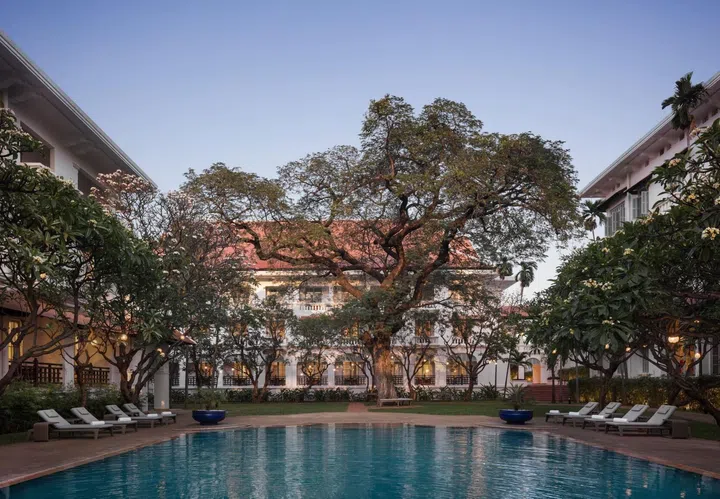
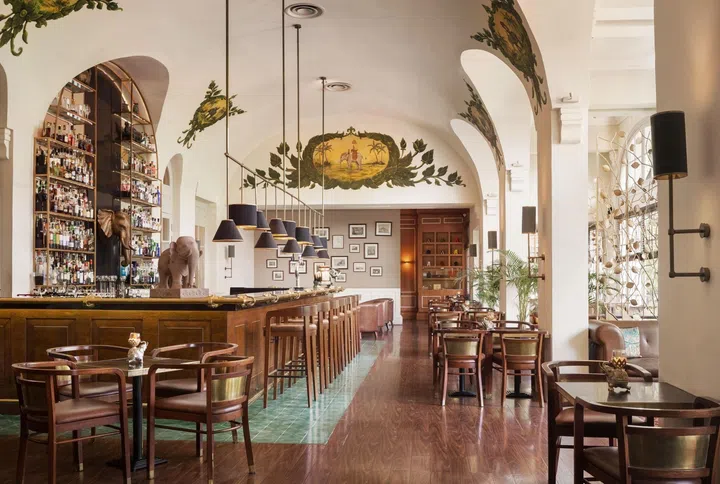
In the searing Cambodian afternoon sun, the deck chairs shaded by frangipani trees and two ancient rain trees at each end of the pool seem the best option. Surrounded by plaster-white columns and balconies with red tiled roofs, the courtyard is silent save for Phnom Penh’s city traffic reduced to a murmur in the distance.
For a moment, the Raffles Hotel Le Royal transports me back to Raffles Hotel Singapore, its predecessor.
As the first expansion of the Raffles Group legacy in 1997 alongside Raffles Grand Hotel d’Angkor in Siem Reap, these two properties have retained the old charm of the original Singapore flagship, which is clearly modelled on. But on their own, the historical hotels opened in the late 1920s to early 1930s have their own stories to tell.
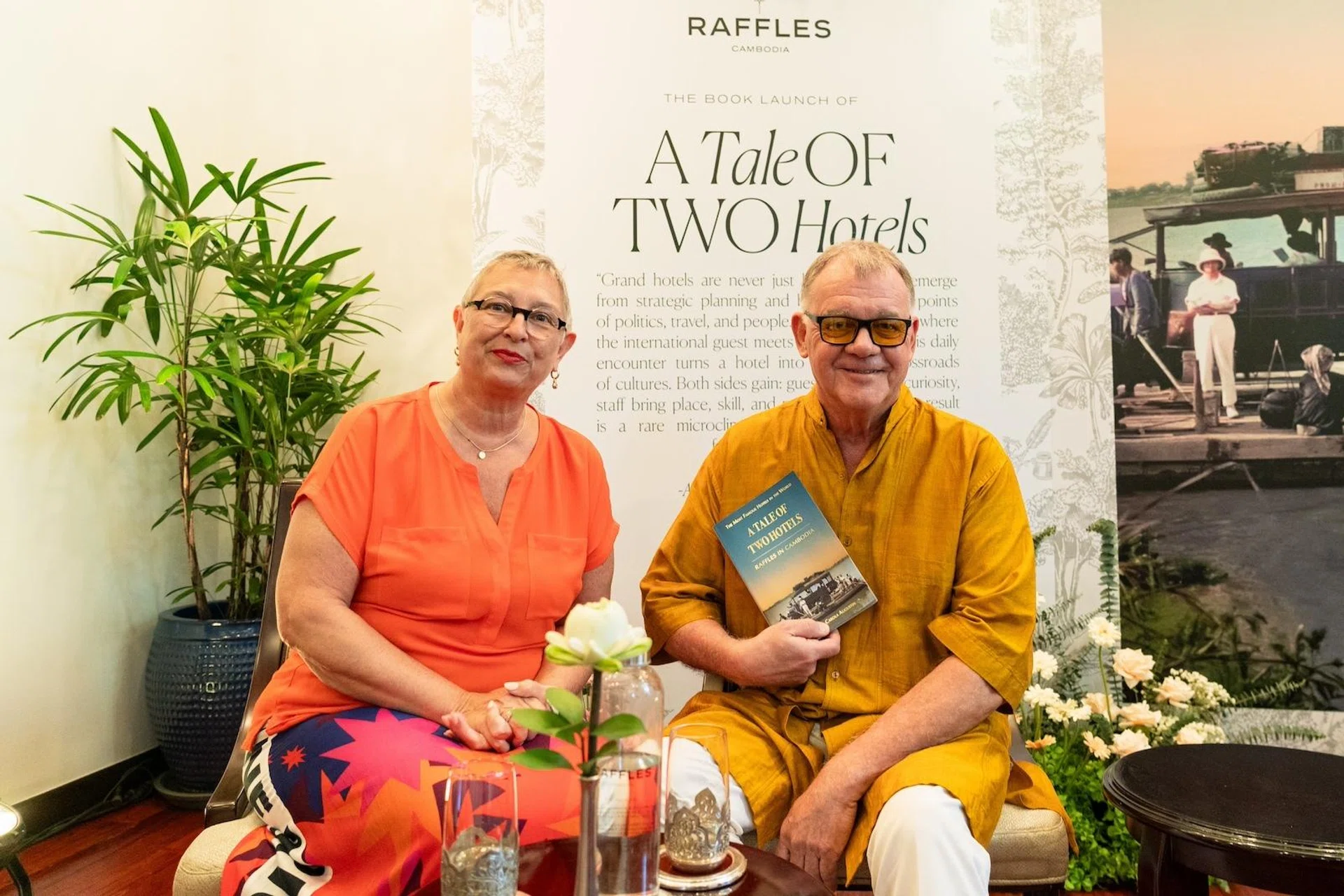
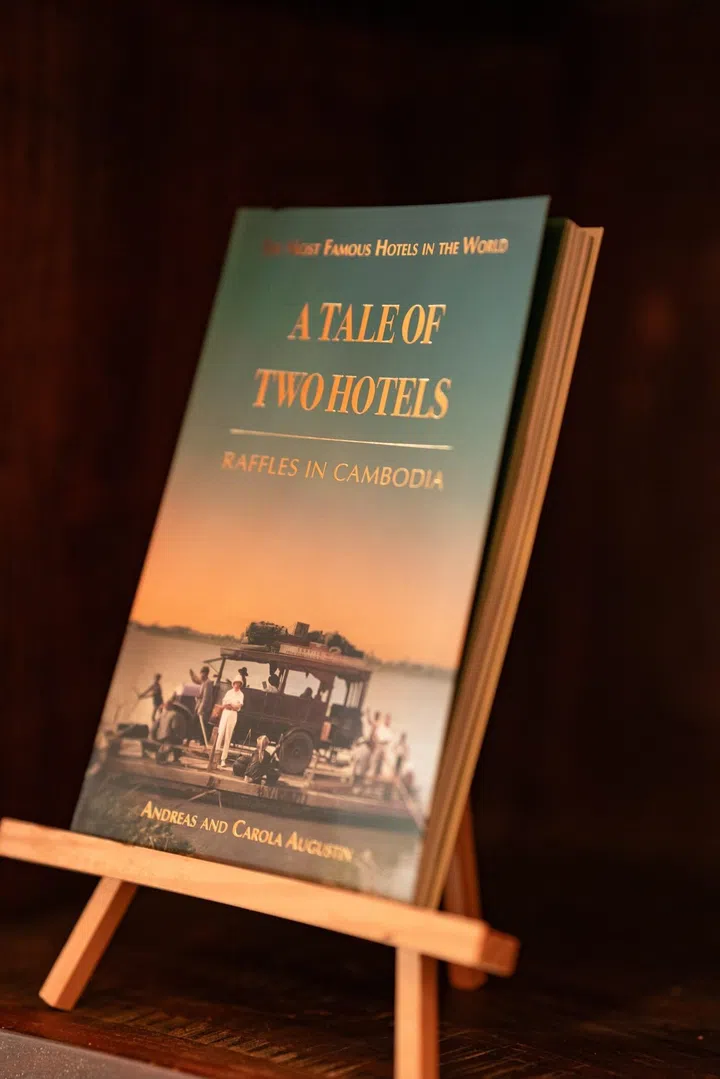
This is where 69-year-old Andreas and 64-year-old Carola E. Augustin come in. The Austrian couple, she the historian with a Master’s in Contemporary History and he the writer, founded the not-for-profit organisation The Most Famous Hotels in the World, a global library of the history of internationally notable properties. Their latest book, A Tale of Two Hotels, chronicles the two Raffles outposts in Cambodia.
A tale of two hotels
Most projects take between six months and more than two years, but uncovering the history of the two Cambodian hotels took much longer. With most of the written records destroyed during the brutal four-year Khmer Rouge regime, the couple began their research in 2019, paused due to Covid-19 and only officially launched the book this year.
Staying up to three months in Phnom Penh and a month in Siem Reap, the pair went through the National Archives of Cambodia in the city and the EFEO Siem Reap Library for information on the roles the buildings played in pivotal moments. Part of the research also required visiting the National Archives of France in Paris for additional colonial-era information.
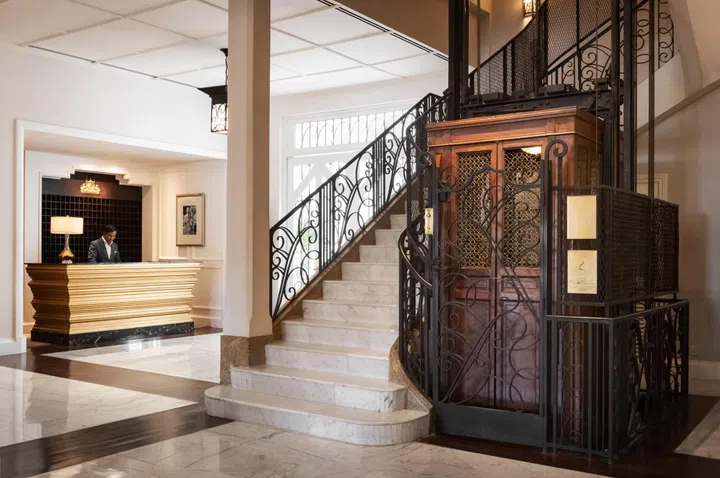
Both hotels were the first luxury accommodations in their own cities, as part of the IndoChina Tourism Office’s plan to attract more European tourists. In Phnom Penh, Le Royal’s official inauguration took place on November 20, 1929, with King Sisowath Monivong in attendance.
Celebrities such as Charlie Chaplin and Jackie Kennedy stayed. The three-storey Grand Hotel opened in 1932 with 65 rooms near Angkor Wat, back then the tallest building in Siem Reap.
Then, as civil unrest and the Vietnam War took hold after 1970, the hotels turned into a base for international journalists, a Red Cross refugee camp, and a Khmer Rouge storehouse. When the Raffles Group decided to add the hotels to its portfolio in 1993, Le Royal was closed, and the Grand Hotel was in worse condition.
How it all began
Tedious research doesn’t faze the duo, after all, they’ve had 40 years of experience digging deep into archives at the request of hospitality groups such as Accor (Sofitel Legends Collection), Belmond, Hilton Hotels, and Mandarin Oriental.
On their own, they’ve thus far published 80 books chronicling the histories of The Savoy in London, The Imperial in Delhi, Hotel Ritz in Madrid, Grand Hotel Royal Budapest (the inspiration for Wes Anderson’s film), The Strand in Yangon (which took 20 years of research), The Peninsula Hong Kong, and the like.
The Augustins, however, have a particular fondness for the Raffles brand.
Their very first book, published in 1986, was for Raffles Singapore, where Andreas stayed for three years and wrote. (Back then, hotel manager Roberto Pregarz invited journalists and writers to stay as a form of word-of-mouth advertising.)
It was printed in German, Japanese, and then English. While he was researching his other book, The Raffles Treasury, he also found the original drawings of the hotel, which led to the building’s preservation.
It was where he first worked with Carola, who eventually became his wife and a founding member of the organisation, and where their decades-long interest in hotel history began. They were given the 2024 Historian of the Year Award by Historic Hotels Worldwide (an official program of the National Trust for Historic Preservation).
For now, The Most Famous Hotels in the World counts 453 hotels as members, each meeting the 3 x 50 rule — the property must have at least 50 rooms, be at least 50 years old, and be operational for 50 per cent of the year. Occasionally, Andreas is a guest professor at EHL Lausanne in Switzerland and the Hotel Management College Modul in Vienna, where he lectures on guerrilla publishing, out-of-the-box public relations and history research.
The magic of hospitality
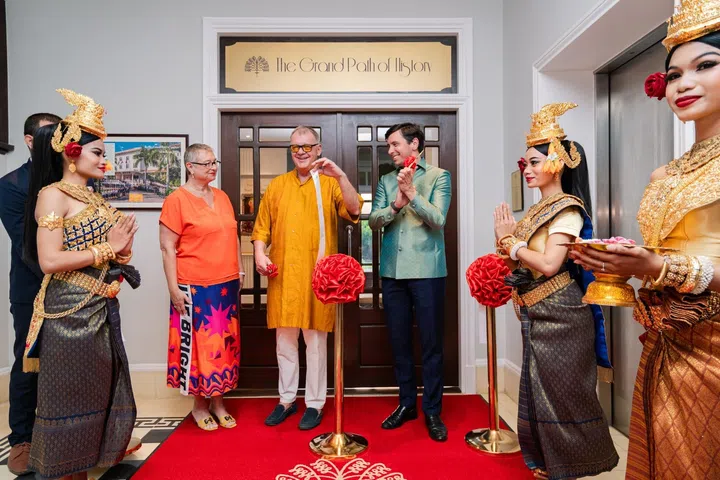
Later at the book’s official launch and the opening of the Grand Path of History, a permanent exhibition at the Raffles Grand Hotel d’Angkor, condensing key information from the book, Andreas makes a speech as Carola smiles beside him. Traditional Cambodian dancers perform the Robam Chuon Por, a blessing dance, decked in gold Apsara headdresses and silk brocade sampots (skirts).
Although A Tale of Two Hotels might not carry the novelty of the first book they published decades ago, it’s clear that the pair have a personal interest in the work that they do. Andreas expresses excitement about the interesting people he discovers and frustration with the lack of written records due to digitisation. And the challenge, perhaps, gives him a greater thrill.
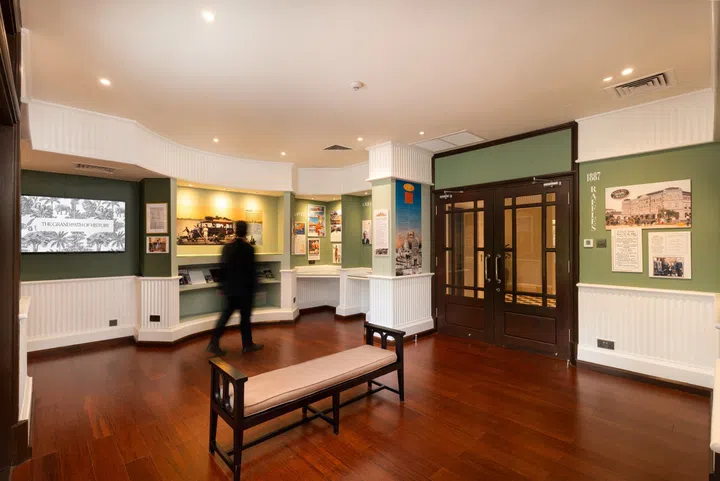
“We see how an entire city can develop along the Grand Hotel d’Angkor. We have generations of families working at the Grand Hotel… The amazing side effect of the hospitality industry is that you really see an enormous development of an entire society,” he adds.
Documentation doesn’t end with the book; in fact, it acts as an open call for more submissions and a gateway to unearthing more buried facts — “We are constantly looking for new material!” As with their previous books, more have come forward with information after knowing of them. The new facts are included in future editions.
Above all, the Augustins are champions of the hospitality industry. “I would really want our books to convey one message — the hospitality industry is among the most fascinating industries in the world. It is people-related, full of life and surprises, but unfortunately underpaid and overworked. However, it is a way of life, which can be more thrilling and exciting than anything else.”