
Beyond F1: A look at Formula 2, 3, and E
We take a look at the ecosystem surrounding the world’s most renowned motor sports.
By Lu Yawen /
Share this article
Formula One (F1) races might be the most prestigious motor racing sport; an entire ecosystem helps whittle down the competition to the best for the final races. Up to 70 per cent of F1 drivers are direct graduates of the Formula 2 and 3 ladder.
F1 regulars such as Lando Norris and Yuki Tsunoda both spent critical years battling in the F2 and F3 spec-series weekends, where the races are usually held. Household names such as Charles Leclerc and Oscar Piastri belong to a group of elite drivers who won both junior championships consecutively and were promoted to F1 immediately.
The Netflix series Formula 1: Drive to Survive sheds light on what goes into the success of the top drivers on the grid, but junior feeder series can paint a fuller picture of what drivers have to go through to reach the top.
Separately, Formula E (FE) is a Fédération Internationale de l’Automobile (FIA) World Championship dedicated to electric open-wheel racing, attracting ex-F1 drivers and factory manufacturer racers.
Deep dive into each series
Formula 3: The global melting pot
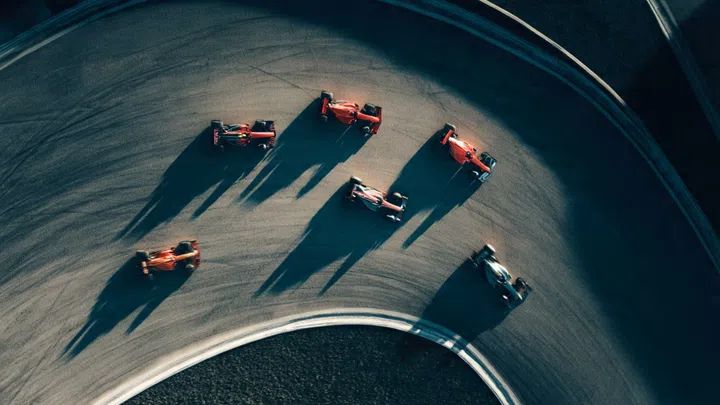
F3 serves as the crucible where top karting and regional F4 champions from around the world meet. Because the grid is exceptionally large (typically 30 cars), the races are notorious for being chaotic, aggressive, and highly competitive.
Drivers aim to finish in the top positions to catch the eye of F1 Junior Academies (like Red Bull, Ferrari, or Mercedes). Drivers must learn how to find clean air on a crowded track and extract maximum grip from their tyres over a single lap.
The races are held over the weekend. A practice session and qualifying are on Friday; a Sprint Race is on Saturday (with the top 12 from qualifying reversed); and a Feature Race is on Sunday morning.
Formula 2: The direct F1 stepping stone
F2 is the final gatekeeper before F1. The cars are much larger, heavier, and heavier-hitting than F3 cars. They require incredible physical strength because, like F1, they generate massive downforce but lack power steering.
F2 introduces critical F1 elements: complex carbon brakes, mandatory pit stops, turbo management, and highly degrading Pirelli tyres. Drivers must learn how to drive fast without destroying their tyres over a 170-kilometre race.
However, winning F2 is a double-edged sword. The champion is barred from competing in F2 again, meaning they must secure an F1 seat or pivot to another professional championship (like IndyCar or WEC).
Drivers also have only a narrow window to compete. If they spend more than three years in F2 without winning or getting signed by an F1 team, they are generally labelled as “stagnant”.
Formula E: The green innovation hub
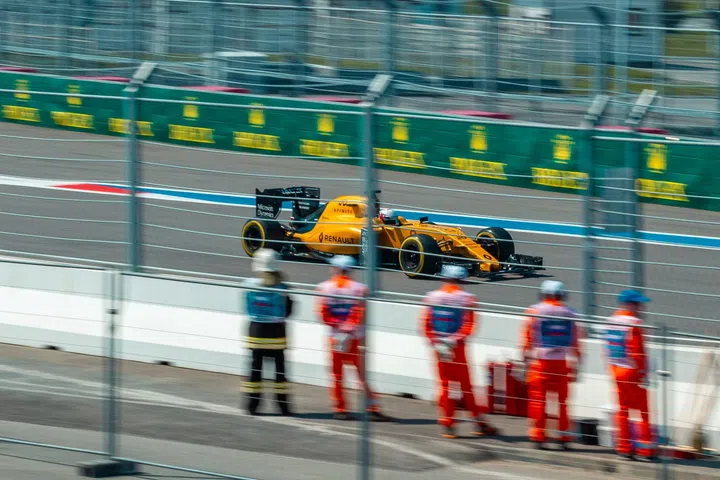
FE is an independent FIA World Championship, not a feeder series. The races require a different set of technical skills, likened to a game of high-speed chess.
Drivers must lift and coast before braking zones to recharge their batteries via regenerative braking; up to 40 per cent of the energy used during a race is harvested directly from braking. To enable overtaking, drivers must intentionally drive off the racing line through a designated “Activation Zone” to unlock a temporary power boost (an extra 50kw).
This is why FE attracts world-class professional drivers, many of whom are ex-F1 drivers or factory manufacturer racers.
The races bring the action directly to fans and prove the viability of electric vehicles. For example, FE races almost exclusively on narrow, bumpy street tracks carved into major cities (e.g., London, Tokyo, Monaco, São Paulo).
Technical and operational comparison
Unlike Formula 1, where teams design and manufacture their own cars, F2 and F3 are “spec” series. Every driver uses the exact same chassis, engine, and aerodynamic package. This ensures a driver’s success comes from skill and setup adjustments, not a massive financial development war.
Conversely, FE is a partial-spec series. While the physical chassis, battery, and aerodynamics are identical for all teams, manufacturers can design their own electric powertrains (including the electric motor, inverter, gearbox, and software). The FE engines are also the quickest to accelerate, taking 1.8 seconds to get from 0 to 100kmh.
Budget and career paths
The F2 and F3 ladder
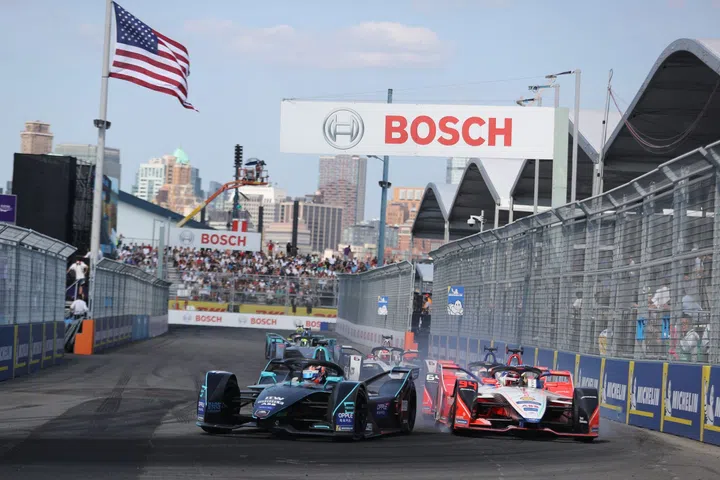
These operate on a “pay-to-driver” model. Young drivers must bring immense personal sponsorship or academy backing as they have limited commercial sponsorship and no prize-money payouts from the FIA.
An F3 season can cost around €600,000 to €1 million (about $1.5 million), with the money going into engine leases, spec chassis components, travel logistics for a 30-person crew and specialised engineering staff.
An F2 seat routinely costs €2 million to €3 million (about $4.4 million) per year, covering Pirelli tyres, advanced data-telemetry systems, carbon-brake replacements, and intense simulator time.
Drivers pay for this through a combination of F1 Junior Academies with teams like Red Bull, Ferrari, or Mercedes, which subsidise a portion of the seat (often 20 per cent to 50 per cent) if the driver is signed to their young driver program. Or national corporations or wealthy private benefactors looking for global exposure on the F1 weekend stage.
The professional tier (Formula E)
FE operates on a completely different economic system designed around commercial sustainability. FE strictly enforces a €13 million to €15 million ($21.8 million) spending cap per team per season to prevent billionaire-backed operations from outspending independent teams.
Massive global automotive manufacturers (like Porsche, Nissan, Jaguar, and Maserati) heavily fund teams. Drivers do not pay a single cent to race.
Instead, they sign professional contracts, earning base salaries ranging from €300,000 to over €2 million per year for elite champions, plus performance-based win bonuses.
Because F1 has only 20 seats, many highly talented drivers hit a funding wall or political gridlock in F2. FE has become the premier fallback destination for two distinct groups of drivers: Drivers who finish in the top five of F2 but recognise that an F1 seat is blocked, so they pivot directly to Formula E manufacturer tests to secure a paid, professional career, and drivers who made it to F1 but lost their seats due to team politics or lack of funding.