%22%3E%0A%3Cpath%20d%3D%22M412%20101.2H393.7C393.1%20101.2%20392.3%20100.9%20391.8%20100.5C377.3%2087.6004%20362.9%2074.6004%20348.4%2061.6004C344.8%2058.4004%20341.3%2055.2004%20337.7%2052.0004C337.1%2051.5004%20336.2%2051.1004%20335.5%2051.0004C334.2%2050.8004%20333%2051.0004%20331.5%2051.0004V101.1H316.7V0.100391H331.4V44.3004C331.9%2044.3004%20332.2%2044.4004%20332.5%2044.4004C334.9%2044.4004%20337.2%2044.5004%20339.6%2044.4004C340.4%2044.4004%20341.3%2044.0004%20341.8%2043.5004C351.6%2034.4004%20361.4%2025.2004%20371.1%2016.0004C376.5%2010.9004%20381.9%205.90039%20387.3%200.800391C387.9%200.200391%20388.5%200.000390626%20389.3%200.000390626H400.9C384.2%2015.8004%20367.8%2031.3004%20351.2%2047.0004C371.5%2065.0004%20391.8%2082.9004%20412.1%20100.9C412.1%20101%20412.1%20101.1%20412%20101.2ZM180.9%20101.2C184.1%2094.9004%20187.2%2088.9004%20190.3%2082.8004C198.3%2067.3004%20206.2%2051.8004%20214.2%2036.2004C220.3%2024.4004%20226.4%2012.5004%20232.4%200.700391C232.7%200.100391%20233%20-0.0996094%20233.7%20-0.0996094H248.1C248.8%20-0.0996094%20249.2%200.100391%20249.6%200.800391C256%2013.3004%20262.4%2025.7004%20268.8%2038.2004C279.3%2058.6004%20289.8%2079.0004%20300.3%2099.5004C300.5%20100%20300.8%20100.4%20301.1%20101.1C300.5%20101.1%20300.1%20101.2%20299.7%20101.2H286.5C285.6%20101.2%20285.1%20100.9%20284.7%20100.2C280.1%2091.3004%20275.4%2082.4004%20270.8%2073.4004C270.1%2072.1004%20269.3%2071.6004%20267.8%2071.6004H209.9C208.7%2071.6004%20208.1%2072.0004%20207.5%2073.1004C202.9%2082.1004%20198.2%2091.0004%20193.6%20100C193.1%20101%20192.6%20101.3%20191.5%20101.3C188.4%20101.2%20185.3%20101.3%20182.3%20101.3C182%20101.2%20181.6%20101.2%20180.9%20101.2ZM239.1%2011.4004C230%2029.2004%20221.1%2046.7004%20212.1%2064.3004H266.4C257.2%2046.7004%20248.2%2029.2004%20239.1%2011.4004ZM0%200.000390626H43.4C51.2%200.000390626%2058.7%201.20039%2065.7%204.80039C75.9%2010.0004%2078.9%2018.0004%2078.6%2027.4004C78.3%2034.3004%2076%2040.5004%2071.2%2045.5004C67.3%2049.6004%2062.4%2052.3004%2057.1%2054.3004C50.6%2056.7004%2043.9%2058.0004%2037.1%2058.6004C30.1%2059.2004%2023.1%2059.4004%2016.2%2059.7004C15.8%2059.7004%2015.3%2059.8004%2014.8%2059.8004V101.1H0.1C0%2067.4004%200%2033.8004%200%200.000390626ZM14.8%207.10039V52.2004C23.7%2052.4004%2032.6%2052.3004%2041.2%2050.1004C44.4%2049.3004%2047.6%2048.2004%2050.6%2046.7004C58.4%2043.0004%2062.3%2036.7004%2062.7%2028.0004C63%2019.9004%2059.5%2014.1004%2052.4%2010.5004C47.6%208.00039%2042.5%207.10039%2037.2%207.10039H14.8ZM95.9%20101.1V0.100391H167.3V7.20039H110.7V44.7004H158.1V51.9004H110.8V93.9004H171.1V101C146.1%20101.1%20121%20101.1%2095.9%20101.1Z%22%20fill%3D%22black%22%2F%3E%0A%3Cpath%20d%3D%22M35.0004%2025.7996H42.5004V20.6996H44.8004V33.1996H42.6004V27.5996H34.9004V33.2996H32.7004V20.7996H35.0004V25.7996ZM54.4004%2025.8996V27.2996H48.9004V31.6996H55.9004C55.9004%2032.1996%2056.0004%2032.5996%2056.0004%2033.0996H46.5004V20.5996H55.5004V21.8996H49.0004V25.7996C50.7004%2025.8996%2052.5004%2025.8996%2054.4004%2025.8996ZM25.9004%2033.0996H23.5004V21.9996H17.9004V20.6996H31.6004V22.0996H27.1004C26.2004%2022.0996%2025.9004%2022.2996%2025.9004%2023.1996C26.0004%2026.0996%2025.9004%2028.9996%2025.9004%2031.7996V33.0996Z%22%20fill%3D%22black%22%2F%3E%0A%3C%2Fg%3E%0A%3Cdefs%3E%0A%3CclipPath%20id%3D%22clip0_388_462%22%3E%0A%3Crect%20width%3D%22411%22%20height%3D%22101.2%22%20fill%3D%22white%22%2F%3E%0A%3C%2FclipPath%3E%0A%3C%2Fdefs%3E%0A%3C%2Fsvg%3E%0A)
Inside China’s culture of welcome — a new language of luxury
A new generation of boutique hotels is defining elegance through Chinese hospitality or dài kè zhī dào — a culturally rooted hospitality philosophy that anchors guests to place, time, and an unmistakable human warmth.
By Tan Pin Yen /
Share this article
In the Yan Ni Nan suite at Qiushui Villa, I wake not to an alarm, but to West Lake itself.
At dawn, the lake’s surface gathers the sun in shimmering silver pleats, while birdsong cuts through the scent of ripening autumn. Wrapped in Hangzhou’s most costly quiet, it occurs to me that West Lake is not scenery to be consumed, but a way to live.
I did not know how, but I shifted from observation to presence. I stopped watching the landscape and began existing within it.
I think of jǐng — a word too easily translated as “scene”. In Chinese thought, landscape is never passive. It is a philosophical medium where nature, history, and inner life converge. For centuries, it has been composed through gardens, poems, and architecture, not to frame beauty, but to materialise tiān rén hé yī — the unity of heaven and humanity.
This sensibility lies at the unstated core of Chinese hospitality: At its highest level, hosting is never to impress or indulge, but to receive guests within a continuum of place and meaning, offering, however briefly, that encounter with unity.
Perceiving the air of the guest
The roots of Chinese hospitality reach back to the time of Confucius, during the tumultuous Spring and Autumn periods — an era of political fragmentation and philosophical invention. From this world emerged kè qì, a discipline of courtesy defined by restraint, ritualised refusal, and practised humility.
Over centuries, this formality softened into instinct: an intuitive attentiveness guided by rén qíng wèi, the human warmth that transforms ritual into care, and an understanding that arrives before it is spoken.
On returning to Hangzhou, I see how this sensitivity — less about protocol than perception — continues to inform contemporary hospitality. Ancient tenets are reanimated through design and service alike: spaces composed to unfold gradually, the unobtrusive presence of a butler, each gesture works quietly to anchor the guest within something larger than the stay itself.
Stepping into a literati dream
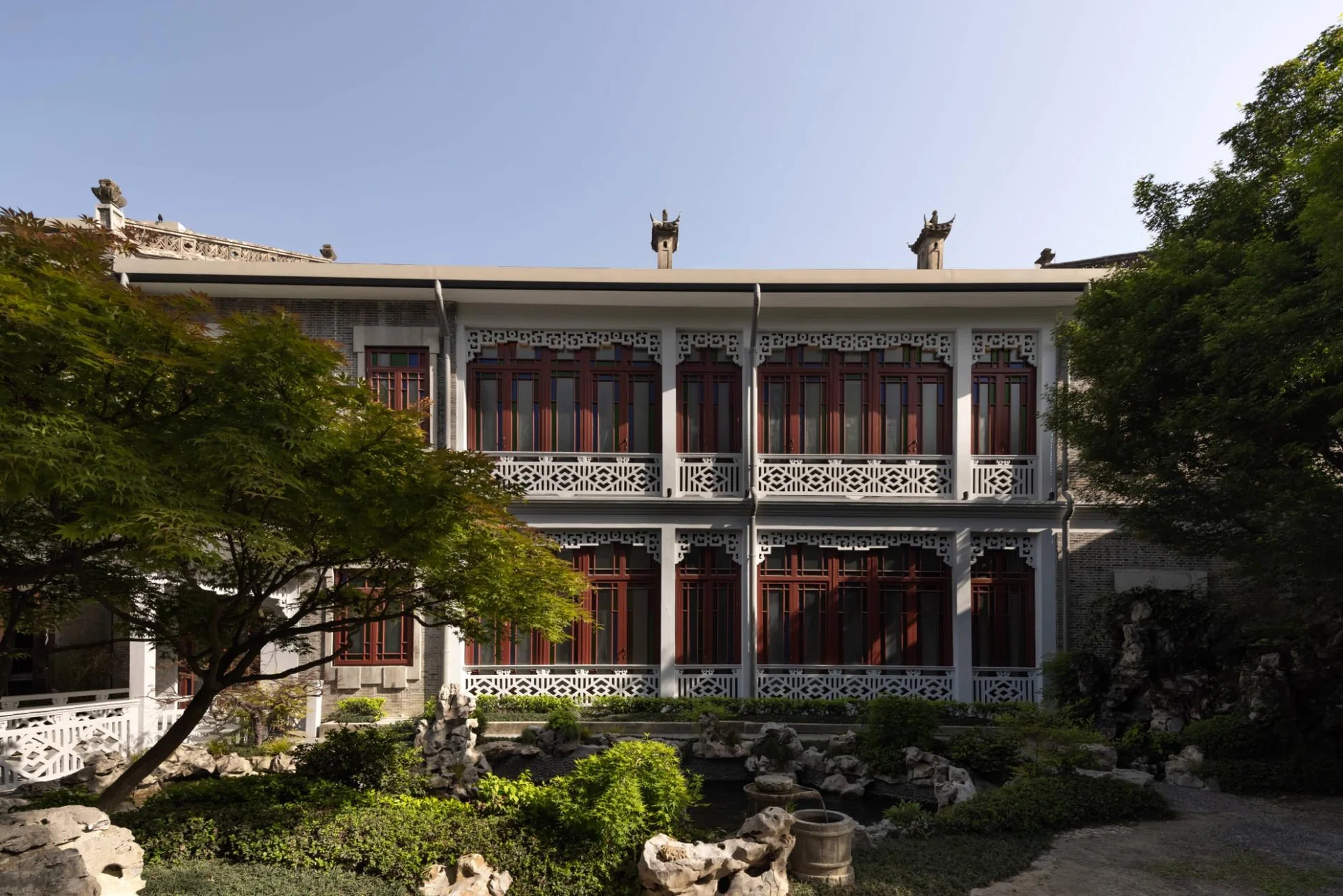
Few places articulate this more fully than Qiushui Villa on Beishan Road, built in the 1930s by newspaper magnate Shi Liangcai for his wife, Shen Qiushui.
The restored residence, now part of Small Luxury Hotels of the World, features low eaves, layered courtyards, and framed windows that gradually reveal West Lake. Its garden references Yihong Courtyard from A Dream of the Red Mansions, its architecture following the Jiangnan principle of yí bù yì jǐng: changing scenes with every step.
Hangzhou, capital of the Southern Song dynasty, was once the epicentre of Chinese scholarly culture, artistic refinement and the very ideal of the Jiangnan literati. At Qiushui Villa, each of the eleven suites draws inspiration from a cultural luminary, extending that lineage into lived space.
They include academic and former Ambassador of China to the USA, Hu Shih, painter and cartoonist, Feng Zikai, and Chinese-American essayist, Eileen Chang.
“We are not selling rooms,” says general manager Laureen Wei. “Our service philosophy is rooted in the unique soul of the literati; what we are offering is an experience where guests become protagonists in a living Jiangnan dream.”
This dream takes on scent and substance when a chef prepares Pian Er Chuan noodles — a Hangzhou speciality on a portable stove in my room for breakfast.
The butler as cultural interpreter
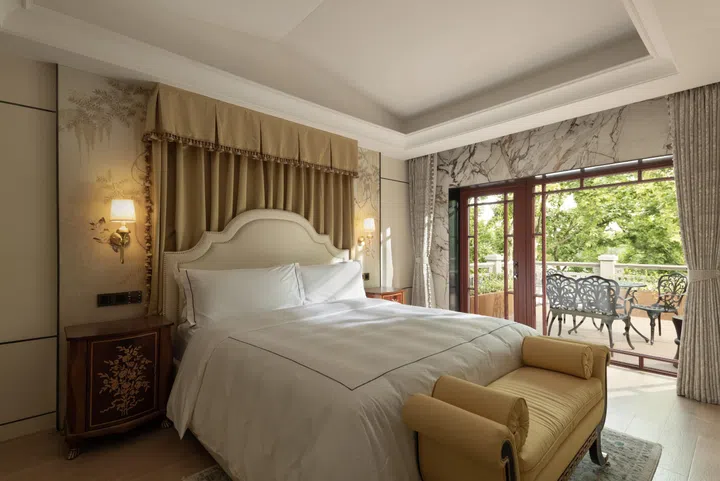
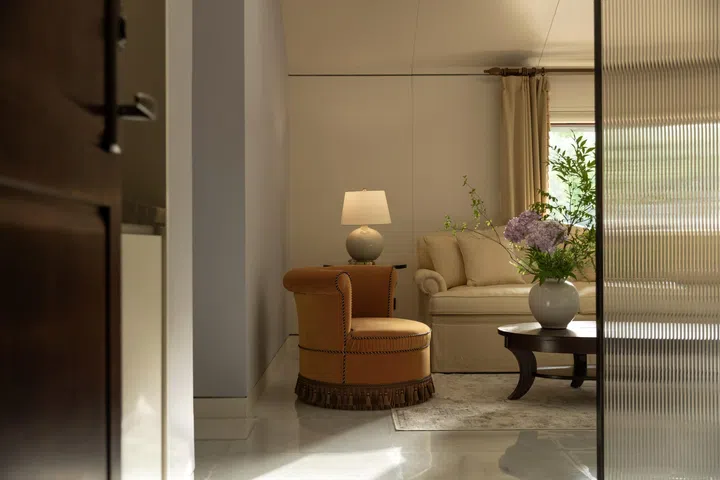
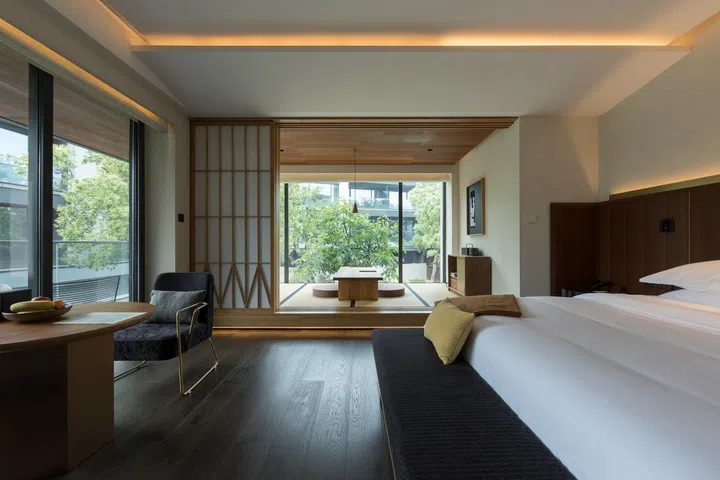
My suite, Yan Ni Nan (Swallow Murmurs), is an ode to poet-architect Lin Huiyin and her poem “You Are the April of This World”. Morning light washes the living room in muted yellows and greens, bringing April’s shine. Upstairs, a study invites lingering with Chinese texts and Longjing tea.
There are no telephones; I control communication via a discreet messaging pad. But always, a round-the-clock Chinese-style butler responds with quiet precision — reserving the pool before I ask, delivering goggles alongside a swimsuit, troubleshooting air conditioning at 2 am without fuss.
If elsewhere, service pampers; here, it empowers. Before I checked out, I was offered a private visit to the “18 Imperial Tea Trees” in Longjing Village — a grove once honoured by Emperor Qianlong — simply because I was too curious during the welcome tea ceremony.
“In the Eastern wisdom of anticipating demand, we think as the guest thinks, and act as the guest acts,” Wei explains. “Personalisation begins with attention, not instruction.”
Unlike the British butler defined by protocol, her Chinese counterpart is imagined as a “Literary Friend”, fluent in the arts of refined living. Music, chess, calligraphy, painting, poetry, wine, flowers, and tea are not staged experiences, but an ecosystem woven into the guest’s stay.
The culture of home
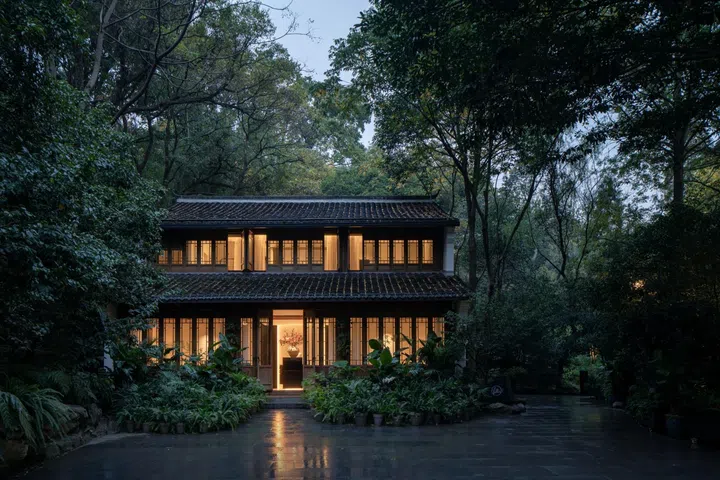
This humanistic approach to hospitality resists standardisation. Wei tells me that the previous guest in my suite stayed for a year and checked out just before I checked in. “We became friends, then family,” she says.
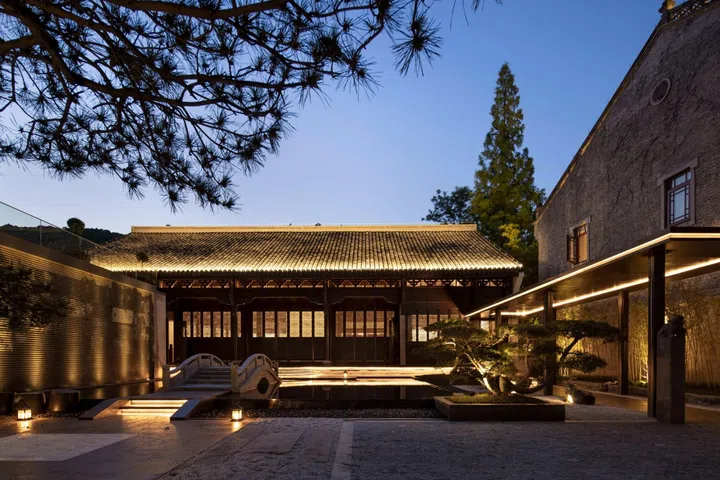
That ethos extends beyond West Lake to the Hupao Valley near Liuhe Pagoda, where the eight-key Vallie Hotel (a play on the French “vallée”) embodies the rustic intimacy of jia wen hua — the culture of home.
Set beside bamboo forests and tea fields, the property, now a member of Small Luxury Hotels of the World, preserves original timber frames and temple roofs, keeping guests anchored in a village setting.
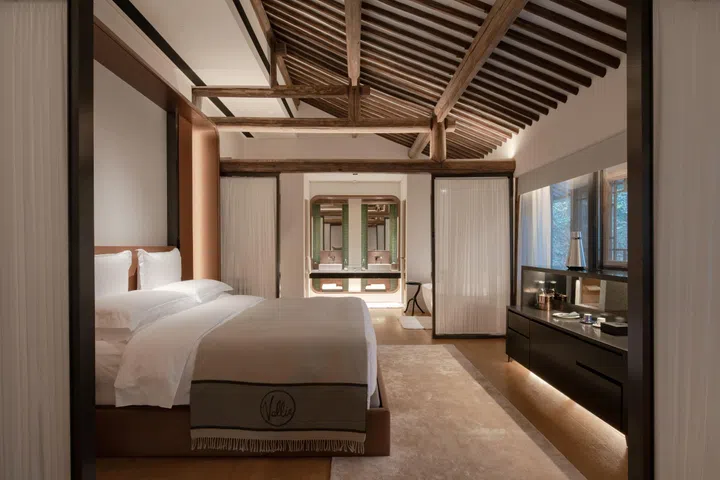
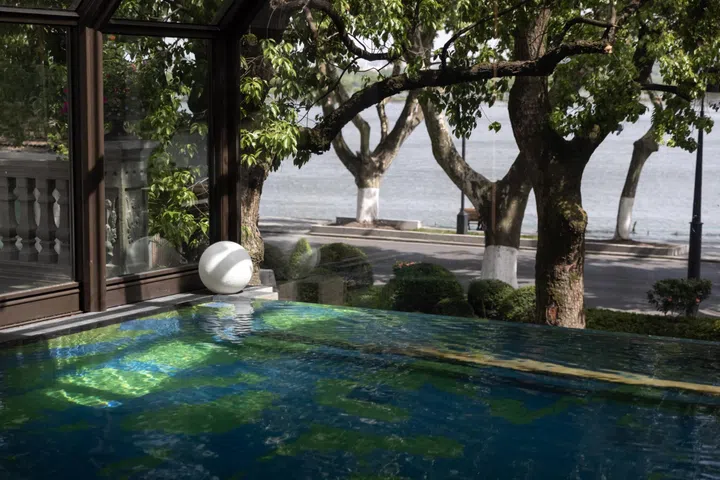
In this sanctuary, hospitality is sourced from the spring itself. My room featured a private pool fed by the Hupao Spring — a source christened the “Third Best Spring under Heaven” by Emperor Qianlong.
Curiosity draws me uphill to the source, where villagers still collect water as they have for generations. Back in my room, fresh spring water arrives quietly at my door, and brewing tea becomes a ritual of connection. To drink it after knowing its history is to collapse the distance between past and present, binding me to Hangzhou’s land and time.
The art of the blank space
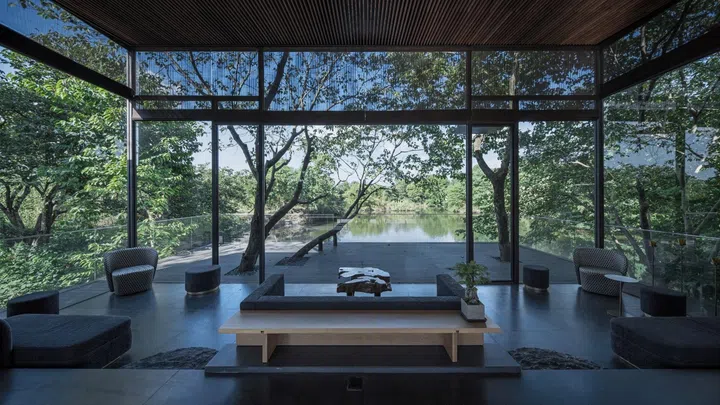
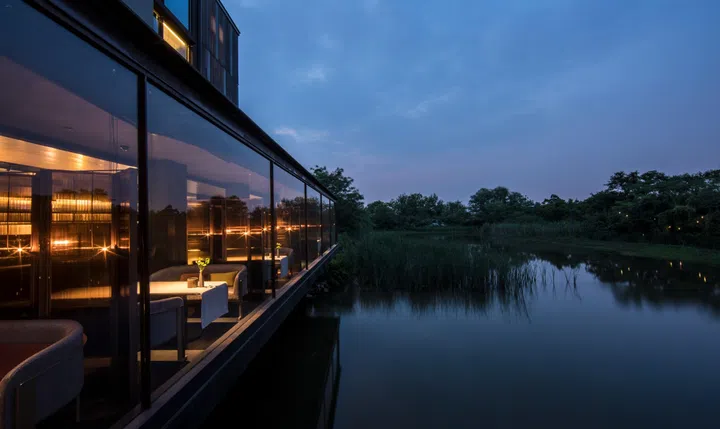
At the 43-key Muh Shoou Xixi, tucked within Xixi National Wetland Park, architecture yields almost entirely to the environment. Ancient persimmon trees were documented and preserved before construction began. Open-sided structures dissolve into water and reed.
Weather-worn stone, wooden accents, and water-washed marble erase the boundaries between shelter and wilderness. I get to see the shifting light. I feel the humidity change, time no longer passes me by.
At this Small Luxury Hotels of the World property, hospitality is guided by the philosophy of coexistence with nature and an awareness of time.
This way of receiving guests extends to the table at Xi Yin, the property’s Black Pearl One Diamond Chinese restaurant, where chef Jerry Pu serves up seasonal Zhejiang cuisine as edible geography, drawing on the wetland’s bounty.
In autumn, lamb chops are smoked with the wood and leaves of the resort’s century-old persimmon trees — the same trees I passed moments earlier. In summer, guests harvest lotus seeds from the pond themselves. Luxury here is meant to be tasted, in the intimacy of place and time.
“Like nature, there is no rigid protocol,” says brand director Summer Qiu, “only a traceless service that feels like warmth, not attention. Staff navigate the thoughtful blank space or liú bái, just as in a Chinese painting.”
Lanterns glow as daylight fades. Fallen leaves are swept away moments after landing. “Service is both present yet invisible, warmed by that unmistakable pulse of rén qíng wèi (the flavour of human touch),” Qiu adds.
This philosophy finds its purest expression aboard the yáolǔ boat, a traditional wooden scull gliding soundlessly through the canals. For an hour, the world contracts to water and oar; the wild quiet of Xixi becomes my own. I speak with the boatman, now in his seventies, whose family lived on these waters for a century before conservation carried their lives into the city.
“That’s why I return every day. Now I get to see those days again,” he paused. “You should come back often, too.”
It is an invitation shaped by human warmth. In China, hospitality — dài kè zhī dào — is not simply the act of receiving a guest, but an act of holding space and time, making return feel natural — almost inevitable.