%22%3E%0A%3Cpath%20d%3D%22M412%20101.2H393.7C393.1%20101.2%20392.3%20100.9%20391.8%20100.5C377.3%2087.6004%20362.9%2074.6004%20348.4%2061.6004C344.8%2058.4004%20341.3%2055.2004%20337.7%2052.0004C337.1%2051.5004%20336.2%2051.1004%20335.5%2051.0004C334.2%2050.8004%20333%2051.0004%20331.5%2051.0004V101.1H316.7V0.100391H331.4V44.3004C331.9%2044.3004%20332.2%2044.4004%20332.5%2044.4004C334.9%2044.4004%20337.2%2044.5004%20339.6%2044.4004C340.4%2044.4004%20341.3%2044.0004%20341.8%2043.5004C351.6%2034.4004%20361.4%2025.2004%20371.1%2016.0004C376.5%2010.9004%20381.9%205.90039%20387.3%200.800391C387.9%200.200391%20388.5%200.000390626%20389.3%200.000390626H400.9C384.2%2015.8004%20367.8%2031.3004%20351.2%2047.0004C371.5%2065.0004%20391.8%2082.9004%20412.1%20100.9C412.1%20101%20412.1%20101.1%20412%20101.2ZM180.9%20101.2C184.1%2094.9004%20187.2%2088.9004%20190.3%2082.8004C198.3%2067.3004%20206.2%2051.8004%20214.2%2036.2004C220.3%2024.4004%20226.4%2012.5004%20232.4%200.700391C232.7%200.100391%20233%20-0.0996094%20233.7%20-0.0996094H248.1C248.8%20-0.0996094%20249.2%200.100391%20249.6%200.800391C256%2013.3004%20262.4%2025.7004%20268.8%2038.2004C279.3%2058.6004%20289.8%2079.0004%20300.3%2099.5004C300.5%20100%20300.8%20100.4%20301.1%20101.1C300.5%20101.1%20300.1%20101.2%20299.7%20101.2H286.5C285.6%20101.2%20285.1%20100.9%20284.7%20100.2C280.1%2091.3004%20275.4%2082.4004%20270.8%2073.4004C270.1%2072.1004%20269.3%2071.6004%20267.8%2071.6004H209.9C208.7%2071.6004%20208.1%2072.0004%20207.5%2073.1004C202.9%2082.1004%20198.2%2091.0004%20193.6%20100C193.1%20101%20192.6%20101.3%20191.5%20101.3C188.4%20101.2%20185.3%20101.3%20182.3%20101.3C182%20101.2%20181.6%20101.2%20180.9%20101.2ZM239.1%2011.4004C230%2029.2004%20221.1%2046.7004%20212.1%2064.3004H266.4C257.2%2046.7004%20248.2%2029.2004%20239.1%2011.4004ZM0%200.000390626H43.4C51.2%200.000390626%2058.7%201.20039%2065.7%204.80039C75.9%2010.0004%2078.9%2018.0004%2078.6%2027.4004C78.3%2034.3004%2076%2040.5004%2071.2%2045.5004C67.3%2049.6004%2062.4%2052.3004%2057.1%2054.3004C50.6%2056.7004%2043.9%2058.0004%2037.1%2058.6004C30.1%2059.2004%2023.1%2059.4004%2016.2%2059.7004C15.8%2059.7004%2015.3%2059.8004%2014.8%2059.8004V101.1H0.1C0%2067.4004%200%2033.8004%200%200.000390626ZM14.8%207.10039V52.2004C23.7%2052.4004%2032.6%2052.3004%2041.2%2050.1004C44.4%2049.3004%2047.6%2048.2004%2050.6%2046.7004C58.4%2043.0004%2062.3%2036.7004%2062.7%2028.0004C63%2019.9004%2059.5%2014.1004%2052.4%2010.5004C47.6%208.00039%2042.5%207.10039%2037.2%207.10039H14.8ZM95.9%20101.1V0.100391H167.3V7.20039H110.7V44.7004H158.1V51.9004H110.8V93.9004H171.1V101C146.1%20101.1%20121%20101.1%2095.9%20101.1Z%22%20fill%3D%22black%22%2F%3E%0A%3Cpath%20d%3D%22M35.0004%2025.7996H42.5004V20.6996H44.8004V33.1996H42.6004V27.5996H34.9004V33.2996H32.7004V20.7996H35.0004V25.7996ZM54.4004%2025.8996V27.2996H48.9004V31.6996H55.9004C55.9004%2032.1996%2056.0004%2032.5996%2056.0004%2033.0996H46.5004V20.5996H55.5004V21.8996H49.0004V25.7996C50.7004%2025.8996%2052.5004%2025.8996%2054.4004%2025.8996ZM25.9004%2033.0996H23.5004V21.9996H17.9004V20.6996H31.6004V22.0996H27.1004C26.2004%2022.0996%2025.9004%2022.2996%2025.9004%2023.1996C26.0004%2026.0996%2025.9004%2028.9996%2025.9004%2031.7996V33.0996Z%22%20fill%3D%22black%22%2F%3E%0A%3C%2Fg%3E%0A%3Cdefs%3E%0A%3CclipPath%20id%3D%22clip0_388_462%22%3E%0A%3Crect%20width%3D%22411%22%20height%3D%22101.2%22%20fill%3D%22white%22%2F%3E%0A%3C%2FclipPath%3E%0A%3C%2Fdefs%3E%0A%3C%2Fsvg%3E%0A)
Foodie Guide: How to taste and appreciate single-origin chocolate
Yilina Leong, co-founder of Fossa Chocolate, a Singapore craft chocolate-maker shares how best to savour the nuanced tasting notes of chocolates.
By Medina Razali /
Share this article
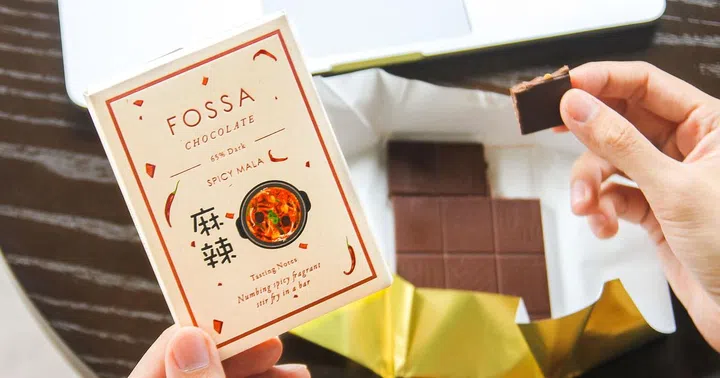
Photo: Fossa Chocolate
The next time you reach for a box of chocolates, don’t gobble it up. Instead, take some time to savour that praline or slab. From the flavour, aroma, and texture, there is much to appreciate about the nuanced and layered notes of chocolate.
To get the most out of chocolates, we chat with Yilina Leong, co-founder of Fossa Chocolate, a homegrown craft chocolate-maker, which specialises in bean-to-bar chocolate. The company makes chocolate from scratch, from souring raw cocoa beans from around the world, roasting and winnowing the cacao, refining and moulding molten chocolate into small batches and hand-wrapping the bars in letter-pressed packaging.
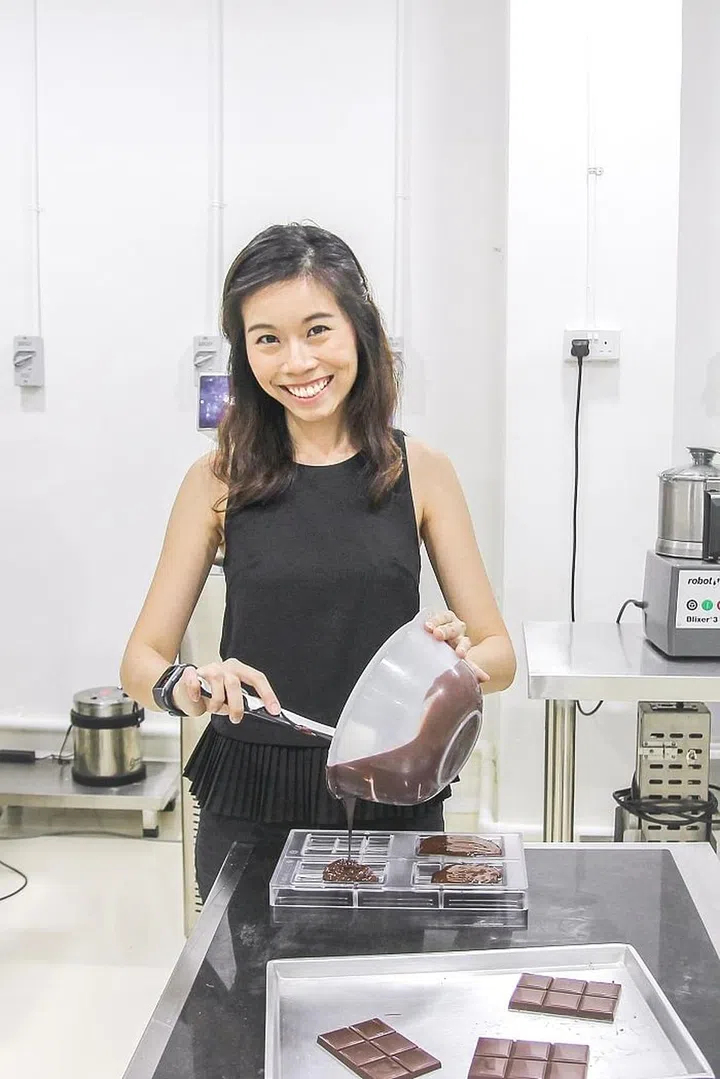
Yilina Leong, co-founder of Fossa Chocolate. (Photo: Fossa Chocolate)
Fossa Chocolate sources its cocoa from all over the world, from countries such as Peru, Mexico, Ecuador, to Indonesia and the Philippines, boasting vastly different flavour profiles.
Sustainability and ethical farming play a big part in ensuring how that cacao is selected. Leong's team sources cacao from estates that engage in agroforestry, a practice of cultivating the main crop alongside other native trees and crops. This enables wildlife to continue to thrive in their natural habitat and ensures greater productivity for farmers in the long run.
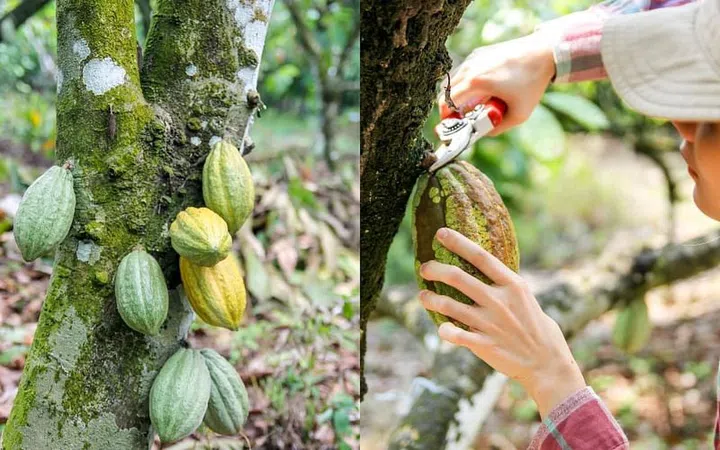
Photo: Fossa Chocolate
The company is also reducing its carbon footprint by turning the cacao husks, accumulated through the winnowing process, into compost. Besides sourcing a diverse range of cacao beans, Fossa Chocolate also creates chocolate bars in unconventional and brow-raising flavours such as Honey Orchid Dancong Hongcha, Black Truffle and Satay Sauce. For Christmas, Fossa Chocolate is introducing new flavours such as the sweet and umami Tomato & Maqaw Pepper, and Apple and Cinnamon Oat Milk.
Leong shares tips on how to identify quality chocolate and ways of appreciating and tasting chocolates like a true gourmand.
Related: Why craft chocolate is on the rise in Singapore
Take a look at the chocolate bar and observe if it glistens under light and boasts an even colour. These are traits of chocolate that has been well-tempered and stored properly. Tempering is the process of melting chocolate while controlling how the temperature rises and falls, which gives chocolate a smooth and glossy finish. If the bar has a dull matte-like appearance, or has white streaks, the bar is likely not well tempered or might have been stored at a warmer temperature.
Another tell-tale sign of a well-tempered chocolate is the crispness of the bar. One of the joys of opening a new chocolate bar is hearing that satisfying snap when you break it. Also, the ideal chocolate bar should not bend or crumble when it is broken.
Contrary to popular belief, the aroma of chocolate can be diverse — different varieties of cacao beans have different scents. For example, craft chocolates usually have either a fruity or a nutty, biscuit-like scent. The key to identifying a quality chocolate by its aroma is to look out for distinct scents. Ideally, a chocolate bar should give off scents that are reminiscent of its flavour profile. However, if your chocolate bar gives off a vanilla or milky smell, it is more likely to contain a higher amount of additives.
Related: Singapore’s artisanal chocolatier rolls out salted egg chocolate bars
Besides the smell, the taste of good quality dark chocolate is also complex and multi-layered, and is mainly dependent on the types of cocoa bean used. Dark chocolate doesn’t always taste bitter — a good quality bar of dark chocolate can even give off impressions of creaminess, nuttiness, fruitiness or even an umami flavour, depending on the bean used. It should not taste overly sweet, bitter or burnt.
Firstly, you should hear a snap when breaking a piece of chocolate. Then, place the piece of chocolate in your mouth and let it melt on your tongue slowly. The rate which the chocolate melts depends on the warmth of your mouth, as well as how much cacao butter is present in the chocolate.
Once the chocolate has melted in your mouth, gently swirl the chocolate around with your tongue. Next, exhale through the nose, and you’ll taste the different layers of flavours as it wafts from your tastebuds through your nose. To cleanse your palate, drink warm or room temperature water.
Bonus tip: Taste chocolates in a well-ventilated environment that has minimal scent. To preserve the quality of chocolate, conduct the tasting session in an air-conditioned room. In between tastings, have some warm water instead of other beverages to maintain a neutral palette. Avoid cold beverages as the low temperature has a numbing effect on the tastebuds.
Related: 5 craft chocolates that are proudly made in Singapore