%22%3E%0A%3Cpath%20d%3D%22M412%20101.2H393.7C393.1%20101.2%20392.3%20100.9%20391.8%20100.5C377.3%2087.6004%20362.9%2074.6004%20348.4%2061.6004C344.8%2058.4004%20341.3%2055.2004%20337.7%2052.0004C337.1%2051.5004%20336.2%2051.1004%20335.5%2051.0004C334.2%2050.8004%20333%2051.0004%20331.5%2051.0004V101.1H316.7V0.100391H331.4V44.3004C331.9%2044.3004%20332.2%2044.4004%20332.5%2044.4004C334.9%2044.4004%20337.2%2044.5004%20339.6%2044.4004C340.4%2044.4004%20341.3%2044.0004%20341.8%2043.5004C351.6%2034.4004%20361.4%2025.2004%20371.1%2016.0004C376.5%2010.9004%20381.9%205.90039%20387.3%200.800391C387.9%200.200391%20388.5%200.000390626%20389.3%200.000390626H400.9C384.2%2015.8004%20367.8%2031.3004%20351.2%2047.0004C371.5%2065.0004%20391.8%2082.9004%20412.1%20100.9C412.1%20101%20412.1%20101.1%20412%20101.2ZM180.9%20101.2C184.1%2094.9004%20187.2%2088.9004%20190.3%2082.8004C198.3%2067.3004%20206.2%2051.8004%20214.2%2036.2004C220.3%2024.4004%20226.4%2012.5004%20232.4%200.700391C232.7%200.100391%20233%20-0.0996094%20233.7%20-0.0996094H248.1C248.8%20-0.0996094%20249.2%200.100391%20249.6%200.800391C256%2013.3004%20262.4%2025.7004%20268.8%2038.2004C279.3%2058.6004%20289.8%2079.0004%20300.3%2099.5004C300.5%20100%20300.8%20100.4%20301.1%20101.1C300.5%20101.1%20300.1%20101.2%20299.7%20101.2H286.5C285.6%20101.2%20285.1%20100.9%20284.7%20100.2C280.1%2091.3004%20275.4%2082.4004%20270.8%2073.4004C270.1%2072.1004%20269.3%2071.6004%20267.8%2071.6004H209.9C208.7%2071.6004%20208.1%2072.0004%20207.5%2073.1004C202.9%2082.1004%20198.2%2091.0004%20193.6%20100C193.1%20101%20192.6%20101.3%20191.5%20101.3C188.4%20101.2%20185.3%20101.3%20182.3%20101.3C182%20101.2%20181.6%20101.2%20180.9%20101.2ZM239.1%2011.4004C230%2029.2004%20221.1%2046.7004%20212.1%2064.3004H266.4C257.2%2046.7004%20248.2%2029.2004%20239.1%2011.4004ZM0%200.000390626H43.4C51.2%200.000390626%2058.7%201.20039%2065.7%204.80039C75.9%2010.0004%2078.9%2018.0004%2078.6%2027.4004C78.3%2034.3004%2076%2040.5004%2071.2%2045.5004C67.3%2049.6004%2062.4%2052.3004%2057.1%2054.3004C50.6%2056.7004%2043.9%2058.0004%2037.1%2058.6004C30.1%2059.2004%2023.1%2059.4004%2016.2%2059.7004C15.8%2059.7004%2015.3%2059.8004%2014.8%2059.8004V101.1H0.1C0%2067.4004%200%2033.8004%200%200.000390626ZM14.8%207.10039V52.2004C23.7%2052.4004%2032.6%2052.3004%2041.2%2050.1004C44.4%2049.3004%2047.6%2048.2004%2050.6%2046.7004C58.4%2043.0004%2062.3%2036.7004%2062.7%2028.0004C63%2019.9004%2059.5%2014.1004%2052.4%2010.5004C47.6%208.00039%2042.5%207.10039%2037.2%207.10039H14.8ZM95.9%20101.1V0.100391H167.3V7.20039H110.7V44.7004H158.1V51.9004H110.8V93.9004H171.1V101C146.1%20101.1%20121%20101.1%2095.9%20101.1Z%22%20fill%3D%22black%22%2F%3E%0A%3Cpath%20d%3D%22M35.0004%2025.7996H42.5004V20.6996H44.8004V33.1996H42.6004V27.5996H34.9004V33.2996H32.7004V20.7996H35.0004V25.7996ZM54.4004%2025.8996V27.2996H48.9004V31.6996H55.9004C55.9004%2032.1996%2056.0004%2032.5996%2056.0004%2033.0996H46.5004V20.5996H55.5004V21.8996H49.0004V25.7996C50.7004%2025.8996%2052.5004%2025.8996%2054.4004%2025.8996ZM25.9004%2033.0996H23.5004V21.9996H17.9004V20.6996H31.6004V22.0996H27.1004C26.2004%2022.0996%2025.9004%2022.2996%2025.9004%2023.1996C26.0004%2026.0996%2025.9004%2028.9996%2025.9004%2031.7996V33.0996Z%22%20fill%3D%22black%22%2F%3E%0A%3C%2Fg%3E%0A%3Cdefs%3E%0A%3CclipPath%20id%3D%22clip0_388_462%22%3E%0A%3Crect%20width%3D%22411%22%20height%3D%22101.2%22%20fill%3D%22white%22%2F%3E%0A%3C%2FclipPath%3E%0A%3C%2Fdefs%3E%0A%3C%2Fsvg%3E%0A)
Bhutan’s contemporary art scene is emerging — and the world should take note
The Peak Singapore visits the last Himalayan Kingdom. It uncovers an emerging contemporary arts scene — one that reflects inner worlds, sacred rhythms, and the radical possibility that art can evolve without severing ties to tradition.
By Azimin Saini /
Share this article
By now, we’ve all seen it. The image ricocheted across headlines and Instagram feeds: a judge in full robes, gavel raised mid-blow, striking down a protester.
Banksy’s latest mural, sprayed overnight onto a side wall of London’s Royal Courts of Justice, didn’t last long, and court authorities quickly scrubbed it away. Though swiftly erased, its message lingered as a critique of state power and the criminalisation of protest.
This is what we’ve come to expect from contemporary art. Globally, artists turn to their canvases to shout against injustice, challenge authority, or wrestle with histories that refuse to stay buried.
From Ai Weiwei’s “Dropping a Han Dynasty Urn” to Kara Walker’s silhouettes of unflinching historical trauma, much of today’s art is shaped by dislocation, loss, or protest.
But what happens when artists emerge from an inherently peaceful culture — one never violently severed from its spiritual or aesthetic traditions?
A scene just beginning
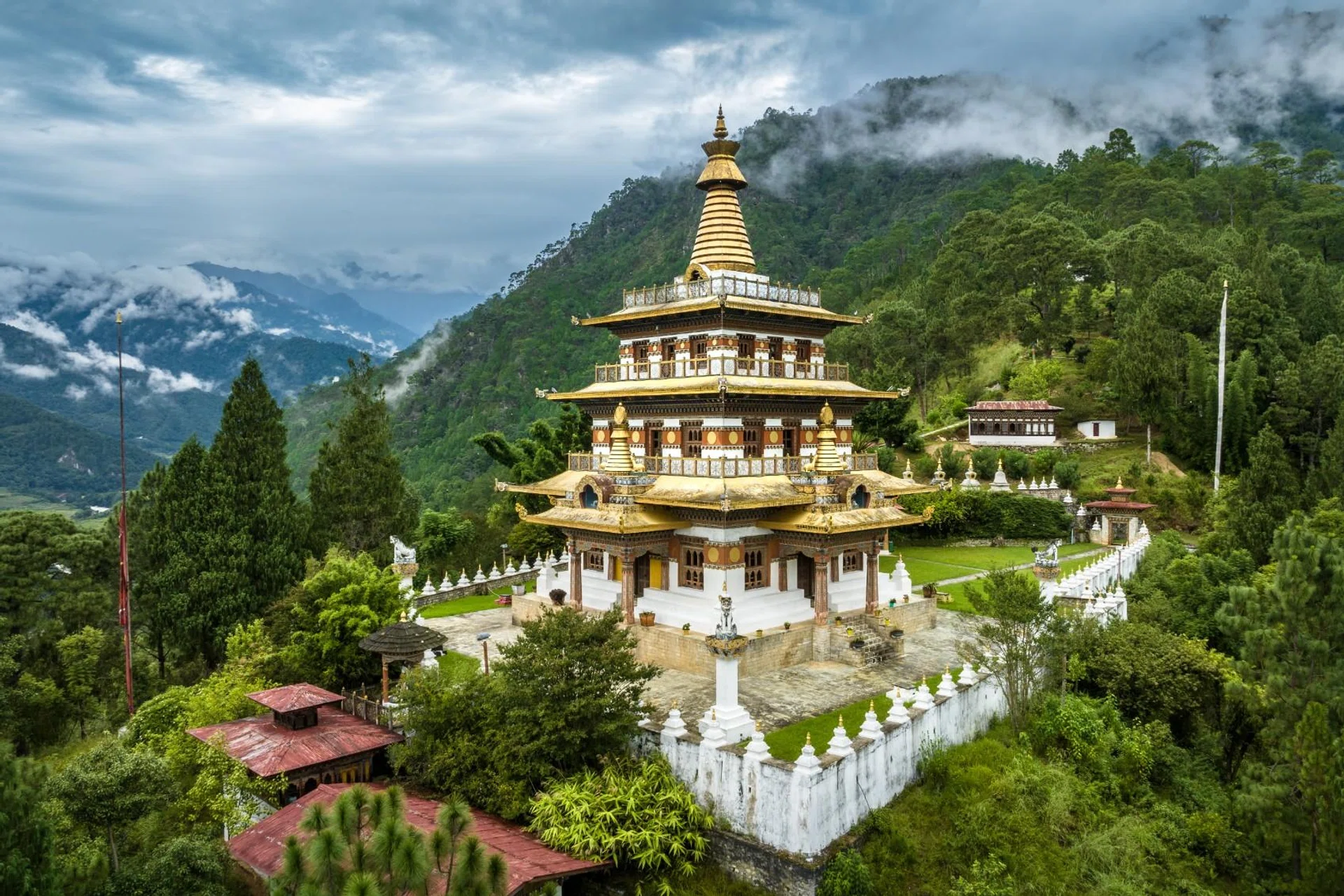
In Bhutan, contemporary art is just finding its feet — and already, it’s charting a path of its own. This is, after all, a country where Buddhist values still shape the rhythms of daily life and where progress is measured not in terms of economic value, but in terms of Gross National Happiness.
The collective that started it all is known as the Voluntary Artists Studio in Thimphu, or VAST for short. Founded in 1998 by five artists, it began as a grassroots movement offering free weekend classes to youth. Until then, there had been no institutional space for art not linked to religion or traditions.
“It’s only been 27 years since VAST Bhutan was started,” says Passang Dema, its executive director. “Before that, art here was entirely religious.”
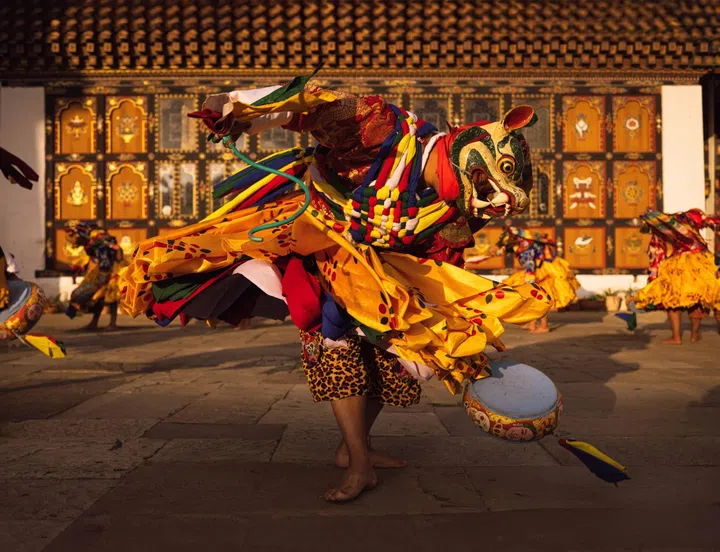
Indeed, to understand Bhutanese art is to understand how its belief systems flow through everyday life — where spiritual reverence remains the root of expression, and even painting is a form of devotion. Here, art adorns the walls of sacred spaces, homes and bridges. Mountains are considered sentient. Rivers are spirits.
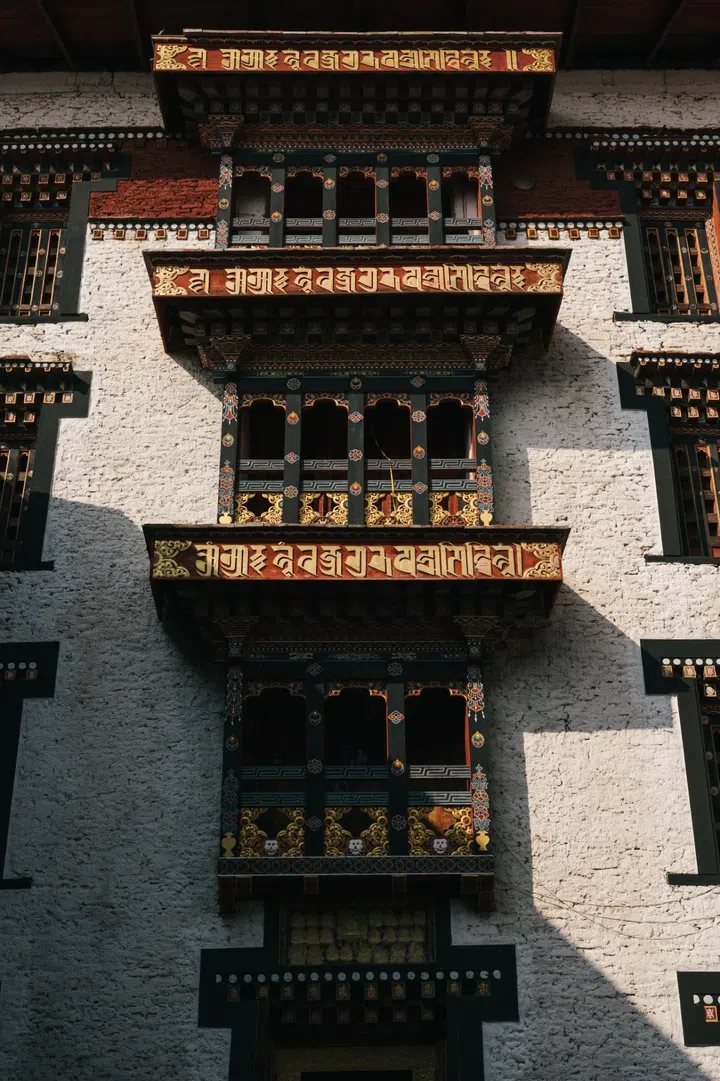
That sense of reverence extends to the country’s most enduring form: thangka painting, which actualises abstract belief systems. It is still taught in monastic settings and government institutes where Buddhist figures are to be replicated according to exacting strokes.
But contemporary art, Passang says, finally allows space for the self. “In traditional art, there are rules — things you’re allowed to do, and things you aren’t,” she says. “With contemporary art, you can finally bring out your feelings.”
Inside VAST’s exhibition space in Thimphu, canvases lean against ochre walls, each carrying its own quiet intent. Among them is Passang Dema’s “Harmony”, where she reinterprets Bhutan’s iconic “Four Harmonious Friends” motif through a contemporary, almost Bauhaus-like abstraction rendered in acrylic spray paint.
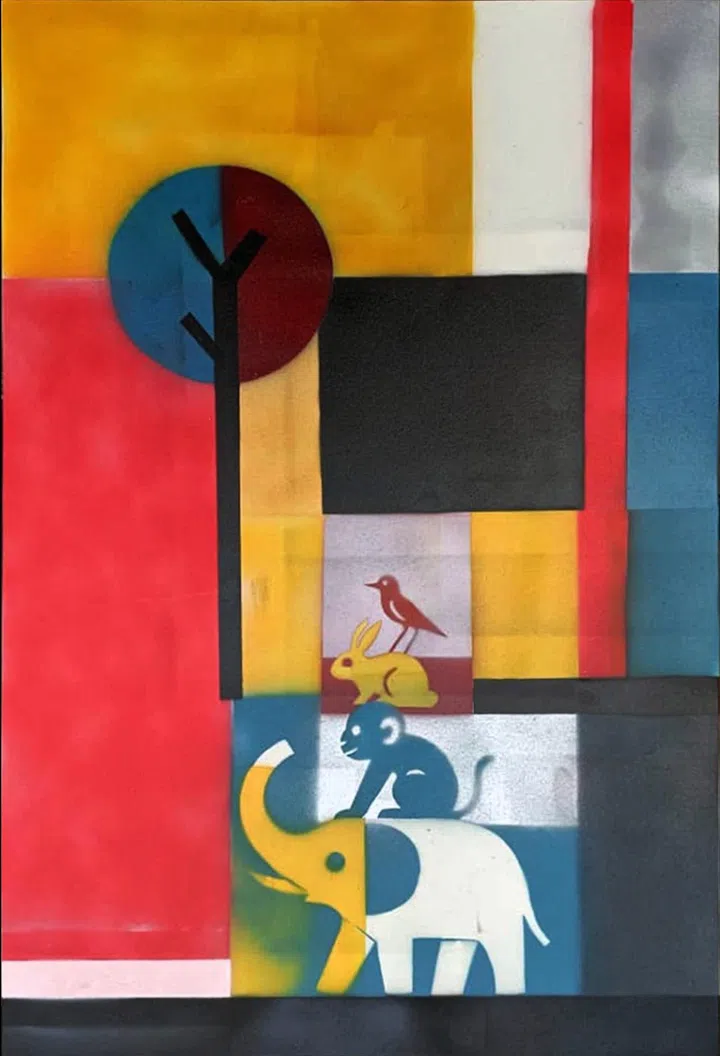
The story symbolises cooperation and the interdependence of beings existing in nature and is often depicted across religious buildings. Hers was a message of peace in a time when wars are hogging today’s headlines.
Tradition as a tool, not a cage
Like Passang, contemporary artists may no longer follow strict religious codes, but the instinct to create with care and intention remains. What’s emerging is not a break from tradition, but a deepening of it. The result may be different in execution, but it is no less exacting in spirit.
Take Tshewang Tenzin, a third-generation traditional Thangka painter who now explores abstraction. “Every stroke reflects my introspection,” he writes. “My art mirrors mindfulness, revealing my essence — a journey that brings focus and peace in the midst of life’s distractions.”
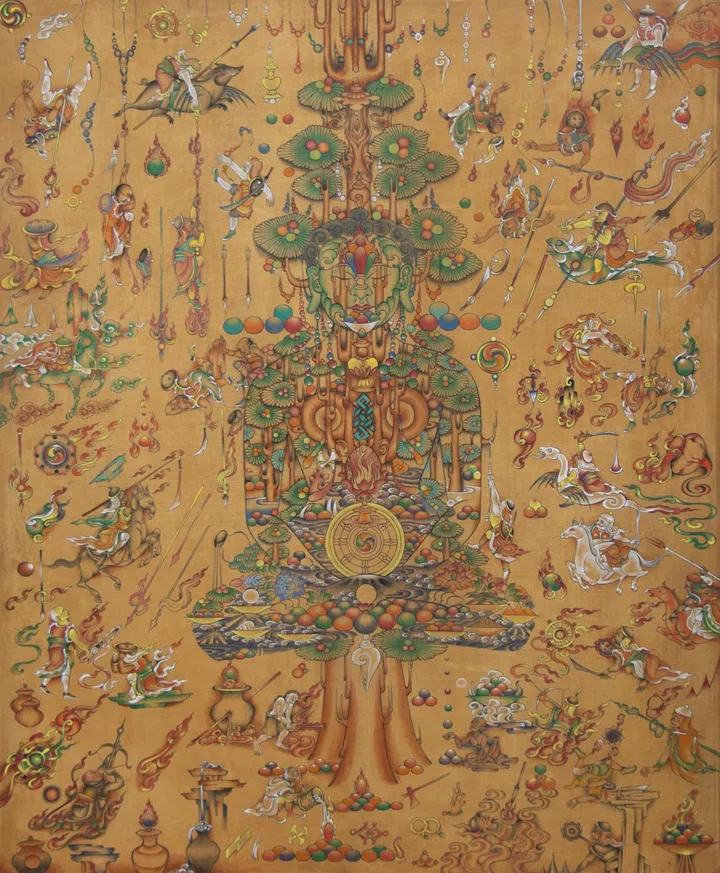
In one of his paintings, “The Wish-Fulfilling Tree’s Tale”, Buddhist cosmology is filtered through a meditative lens. It may have elements of a traditional thangka, but its message is distinctly contemporary.
Instead of illustrating Buddhist cosmology as doctrine, the artist reframes it as a metaphor for inner conflict — how pride, greed, and desire weaken our moral foundations from within, inviting the viewer into contemplation.
What’s striking is how many of these artists eschew the idea that meaning must come from suffering. In much of the world, intensity is often equated with rupture — and protest becomes shorthand for relevance. But in Bhutan, intensity is internal. It shows up gently, not rage.

“In Bhutan, our art hasn’t come out of war or colonialism,” Passang explains. “We haven’t needed to shout.”
That isn’t to say Bhutanese artists are without conviction. In “Beyond Racism”, Amit Bdr. Rai turns the mandala into a meditation on racial justice. He reflects on how prejudice, like other systems of imbalance, upholds power for the few at the expense of the many through intricate acrylic patterns and a kaleidoscope of soft tones.
The work invites viewers to look through what he calls “the heart’s lens” — to recognise that all life, in its diversity, holds the same worth.
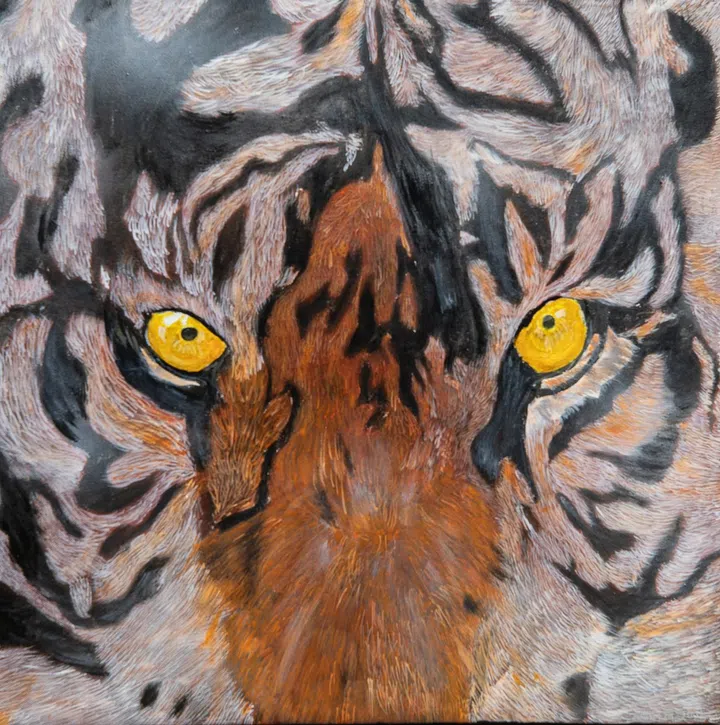
In “Predator’s Gaze”, Monjit Nepal captures the tiger’s raw intensity in a close-up that pulls the viewer straight into its sharp, unyielding eyes. The layered brushwork conveys both majesty and fragility, evoking the tension between the animal’s power and the species’ dwindling numbers. It serves as a reminder that looking into the tiger’s gaze is to confront our own role in its survival. Who really is the predator? It seems to ask.
Their works express concern for the state of the world through a subtle, distinctly Bhutanese visual vocabulary.
A scene in motion
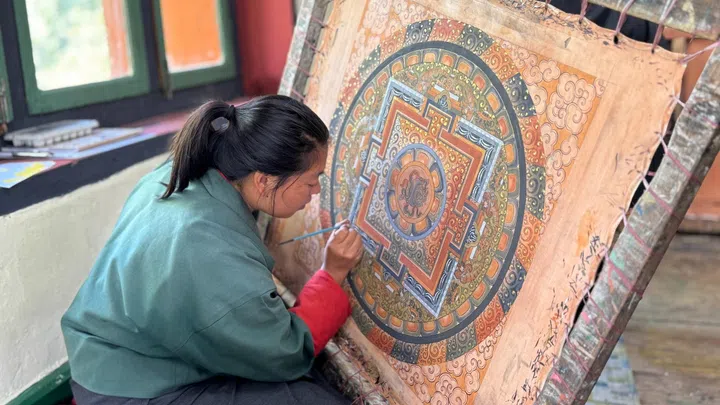
These signs point to a contemporary art scene poised for takeoff. A new generation of artists trained abroad is returning home with fresh techniques and sharper questions.
Solo exhibitions are becoming more frequent, and publications about them are emerging. VAST itself has begun turning its gaze outward — showcasing Bhutanese artists on the global stage. Their works have travelled to exhibitions in India, Taiwan, and across Southeast Asia, with the most recent showing in October this year held in Leuk, Switzerland.
For Bhutanese artists, showing abroad isn’t about chasing validation but widening the conversation.
“We are now connecting with galleries and curators outside Bhutan, and that’s important for our artists,” says Passang. “It helps them grow while staying grounded in our values.”
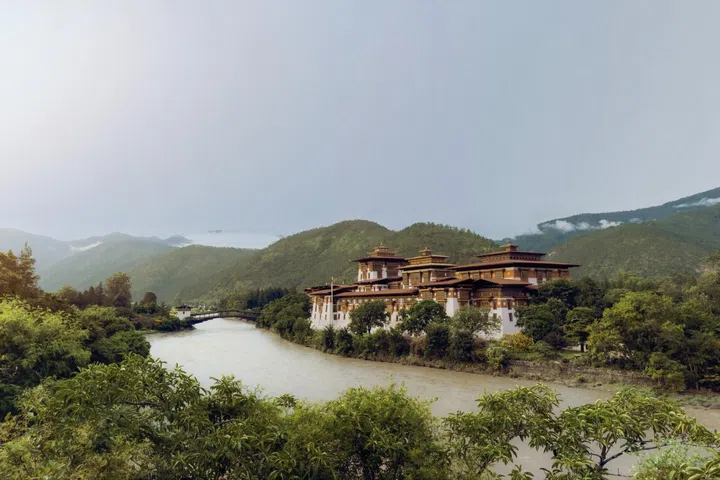
These overtures offer the contemporary art world a chance to reconsider what progress might mean. In a culture where creation is an act of mindfulness, Bhutan’s painters remind us that art can question without rage, and evolve without rupture.
Where in London, a Banksy mural may vanish overnight, in Thimphu, the art is patient and resolute in its intent — and one with its own message for the world.
Drukair (Royal Bhutan Airlines) operates twice-weekly flights from Singapore to Paro. This story was made possible with the support of SoulTrips and Druk Asia. www.drukasia.com, www.soultrips.co.
Three stays, three ways to see Bhutan
From pine forests to clouds to rivers, these stays capture Bhutan’s changing landscapes and its quiet rhythms.
Amankora Paro
Amankora is a study in quiet luxury. It’s set on the edge of the Paro Valley, and where suites open out to a pine forest with views of snow peaks. Mornings are remarkably still here, and come evening, dinners will have guests gathered around the hearth. For the adventurers raring to make the trek up to the iconic Tiger’s Nest temple, consider this your abode before making the journey.
www.aman.com
Six Senses Thimphu
Six Senses Thimphu is perched high above the capital with sweeping views of the drifting mist and wide valley. Its architecture is pared back yet rooted in Bhutanese craft, designed for stillness and reflection. Besides stunning views, cultural activities are on hand for guests, ranging from butter tea-making to archery — Bhutan’s national sport.
www.sixsenses.com
andBeyond Punakha River Lodge
andBeyond Punakha River Lodge spans 20.23ha on the banks of the Mo Chhu River. Its six intimate safari-style luxury tents, a River House and a two-bedroom Family Suite feature private decks, outdoor showers, and deep soaking tubs. Guests can raft, hike, or unwind in hot-stone baths. Breakfast showcases garden produce, local honey, freshly baked bread, and a selection of warm viennoiseries. www.andbeyond.com