
Share this article
At a time when the automotive industry continues its march toward electrification, Aston Martin has decided that its most powerful SUV needs neither an electric motor nor a battery pack.
Instead, the British marque has taken its already formidable DBX707, extracted more performance from its V8 engine, and made the resulting machine lighter, sharper, and considerably more expensive.
The new Aston Martin DBX S has arrived in Singapore, carrying a starting price of $980,000 before Certificate of Entitlement (COE) and optional extras. It represents the latest expression of the marque’s longstanding “S” philosophy: taking an existing performance car and pushing its capabilities further.
And in a market where luxury SUVs increasingly promise to do everything, Aston Martin seems particularly focused on one thing: making the person behind the wheel enjoy driving.
More power, no batteries
At the heart of the DBX S sits an enhanced V8 engine producing 727PS and 900Nm of torque. That translates into a century sprint of just 3.3 seconds and a top speed of 310kmh, figures that put this sizable luxury SUV firmly in sports-car territory.
Much of that improvement comes from turbocharger technology derived from Aston Martin’s forthcoming Valhalla supercar, which promises greater responsiveness and stronger performance at higher engine speeds. And unlike manufacturers that increasingly rely on hybrid assistance to deliver additional horsepower, Aston Martin has achieved these figures entirely through its internal combustion powertrain.
Beyond outright acceleration, the company wants to preserve the immediacy, mechanical character, and emotional engagement that have traditionally defined its sports cars. A specially tuned nine-speed multi-plate wet-clutch transmission and an all-wheel-drive system complete the powertrain package, promising more responsive performance without sacrificing the everyday usability expected of a luxury SUV.
The weight equation
More horsepower, however, accounts for only part of the DBX S story.
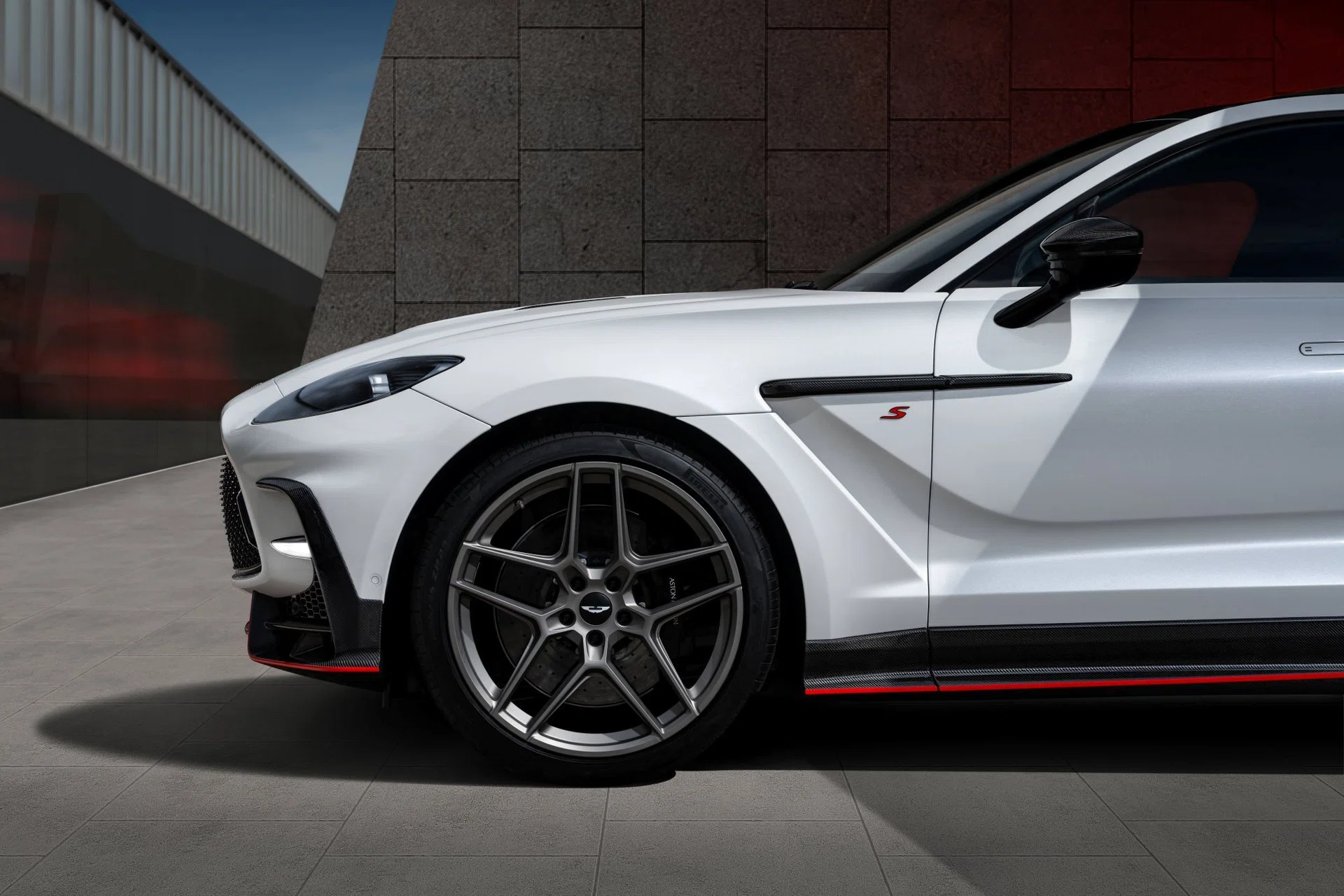
Aston Martin has also introduced several optional weight-saving measures, including 23-inch magnesium wheels that reduce unsprung and rotational mass, and a carbon-fibre roof that lowers the vehicle’s centre of gravity.
Together with other lightweight components, these options can shave as much as 47kg from the DBX S compared with the DBX707.
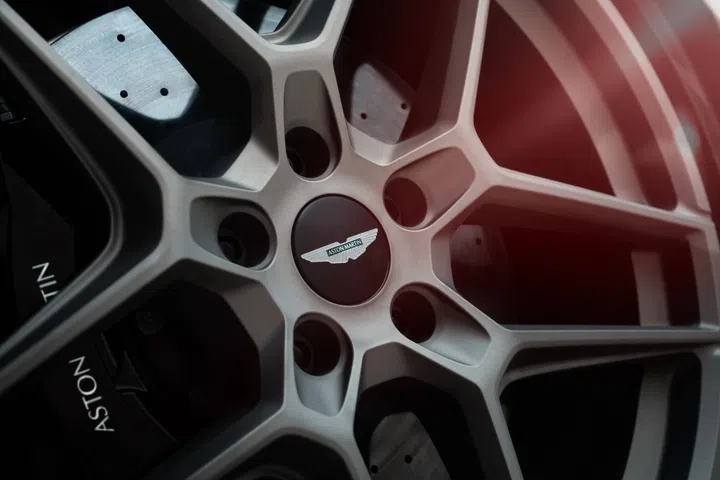
That reduction may sound modest against the considerable mass of a performance SUV, but its positioning demands closer inspection. Removing weight from the wheels and roof can improve responsiveness, agility, and body control, qualities that become particularly important when negotiating corners rather than accelerating along straights.
The marque has also revised the suspension calibration and enhanced chassis dynamics to deliver a more engaging driving experience while retaining the refinement expected of an Aston Martin.
An unmistakable identity
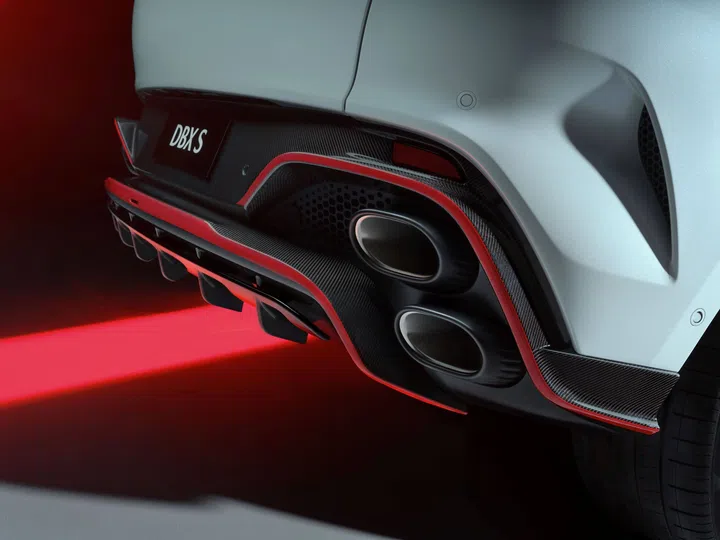
The mechanical revisions are matched by a more assertive exterior. A redesigned front grille and transformed rear distinguish the DBX S from its predecessor, while vertically stacked quad exhaust outlets underline its performance credentials. Buyers can specify additional carbon-fibre elements.
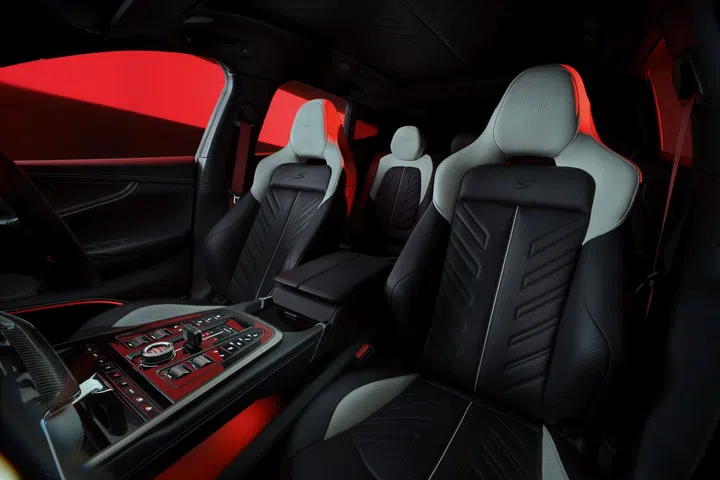
Inside, distinctive “S” detailing reinforces the car’s sporting identity, with Alcantara and leather finishes among the available upholstery choices.
The designation itself has considerable history. Aston Martin traces its “S” performance lineage to 1927, making the DBX S the latest interpretation of a philosophy that has endured for almost a century.
“The DBX S embodies what we believe an Aston Martin SUV should be — effortlessly capable, yet deeply engaging from behind the wheel,” says Ian Grant, general manager of Aston Martin Singapore.
For prospective buyers, one example finished in Onyx Black with a Phantom Grey interior is currently available for viewing and test drives in Singapore. The dealership is also accepting factory orders, with deliveries expected from the first quarter of 2027.
At nearly $1 million before COE and options, the DBX S makes no pretence of being a rational purchase. Its proposition rests instead on something more visceral: Even as electrification reshapes the automotive industry, a clientele remains willing to pay handsomely for the particular sensations of a powerful combustion engine.