%22%3E%0A%3Cpath%20d%3D%22M412%20101.2H393.7C393.1%20101.2%20392.3%20100.9%20391.8%20100.5C377.3%2087.6004%20362.9%2074.6004%20348.4%2061.6004C344.8%2058.4004%20341.3%2055.2004%20337.7%2052.0004C337.1%2051.5004%20336.2%2051.1004%20335.5%2051.0004C334.2%2050.8004%20333%2051.0004%20331.5%2051.0004V101.1H316.7V0.100391H331.4V44.3004C331.9%2044.3004%20332.2%2044.4004%20332.5%2044.4004C334.9%2044.4004%20337.2%2044.5004%20339.6%2044.4004C340.4%2044.4004%20341.3%2044.0004%20341.8%2043.5004C351.6%2034.4004%20361.4%2025.2004%20371.1%2016.0004C376.5%2010.9004%20381.9%205.90039%20387.3%200.800391C387.9%200.200391%20388.5%200.000390626%20389.3%200.000390626H400.9C384.2%2015.8004%20367.8%2031.3004%20351.2%2047.0004C371.5%2065.0004%20391.8%2082.9004%20412.1%20100.9C412.1%20101%20412.1%20101.1%20412%20101.2ZM180.9%20101.2C184.1%2094.9004%20187.2%2088.9004%20190.3%2082.8004C198.3%2067.3004%20206.2%2051.8004%20214.2%2036.2004C220.3%2024.4004%20226.4%2012.5004%20232.4%200.700391C232.7%200.100391%20233%20-0.0996094%20233.7%20-0.0996094H248.1C248.8%20-0.0996094%20249.2%200.100391%20249.6%200.800391C256%2013.3004%20262.4%2025.7004%20268.8%2038.2004C279.3%2058.6004%20289.8%2079.0004%20300.3%2099.5004C300.5%20100%20300.8%20100.4%20301.1%20101.1C300.5%20101.1%20300.1%20101.2%20299.7%20101.2H286.5C285.6%20101.2%20285.1%20100.9%20284.7%20100.2C280.1%2091.3004%20275.4%2082.4004%20270.8%2073.4004C270.1%2072.1004%20269.3%2071.6004%20267.8%2071.6004H209.9C208.7%2071.6004%20208.1%2072.0004%20207.5%2073.1004C202.9%2082.1004%20198.2%2091.0004%20193.6%20100C193.1%20101%20192.6%20101.3%20191.5%20101.3C188.4%20101.2%20185.3%20101.3%20182.3%20101.3C182%20101.2%20181.6%20101.2%20180.9%20101.2ZM239.1%2011.4004C230%2029.2004%20221.1%2046.7004%20212.1%2064.3004H266.4C257.2%2046.7004%20248.2%2029.2004%20239.1%2011.4004ZM0%200.000390626H43.4C51.2%200.000390626%2058.7%201.20039%2065.7%204.80039C75.9%2010.0004%2078.9%2018.0004%2078.6%2027.4004C78.3%2034.3004%2076%2040.5004%2071.2%2045.5004C67.3%2049.6004%2062.4%2052.3004%2057.1%2054.3004C50.6%2056.7004%2043.9%2058.0004%2037.1%2058.6004C30.1%2059.2004%2023.1%2059.4004%2016.2%2059.7004C15.8%2059.7004%2015.3%2059.8004%2014.8%2059.8004V101.1H0.1C0%2067.4004%200%2033.8004%200%200.000390626ZM14.8%207.10039V52.2004C23.7%2052.4004%2032.6%2052.3004%2041.2%2050.1004C44.4%2049.3004%2047.6%2048.2004%2050.6%2046.7004C58.4%2043.0004%2062.3%2036.7004%2062.7%2028.0004C63%2019.9004%2059.5%2014.1004%2052.4%2010.5004C47.6%208.00039%2042.5%207.10039%2037.2%207.10039H14.8ZM95.9%20101.1V0.100391H167.3V7.20039H110.7V44.7004H158.1V51.9004H110.8V93.9004H171.1V101C146.1%20101.1%20121%20101.1%2095.9%20101.1Z%22%20fill%3D%22black%22%2F%3E%0A%3Cpath%20d%3D%22M35.0004%2025.7996H42.5004V20.6996H44.8004V33.1996H42.6004V27.5996H34.9004V33.2996H32.7004V20.7996H35.0004V25.7996ZM54.4004%2025.8996V27.2996H48.9004V31.6996H55.9004C55.9004%2032.1996%2056.0004%2032.5996%2056.0004%2033.0996H46.5004V20.5996H55.5004V21.8996H49.0004V25.7996C50.7004%2025.8996%2052.5004%2025.8996%2054.4004%2025.8996ZM25.9004%2033.0996H23.5004V21.9996H17.9004V20.6996H31.6004V22.0996H27.1004C26.2004%2022.0996%2025.9004%2022.2996%2025.9004%2023.1996C26.0004%2026.0996%2025.9004%2028.9996%2025.9004%2031.7996V33.0996Z%22%20fill%3D%22black%22%2F%3E%0A%3C%2Fg%3E%0A%3Cdefs%3E%0A%3CclipPath%20id%3D%22clip0_388_462%22%3E%0A%3Crect%20width%3D%22411%22%20height%3D%22101.2%22%20fill%3D%22white%22%2F%3E%0A%3C%2FclipPath%3E%0A%3C%2Fdefs%3E%0A%3C%2Fsvg%3E%0A)
House Tour: A heritage shophouse on Emerald Hill refitted with floating staircases
Wood, glass, and stone materials bring the cosy abode in this conservation building into the 21st century.
By Luo Jingmei /
Share this article
The complex architectural staircase etchings of Giovanni Battista Piranesi have intrigued many for centuries. These imaginings of his fascination with Roman ruins also drew from his work as a scenographer.
Piranesi’s artwork — in particular, The Drawbridge, completed in 1971 — inspired the renovation of this shophouse at Emerald Hill.
“Piranesi’s drawings often depicted a grand vision of imagined ruins and complex spatial arrangements. By manipulating scale and dramatic contrast of light and shadow, they were able to depict environments that felt simultaneously otherworldly and intimately human,” says Pan Yi Cheng, the founder of multidisciplinary design studio Type 0 Architecture.
Preserving the past
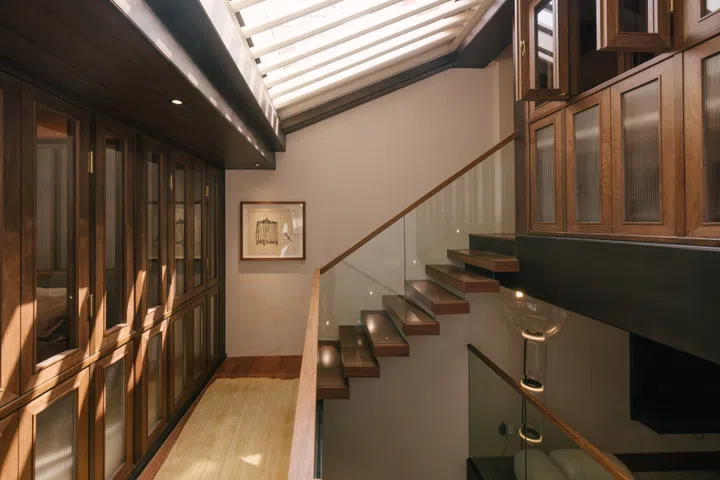
Inside the shophouse, a spectacle of “floating” staircases animated by light and shadow certainly pays homage to Piranesi. Entry from the five-foot-way into this vertical panorama is through a heritage pintu pagar — meaning fence door in Malay.
The half-height outer door is a charming feature of vernacular urban typologies brought to this part of Asia from 19th-century China.
This, and many other shophouse quirks, attracted the businessman-owner and his restaurateur wife, who live here with their two children. “The owner has a strong interest in the area’s architectural heritage and wanted to experience living in a traditional shophouse,” says Pan.
Mainly constructed by Straits-born Chinese, these shophouses behind Orchard Road feature eclectic “Chinese-Baroque” elements.
As it was a conservation building, the team had to restore and treat it carefully. “For the exterior, we kept to the facade colours that corresponded to a photograph from the 1960s,” says Pan. The paint that covered granite corbels was stripped off with chemicals and brushed to reveal the original finish.
The well-preserved timber parts, such as the pintu pagar, fenestrations, and a quaint mailbox door with woven panels in the outer wall, were sanded down, re-varnished, and repainted.
“The Chengal floor joists were prominent features of the house, and what attracted the owners was what they saw when they first saw the property. We wanted to express the structural integrity as much as possible and opted not to cover them,” Pan adds.
Strict regulations made this challenging, but his team was creative, covering fire-rated boards with teak veneer panels for a coherent aesthetic and raising bathrooms with steel and concrete members to preserve the existing timber floors.
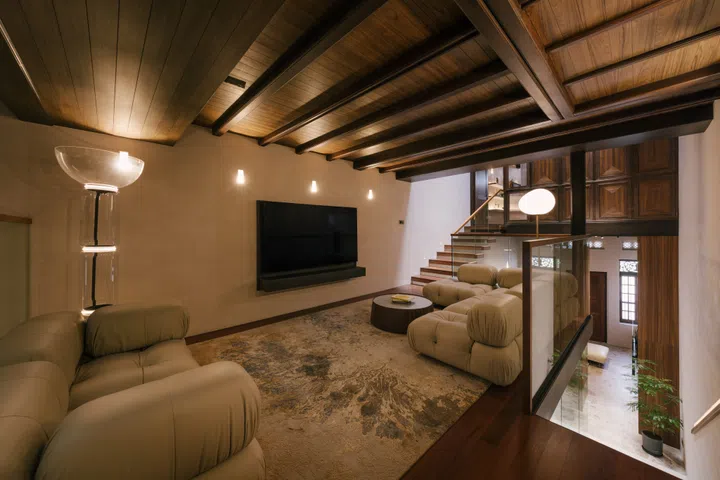
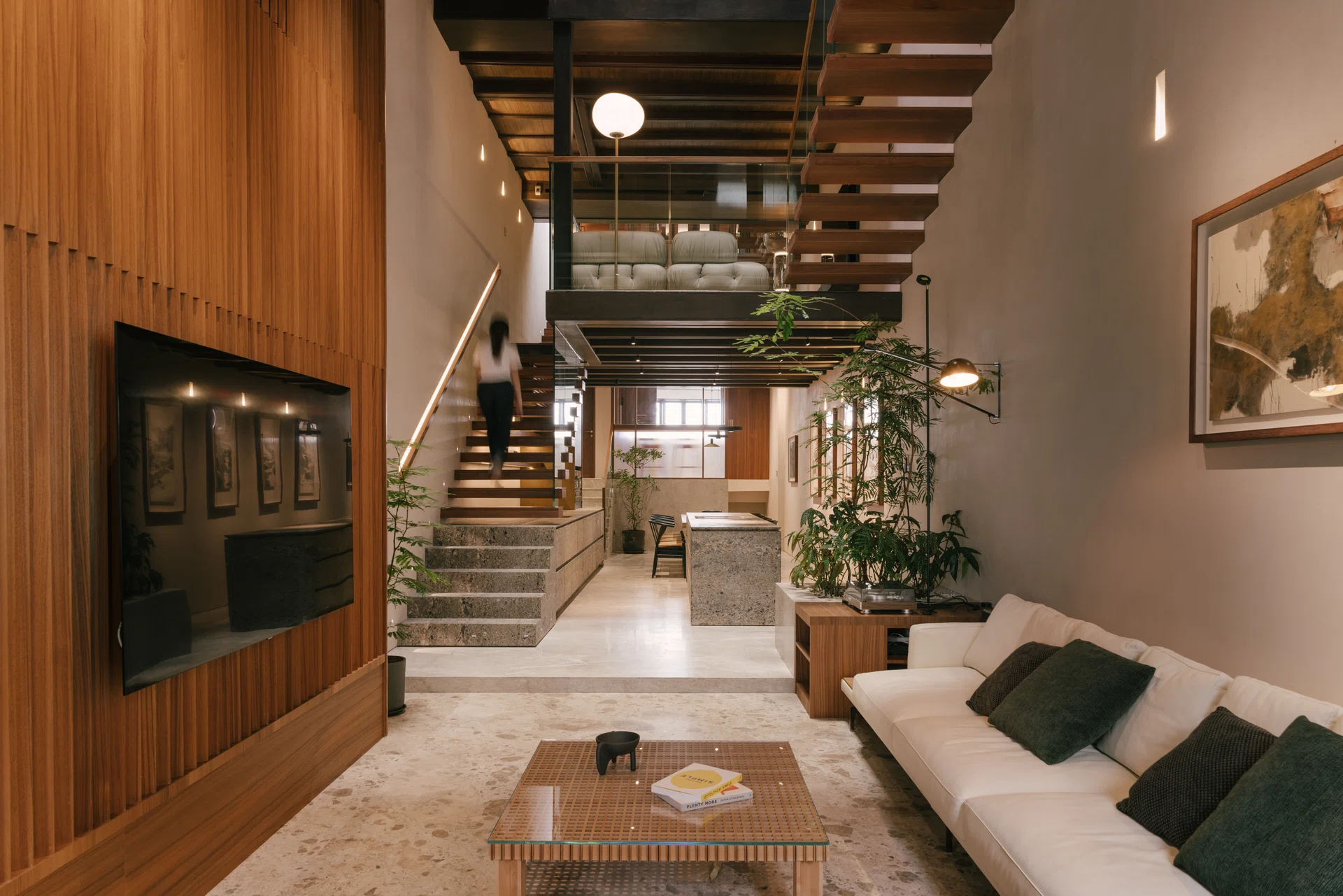
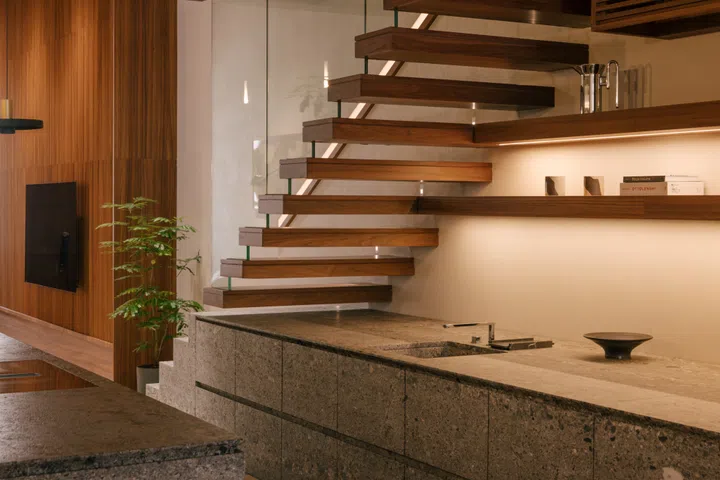
To create an open feel through the shophouse, Pan replaced the dogleg staircase with floating steps edged against the party walls, which were integrated with a new family lounge and playroom on “floating platforms”.
“The strategy was to free up the centre of the shophouse by transforming the typical staircase into a continuous communal space connecting the private rooms at the front and rear ends of the house. As we open up voids, allowing light to cascade through the interior, the play of light and shadow creates dynamic shifts in perception throughout the day,” explains Pan.
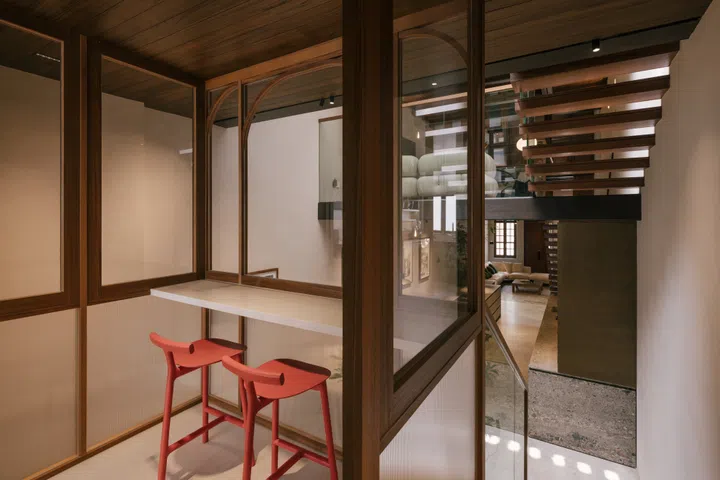
Removing the dogleg staircase also “exaggerates the (perceived) depth of the shophouse”, he points out. This means one can now see the whole length of the shophouse at the first storey from the living room to the dining area and kitchen.
A new artificial skylight mimicking the external lighting conditions was also added, producing a second “air well” at the front of the house.
Finding new purpose
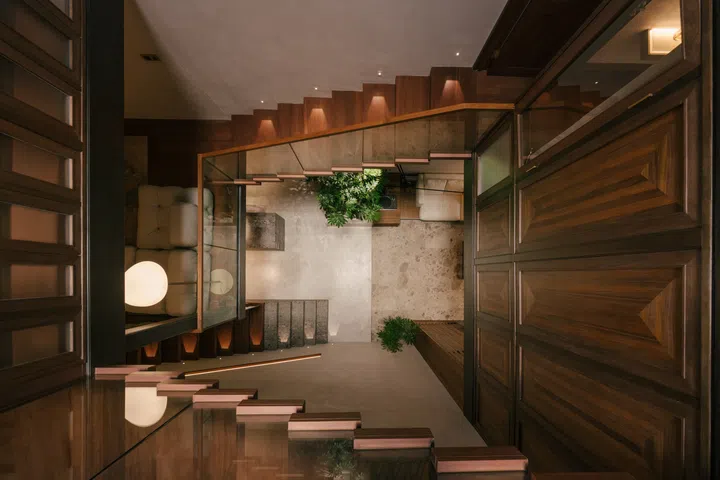
To create harmony between the old and new, Pan looked to existing shophouse features. “Firstly, we designed the facades facing the air wells with the same timber panelled casement windows ‘mirroring’ the external fenestration (window arrangement). Secondly, we reimagined the forecourt as the entrance of the property that forms a threshold at the first air well between the living and dining space, delineating it with a planter,” he elaborates.
The forecourt is suitably finished in Beige Ceppo — a stone with a large granular character commonly used in external landscaping. Through the house, natural materials complement the existing timber palette — “namely timber and stone varieties for the hard furnishing like carpentry and architectural features like staircases; and leather and natural fabric for soft furnishing”, says Pan.
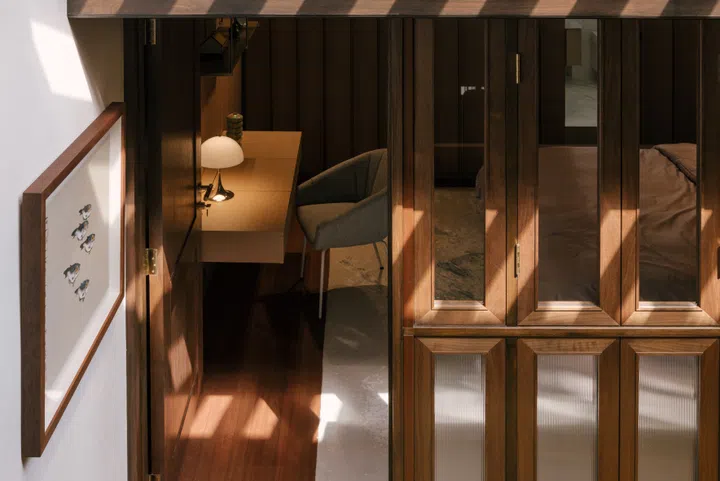
The owners share that they like hanging out in the newly inserted family lounge and study room to watch movies or play games together with the children.
Shares Pan, “Above all, they really appreciate the openness and interconnected nature of the spaces. Perhaps like many Asian parents, our clients like the ability to be able to watch over and call out to their children wherever they are in the house.”
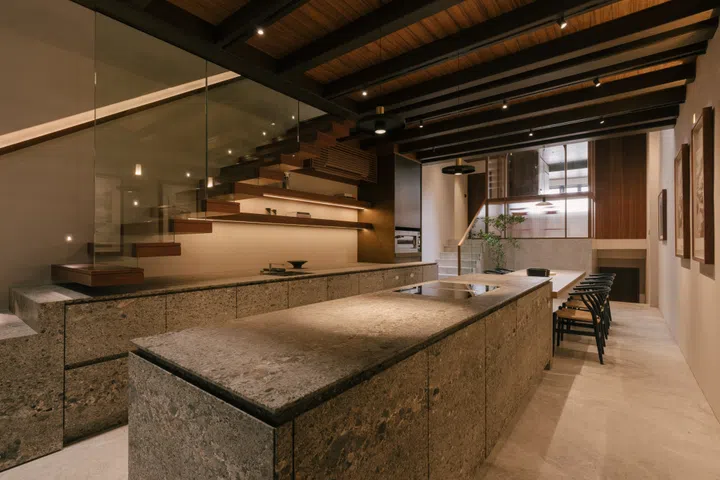
As the wife enjoys cooking and baking at home with friends and family, the kitchen-cum-dining is now her fort.
Muses Pan, “The wife mentioned that the dining area is her favourite space as she can command and control her wet and dry kitchen, observe the family mezzanine as well as call out to the playroom when it is time for meals. The elder daughter has also taken to her mom’s hobby, learning to make pastries and pizza.”