%22%3E%0A%3Cpath%20d%3D%22M412%20101.2H393.7C393.1%20101.2%20392.3%20100.9%20391.8%20100.5C377.3%2087.6004%20362.9%2074.6004%20348.4%2061.6004C344.8%2058.4004%20341.3%2055.2004%20337.7%2052.0004C337.1%2051.5004%20336.2%2051.1004%20335.5%2051.0004C334.2%2050.8004%20333%2051.0004%20331.5%2051.0004V101.1H316.7V0.100391H331.4V44.3004C331.9%2044.3004%20332.2%2044.4004%20332.5%2044.4004C334.9%2044.4004%20337.2%2044.5004%20339.6%2044.4004C340.4%2044.4004%20341.3%2044.0004%20341.8%2043.5004C351.6%2034.4004%20361.4%2025.2004%20371.1%2016.0004C376.5%2010.9004%20381.9%205.90039%20387.3%200.800391C387.9%200.200391%20388.5%200.000390626%20389.3%200.000390626H400.9C384.2%2015.8004%20367.8%2031.3004%20351.2%2047.0004C371.5%2065.0004%20391.8%2082.9004%20412.1%20100.9C412.1%20101%20412.1%20101.1%20412%20101.2ZM180.9%20101.2C184.1%2094.9004%20187.2%2088.9004%20190.3%2082.8004C198.3%2067.3004%20206.2%2051.8004%20214.2%2036.2004C220.3%2024.4004%20226.4%2012.5004%20232.4%200.700391C232.7%200.100391%20233%20-0.0996094%20233.7%20-0.0996094H248.1C248.8%20-0.0996094%20249.2%200.100391%20249.6%200.800391C256%2013.3004%20262.4%2025.7004%20268.8%2038.2004C279.3%2058.6004%20289.8%2079.0004%20300.3%2099.5004C300.5%20100%20300.8%20100.4%20301.1%20101.1C300.5%20101.1%20300.1%20101.2%20299.7%20101.2H286.5C285.6%20101.2%20285.1%20100.9%20284.7%20100.2C280.1%2091.3004%20275.4%2082.4004%20270.8%2073.4004C270.1%2072.1004%20269.3%2071.6004%20267.8%2071.6004H209.9C208.7%2071.6004%20208.1%2072.0004%20207.5%2073.1004C202.9%2082.1004%20198.2%2091.0004%20193.6%20100C193.1%20101%20192.6%20101.3%20191.5%20101.3C188.4%20101.2%20185.3%20101.3%20182.3%20101.3C182%20101.2%20181.6%20101.2%20180.9%20101.2ZM239.1%2011.4004C230%2029.2004%20221.1%2046.7004%20212.1%2064.3004H266.4C257.2%2046.7004%20248.2%2029.2004%20239.1%2011.4004ZM0%200.000390626H43.4C51.2%200.000390626%2058.7%201.20039%2065.7%204.80039C75.9%2010.0004%2078.9%2018.0004%2078.6%2027.4004C78.3%2034.3004%2076%2040.5004%2071.2%2045.5004C67.3%2049.6004%2062.4%2052.3004%2057.1%2054.3004C50.6%2056.7004%2043.9%2058.0004%2037.1%2058.6004C30.1%2059.2004%2023.1%2059.4004%2016.2%2059.7004C15.8%2059.7004%2015.3%2059.8004%2014.8%2059.8004V101.1H0.1C0%2067.4004%200%2033.8004%200%200.000390626ZM14.8%207.10039V52.2004C23.7%2052.4004%2032.6%2052.3004%2041.2%2050.1004C44.4%2049.3004%2047.6%2048.2004%2050.6%2046.7004C58.4%2043.0004%2062.3%2036.7004%2062.7%2028.0004C63%2019.9004%2059.5%2014.1004%2052.4%2010.5004C47.6%208.00039%2042.5%207.10039%2037.2%207.10039H14.8ZM95.9%20101.1V0.100391H167.3V7.20039H110.7V44.7004H158.1V51.9004H110.8V93.9004H171.1V101C146.1%20101.1%20121%20101.1%2095.9%20101.1Z%22%20fill%3D%22black%22%2F%3E%0A%3Cpath%20d%3D%22M35.0004%2025.7996H42.5004V20.6996H44.8004V33.1996H42.6004V27.5996H34.9004V33.2996H32.7004V20.7996H35.0004V25.7996ZM54.4004%2025.8996V27.2996H48.9004V31.6996H55.9004C55.9004%2032.1996%2056.0004%2032.5996%2056.0004%2033.0996H46.5004V20.5996H55.5004V21.8996H49.0004V25.7996C50.7004%2025.8996%2052.5004%2025.8996%2054.4004%2025.8996ZM25.9004%2033.0996H23.5004V21.9996H17.9004V20.6996H31.6004V22.0996H27.1004C26.2004%2022.0996%2025.9004%2022.2996%2025.9004%2023.1996C26.0004%2026.0996%2025.9004%2028.9996%2025.9004%2031.7996V33.0996Z%22%20fill%3D%22black%22%2F%3E%0A%3C%2Fg%3E%0A%3Cdefs%3E%0A%3CclipPath%20id%3D%22clip0_388_462%22%3E%0A%3Crect%20width%3D%22411%22%20height%3D%22101.2%22%20fill%3D%22white%22%2F%3E%0A%3C%2FclipPath%3E%0A%3C%2Fdefs%3E%0A%3C%2Fsvg%3E%0A)
Two unique ways to explore Myanmar: Get on a cruise and a hot-air balloon
Tourism is set to rise as the country eases travel restrictions.
By Lee Jian Xuan /
Share this article
It is a searing afternoon as I trundle along one of the numerous pot-holed roads criss-crossing Bagan, once the capital of an ancient kingdom from which modern-day Myanmar was born.
The first day of my trip has been a whirlwind tour of the temples, pagodas and Buddha statues that dot the old city’s landscape. Behind me, an American tourist, weary from our hour-long bumpy, lurching ride, lets out a loud sigh.
Like him, I, too, feel a palpable sense of relief as we step into the gleaming air-conditioned luxury vessel that will be our stately home on the water for the next four days.
As the servers on board greet my companions and me with wide smiles and wet towels, whisking away our dusty shoes to be washed, I feel my fatigue quickly melt away.
Myanmar rewards the intrepid traveller who might brave sand, dust and the oppressive heat during the hot season, but one can also opt for the comfort afforded by river cruises, such as the luxurious The Strand Cruise, which I am aboard.
Launched in October last year, the cruise is operated by GCP Hospitality, an affiliate of Hong Kong-based private equity group Gaw Capital Partners. It is one of the latest entrants to the country’s cruise market, which is picking up steam as the country emerges from decades of reclusion under military junta rule.
According to official statistics, Myanmar welcomed 25 cruise ships carrying 26,000 passengers last year and the number looks set to rise this year as travel restrictions ease. From December, Singaporeans travelling to Myanmar will no longer require a visa for stays of not longer than 30 days.
(Related: Tourism in Yangon is rocketing.)
Our planned route of travel plies Myanmar’s mighty Irrawaddy River, which spans about 2,170km. It starts in the snow-capped Himalayan mountains and winds through the country, widening into a delta in the lowlands, before flowing into the Andaman Sea.
The journey takes us northwards of Bagan to Mandalay, the seat of the last Burmese monarchy, before the country was annexed by British forces in 1885. Over the next four days, the ship makes several land stops daily, giving us the option to tour the ruins of old Myanmar capitals.
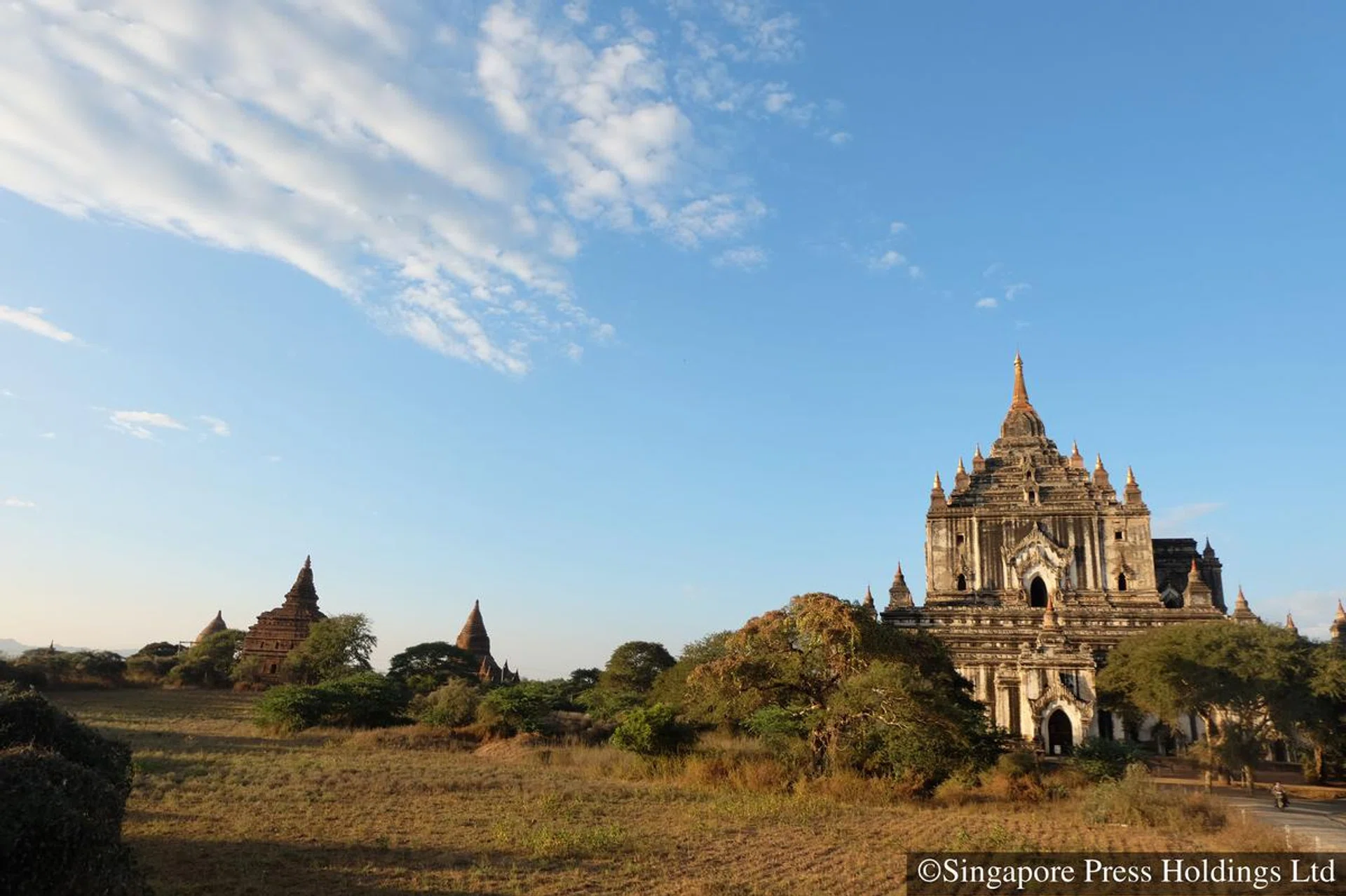
We spend our first day exploring Bagan, a tourist hot spot which is home to more than 2,000 temples and pagodas of every shape, size and colour, a mix of old and new designs.

Hop on a hot-air balloon to see Bagan's more than 2,000 temples and pagodas in one sweeping panorama.
Our first stop is the Shwezigon Pagoda, which is crowned by a massive gold leaf-gilded stupa that glimmers in the sun. Our guide, Mr Tun Tun Lin, tells us in halting English that it was built in the 11th century by King Anawrahta, who established Theravada Buddhism as the country’s primary religion.
Later, we visit the Ananda temple, which is carved out of a rich, creamy shade of sandstone and is considered one of Bagan’s most beautiful temples. It was built by another king who had hoped to earn religious merit.
Over the years, many Buddhists like them commissioned the building of temples and pagodas, adds Mr Tun. This has, however, put a crimp in Bagan’s heritage ambitions – the area was not designated a Unesco World Heritage site, due to unfettered rebuilding and restoration after a major 1975 earthquake.
Another guide, Ms April Tin Tin Aye, who is a member of conservation group Bagan Heritage Trust, tells us: “We’re getting more tourists here and there’s a lot of exhaust gas from the buses and the hot-air balloons. We’re just starting to study the effects of all this.”
Early next morning, we take a bus to the Tantkyitaung Pagoda, which offers a hilltop view of the Irrawaddy River and the surrounding temples and flood plains.
Just before we board the ship, a local dance troupe dons an elephant costume to perform a merry dance for us. Looking on, I am transported back to a time when Bagan flourished as a mediaeval Buddhist stronghold of great learning and culture, where kings and monks were equally venerated.
I while away most of my days aboard the ship, as we continue our cruise towards Mandalay. Though our floating hotel is equipped with amenities such as a gym, a spa, an on-deck pool and a bar, I am reluctant to leave the comfortable cabin I have been assigned. It comes with an ensuite bathroom, polished teak furniture, sliding balcony doors with a river view and a king-sized bed.
For breakfast served in the ship’s restaurant, I skip the usual spread of bread, hams and cheeses in favour of mohinga, a hearty dish of rice vermicelli soaked in a tangy fish broth and topped with lemongrass and scallions, which is loved by locals. Lunch is usually served buffet- style on the deck, so passengers can lounge on daybeds and sofas and watch scenes of bucolic river life unfold.
(Related: Singaporean fare by Les Amis Group in Yangon.)
The Irrawaddy is a hive of activity, shared by barges, fishing boats and other cruise ships sailing by at all hours of the day. Nearer the banks, villagers do laundry, bathe, gossip and cool off from the midday sun with a quick dip. Swallows swoop and dart next to our ship in the mornings, but we do not spot the endangered Irrawaddy dolphins, which sometimes nose into these waters.
One evening, I head to the deck for an early cocktail before dinner and watch as the setting sun paints the sky in dramatic streaks of indigo, amber and pink. The ship can take up to 56 passengers and maintains a passenger to server ratio of 1:1, says American cruise manager Molly McBride.
The service by the crew of mainly locals is impeccable – polite servers materialise to take drink requests the second I step on deck and I retire to my cabin nightly to find handwritten notes and tokens – a leather-bound notebook, a toy puppet and a lacquer box – on my bed.
Most of my fellow passengers are wealthy retirees who like the leisurely pace of the trip and are happy to skip the land tours to relax aboard the ship. Upon docking at Mandalay, we board a tuk-tuk to the Mingun township to see the largest uncracked hanging bell in the world, which weighs five tonnes.
We also walk on the rickety U Bein teak bridge, amid locals crossing the lake on their way to work and school in the city.

The U Bein bridge in Mandalay is used by locals to cross the lake on their way to work and school.
Our trip is bookended by a stay in Yangon’s luxurious colonial-style The Strand Hotel, which was founded in 1901 by the Sarkies brothers, the Armenian hoteliers who developed Singapore’s Raffles Hotel.
Stepping out into the bustling city, with its traffic-clogged streets and streams of city dwellers, I am aware of how rapidly Myanmar is changing. It stirs in me a longing for the languid days of a river cruise that passes through the heart of Myanmar and takes me back to its storied past.
Adapted from The Sunday Times.