%22%3E%0A%3Cpath%20d%3D%22M412%20101.2H393.7C393.1%20101.2%20392.3%20100.9%20391.8%20100.5C377.3%2087.6004%20362.9%2074.6004%20348.4%2061.6004C344.8%2058.4004%20341.3%2055.2004%20337.7%2052.0004C337.1%2051.5004%20336.2%2051.1004%20335.5%2051.0004C334.2%2050.8004%20333%2051.0004%20331.5%2051.0004V101.1H316.7V0.100391H331.4V44.3004C331.9%2044.3004%20332.2%2044.4004%20332.5%2044.4004C334.9%2044.4004%20337.2%2044.5004%20339.6%2044.4004C340.4%2044.4004%20341.3%2044.0004%20341.8%2043.5004C351.6%2034.4004%20361.4%2025.2004%20371.1%2016.0004C376.5%2010.9004%20381.9%205.90039%20387.3%200.800391C387.9%200.200391%20388.5%200.000390626%20389.3%200.000390626H400.9C384.2%2015.8004%20367.8%2031.3004%20351.2%2047.0004C371.5%2065.0004%20391.8%2082.9004%20412.1%20100.9C412.1%20101%20412.1%20101.1%20412%20101.2ZM180.9%20101.2C184.1%2094.9004%20187.2%2088.9004%20190.3%2082.8004C198.3%2067.3004%20206.2%2051.8004%20214.2%2036.2004C220.3%2024.4004%20226.4%2012.5004%20232.4%200.700391C232.7%200.100391%20233%20-0.0996094%20233.7%20-0.0996094H248.1C248.8%20-0.0996094%20249.2%200.100391%20249.6%200.800391C256%2013.3004%20262.4%2025.7004%20268.8%2038.2004C279.3%2058.6004%20289.8%2079.0004%20300.3%2099.5004C300.5%20100%20300.8%20100.4%20301.1%20101.1C300.5%20101.1%20300.1%20101.2%20299.7%20101.2H286.5C285.6%20101.2%20285.1%20100.9%20284.7%20100.2C280.1%2091.3004%20275.4%2082.4004%20270.8%2073.4004C270.1%2072.1004%20269.3%2071.6004%20267.8%2071.6004H209.9C208.7%2071.6004%20208.1%2072.0004%20207.5%2073.1004C202.9%2082.1004%20198.2%2091.0004%20193.6%20100C193.1%20101%20192.6%20101.3%20191.5%20101.3C188.4%20101.2%20185.3%20101.3%20182.3%20101.3C182%20101.2%20181.6%20101.2%20180.9%20101.2ZM239.1%2011.4004C230%2029.2004%20221.1%2046.7004%20212.1%2064.3004H266.4C257.2%2046.7004%20248.2%2029.2004%20239.1%2011.4004ZM0%200.000390626H43.4C51.2%200.000390626%2058.7%201.20039%2065.7%204.80039C75.9%2010.0004%2078.9%2018.0004%2078.6%2027.4004C78.3%2034.3004%2076%2040.5004%2071.2%2045.5004C67.3%2049.6004%2062.4%2052.3004%2057.1%2054.3004C50.6%2056.7004%2043.9%2058.0004%2037.1%2058.6004C30.1%2059.2004%2023.1%2059.4004%2016.2%2059.7004C15.8%2059.7004%2015.3%2059.8004%2014.8%2059.8004V101.1H0.1C0%2067.4004%200%2033.8004%200%200.000390626ZM14.8%207.10039V52.2004C23.7%2052.4004%2032.6%2052.3004%2041.2%2050.1004C44.4%2049.3004%2047.6%2048.2004%2050.6%2046.7004C58.4%2043.0004%2062.3%2036.7004%2062.7%2028.0004C63%2019.9004%2059.5%2014.1004%2052.4%2010.5004C47.6%208.00039%2042.5%207.10039%2037.2%207.10039H14.8ZM95.9%20101.1V0.100391H167.3V7.20039H110.7V44.7004H158.1V51.9004H110.8V93.9004H171.1V101C146.1%20101.1%20121%20101.1%2095.9%20101.1Z%22%20fill%3D%22black%22%2F%3E%0A%3Cpath%20d%3D%22M35.0004%2025.7996H42.5004V20.6996H44.8004V33.1996H42.6004V27.5996H34.9004V33.2996H32.7004V20.7996H35.0004V25.7996ZM54.4004%2025.8996V27.2996H48.9004V31.6996H55.9004C55.9004%2032.1996%2056.0004%2032.5996%2056.0004%2033.0996H46.5004V20.5996H55.5004V21.8996H49.0004V25.7996C50.7004%2025.8996%2052.5004%2025.8996%2054.4004%2025.8996ZM25.9004%2033.0996H23.5004V21.9996H17.9004V20.6996H31.6004V22.0996H27.1004C26.2004%2022.0996%2025.9004%2022.2996%2025.9004%2023.1996C26.0004%2026.0996%2025.9004%2028.9996%2025.9004%2031.7996V33.0996Z%22%20fill%3D%22black%22%2F%3E%0A%3C%2Fg%3E%0A%3Cdefs%3E%0A%3CclipPath%20id%3D%22clip0_388_462%22%3E%0A%3Crect%20width%3D%22411%22%20height%3D%22101.2%22%20fill%3D%22white%22%2F%3E%0A%3C%2FclipPath%3E%0A%3C%2Fdefs%3E%0A%3C%2Fsvg%3E%0A)
Japanese sensibilities meet Indian handicraft with the Kengo Kuma x Jaipur Rugs’ Faces collection
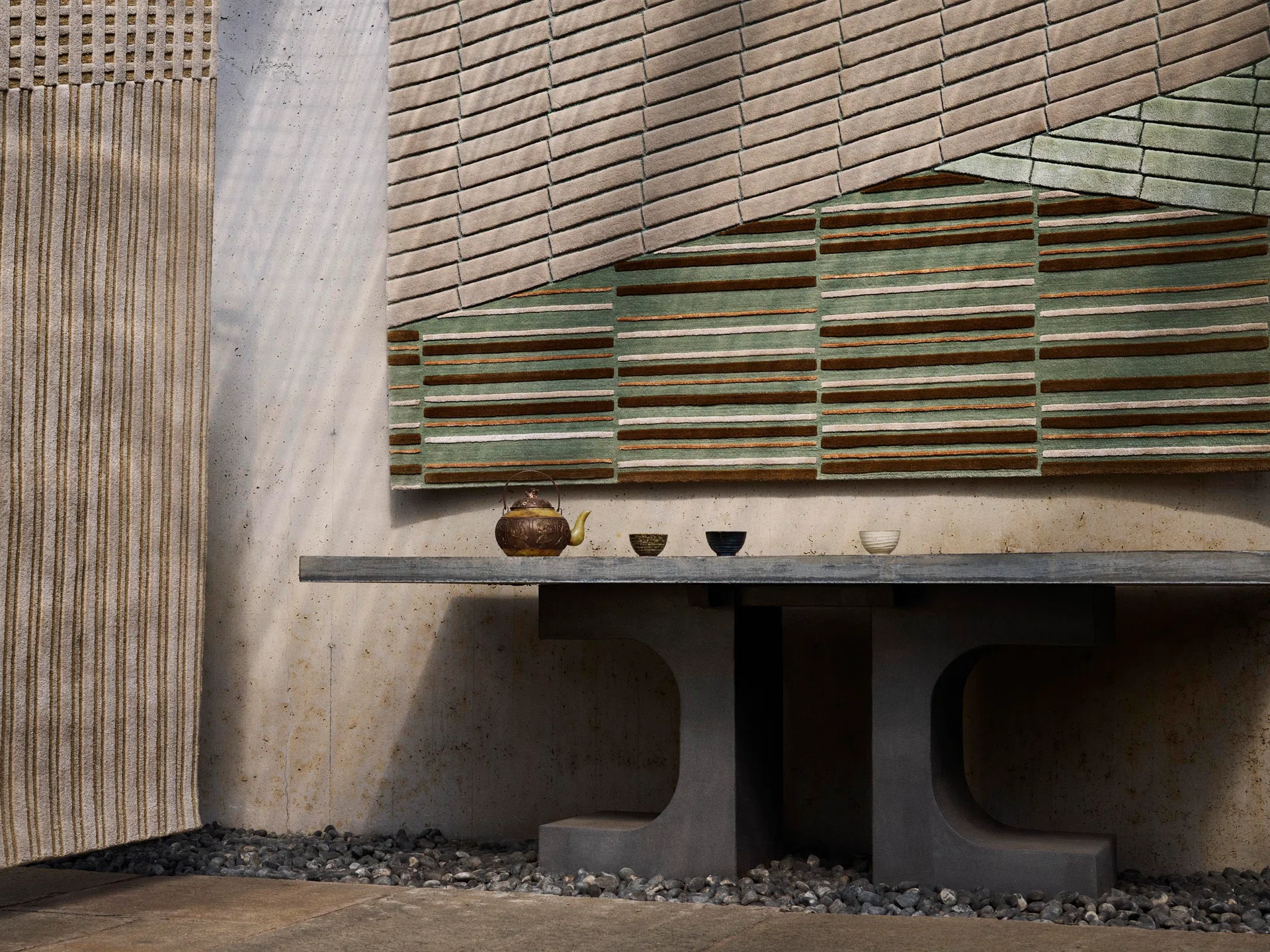
Exhibited at Milan Design Week 2026, Jaipur Rugs’ Faces collection translates the facades of the famed Japanese architect’s buildings into soft rugs with abstract, graphic designs.
By Luo Jingmei /
Share this article
Fans of Kengo Kuma’s buildings are in for a treat with the Faces collection by Jaipur Rugs. The intricate, crafted facades of some of the celebrated Japanese architect’s structures have been translated into abstract, graphic imagery woven from natural wool and regenerated natural fibre viscose.
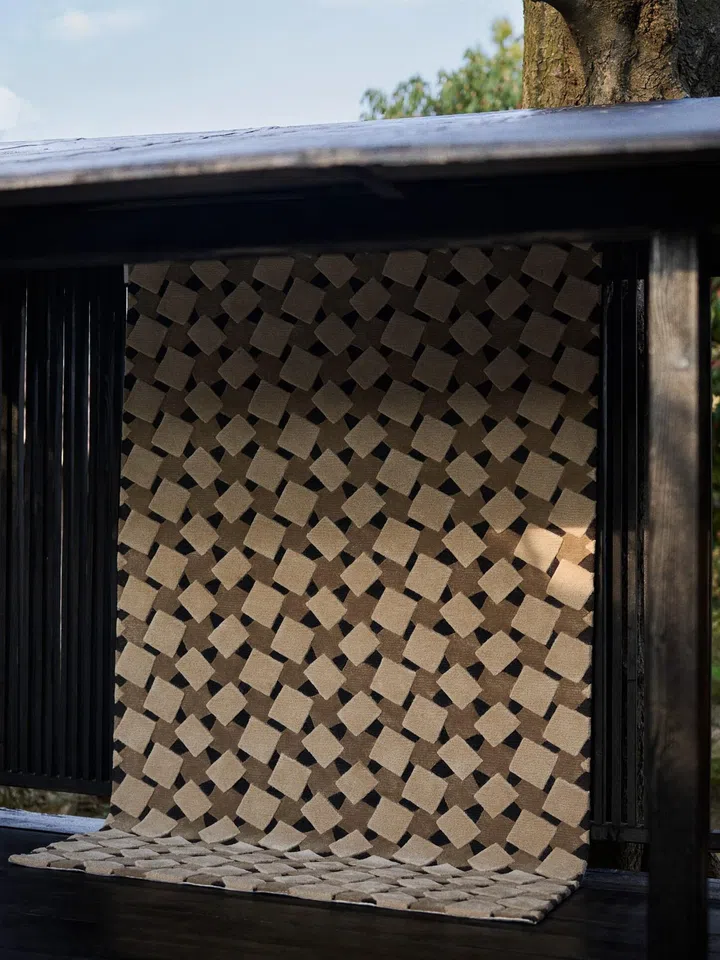
For example, the Kasane rug’s layering of dual linear patterns evokes the triangulated folds of the Albert Kahn Museum in Boulogne-Billancourt, while the Chirashi rug’s scattered rhythm of little squares mimics the playful grids on the skin of the Kanayama Community Centre in Gunma that abstracts castle stonewalls.
“This collection for Jaipur Rugs explores the subtle ‘faces’ of my architecture. These architectural expressions, often perceived as fleeting and atmospheric, are reinterpreted through Jaipur Rugs’ refined handicraft and material sensibility,” says the architect and founder of Kengo Kuma & Associates (KKAA).
“What emerges is not a literal translation, but a tactile memory of architecture that feels soft, warm, and deeply embedded in everyday living spaces.”
Technique and time
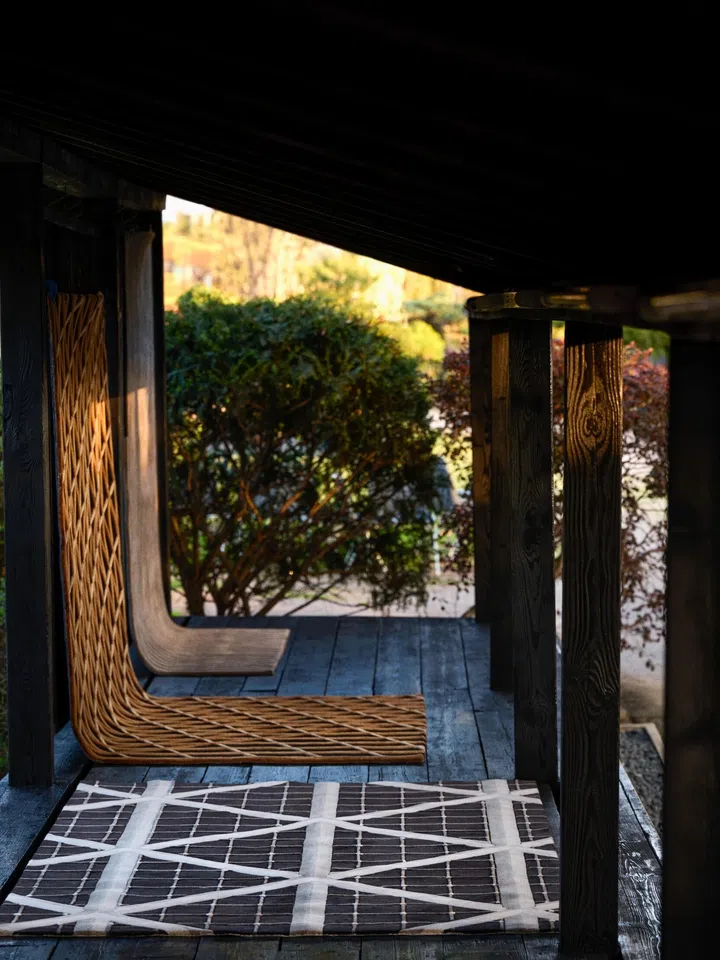
There are five designs in the collection — Sukima, Bokashi, Chirashi, Kigumi, and Kasane — named after Japanese techniques or spatial elements that Kuma interpreted for his architecture. They were showcased at Milan Design Week, which ran from April 20 to 26, 2026.
The rugs were exhibited not only at Jaipur Rugs’ showroom on Via Marco Minghetti but also at the Salone del Mobile trade hall. They were also displayed among shapely plants at the Crespi Bonsai Museum near Milan, bringing together artistry and nature in a facility housing the most important collection of bonsai trees outside Japan.
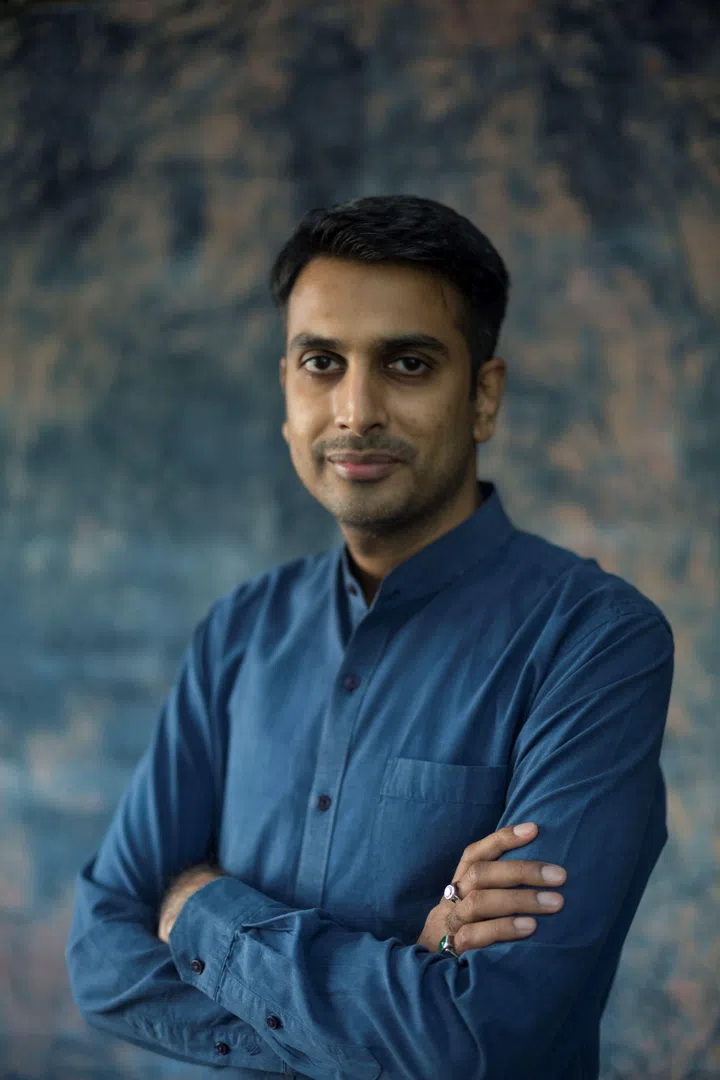
“The intention behind this collection was to explore a deeper dialogue between material, architecture, and craft. Mr Kuma’s philosophy of lightness, natural textures, and human-scale design resonated strongly with our own values at Jaipur Rugs,” says Yogesh Chaudhary, the director of Jaipur Rugs and a second-generation family member.
History with a conscience
Jaipur Rugs is India’s largest maker of handmade rugs. The family-owned company, founded in 1978 by Nand Kishore Chaudhary in Rajasthan with two looms and borrowed money from his father, began operations.
Today, the rugs are sold in over 60 countries. Rather than just focusing on profits, the business is also a social enterprise, bypassing middlemen to directly employ and directly benefit over 40,000 artisans across 300 Indian villages.
Around 85 per cent of them are women, and the company allows them to work from home so they can stay with their families.
The elder Chaudhary ignored class prejudices that marginalised women, artists, and the poor by working with tribal artisans who were considered untouchables early on in his business. With their help, he brought 16th-century Persian weaving techniques from his hometown into the present, incorporating modern designs.
The Jaipur Rugs Foundation has also paved the way for fair wages, skill development, and education to improve the livelihoods of these marginalised communities.
While it is steeped in legacy, the company has one foot in the present, collaborating with many renowned creatives on special collections, including Chandigarh-based artist Gurjeet Singh, English artist Richard Hutten, and Italian architecture and design firm ADML CIRCLE, founded by Michele de Lucchi. The Faces collection continues this evolution.
Pushing boundaries
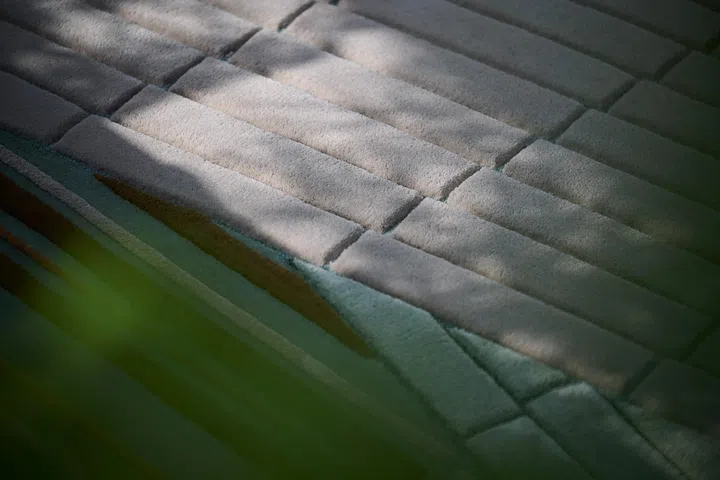
“(The collaboration with Mr Kuma) marks a meaningful evolution for Jaipur Rugs. While our legacy has always been grounded in traditional craftsmanship, this collection signals a more experimental and cross-disciplinary direction. It introduces a design language that is quieter, more architectural, and globally contextual. In many ways, it fills a gap where design meets minimalism and structure — areas we wanted to explore more deeply through collaborations with visionary creators,” says Chaudhary.
Developing the collection was a “collaborative and thoughtful” process. The team experimented with layering techniques, varied pile heights, and natural fibres in order to “create depth without heaviness”. One challenge was translating Kuma’s bold architectural ideas into the soft rugs.
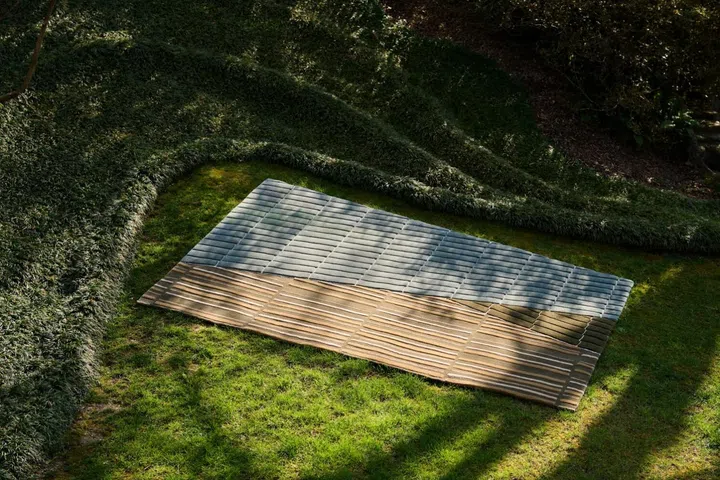
“Achieving that sense of lightness and fluidity required innovation at the weaving stage, as well as close coordination with our artisans,” says Chaudhary, who saw this as an opportunity to push technical boundaries as well as “how we think about rugs as part of spatial design”.
He believes the rugs’ understated design resonates with many homeowners today, who are looking for meaningful, versatile pieces for the home.
“There is a clear shift towards authenticity, sustainability, and understated elegance; people want products that feel personal, that tell a story, and that integrate seamlessly into their living spaces rather than overpower them,” Chaudhary observes.
“This collection reflects those aspirations. It focuses on natural materials, subtle textures, and timeless design.”
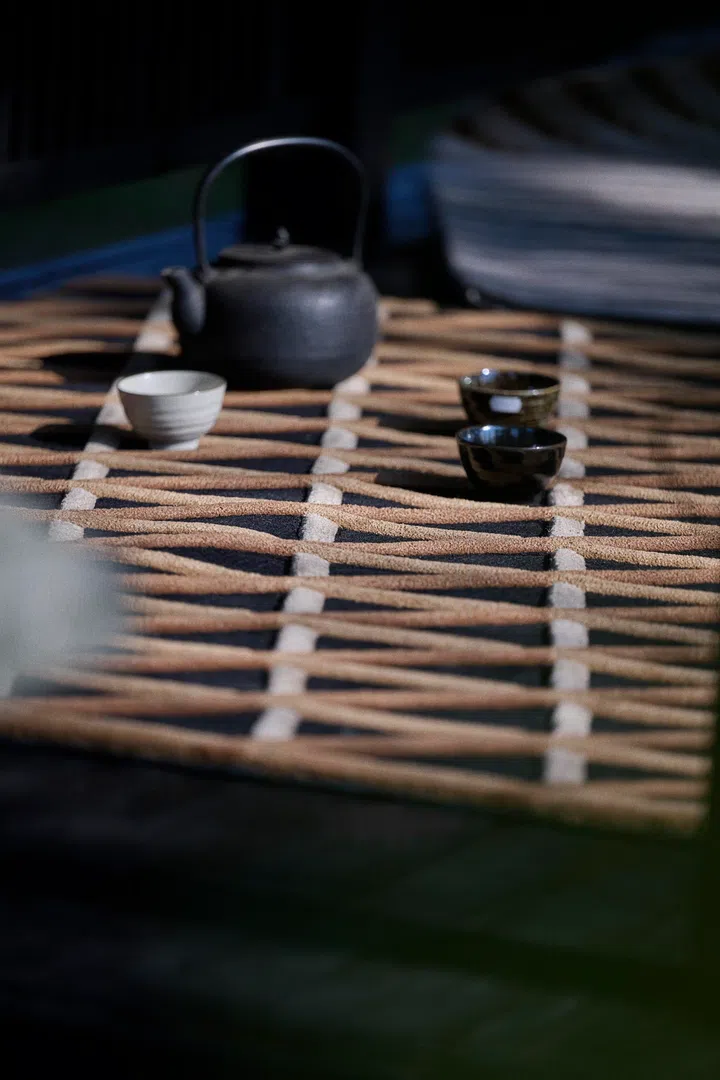
During Milan Design Week, visitors appreciated the balance of Japanese minimalism and Indian craftsmanship. “Many people commented on the tactile quality of the rugs and the way they seemed to ‘blend into’ the space while still adding depth,” noted Chaudhary.
Encouraged by the response, he believed the collection “sparked conversation not just about design, but also about collaboration, culture, and the future of craft… (which) is always very meaningful for us.”