%22%3E%0A%3Cpath%20d%3D%22M412%20101.2H393.7C393.1%20101.2%20392.3%20100.9%20391.8%20100.5C377.3%2087.6004%20362.9%2074.6004%20348.4%2061.6004C344.8%2058.4004%20341.3%2055.2004%20337.7%2052.0004C337.1%2051.5004%20336.2%2051.1004%20335.5%2051.0004C334.2%2050.8004%20333%2051.0004%20331.5%2051.0004V101.1H316.7V0.100391H331.4V44.3004C331.9%2044.3004%20332.2%2044.4004%20332.5%2044.4004C334.9%2044.4004%20337.2%2044.5004%20339.6%2044.4004C340.4%2044.4004%20341.3%2044.0004%20341.8%2043.5004C351.6%2034.4004%20361.4%2025.2004%20371.1%2016.0004C376.5%2010.9004%20381.9%205.90039%20387.3%200.800391C387.9%200.200391%20388.5%200.000390626%20389.3%200.000390626H400.9C384.2%2015.8004%20367.8%2031.3004%20351.2%2047.0004C371.5%2065.0004%20391.8%2082.9004%20412.1%20100.9C412.1%20101%20412.1%20101.1%20412%20101.2ZM180.9%20101.2C184.1%2094.9004%20187.2%2088.9004%20190.3%2082.8004C198.3%2067.3004%20206.2%2051.8004%20214.2%2036.2004C220.3%2024.4004%20226.4%2012.5004%20232.4%200.700391C232.7%200.100391%20233%20-0.0996094%20233.7%20-0.0996094H248.1C248.8%20-0.0996094%20249.2%200.100391%20249.6%200.800391C256%2013.3004%20262.4%2025.7004%20268.8%2038.2004C279.3%2058.6004%20289.8%2079.0004%20300.3%2099.5004C300.5%20100%20300.8%20100.4%20301.1%20101.1C300.5%20101.1%20300.1%20101.2%20299.7%20101.2H286.5C285.6%20101.2%20285.1%20100.9%20284.7%20100.2C280.1%2091.3004%20275.4%2082.4004%20270.8%2073.4004C270.1%2072.1004%20269.3%2071.6004%20267.8%2071.6004H209.9C208.7%2071.6004%20208.1%2072.0004%20207.5%2073.1004C202.9%2082.1004%20198.2%2091.0004%20193.6%20100C193.1%20101%20192.6%20101.3%20191.5%20101.3C188.4%20101.2%20185.3%20101.3%20182.3%20101.3C182%20101.2%20181.6%20101.2%20180.9%20101.2ZM239.1%2011.4004C230%2029.2004%20221.1%2046.7004%20212.1%2064.3004H266.4C257.2%2046.7004%20248.2%2029.2004%20239.1%2011.4004ZM0%200.000390626H43.4C51.2%200.000390626%2058.7%201.20039%2065.7%204.80039C75.9%2010.0004%2078.9%2018.0004%2078.6%2027.4004C78.3%2034.3004%2076%2040.5004%2071.2%2045.5004C67.3%2049.6004%2062.4%2052.3004%2057.1%2054.3004C50.6%2056.7004%2043.9%2058.0004%2037.1%2058.6004C30.1%2059.2004%2023.1%2059.4004%2016.2%2059.7004C15.8%2059.7004%2015.3%2059.8004%2014.8%2059.8004V101.1H0.1C0%2067.4004%200%2033.8004%200%200.000390626ZM14.8%207.10039V52.2004C23.7%2052.4004%2032.6%2052.3004%2041.2%2050.1004C44.4%2049.3004%2047.6%2048.2004%2050.6%2046.7004C58.4%2043.0004%2062.3%2036.7004%2062.7%2028.0004C63%2019.9004%2059.5%2014.1004%2052.4%2010.5004C47.6%208.00039%2042.5%207.10039%2037.2%207.10039H14.8ZM95.9%20101.1V0.100391H167.3V7.20039H110.7V44.7004H158.1V51.9004H110.8V93.9004H171.1V101C146.1%20101.1%20121%20101.1%2095.9%20101.1Z%22%20fill%3D%22black%22%2F%3E%0A%3Cpath%20d%3D%22M35.0004%2025.7996H42.5004V20.6996H44.8004V33.1996H42.6004V27.5996H34.9004V33.2996H32.7004V20.7996H35.0004V25.7996ZM54.4004%2025.8996V27.2996H48.9004V31.6996H55.9004C55.9004%2032.1996%2056.0004%2032.5996%2056.0004%2033.0996H46.5004V20.5996H55.5004V21.8996H49.0004V25.7996C50.7004%2025.8996%2052.5004%2025.8996%2054.4004%2025.8996ZM25.9004%2033.0996H23.5004V21.9996H17.9004V20.6996H31.6004V22.0996H27.1004C26.2004%2022.0996%2025.9004%2022.2996%2025.9004%2023.1996C26.0004%2026.0996%2025.9004%2028.9996%2025.9004%2031.7996V33.0996Z%22%20fill%3D%22black%22%2F%3E%0A%3C%2Fg%3E%0A%3Cdefs%3E%0A%3CclipPath%20id%3D%22clip0_388_462%22%3E%0A%3Crect%20width%3D%22411%22%20height%3D%22101.2%22%20fill%3D%22white%22%2F%3E%0A%3C%2FclipPath%3E%0A%3C%2Fdefs%3E%0A%3C%2Fsvg%3E%0A)
Share this article
Three golden shower trees stand outside Fairmont Bangkok Sukhumvit. Their presence might seem an innocuous landscaping decision, but they offer the first clue to understanding the design philosophy of Thailand’s newest luxury hotel.
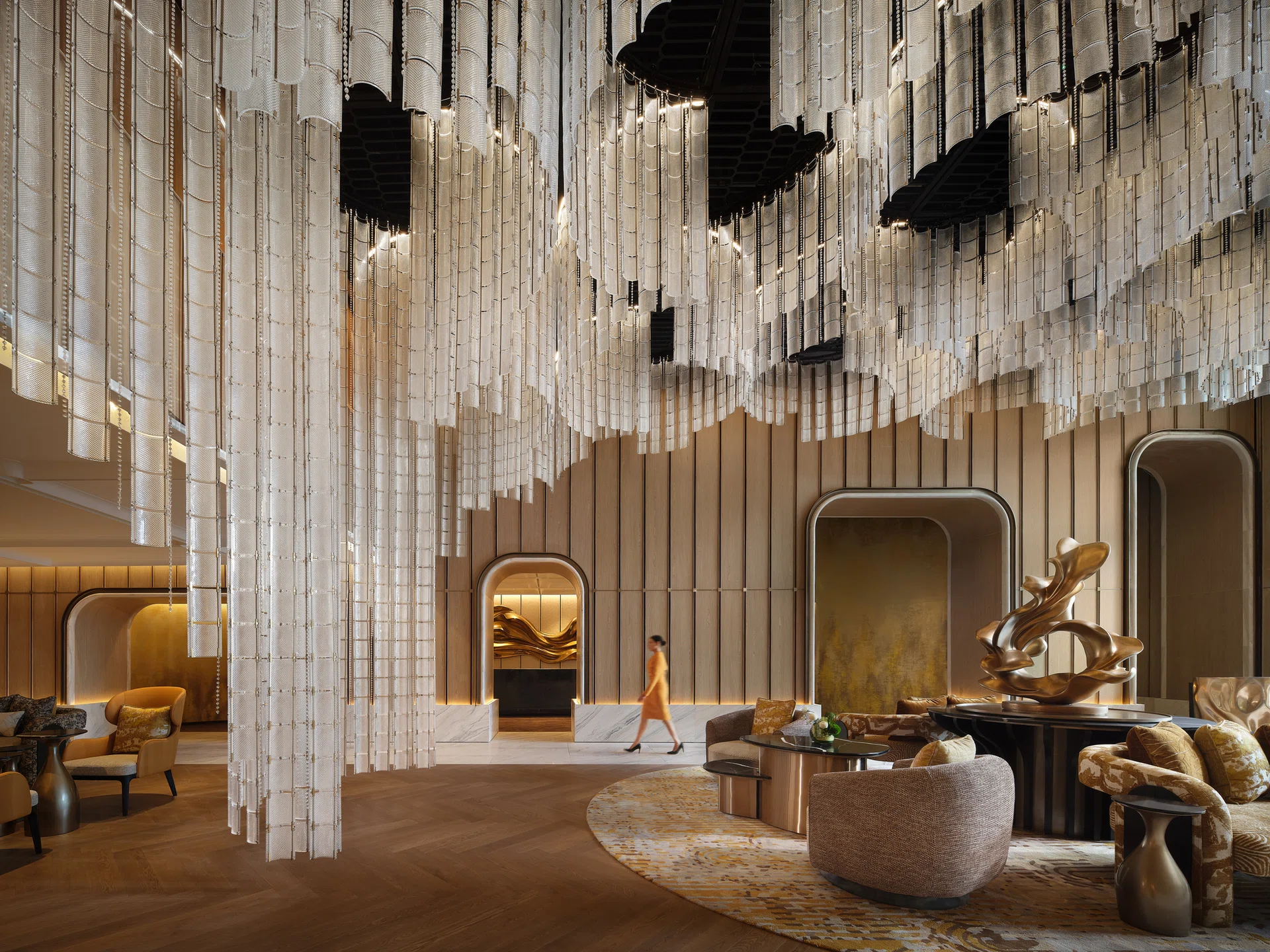
The golden ratchaphruek, or golden shower tree, bears Thailand’s national flower. Inside the hotel, its cascading blossoms find a rather more extravagant interpretation: a monumental chandelier comprising 4,166 glass pieces and more than 35,000 crystal balls, suspended above the lobby in a glittering approximation of nature.
The installation is spectacular, certainly, but its greater significance lies in how it introduces the hotel’s overarching design philosophy. At Fairmont Bangkok Sukhumvit, almost everything begins with a flower.
A different expression of Thai identity
Opened in August 2026, the 474-key property marks Fairmont Hotels & Resorts’ first foray into Thailand. Developed by Asset World Corporation, with architecture by A49 and interiors by Thai design practice PIA, the hotel occupies a substantial footprint in Sukhumvit, one of Bangkok’s busiest neighbourhoods.
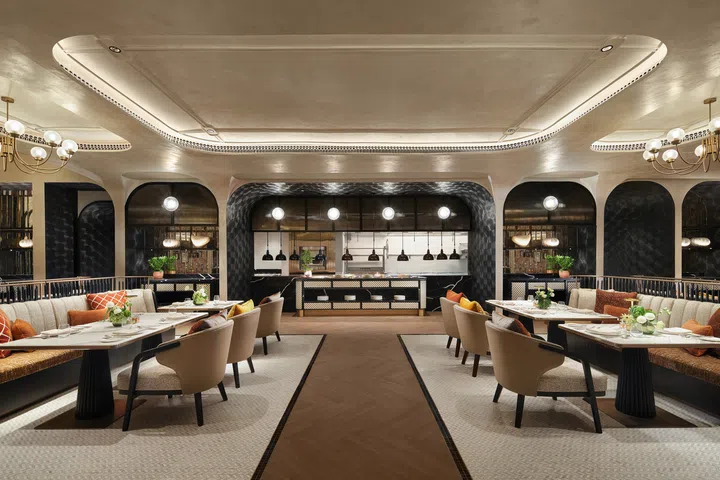
Harper’s is a vibrant North American brasserie offering an energetic all-day dining experience.
Its creative concept, The Blooming Stage, draws from Thailand’s botanical heritage, translating familiar flowers into architectural geometry, sculptural installations, material textures, and decorative patterns.
What makes the approach particularly compelling is its restraint in matters of cultural representation. There are no obligatory temple silhouettes or ostentatious reproductions of traditional Thai ornamentation. Instead, the designers have found a contemporary vocabulary through which to express a recognisably Thai sensibility.
PIA’s collaborative approach also gives individual spaces their own personalities, with different designers contributing distinct interpretations of the broader concept. The result feels almost couture-like: an ensemble of individually considered environments that nevertheless share a common creative language.
Nowhere is this more apparent than in the Fairmont Gold lounge, where curved ceilings and enveloping forms soften the rigidity one might expect from a contemporary urban hotel. The effect is intimate and theatrical, closer to a private members’ club than the functional executive lounges that populate international hotels.
The architecture of feeling
The botanical references continue at Fairmont Spa, where the jasmine flower provides the central inspiration. Associated with motherhood in Thai culture, jasmine carries connotations of tenderness, purity, and care.
Here, its influence extends beyond decorative symbolism. Hand-textured walls introduce tactile irregularities into an otherwise meticulously composed environment, their surfaces bearing traces of the human craftsmanship behind them. In a hospitality industry increasingly capable of producing immaculate, interchangeable interiors, the presence of the human hand can provide a welcome counterpoint to perfection.
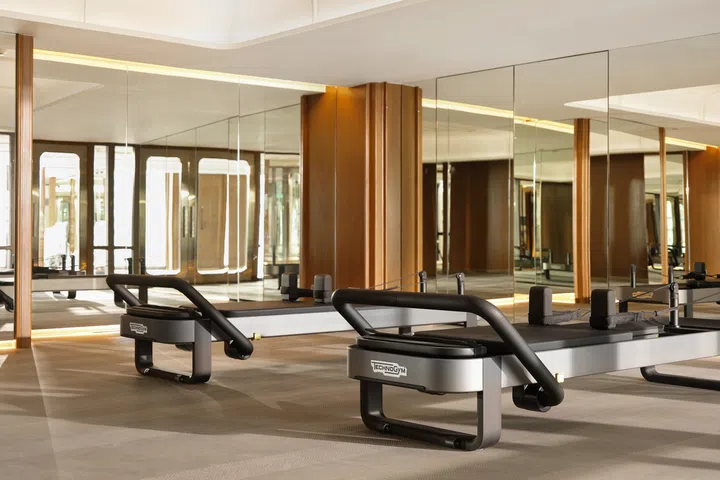
Fairmont calls its broader wellness philosophy Wellness Without Walls, an approach that integrates wellbeing into the guest experience rather than confining it to the spa. The hotel’s environmental ambitions follow a similar philosophy. Designed to LEED Gold standards, the building incorporates water recycling, smart energy systems, and a façade intended to reduce heat gain.
Even its culinary operations demonstrate an interest in considered consumption. Breakfast adopts a semi-buffet format intended to reduce unnecessary food waste, while plans for a beehive in the chef’s garden suggest an ambition to connect hospitality with urban ecology.
Individually, these gestures might seem modest. Collectively, they reveal a property attempting to reconcile the extravagance of luxury hospitality with a more conscientious approach to consumption.
When the smallest details matter
Over three nights, however, I found that the hotel’s most persuasive design decisions were often its least conspicuous.
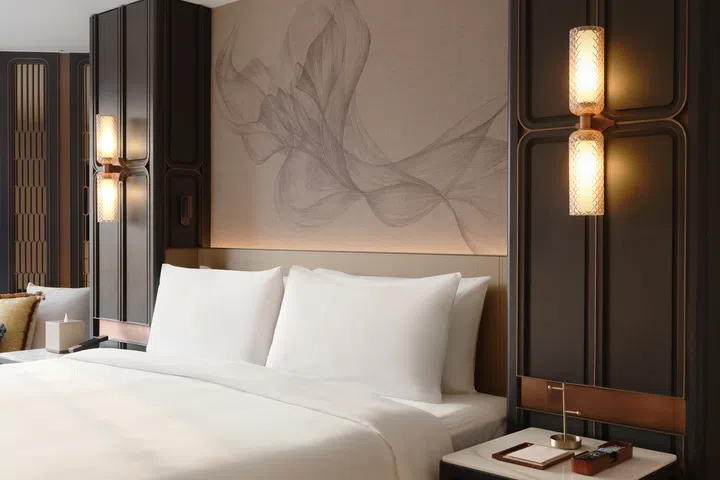
A wireless charger beside the bed eliminated the familiar inconvenience of searching for sockets. A small bedside clock offered the time without requiring me to reach for my phone. Neither feature will appear in an architectural manifesto, yet both demonstrate an understanding of how guests actually inhabit a room.
The same attentiveness occasionally extended beyond design into human interaction.
One rainy evening, I informed the doorman that I intended to take a motorcycle taxi. He looked at me with unmistakable concern.
“Have you taken a bike before, Khun Zat?”
I laughed. His apprehension was entirely genuine, and considerably more memorable than another rehearsed assurance of exceptional service.
Of course, a hotel so preoccupied with detail also invites closer scrutiny when those details falter.
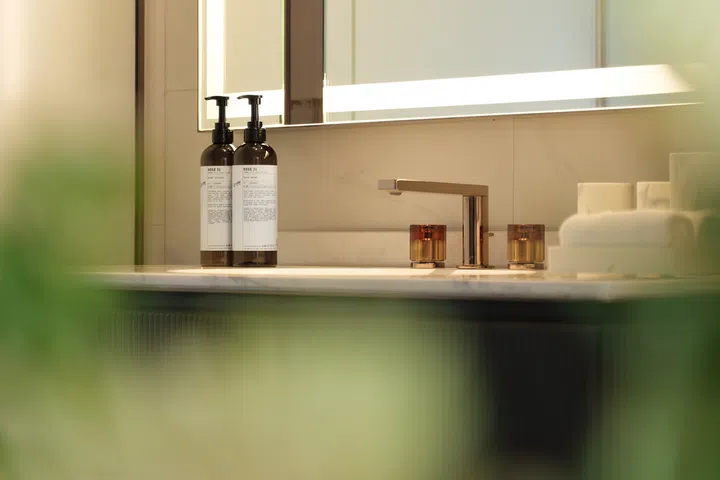
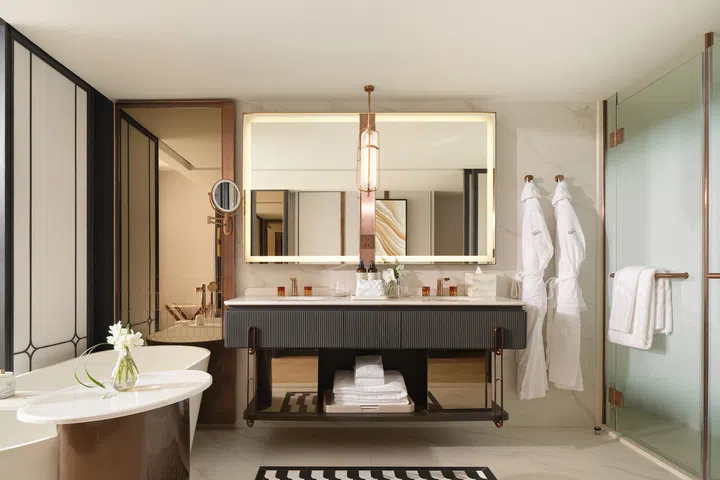
The brand’s first property in Thailand, features luxury-branded Le Labo bath and body amenities in all of its rooms and suites.
My room arrived without both shower gel and hair conditioner, an omission that seemed to perplex the staff as much as it did me. On another occasion, when I asked to refill my water bottle at the lounge, an employee informed me that I could only purchase bottled still water. This seemed particularly incongruous when a bar capable of serving drinking water stood a few steps away.
Neither incident was consequential, but both exposed the occasional distance between a hotel’s carefully articulated philosophy and its everyday operations. A commitment to sustainability, for instance, becomes less convincing when a simple request to refill a reusable bottle meets a commercial restriction.
That, perhaps, is the more demanding definition of intentional hospitality. It requires an organisation to carry its principles through the smallest operational decisions, including those that designers cannot anticipate.
Fairmont Bangkok Sukhumvit has invested considerable imagination in making its spaces beautiful, culturally specific, and architecturally expressive. Its most enduring achievement, however, may ultimately depend on whether the people working within those spaces can exercise the same thoughtfulness.
After all, the difference between a beautiful hotel and an exceptional one rarely comes down to the chandelier.