%22%3E%0A%3Cpath%20d%3D%22M412%20101.2H393.7C393.1%20101.2%20392.3%20100.9%20391.8%20100.5C377.3%2087.6004%20362.9%2074.6004%20348.4%2061.6004C344.8%2058.4004%20341.3%2055.2004%20337.7%2052.0004C337.1%2051.5004%20336.2%2051.1004%20335.5%2051.0004C334.2%2050.8004%20333%2051.0004%20331.5%2051.0004V101.1H316.7V0.100391H331.4V44.3004C331.9%2044.3004%20332.2%2044.4004%20332.5%2044.4004C334.9%2044.4004%20337.2%2044.5004%20339.6%2044.4004C340.4%2044.4004%20341.3%2044.0004%20341.8%2043.5004C351.6%2034.4004%20361.4%2025.2004%20371.1%2016.0004C376.5%2010.9004%20381.9%205.90039%20387.3%200.800391C387.9%200.200391%20388.5%200.000390626%20389.3%200.000390626H400.9C384.2%2015.8004%20367.8%2031.3004%20351.2%2047.0004C371.5%2065.0004%20391.8%2082.9004%20412.1%20100.9C412.1%20101%20412.1%20101.1%20412%20101.2ZM180.9%20101.2C184.1%2094.9004%20187.2%2088.9004%20190.3%2082.8004C198.3%2067.3004%20206.2%2051.8004%20214.2%2036.2004C220.3%2024.4004%20226.4%2012.5004%20232.4%200.700391C232.7%200.100391%20233%20-0.0996094%20233.7%20-0.0996094H248.1C248.8%20-0.0996094%20249.2%200.100391%20249.6%200.800391C256%2013.3004%20262.4%2025.7004%20268.8%2038.2004C279.3%2058.6004%20289.8%2079.0004%20300.3%2099.5004C300.5%20100%20300.8%20100.4%20301.1%20101.1C300.5%20101.1%20300.1%20101.2%20299.7%20101.2H286.5C285.6%20101.2%20285.1%20100.9%20284.7%20100.2C280.1%2091.3004%20275.4%2082.4004%20270.8%2073.4004C270.1%2072.1004%20269.3%2071.6004%20267.8%2071.6004H209.9C208.7%2071.6004%20208.1%2072.0004%20207.5%2073.1004C202.9%2082.1004%20198.2%2091.0004%20193.6%20100C193.1%20101%20192.6%20101.3%20191.5%20101.3C188.4%20101.2%20185.3%20101.3%20182.3%20101.3C182%20101.2%20181.6%20101.2%20180.9%20101.2ZM239.1%2011.4004C230%2029.2004%20221.1%2046.7004%20212.1%2064.3004H266.4C257.2%2046.7004%20248.2%2029.2004%20239.1%2011.4004ZM0%200.000390626H43.4C51.2%200.000390626%2058.7%201.20039%2065.7%204.80039C75.9%2010.0004%2078.9%2018.0004%2078.6%2027.4004C78.3%2034.3004%2076%2040.5004%2071.2%2045.5004C67.3%2049.6004%2062.4%2052.3004%2057.1%2054.3004C50.6%2056.7004%2043.9%2058.0004%2037.1%2058.6004C30.1%2059.2004%2023.1%2059.4004%2016.2%2059.7004C15.8%2059.7004%2015.3%2059.8004%2014.8%2059.8004V101.1H0.1C0%2067.4004%200%2033.8004%200%200.000390626ZM14.8%207.10039V52.2004C23.7%2052.4004%2032.6%2052.3004%2041.2%2050.1004C44.4%2049.3004%2047.6%2048.2004%2050.6%2046.7004C58.4%2043.0004%2062.3%2036.7004%2062.7%2028.0004C63%2019.9004%2059.5%2014.1004%2052.4%2010.5004C47.6%208.00039%2042.5%207.10039%2037.2%207.10039H14.8ZM95.9%20101.1V0.100391H167.3V7.20039H110.7V44.7004H158.1V51.9004H110.8V93.9004H171.1V101C146.1%20101.1%20121%20101.1%2095.9%20101.1Z%22%20fill%3D%22black%22%2F%3E%0A%3Cpath%20d%3D%22M35.0004%2025.7996H42.5004V20.6996H44.8004V33.1996H42.6004V27.5996H34.9004V33.2996H32.7004V20.7996H35.0004V25.7996ZM54.4004%2025.8996V27.2996H48.9004V31.6996H55.9004C55.9004%2032.1996%2056.0004%2032.5996%2056.0004%2033.0996H46.5004V20.5996H55.5004V21.8996H49.0004V25.7996C50.7004%2025.8996%2052.5004%2025.8996%2054.4004%2025.8996ZM25.9004%2033.0996H23.5004V21.9996H17.9004V20.6996H31.6004V22.0996H27.1004C26.2004%2022.0996%2025.9004%2022.2996%2025.9004%2023.1996C26.0004%2026.0996%2025.9004%2028.9996%2025.9004%2031.7996V33.0996Z%22%20fill%3D%22black%22%2F%3E%0A%3C%2Fg%3E%0A%3Cdefs%3E%0A%3CclipPath%20id%3D%22clip0_388_462%22%3E%0A%3Crect%20width%3D%22411%22%20height%3D%22101.2%22%20fill%3D%22white%22%2F%3E%0A%3C%2FclipPath%3E%0A%3C%2Fdefs%3E%0A%3C%2Fsvg%3E%0A)
Hotel Review: InterContinental Halong Bay Resort’s lesson in architectural deference
Building inside a UNESCO World Heritage Site comes with rules. InterContinental Halong Bay Resort turned every single one into a design decision.
By Zawani Abdul Ghani /
Share this article
Ha Long Bay, where ancient and authoritative limestone karsts rise from the water like punctuation marks in a sentence only geology fully understands. It is not a landscape that easily accommodates new arrivals.
That the InterContinental Halong Bay Resort not only holds its own against this backdrop but also feels earned is perhaps the most telling measure of what WATG’s design team pulled off.
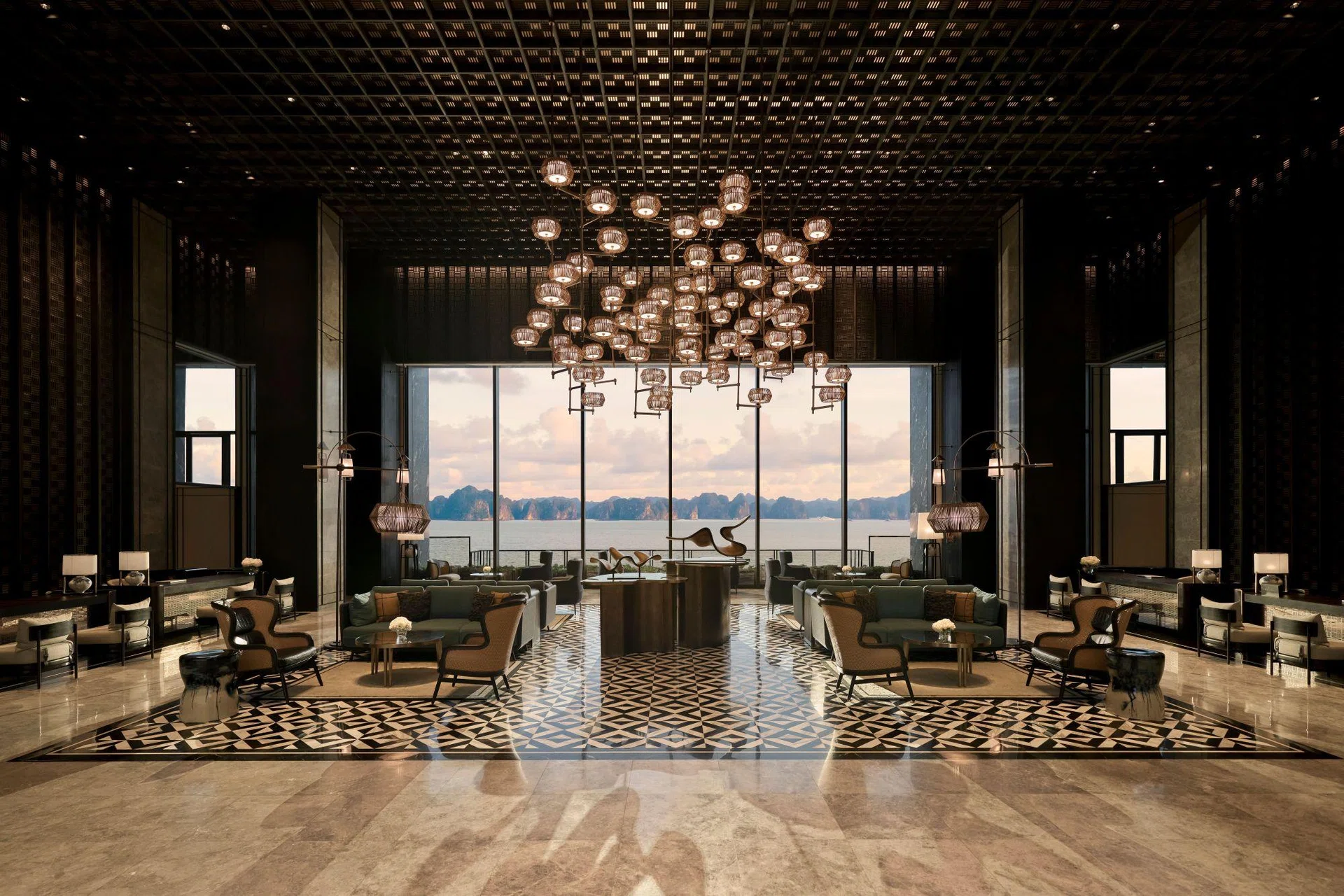
The lobby makes a first impression that few have prepared themselves for. It’s expansive in every direction — breadth, height, and an unobstructed view of the bay that hits you squarely in the chest the moment you step through.
On a quiet afternoon, when the crowd thins and the staff retreat briefly from view, there’s an odd sensation of having wandered into someone’s very grand private hallway. You’re not entirely sure you should be here.
It passes quickly, but it’s a good sign: spaces that produce that feeling tend to be the ones worth staying in.
Designing within limits
Building within a UNESCO World Heritage Site — Ha Long Bay holds the designation twice over — is less a creative challenge than a creative reckoning. Strict regulations govern height, density, and visual impact; the architecture had to remain low-rise and pressed into the natural topography rather than imposed upon it.
What might have read as a limitation became, instead, a design language. The resort prioritises horizontality and open sightlines, its material palette drawn from the surrounding landscape so that the building sits quietly within its context rather than staking a claim against it.
On 4ha — a tight footprint for a property of this scale — the masterplan leans on layering over sprawl. Building forms are staggered. View corridors are carved deliberately towards the bay. Amenities are distributed across levels so that the guest journey feels intuitive rather than efficiently mapped, each transition offering something slightly unexpected.
The experience the architects describe is one of “privacy and a sense of discovery” — and in practice, that’s precisely what it delivers.
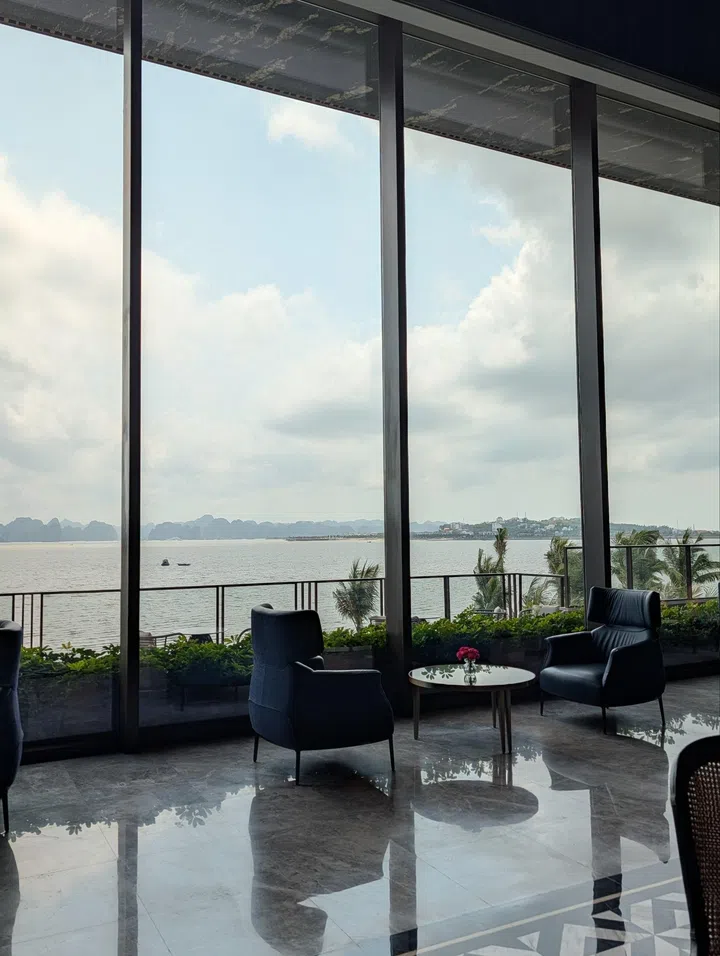
Nowhere is this more apparent than in how the building handles light. The resort does not shy away from it; wherever structurally possible, floor-to-ceiling windows replace walls, and the option of curtains or cosy dimness has largely been declined. There is no dark corner making a virtue of moodiness here.
Instead, the bay floods in — its shifting greys and greens and occasional glitter of sun on water present at every turn. It takes a particular confidence in your surroundings to design a building that essentially says, “We are not the view. The bay is.”
Honouring Vietnam’s cultural influences
The cultural embeds run deeper than surface-level motifs. The lobby draws on Vietnam’s traditional bamboo basket boats — the rounded coracles of coastal fishing communities — and translates them into architectural form without tipping into pastiche.
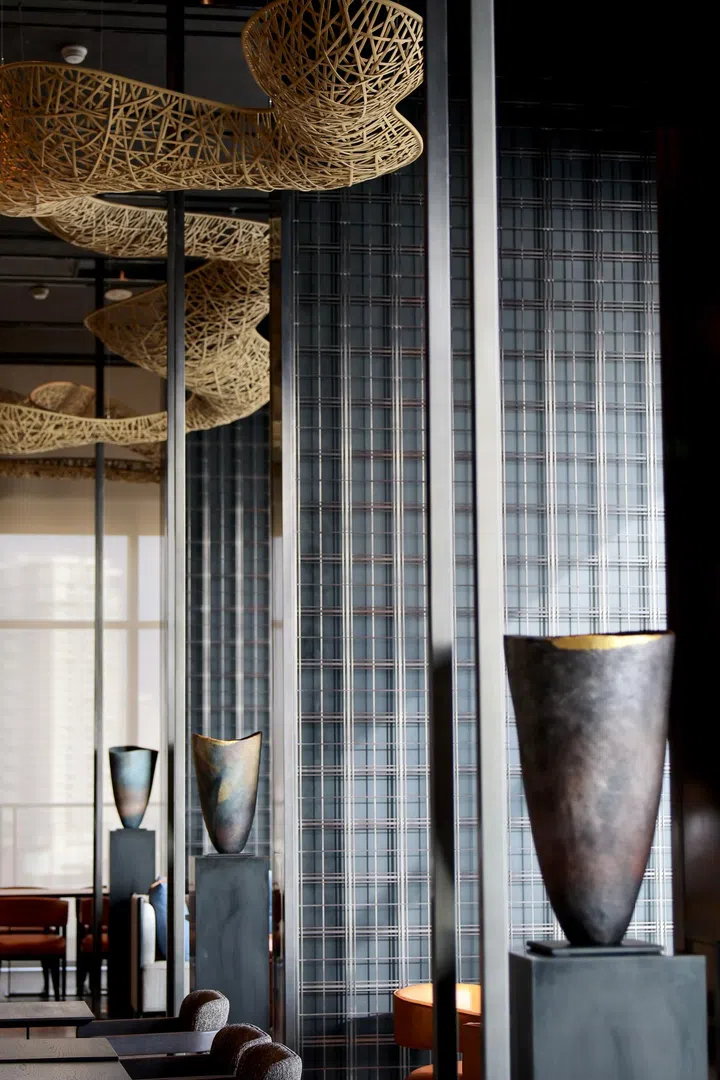
Fish scales ripple across surfaces; iridescent pearl textures shift with the light; the descending dragon of Ha Long legend reappears in the bamboo installation for Roku & Star Bar, the 10th-floor restaurant.
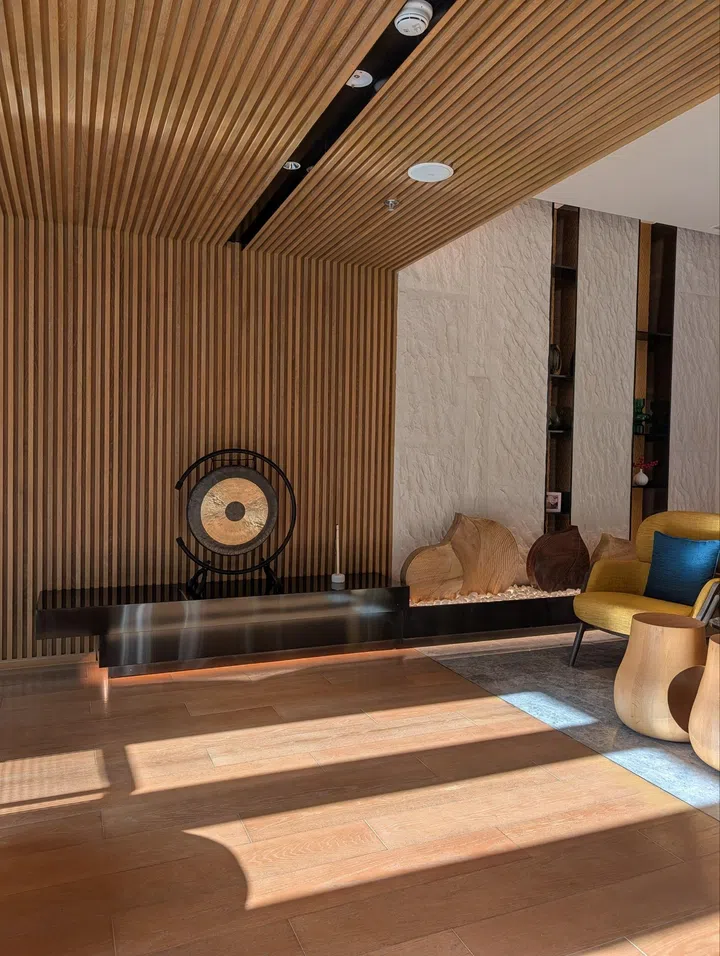
On the craft side, elements like lacquer and hand-finished surfaces were developed in collaboration with local artisans, particularly for feature installations — though the architects are candid that durability and scalability for a resort of this size meant some traditional techniques had to be adapted rather than replicated wholesale.
The result sits deliberately in the space between authentic craftsmanship and contemporary execution, and it’s more honest to admit it.
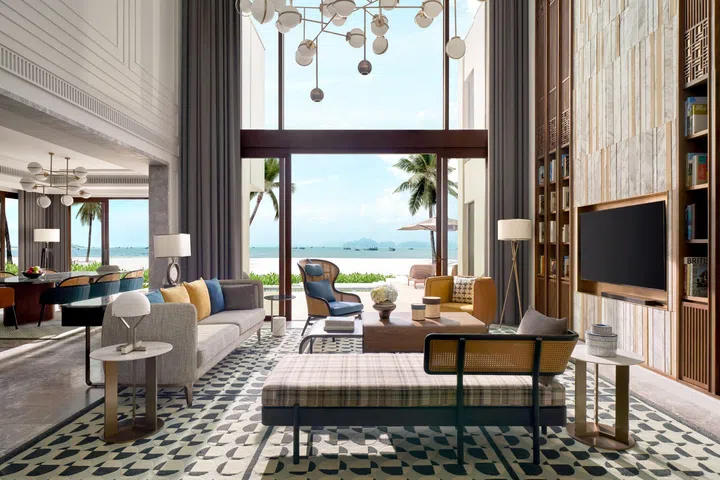
The rooms extend both logics — spatial and cultural — to their natural conclusion. The same floor-to-ceiling windows, the same refusal to compete with what’s outside. Turquoise upholstery and brass accents keep the bay’s palette alive indoors, but the proportions do the real work.
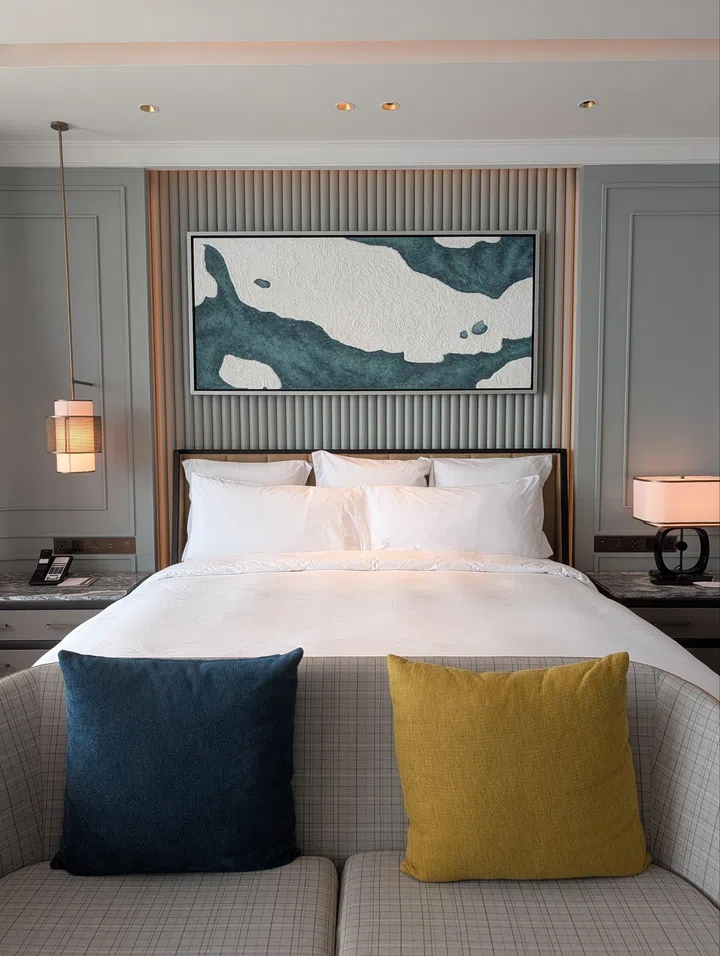
Waking up to that on a clear morning requires a brief recalibration of what a window is supposed to do.
Sustainability was baked into the brief rather than bolted on afterwards. Under the EDGE framework, the resort is designed to save 31 per cent in energy, 27 per cent in water, and 30 per cent in embodied material energy, reducing annual carbon emissions by over 5,000 tonnes.
The harder design problem was making those systems invisible — because inside a World Heritage Site, high-performance infrastructure that’s too revealing would have been its own kind of offence. The approach was to integrate environmental performance so seamlessly that the guest reads it only as comfort.
A new standard for the bay
As the first international luxury brand in the area, there’s an obvious temptation towards self-congratulation. The resort mostly resists it. The framing from within is less “we are the standard” and more “we are setting a tone” — helping shift Ha Long from a day-tripper destination to something more immersive and design-led.
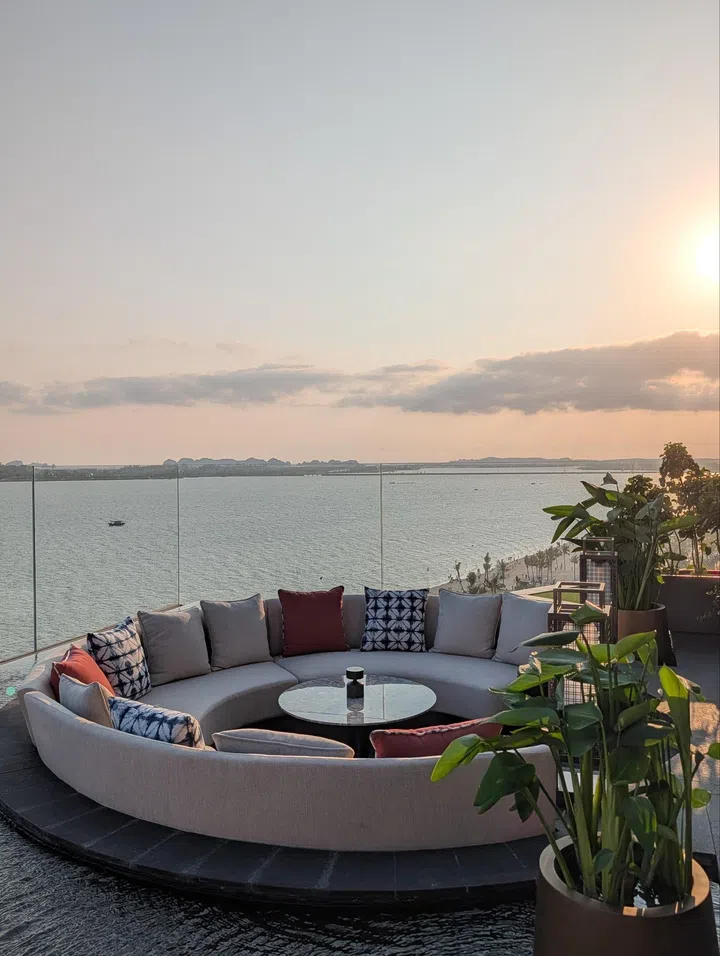
The dining gives that ambition something to stand on. On a clear evening, Happy Hour at Roku & Star Bar offers what is genuinely one of the best vantage points over the bay. The golden hour light on the karsts, a drink in hand — it earns its reputation simply by being where it is.
However, it’s dinner at La Baguette that lingers. The H’Mong Black Chicken arrived with the kind of quiet confidence that doesn’t require explanation, and the Profiteroles Au Chocolat made for an ending that was, frankly, difficult to argue with.
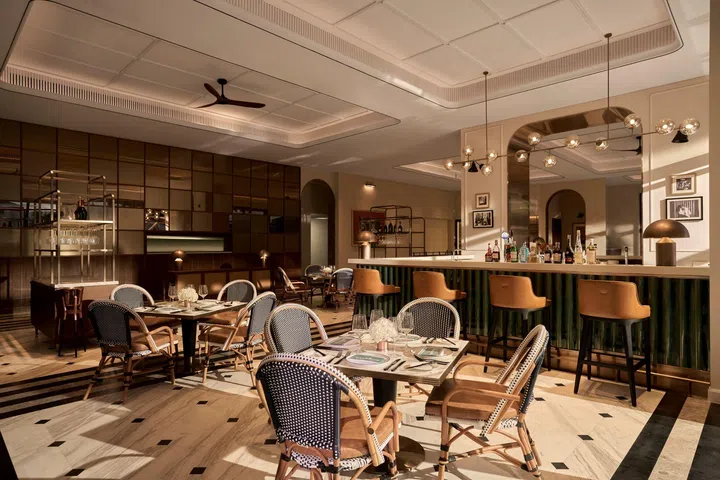
It’s the sort of meal that reframes a last night into something worth savouring slowly.
What InterContinental Halong Bay ultimately makes the case for is that building within a landscape of genuine consequence — ecological, cultural, mythological — doesn’t require choosing between ambition and sensitivity.
The architecture makes that argument without making a fuss about it: low, horizontal, deeply literate in its context, and confident enough to let the bay continue doing what it has always done.