%22%3E%0A%3Cpath%20d%3D%22M412%20101.2H393.7C393.1%20101.2%20392.3%20100.9%20391.8%20100.5C377.3%2087.6004%20362.9%2074.6004%20348.4%2061.6004C344.8%2058.4004%20341.3%2055.2004%20337.7%2052.0004C337.1%2051.5004%20336.2%2051.1004%20335.5%2051.0004C334.2%2050.8004%20333%2051.0004%20331.5%2051.0004V101.1H316.7V0.100391H331.4V44.3004C331.9%2044.3004%20332.2%2044.4004%20332.5%2044.4004C334.9%2044.4004%20337.2%2044.5004%20339.6%2044.4004C340.4%2044.4004%20341.3%2044.0004%20341.8%2043.5004C351.6%2034.4004%20361.4%2025.2004%20371.1%2016.0004C376.5%2010.9004%20381.9%205.90039%20387.3%200.800391C387.9%200.200391%20388.5%200.000390626%20389.3%200.000390626H400.9C384.2%2015.8004%20367.8%2031.3004%20351.2%2047.0004C371.5%2065.0004%20391.8%2082.9004%20412.1%20100.9C412.1%20101%20412.1%20101.1%20412%20101.2ZM180.9%20101.2C184.1%2094.9004%20187.2%2088.9004%20190.3%2082.8004C198.3%2067.3004%20206.2%2051.8004%20214.2%2036.2004C220.3%2024.4004%20226.4%2012.5004%20232.4%200.700391C232.7%200.100391%20233%20-0.0996094%20233.7%20-0.0996094H248.1C248.8%20-0.0996094%20249.2%200.100391%20249.6%200.800391C256%2013.3004%20262.4%2025.7004%20268.8%2038.2004C279.3%2058.6004%20289.8%2079.0004%20300.3%2099.5004C300.5%20100%20300.8%20100.4%20301.1%20101.1C300.5%20101.1%20300.1%20101.2%20299.7%20101.2H286.5C285.6%20101.2%20285.1%20100.9%20284.7%20100.2C280.1%2091.3004%20275.4%2082.4004%20270.8%2073.4004C270.1%2072.1004%20269.3%2071.6004%20267.8%2071.6004H209.9C208.7%2071.6004%20208.1%2072.0004%20207.5%2073.1004C202.9%2082.1004%20198.2%2091.0004%20193.6%20100C193.1%20101%20192.6%20101.3%20191.5%20101.3C188.4%20101.2%20185.3%20101.3%20182.3%20101.3C182%20101.2%20181.6%20101.2%20180.9%20101.2ZM239.1%2011.4004C230%2029.2004%20221.1%2046.7004%20212.1%2064.3004H266.4C257.2%2046.7004%20248.2%2029.2004%20239.1%2011.4004ZM0%200.000390626H43.4C51.2%200.000390626%2058.7%201.20039%2065.7%204.80039C75.9%2010.0004%2078.9%2018.0004%2078.6%2027.4004C78.3%2034.3004%2076%2040.5004%2071.2%2045.5004C67.3%2049.6004%2062.4%2052.3004%2057.1%2054.3004C50.6%2056.7004%2043.9%2058.0004%2037.1%2058.6004C30.1%2059.2004%2023.1%2059.4004%2016.2%2059.7004C15.8%2059.7004%2015.3%2059.8004%2014.8%2059.8004V101.1H0.1C0%2067.4004%200%2033.8004%200%200.000390626ZM14.8%207.10039V52.2004C23.7%2052.4004%2032.6%2052.3004%2041.2%2050.1004C44.4%2049.3004%2047.6%2048.2004%2050.6%2046.7004C58.4%2043.0004%2062.3%2036.7004%2062.7%2028.0004C63%2019.9004%2059.5%2014.1004%2052.4%2010.5004C47.6%208.00039%2042.5%207.10039%2037.2%207.10039H14.8ZM95.9%20101.1V0.100391H167.3V7.20039H110.7V44.7004H158.1V51.9004H110.8V93.9004H171.1V101C146.1%20101.1%20121%20101.1%2095.9%20101.1Z%22%20fill%3D%22black%22%2F%3E%0A%3Cpath%20d%3D%22M35.0004%2025.7996H42.5004V20.6996H44.8004V33.1996H42.6004V27.5996H34.9004V33.2996H32.7004V20.7996H35.0004V25.7996ZM54.4004%2025.8996V27.2996H48.9004V31.6996H55.9004C55.9004%2032.1996%2056.0004%2032.5996%2056.0004%2033.0996H46.5004V20.5996H55.5004V21.8996H49.0004V25.7996C50.7004%2025.8996%2052.5004%2025.8996%2054.4004%2025.8996ZM25.9004%2033.0996H23.5004V21.9996H17.9004V20.6996H31.6004V22.0996H27.1004C26.2004%2022.0996%2025.9004%2022.2996%2025.9004%2023.1996C26.0004%2026.0996%2025.9004%2028.9996%2025.9004%2031.7996V33.0996Z%22%20fill%3D%22black%22%2F%3E%0A%3C%2Fg%3E%0A%3Cdefs%3E%0A%3CclipPath%20id%3D%22clip0_388_462%22%3E%0A%3Crect%20width%3D%22411%22%20height%3D%22101.2%22%20fill%3D%22white%22%2F%3E%0A%3C%2FclipPath%3E%0A%3C%2Fdefs%3E%0A%3C%2Fsvg%3E%0A)
Where Java breathes: Inside Amanjiwo’s living classroom
From the cosmological architecture of Borobudur to the character-building discipline of royal Javanese archery, this is what genuine cultural immersion looks like when a hotel takes it seriously.
By Zawani Abdul Ghani /
Share this article
There’s a moment, somewhere between stepping out of the car and reaching the top of Amanjiwo’s stone steps, where you stop. Not because you’re winded — though the Magelang heat certainly earns some credit — but because the property’s grandeur creeps up on you before you’re ready to take in its regality.
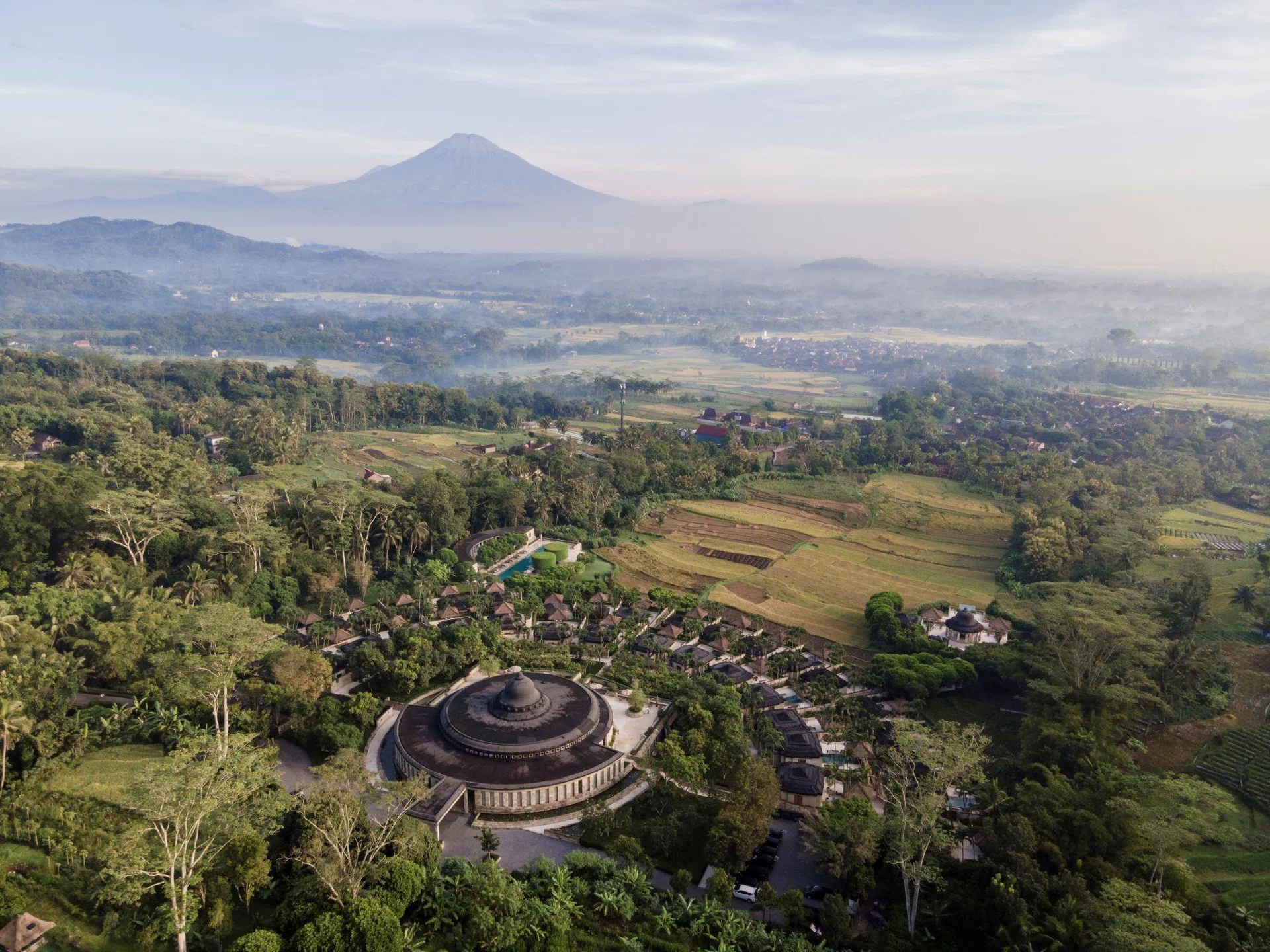
The main rotunda rises before you: a domed, colonnade-ringed structure built from blush-beige paras stone, its silhouette unmistakably familiar yet somehow displaced from everything around it. I’d soon realise it mirrors a slightly grander structure — albeit on a thousand-year-old scale — rising from the Kedu Plain, barely 10 minutes down the road.
Amanjiwo was designed by architect Ed Tuttle as a deliberate echo of Borobudur. The proportions, the circular geometry, the tiered stonework — all of it a quiet nod to the 9th-century Buddhist monument it overlooks.
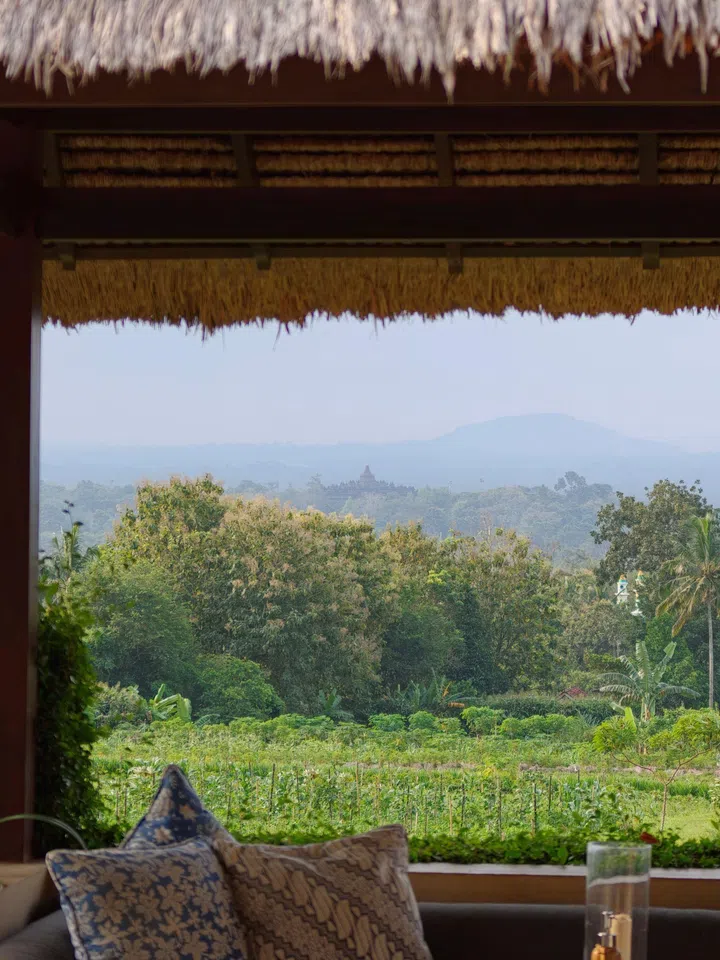
This runs so deep that guests will specifically request a Borobudur Pavilion, a suite category that faces the temple. On a clear morning, the top stupa — the highest point of the world’s largest Buddhist monument — appears framed in the distance.
What distinguishes Amanjiwo from the category of beautiful hotels with incredible views, though, sits well above the aesthetic. Central Java has long been considered Indonesia’s cultural heartland, and Amanjiwo has structured its entire guest experience around that legacy.
The temple at dawn
Education begins with the Sunrise Borobudur Tour at 4.30am, which sounds punishing until you’re standing on the upper terraces in near-silence, with mist sitting low over the Kedu Plain and the outline of Mount Merapi barely visible through the blue-grey dark.
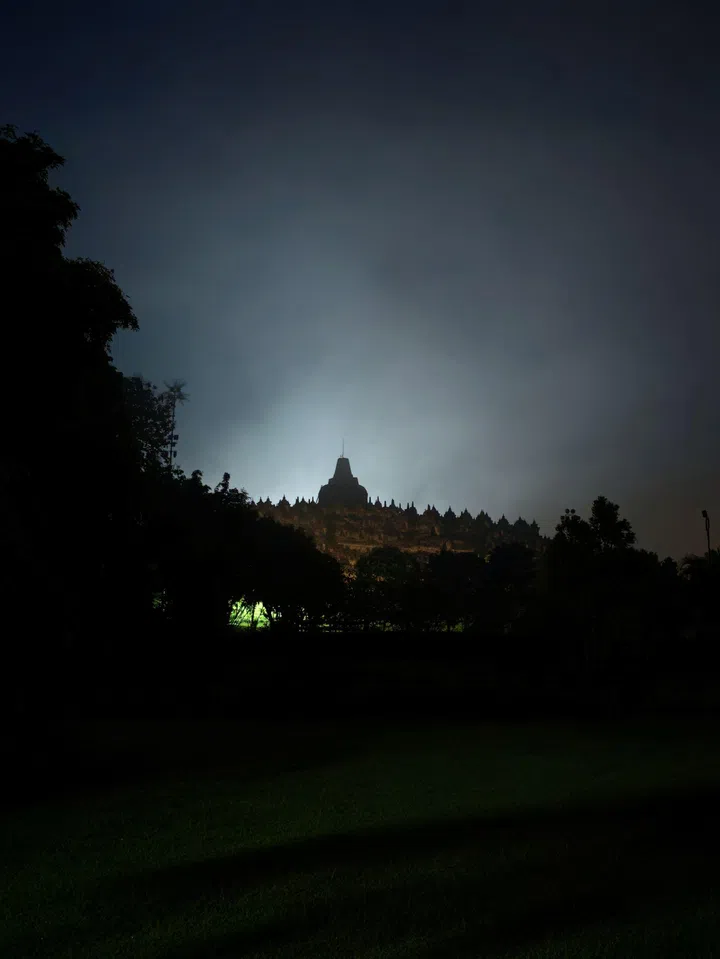
Our guide explained that the site’s location was no accident. The Kedu Plain was chosen specifically for its cosmological significance: positioned between two pairs of twin volcanoes, Sundoro-Sumbing and Merbabu-Merapi, and flanked by two rivers, the Progo and the Elo, the ancient Javanese regarded it as the most sacred ground on the island.
The rivers were understood as earthly counterparts to the sacred Ganges and Yamuna of India. To build here was to build at the centre of the universe, as they understood it.
The temple itself is structured as a three-dimensional map of that universe. At the base, the Kamadhatu — the realm of human desire, where we are bound to our appetites and impulses. Ascending through the square terraces, the Rupadhatu — the sphere of form, where desire is released, but identity remains.
And at the top, the circular platforms of the Arupadhatu — the formless realm, where identity dissolves into something approaching nirvana.
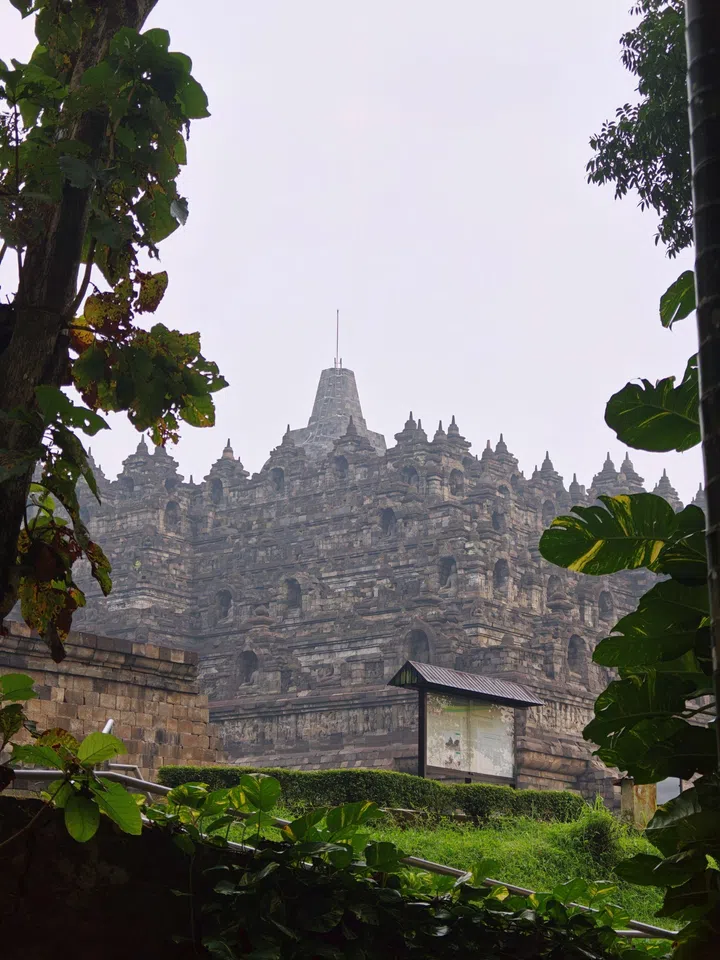
The progression, our guide noted, mirrors the stages of human self-actualisation: the struggle to transcend what you want, then what you think you are, and finally the version of yourself you’ve been performing for the world.
Here, over 2,600 relief panels line the gallery walls — the entire life and teachings of the Buddha rendered in stone — meant to be read clockwise as pilgrims ascend, each tier demanding more of the person climbing it.
Breakfast at the river’s edge
The Progo River, one of the two waterways that the ancient Javanese believed mirrored the sacred rivers of the Indian subcontinent, borders Amanjiwo to the west — and carries the same cosmological significance the guide unpacked at the temple.
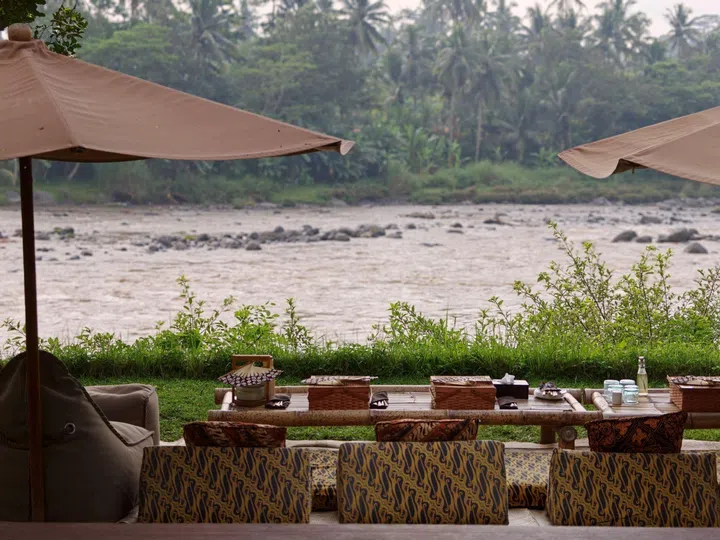
Sitting beside it at breakfast, with the jungle pressing in close on both banks and the current moving steadily below, that history doesn’t feel remote. Amanjiwo sets a private picnic above the riverbank, and there’s something about the particular quality of the morning light there — gold and slow — that makes the context of the temple tour settle differently.
The resort also offers the Ruwatan purification ritual on the banks of the Progo, guided by a Javanese healer-shaman, drawing on the river’s long-standing role as a site of spiritual cleansing in Javanese tradition.
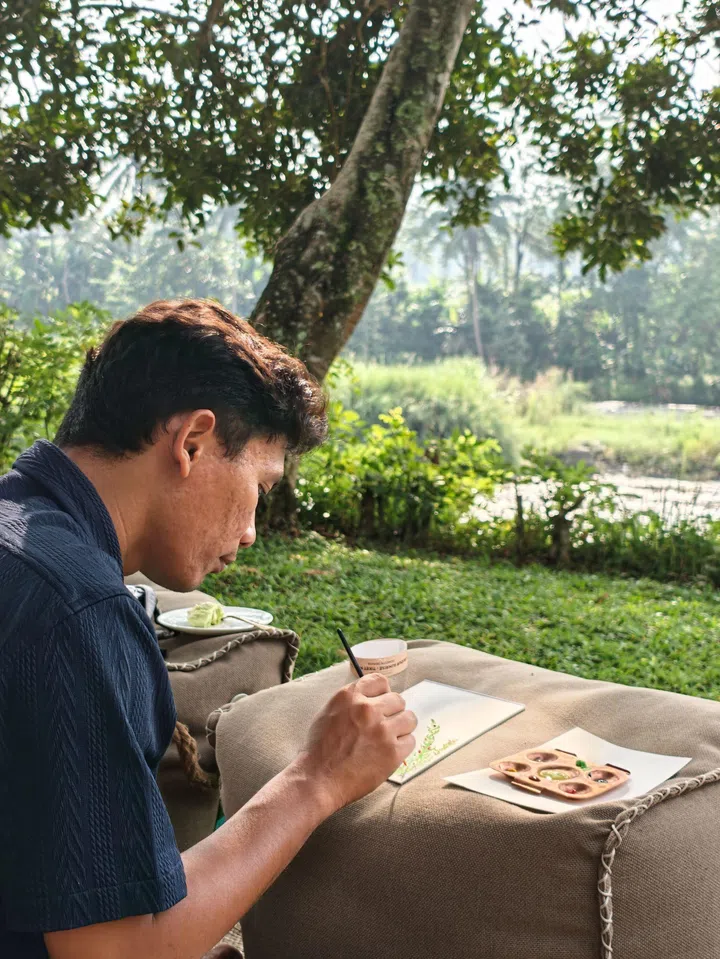
The breakfast and the ritual occupy different registers, but they’re expressions of the same conviction: that this stretch of water means something, and that being beside it is worth being present for.
A spiritual sport
Elsewhere in Amanjiwo’s curated library of cultural immersions is Sasanatama, the resort’s archery pavilion, where any assumption that Jemparingan is a novelty activity gets promptly dismantled within the first few minutes.
Jemparingan originated within the walls of Keraton Yogyakarta, the royal palace of the Yogyakarta Sultanate, as the training discipline of the Bregodo Nyutro — an elite guard corps dedicated to protecting the Sultan’s lineage.
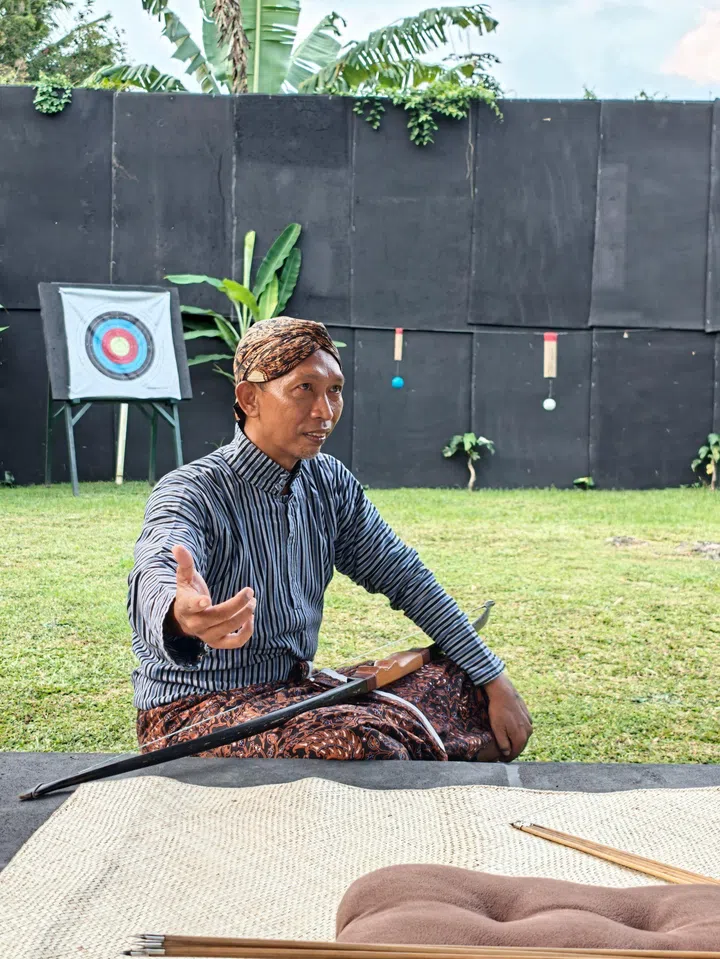
Our instructor was clear from the outset that the practice was never designed around accuracy, but character-building. Practitioners sit cross-legged on the ground, draw the bow — held horizontally — to chest level rather than eye level, and aim at a cylindrical target some 35m away.
The visual acuity you’d rely on in conventional archery is, by design, taken away from you.
Each round consists of four arrows — no more, no less — and our teacher was precise about what each one represents: “Focus,” he said. “Identity. Self-motivation. And responsibility.”
The constraint is the entire point. You cannot compensate for a poor shot with volume, nor lose concentration and recover it across a longer round. Four arrows is the full extent of your chance to demonstrate who you are under pressure, which is exactly why the Sultanate used this practice to develop soldiers who could be trusted to act with integrity when it mattered.
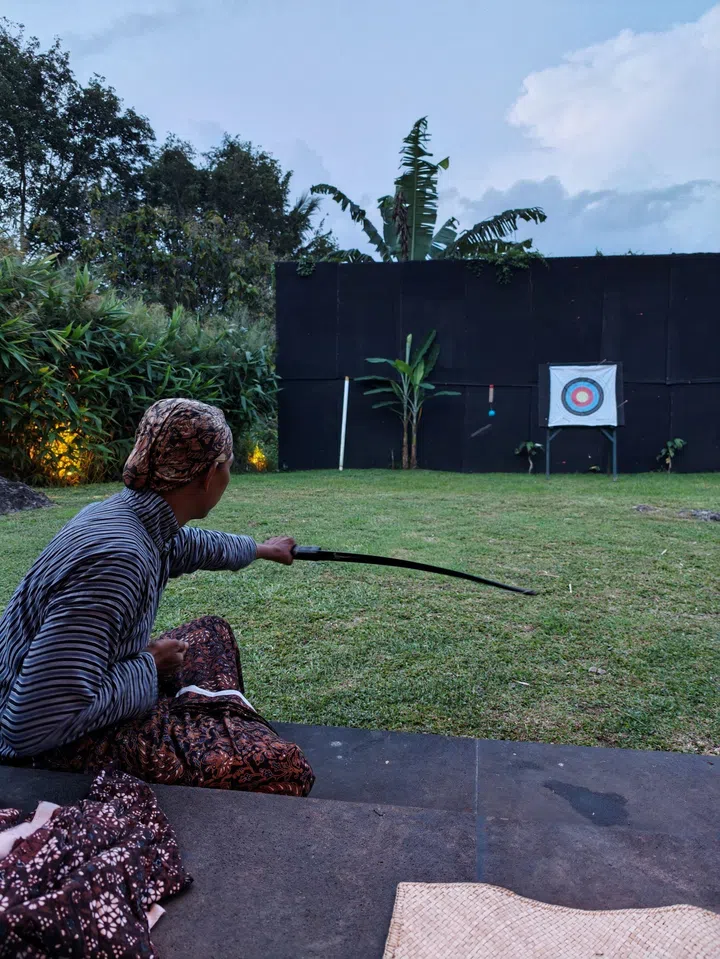
During competitions, showcasing humility rather than precise shooting is a true marker of someone who has genuinely embraced the essence of Jemparingan — to embody kindness, sportsmanship, and integrity; all the hallmarks of true chivalry.
I shot my four arrows with the concentrated effort of someone who had just been told all of this, and they were certainly not of palace-approved marksmanship.
What’s equally worth noting is that the practitioners who teach at Amanjiwo are drawn from the surrounding communities — cultural custodians for whom this is a living tradition. The resort’s role is to create the platform and the livelihood that keeps the practice from existing only in palace archives; Amanjiwo as an enabler of cultural continuity.
An evening of puppet mastery
An evening with Amanjiwo’s Javanese Wayang dinner is not one to leave off your itinerary.
Wayang kulit, the shadow puppet tradition of Java, is among the oldest continuously practised art forms in the world, recognised by UNESCO as an Intangible Cultural Heritage of Humanity.
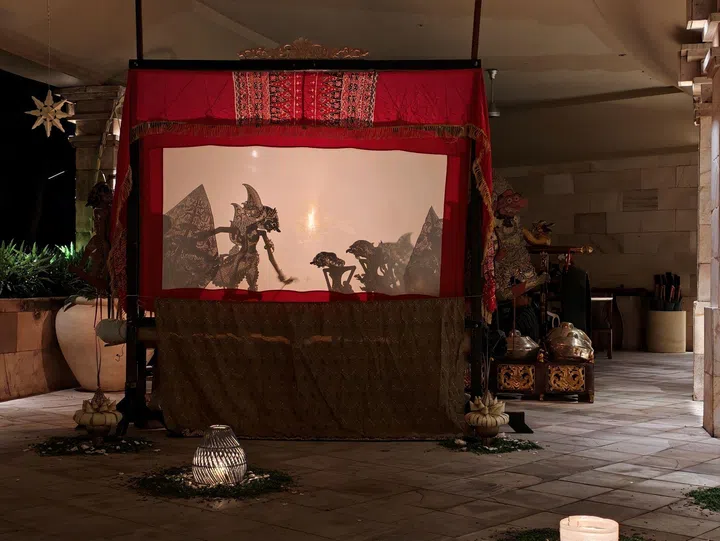
The dalang — the puppet master — functions simultaneously as narrator, orchestra conductor, and the sole voice for dozens of distinct characters, drawing on an oral literary tradition that encompasses the Mahabharata, the Ramayana, and cycles of Javanese mythology. A traditional performance runs through the night, sometimes eight hours or longer.
The version that unfolds at Amanjiwo’s dinner is a curated excerpt, delivered with full gamelan accompaniment and framed with enough context for the craft to land as it should.
The curated menu complements the performance; Javanese-inspired cuisine crafted from Amanjiwo’s organic garden and local producers, with the nuanced depth, aroma, and flavour that are trademarks of the region.
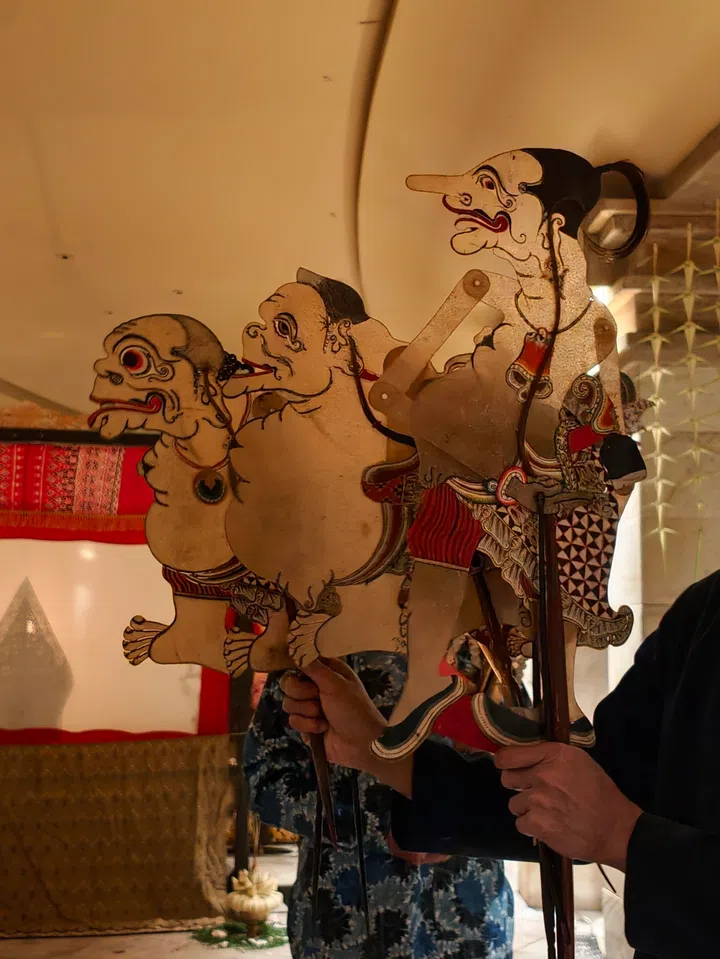
On stage, there was a specificity to his hands, a fluency in the movement of the leather figures against the backlit screen, that you can only recognise as the product of decades.
An immersive curriculum
The simplest reading of a place like Amanjiwo is that it is a luxury property that offers cultural programming as an indispensable layer of the experience. But that framing still undersells it.
The Kedu Plain has been considered sacred ground for over a thousand years. What Amanjiwo has built — by design and by sustained community relationship — is a guest experience that takes that seriously: educational without being didactic, immersive without being extractive, and luxurious in a way that doesn’t require you to bracket your conscience to enjoy it.
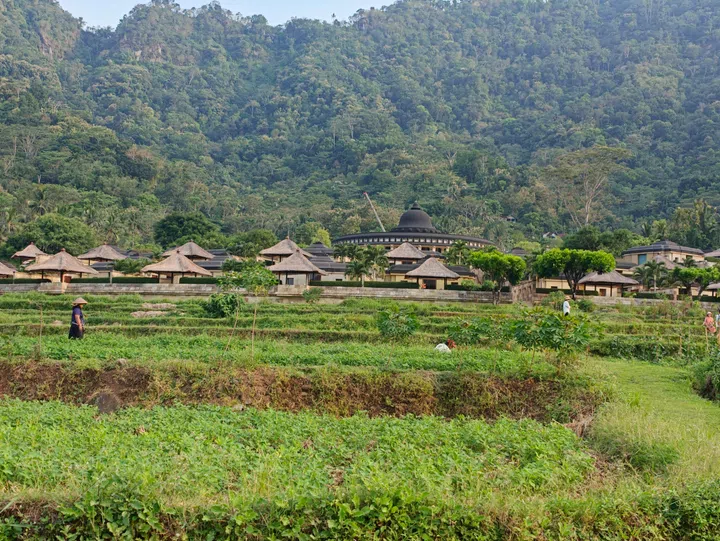
The cultural custodians it partners with are not ornamental; they are the curriculum. And the resort, at its most considered, understands that its greatest offering isn’t the view from the Borobudur Pavilion — as extraordinary as that view is — but the framework it provides for understanding what you’re admiring from your villa patio.