%22%3E%0A%3Cpath%20d%3D%22M412%20101.2H393.7C393.1%20101.2%20392.3%20100.9%20391.8%20100.5C377.3%2087.6004%20362.9%2074.6004%20348.4%2061.6004C344.8%2058.4004%20341.3%2055.2004%20337.7%2052.0004C337.1%2051.5004%20336.2%2051.1004%20335.5%2051.0004C334.2%2050.8004%20333%2051.0004%20331.5%2051.0004V101.1H316.7V0.100391H331.4V44.3004C331.9%2044.3004%20332.2%2044.4004%20332.5%2044.4004C334.9%2044.4004%20337.2%2044.5004%20339.6%2044.4004C340.4%2044.4004%20341.3%2044.0004%20341.8%2043.5004C351.6%2034.4004%20361.4%2025.2004%20371.1%2016.0004C376.5%2010.9004%20381.9%205.90039%20387.3%200.800391C387.9%200.200391%20388.5%200.000390626%20389.3%200.000390626H400.9C384.2%2015.8004%20367.8%2031.3004%20351.2%2047.0004C371.5%2065.0004%20391.8%2082.9004%20412.1%20100.9C412.1%20101%20412.1%20101.1%20412%20101.2ZM180.9%20101.2C184.1%2094.9004%20187.2%2088.9004%20190.3%2082.8004C198.3%2067.3004%20206.2%2051.8004%20214.2%2036.2004C220.3%2024.4004%20226.4%2012.5004%20232.4%200.700391C232.7%200.100391%20233%20-0.0996094%20233.7%20-0.0996094H248.1C248.8%20-0.0996094%20249.2%200.100391%20249.6%200.800391C256%2013.3004%20262.4%2025.7004%20268.8%2038.2004C279.3%2058.6004%20289.8%2079.0004%20300.3%2099.5004C300.5%20100%20300.8%20100.4%20301.1%20101.1C300.5%20101.1%20300.1%20101.2%20299.7%20101.2H286.5C285.6%20101.2%20285.1%20100.9%20284.7%20100.2C280.1%2091.3004%20275.4%2082.4004%20270.8%2073.4004C270.1%2072.1004%20269.3%2071.6004%20267.8%2071.6004H209.9C208.7%2071.6004%20208.1%2072.0004%20207.5%2073.1004C202.9%2082.1004%20198.2%2091.0004%20193.6%20100C193.1%20101%20192.6%20101.3%20191.5%20101.3C188.4%20101.2%20185.3%20101.3%20182.3%20101.3C182%20101.2%20181.6%20101.2%20180.9%20101.2ZM239.1%2011.4004C230%2029.2004%20221.1%2046.7004%20212.1%2064.3004H266.4C257.2%2046.7004%20248.2%2029.2004%20239.1%2011.4004ZM0%200.000390626H43.4C51.2%200.000390626%2058.7%201.20039%2065.7%204.80039C75.9%2010.0004%2078.9%2018.0004%2078.6%2027.4004C78.3%2034.3004%2076%2040.5004%2071.2%2045.5004C67.3%2049.6004%2062.4%2052.3004%2057.1%2054.3004C50.6%2056.7004%2043.9%2058.0004%2037.1%2058.6004C30.1%2059.2004%2023.1%2059.4004%2016.2%2059.7004C15.8%2059.7004%2015.3%2059.8004%2014.8%2059.8004V101.1H0.1C0%2067.4004%200%2033.8004%200%200.000390626ZM14.8%207.10039V52.2004C23.7%2052.4004%2032.6%2052.3004%2041.2%2050.1004C44.4%2049.3004%2047.6%2048.2004%2050.6%2046.7004C58.4%2043.0004%2062.3%2036.7004%2062.7%2028.0004C63%2019.9004%2059.5%2014.1004%2052.4%2010.5004C47.6%208.00039%2042.5%207.10039%2037.2%207.10039H14.8ZM95.9%20101.1V0.100391H167.3V7.20039H110.7V44.7004H158.1V51.9004H110.8V93.9004H171.1V101C146.1%20101.1%20121%20101.1%2095.9%20101.1Z%22%20fill%3D%22black%22%2F%3E%0A%3Cpath%20d%3D%22M35.0004%2025.7996H42.5004V20.6996H44.8004V33.1996H42.6004V27.5996H34.9004V33.2996H32.7004V20.7996H35.0004V25.7996ZM54.4004%2025.8996V27.2996H48.9004V31.6996H55.9004C55.9004%2032.1996%2056.0004%2032.5996%2056.0004%2033.0996H46.5004V20.5996H55.5004V21.8996H49.0004V25.7996C50.7004%2025.8996%2052.5004%2025.8996%2054.4004%2025.8996ZM25.9004%2033.0996H23.5004V21.9996H17.9004V20.6996H31.6004V22.0996H27.1004C26.2004%2022.0996%2025.9004%2022.2996%2025.9004%2023.1996C26.0004%2026.0996%2025.9004%2028.9996%2025.9004%2031.7996V33.0996Z%22%20fill%3D%22black%22%2F%3E%0A%3C%2Fg%3E%0A%3Cdefs%3E%0A%3CclipPath%20id%3D%22clip0_388_462%22%3E%0A%3Crect%20width%3D%22411%22%20height%3D%22101.2%22%20fill%3D%22white%22%2F%3E%0A%3C%2FclipPath%3E%0A%3C%2Fdefs%3E%0A%3C%2Fsvg%3E%0A)
Share this article
There’s a particular kind of restraint that comes with building a car for Singapore. Space is tight, costs are punishing, and practicality tends to win most arguments. Which makes the arrival of the Alfa Romeo Junior Elettrica slightly unexpected — not because it is electric, but because it refuses to behave like a typical Category A car.
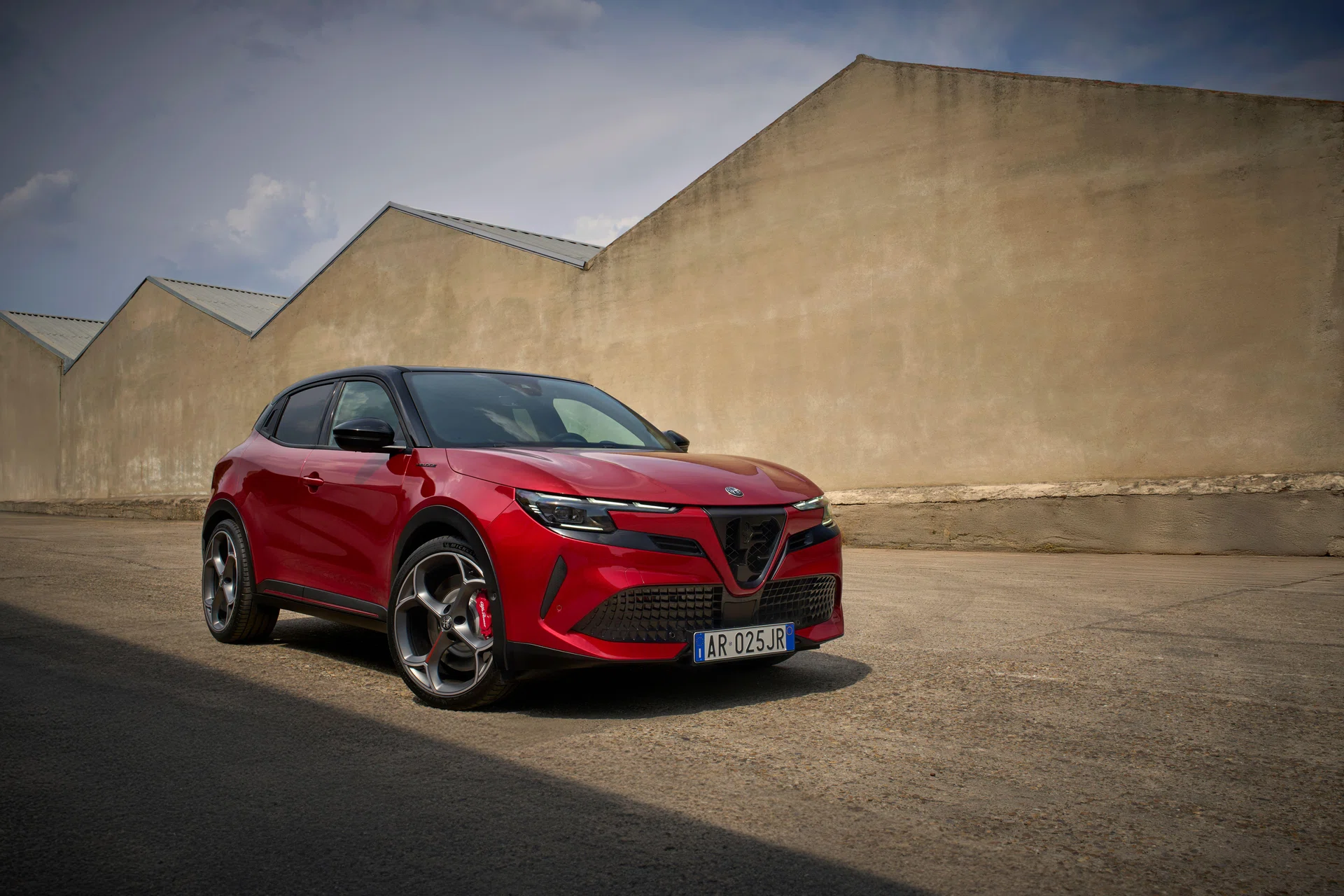
Now on display at the Red Rock & Rosso Motor Experience Centre in Gillman Barracks, the Junior marks Alfa Romeo’s return to the compact segment, though it doesn’t read like a concession to it.
The framing, at least from the brand, leans towards a new generation of drivers, but what’s more interesting is how it tries to hold on to a sense of identity in a market that often flattens it.
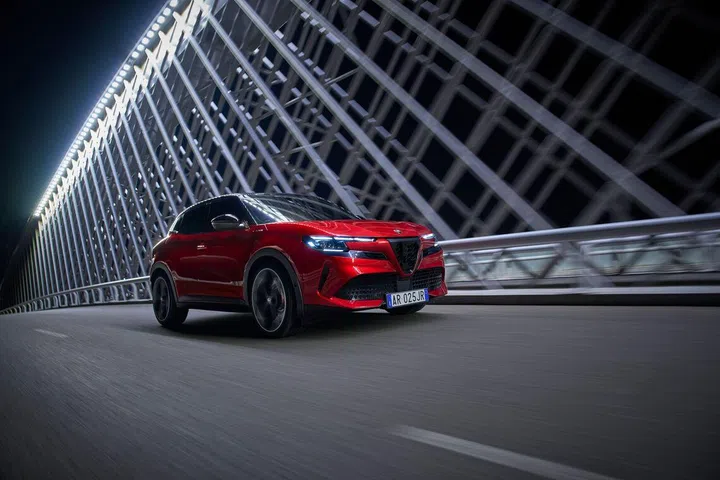
The design carries that tension quite clearly. At 4.17m long, it sits comfortably within the category’s constraints, but the visual language pushes against that neat classification. The familiar Alfa Romeo cues remain — the scudetto grille, the trilobo motif — but they feel tightened, almost compressed, as though forced to negotiate with the car’s footprint rather than dominate it.
Even the references to older models, like the “coda tronca” rear, land less as nostalgia and more as insistence. The brand still wants to be recognised on its own terms.
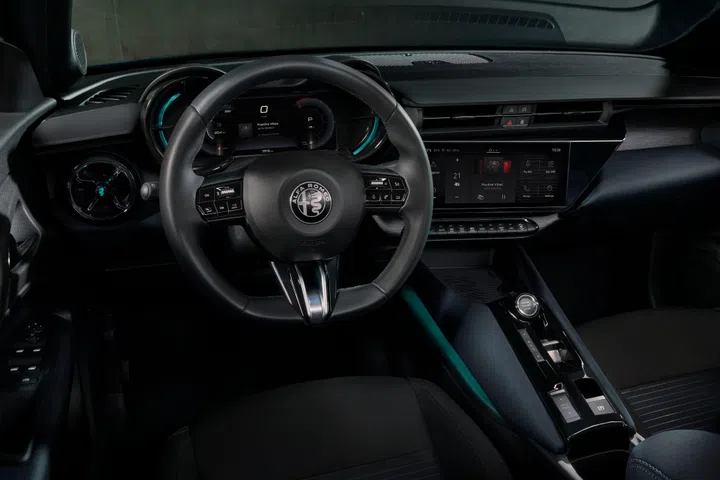
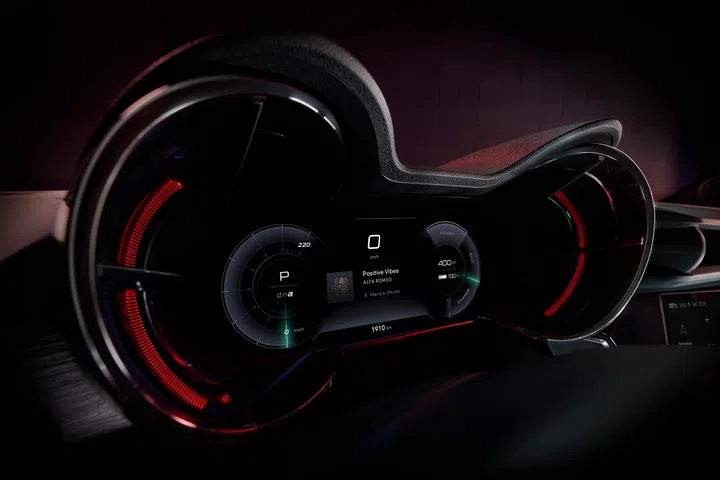
Inside, the approach becomes more pragmatic, though not entirely neutral. The layout is decisively driver-oriented, with controls clustered within reach and a 10.25-inch digital cluster paired with an equally sized infotainment display.
There’s an effort here to keep things intuitive without overcomplicating the experience, which in itself feels like a quiet correction to where many new cars have gone. Materials like the RipStop fabric seats — engineered for durability and breathability — suggest a degree of adaptation to Singapore’s climate rather than an attempt to impose an unchanged European sensibility.
Performance without excess
The electric powertrain is where the conversation inevitably shifts. On paper, the numbers are measured: 100kW of power, 260 Nm of torque, a 0 to 100 kmh time of nine seconds, and a range of up to 410km. None of this is particularly aggressive, and perhaps that’s the point.
The Junior doesn’t try to overwhelm with performance figures. Instead, it positions itself within a more usable spectrum — enough responsiveness to feel engaged, without tipping into excess that Singapore’s roads can’t accommodate anyway.
Charging times reinforce that everyday framing. A 100kW fast charge can deliver around 100km of range in ten minutes, or bring the battery from 10 to 80 per cent in roughly half an hour. It’s functional, predictable, and aligned with how most urban drivers actually use their cars, rather than how manufacturers often prefer to describe them.
Where Alfa Romeo seems more deliberate is in how the car drives, or at least how it claims it should. The steering ratio — 15.8 — has been calibrated for sharper response, and the familiar DNA drive modes remain, albeit reinterpreted for an electric platform.
“Dynamic”, “Natural”, and “Advanced Efficiency” aren’t new ideas, but their presence suggests an attempt to preserve a certain rhythm to driving, even as the mechanics beneath it change.
Between badge and bracket
Then there is the expected layer of safety and assistance systems — adaptive cruise control, lane centring, traffic jam assist, a full suite of driver alerts — all of which now read as baseline rather than standout. Their presence feels less like a point of differentiation and more like an acknowledgement of what the modern driver already expects.
Pricing places the Junior in a more precarious position. Starting from just over $103,000 without COE (as of April 10, 2026), with early offers dipping lower, it sits within reach of the Category A bracket while still carrying the weight of a premium badge. Whether that balance holds — between accessibility and expectation — will likely determine how the car is received.
What the Junior reveals is less about Alfa Romeo’s ability to build an electric car and more about its willingness to adapt without fully conceding. It doesn’t try to dominate the conversation around electrification, nor does it retreat into heritage.
Instead, it settles into an uneasy middle ground, where identity is negotiated rather than declared. And in a market like Singapore, that might be the more honest position to take.