%22%3E%0A%3Cpath%20d%3D%22M412%20101.2H393.7C393.1%20101.2%20392.3%20100.9%20391.8%20100.5C377.3%2087.6004%20362.9%2074.6004%20348.4%2061.6004C344.8%2058.4004%20341.3%2055.2004%20337.7%2052.0004C337.1%2051.5004%20336.2%2051.1004%20335.5%2051.0004C334.2%2050.8004%20333%2051.0004%20331.5%2051.0004V101.1H316.7V0.100391H331.4V44.3004C331.9%2044.3004%20332.2%2044.4004%20332.5%2044.4004C334.9%2044.4004%20337.2%2044.5004%20339.6%2044.4004C340.4%2044.4004%20341.3%2044.0004%20341.8%2043.5004C351.6%2034.4004%20361.4%2025.2004%20371.1%2016.0004C376.5%2010.9004%20381.9%205.90039%20387.3%200.800391C387.9%200.200391%20388.5%200.000390626%20389.3%200.000390626H400.9C384.2%2015.8004%20367.8%2031.3004%20351.2%2047.0004C371.5%2065.0004%20391.8%2082.9004%20412.1%20100.9C412.1%20101%20412.1%20101.1%20412%20101.2ZM180.9%20101.2C184.1%2094.9004%20187.2%2088.9004%20190.3%2082.8004C198.3%2067.3004%20206.2%2051.8004%20214.2%2036.2004C220.3%2024.4004%20226.4%2012.5004%20232.4%200.700391C232.7%200.100391%20233%20-0.0996094%20233.7%20-0.0996094H248.1C248.8%20-0.0996094%20249.2%200.100391%20249.6%200.800391C256%2013.3004%20262.4%2025.7004%20268.8%2038.2004C279.3%2058.6004%20289.8%2079.0004%20300.3%2099.5004C300.5%20100%20300.8%20100.4%20301.1%20101.1C300.5%20101.1%20300.1%20101.2%20299.7%20101.2H286.5C285.6%20101.2%20285.1%20100.9%20284.7%20100.2C280.1%2091.3004%20275.4%2082.4004%20270.8%2073.4004C270.1%2072.1004%20269.3%2071.6004%20267.8%2071.6004H209.9C208.7%2071.6004%20208.1%2072.0004%20207.5%2073.1004C202.9%2082.1004%20198.2%2091.0004%20193.6%20100C193.1%20101%20192.6%20101.3%20191.5%20101.3C188.4%20101.2%20185.3%20101.3%20182.3%20101.3C182%20101.2%20181.6%20101.2%20180.9%20101.2ZM239.1%2011.4004C230%2029.2004%20221.1%2046.7004%20212.1%2064.3004H266.4C257.2%2046.7004%20248.2%2029.2004%20239.1%2011.4004ZM0%200.000390626H43.4C51.2%200.000390626%2058.7%201.20039%2065.7%204.80039C75.9%2010.0004%2078.9%2018.0004%2078.6%2027.4004C78.3%2034.3004%2076%2040.5004%2071.2%2045.5004C67.3%2049.6004%2062.4%2052.3004%2057.1%2054.3004C50.6%2056.7004%2043.9%2058.0004%2037.1%2058.6004C30.1%2059.2004%2023.1%2059.4004%2016.2%2059.7004C15.8%2059.7004%2015.3%2059.8004%2014.8%2059.8004V101.1H0.1C0%2067.4004%200%2033.8004%200%200.000390626ZM14.8%207.10039V52.2004C23.7%2052.4004%2032.6%2052.3004%2041.2%2050.1004C44.4%2049.3004%2047.6%2048.2004%2050.6%2046.7004C58.4%2043.0004%2062.3%2036.7004%2062.7%2028.0004C63%2019.9004%2059.5%2014.1004%2052.4%2010.5004C47.6%208.00039%2042.5%207.10039%2037.2%207.10039H14.8ZM95.9%20101.1V0.100391H167.3V7.20039H110.7V44.7004H158.1V51.9004H110.8V93.9004H171.1V101C146.1%20101.1%20121%20101.1%2095.9%20101.1Z%22%20fill%3D%22black%22%2F%3E%0A%3Cpath%20d%3D%22M35.0004%2025.7996H42.5004V20.6996H44.8004V33.1996H42.6004V27.5996H34.9004V33.2996H32.7004V20.7996H35.0004V25.7996ZM54.4004%2025.8996V27.2996H48.9004V31.6996H55.9004C55.9004%2032.1996%2056.0004%2032.5996%2056.0004%2033.0996H46.5004V20.5996H55.5004V21.8996H49.0004V25.7996C50.7004%2025.8996%2052.5004%2025.8996%2054.4004%2025.8996ZM25.9004%2033.0996H23.5004V21.9996H17.9004V20.6996H31.6004V22.0996H27.1004C26.2004%2022.0996%2025.9004%2022.2996%2025.9004%2023.1996C26.0004%2026.0996%2025.9004%2028.9996%2025.9004%2031.7996V33.0996Z%22%20fill%3D%22black%22%2F%3E%0A%3C%2Fg%3E%0A%3Cdefs%3E%0A%3CclipPath%20id%3D%22clip0_388_462%22%3E%0A%3Crect%20width%3D%22411%22%20height%3D%22101.2%22%20fill%3D%22white%22%2F%3E%0A%3C%2FclipPath%3E%0A%3C%2Fdefs%3E%0A%3C%2Fsvg%3E%0A)
This writer turns into living art as part of artist Liu Bolin’s China’s “invisible man” installation in Singapore
Joining globally acclaimed Chinese artist at the National Gallery Singapore, I became part of his latest artwork, disappearing into the colonial-era monument with a powerful message of unity, identity, and collective resilience.
By Y-Jean Mun-Delsalle /

Share this article
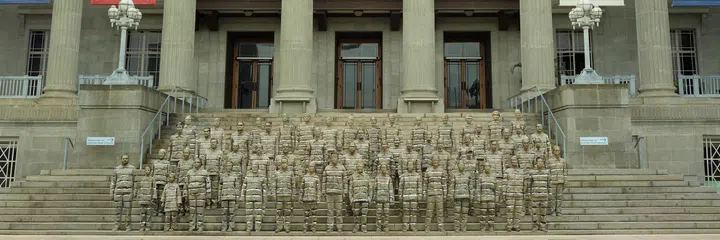
Standing on the steps of the former City Hall, now the National Gallery Singapore, on a rainy Friday morning in January, I felt the weight of history beneath my feet. The three-storey-high Corinthian columns loomed above us as Liu Bolin and his team positioned and painted us, a diverse group of 60 individuals of different races, cultures, and creeds.
We were about to vanish — absorbed into the grand facade in a way that would make us both invisible and deeply seen, becoming a paradox of presence in absence.
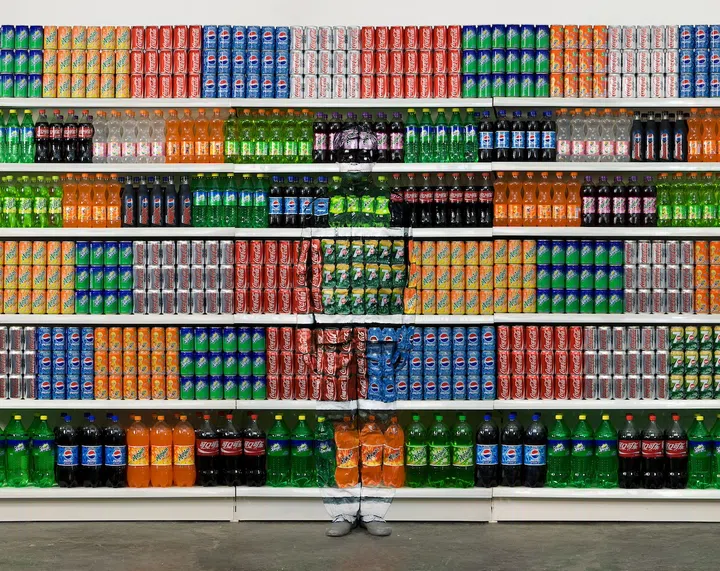
For years, I had admired Liu’s work, his ability to disappear into the landscapes of urban life, and his body becoming part of propaganda posters, supermarket shelves, historical landmarks and even artistic masterpieces.
I followed his projects and met him in Hong Kong and Paris, each time personally invited to participate in his artworks, but he had never been available until now.
This time, I wasn’t a spectator. I actively participated in his latest project, “We Are the World”, a photo performance that called for love and unity while opposing war. Part of his “Hiding in Singapore” series was a statement: We are not separate from the world; we are the world itself.
A meticulous process
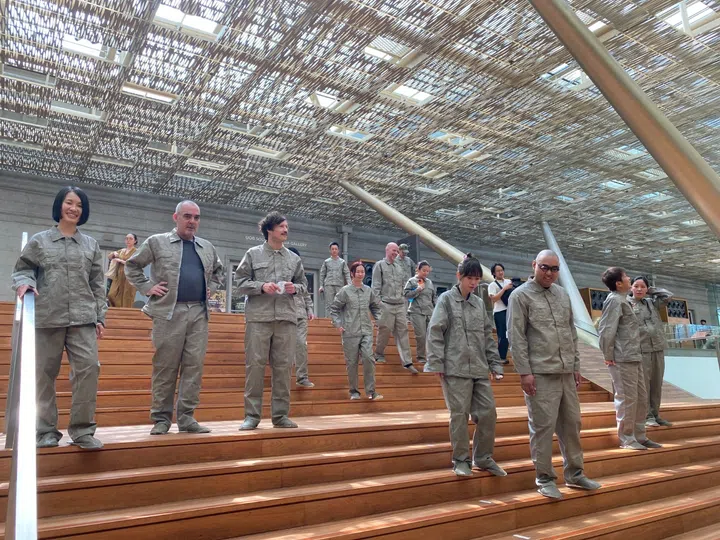
Liu and his assistants handed us military uniforms sourced from an online army surplus store. We applied Vaseline to our faces, necks, and hands as a barrier to prevent direct contact with the acrylic pigments. Then, they painted over our clothes, skin, and hair, matching us to the backdrop so that we became human canvases, vanishing into the lines and textures of the stone steps.
It wasn’t a simple act of blending in — it was an act of transformation. We were no longer individuals but interconnected entities, living, breathing parts of architecture bound together by our shared humanity.
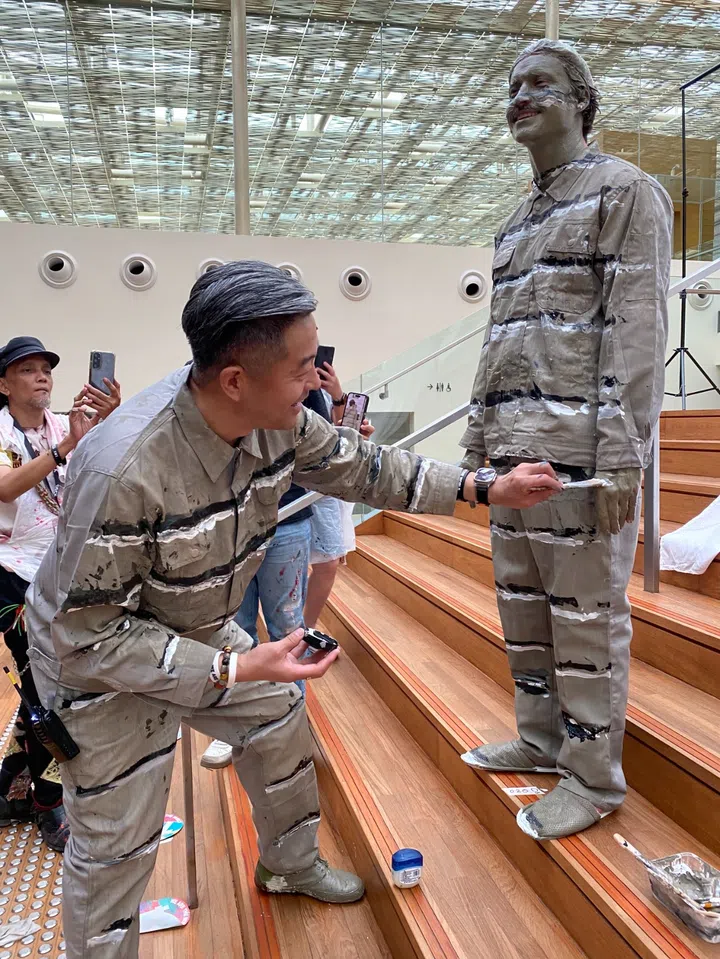
As one of the participants in the photo, Liu moved back and forth from City Hall across the street to the sidewalk facing the Padang, where his Phase One IQ280 camera was set up, coordinating with his photographer via walkie-talkie. Meanwhile, a couple in full bridal attire posed for their wedding photos at the top of the steps.
Since it was the monsoon season and stormy weather was forecast, we held umbrellas painted in bold, festive red, symbolising the Chinese New Year, celebration, happiness, fire, and even anger.
The bigger picture
“I maintained close contact with local residents and observed that Singapore’s cultural atmosphere is distinctly different,” said Bolin. “People of diverse religions, skin colours, languages and cultures coexist harmoniously. Inspired by this, I wanted to explore the possibility of harmonious coexistence among ethnic groups with different religious beliefs and cultural backgrounds.”
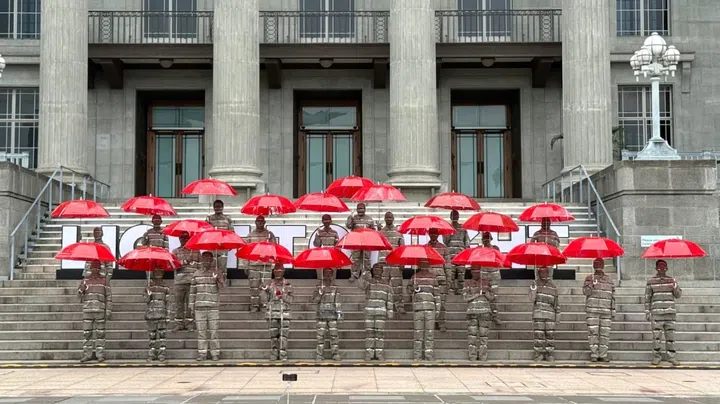
As I stood motionless, waiting for the photograph to be taken, I reflected on the significance of City Hall. This was the site where the Japanese surrendered to the Allied forces in 1945, where Singapore’s flag and national anthem were unveiled, where independence was declared in 1965, where world leaders had gathered, and where history had been made.
To dissolve into this space was to become part of a larger narrative that transcended borders and divisions, mirroring Singapore’s diverse social fabric and nation-building odyssey as it marks its 60th anniversary this year.
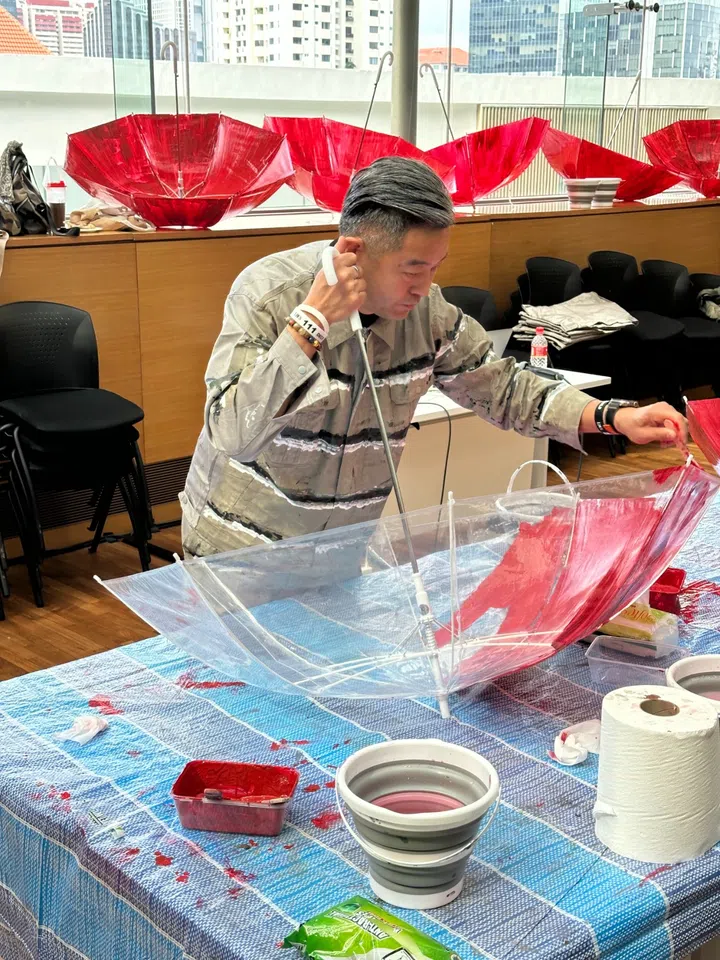
Going behind the scenes was an unforgettable experience; I was painted by Liu himself, becoming part of his artwork and Singapore’s cultural legacy. The painting process took two days and involved 111 people: 60 models, 26 painters, eight videographers, two photographers, two media personnel, and 13 support staff.
Multiple photographs were subsequently stitched together to form the final composite images.
The man behind the art
Liu’s journey as an artist began in 1973 in China’s Shandong Province. He studied sculpture at the Central Academy of Fine Arts in Beijing, but his career took a turn in 2005 when the artists’ village where he worked was demolished as part of Beijing’s restructuring for the 2008 Olympics.
Rather than passively accepting his erasure, he became a living sculpture, camouflaging into the ruins in silent protest. That first disappearance became the foundation of his renowned series, “Hiding In the City”.
Beyond aesthetics, his art is deeply political, addressing themes of state power, consumerism, collective memory, displacement, migration and environmental degradation.
“I found immense joy in hours of shooting; it was standing that shaped my identity,” Liu explained. “In the process of disappearing — of grappling with my physical ability — I encapsulated my artistic attitude, observations about the world, reflections on my destiny, recognition of my strengths and pursuit of dreams within these works. This culminated in what can be considered the most fundamental and elegant expression of my worldview.”
A second disappearance
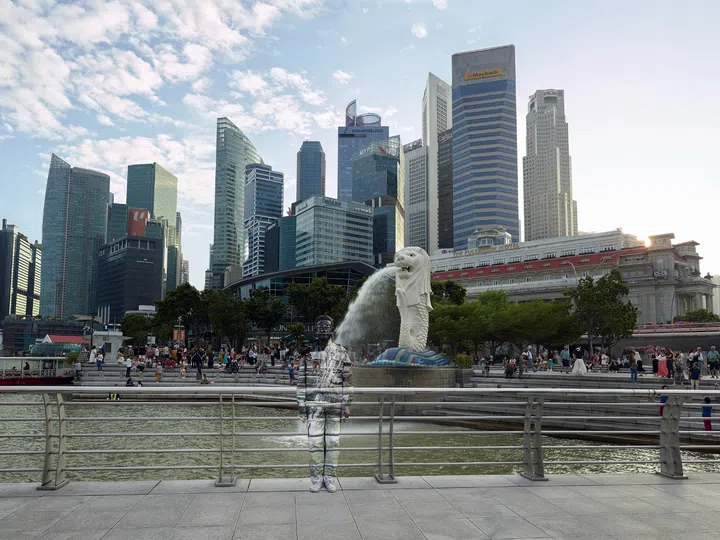
A couple of days later, he staged another disappearance at Clifford Pier, a location steeped in Singapore’s maritime history. This performance, featuring former harbour boatmen and representatives of the nautical industry, was a poignant tribute to the early traders and immigrants who had shaped the city-state’s destiny.
It was a metaphor for Singapore’s transformation from a colonial port to a global metropolis, a nation built on the labour and sacrifices of its predecessors.
For Liu, these photo performances are more than just visual illusions; they are acts of social commentary. They challenge us to question who is seen and forgotten, who holds power and who is erased from history.
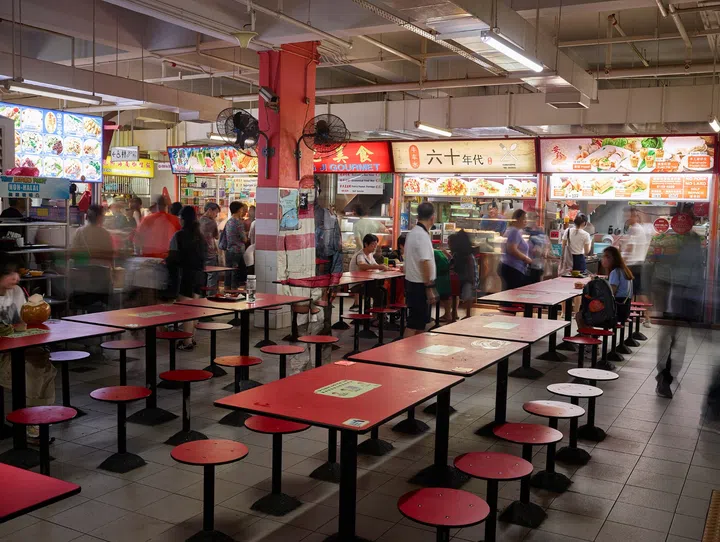
Participating in “We Are the World” was a humbling experience — one that made me realise that invisibility could be a form of resistance, a way of challenging the idea that individuals are separate from their surroundings.
In Singapore, a city multiculturalism has long defined, Bolin’s project took on an added layer of meaning. At a time when global tensions are high and divisions are being reinforced rather than dismantled, this performance reminded us that art could serve as a powerful force for peace and solidarity.