
Malaysian architect Mior Aizuddin Fahmi sees limitations as a chance to “create beauty”
From emotive pavilions to his experimental office-and-gallery space in a terrace house, Bunga Design Atelier’s founder finds opportunities to engage community, provoke thought, and shape memorable atmospheres.
By Luo Jingmei /
Share this article
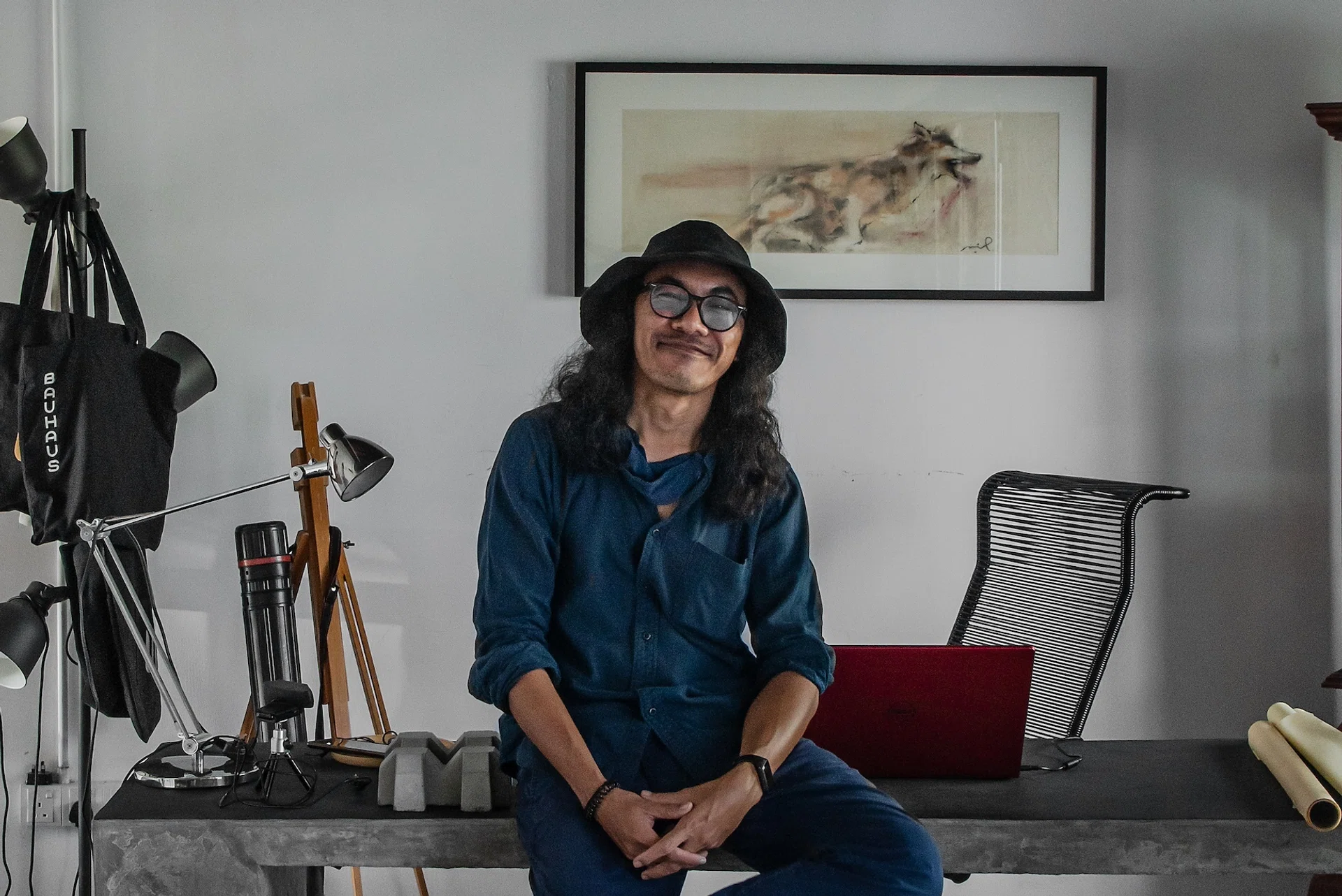
fter establishing architecture office Bunga Design Atelier in 2018, Mior Aizuddin Fahmi focused on landscape projects for the first five years rather than making buildings. “That was our strategy, although we are now slowly doing more architecture work,” says the Kuala Lumpur-based architect, who was in Singapore for Archifest 2026 in July.
He wanted to show that landscape design is as integral as the building in creating good environments. “When you bring greenery, sustainable elements or any landscape feature into a building, it elevates your project, but you need to do it at the beginning of your project, not at the last chapter where landscape looks like an afterthought,” comments Mior.
He grew up in Batu Gajah, Perak, a former tin-mining area with many wetlands. This shaped his perspective on land and the environment. After studying architecture in Malaysia, Mior worked at Seksan Design for about 10 years.
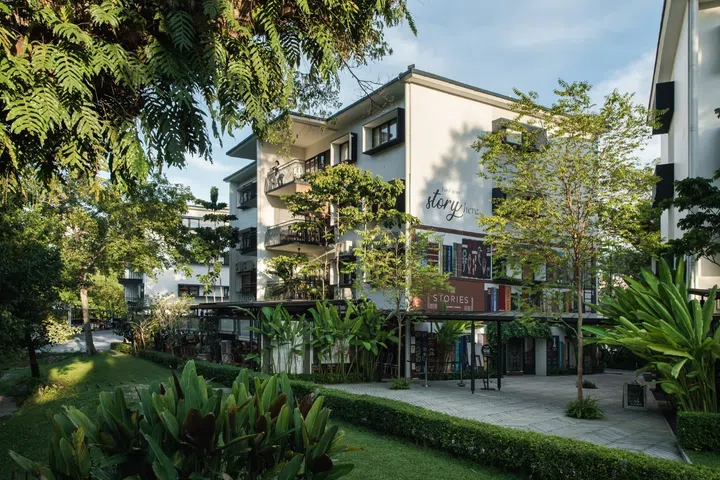
Its founder, Malaysian landscape architect and maverick Ng Sek San, who is responsible for the non-profit community farm and urban garden Kebun Kebun Bangsar in KL, was another major influence. The latter’s bold, artistic, people-first approach runs through Mior’s work today.
Second chances
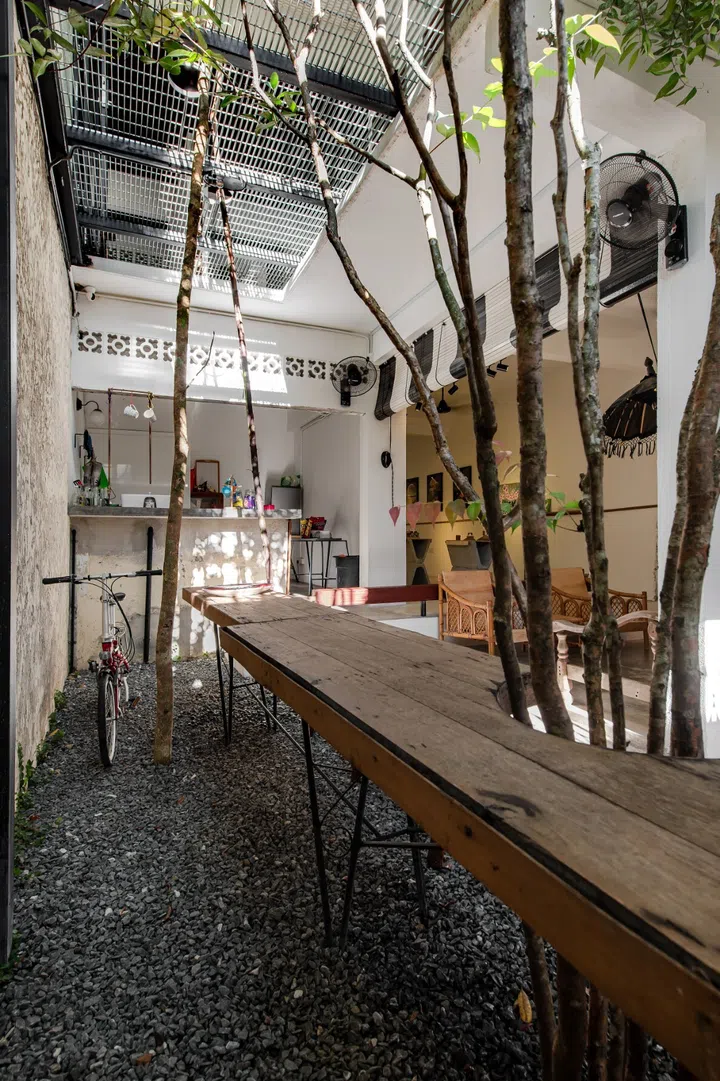
“Sek San always celebrated local culture. He also emphasised the idea of making and using local materials instead of imported ones,” shares Mior. Bunga Design Atelier’s office, a two-storey terrace house in a suburban neighbourhood, embodies this ethos.
“It’s a very small project, but we do a lot of experimentation there,” says Mior. He removed walls to bring in light. An existing courtyard now contains the dining and kitchen, and the former door grill remains at the entrance, embedded in the concrete floor. “It’s like a carpet to my entrance courtyard,” Mior comments.
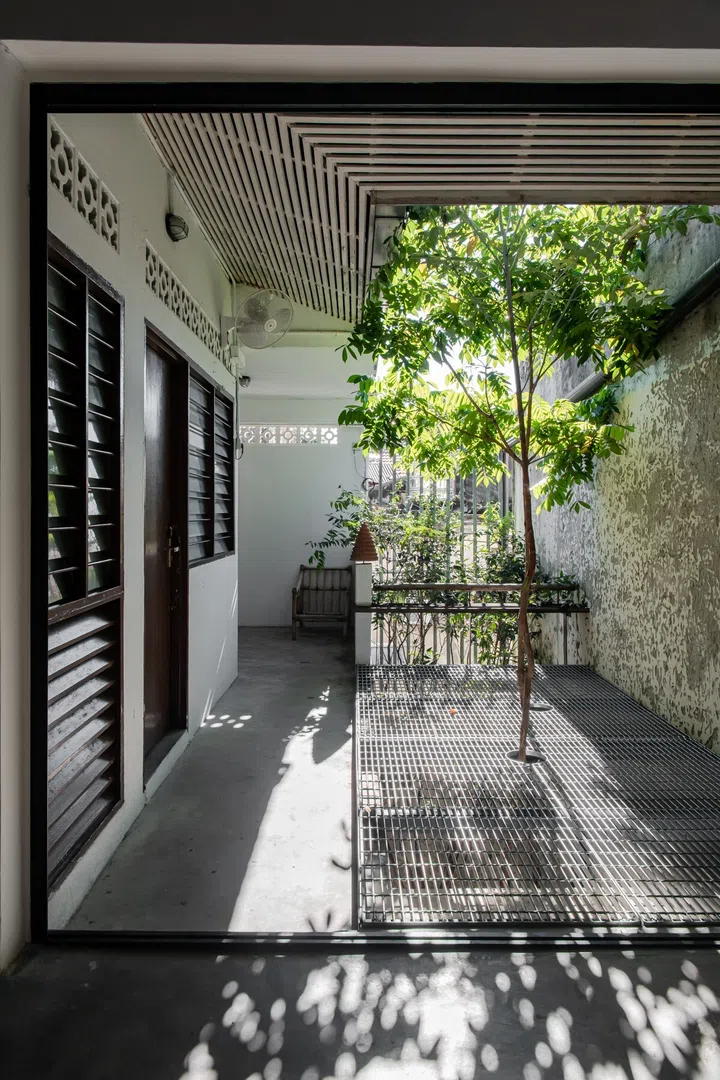
The office shows how giving existing components a second life makes a project more meaningful. “It’s also interesting to see how these elements work in a new environment,” says Mior. For example, felled timber columns were turned into seating and curry pots were stacked to become garden walls.
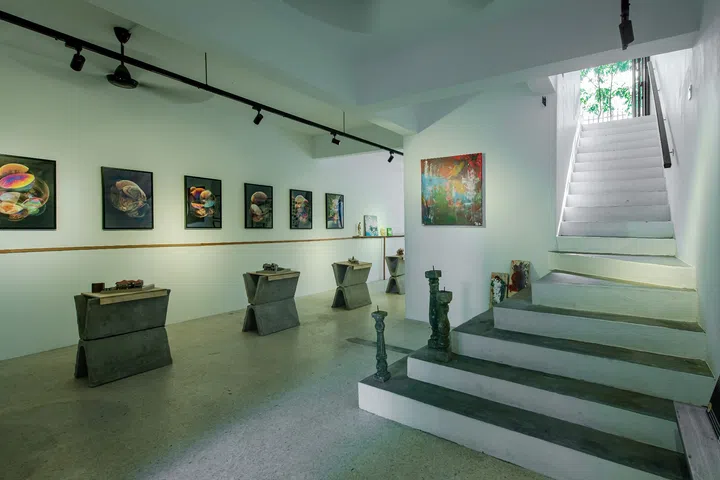
The office has also become a community hub. “Artist friends exhibit their work. Neighbours drop by. Friends come by for coffee. Students always come to learn. My musician friends come to do pre-recordings. My son comes to ‘vandalise’ my chalkboard wall,” he muses.
No limits to creativity
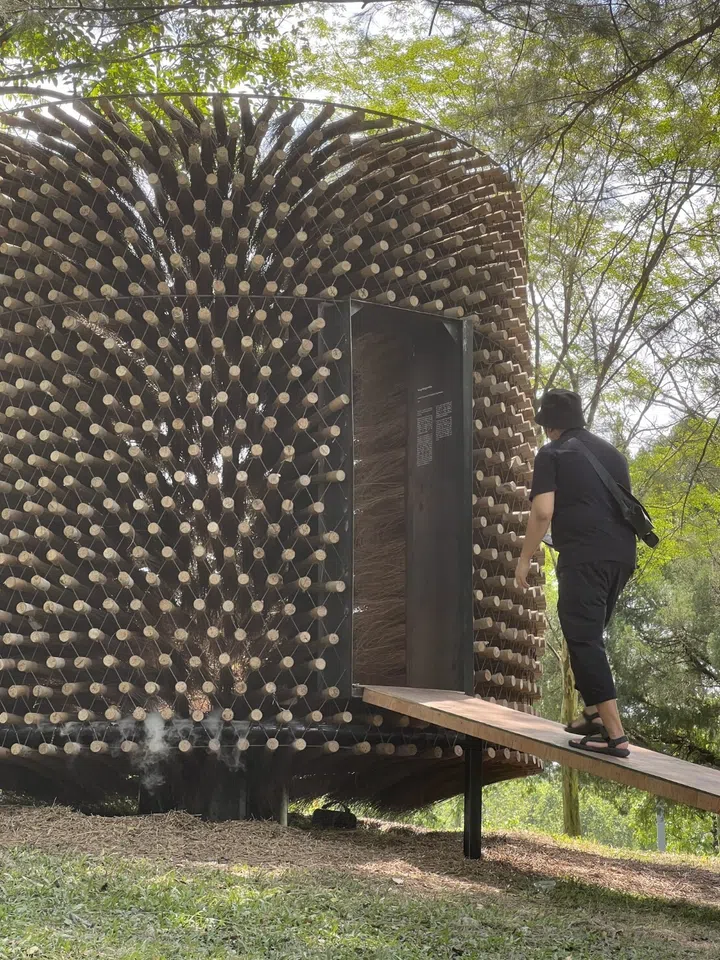
Mior welcomes limitations as catalysts for new ideas rather than obstacles. “I have always loved the idea of limitation to create beauty,” he remarks. Another project embodying his approach is Rambut Rambut, or Temple of Togetherness. The pavilion and public art installation were constructed in 2023 at Taman Tasik Titiwangsa in Kuala Lumpur.
“We felt so excited because it was a very rare opportunity for young designers to build a pavilion and showcase it in a park — until we found out that the budget was RM2,000 (equivalent to about $600). That put me in a difficult situation. But looking back, they didn’t just give us a limited budget; they also gave us another way of seeing things,” says the optimist.
Since expensive materials were out of the question, he turned to a ubiquitous household object — the local broomstick made from coconut leaf strips. It is used not only for sweeping floors but also placed behind doors as a talisman. He added, “And whenever you are naughty, parents also use the broomstick as a discipline tool!”
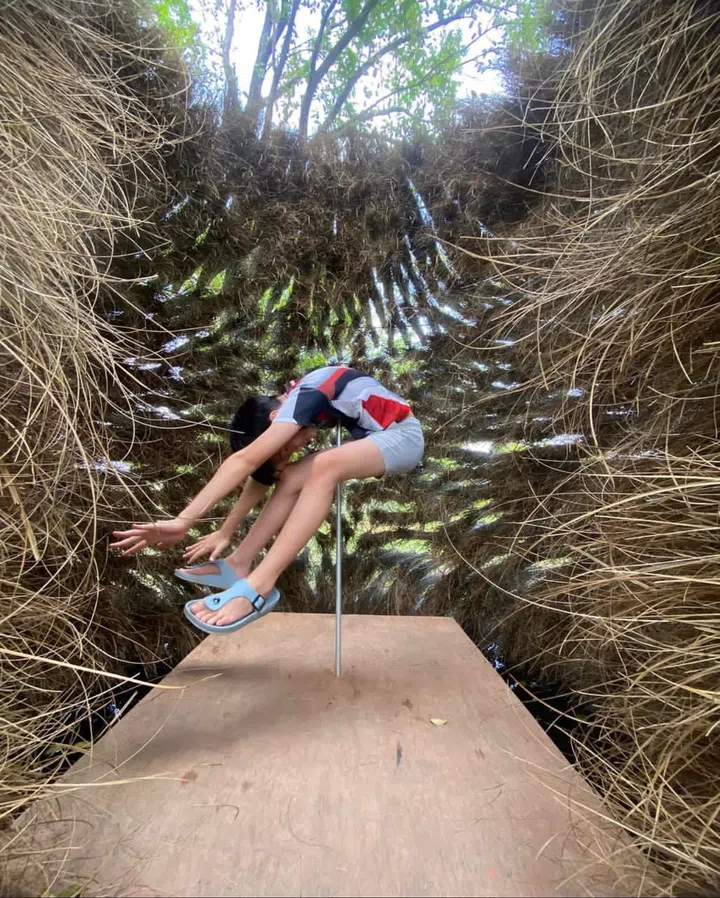
He bunched broomsticks into modules, arranged in a diagonal grid. The connected modules became a metaphor for strength resulting from togetherness. About 2,000 broomsticks were purchased from all over the country. “I think at that time, Malaysia had a shortage of broomsticks,” Mior laughs.
Light from darkness
The limited funds also paved the way for gotong royong. “Gotong royong refers to the collaborative effort by the community to lessen one another’s burdens. (In the past), that meant building houses together, building bridges together, harvesting rice together. We tried to bring this spirit into executing the temple,” Mior explains. Volunteers and even passers-by helped build the modules.
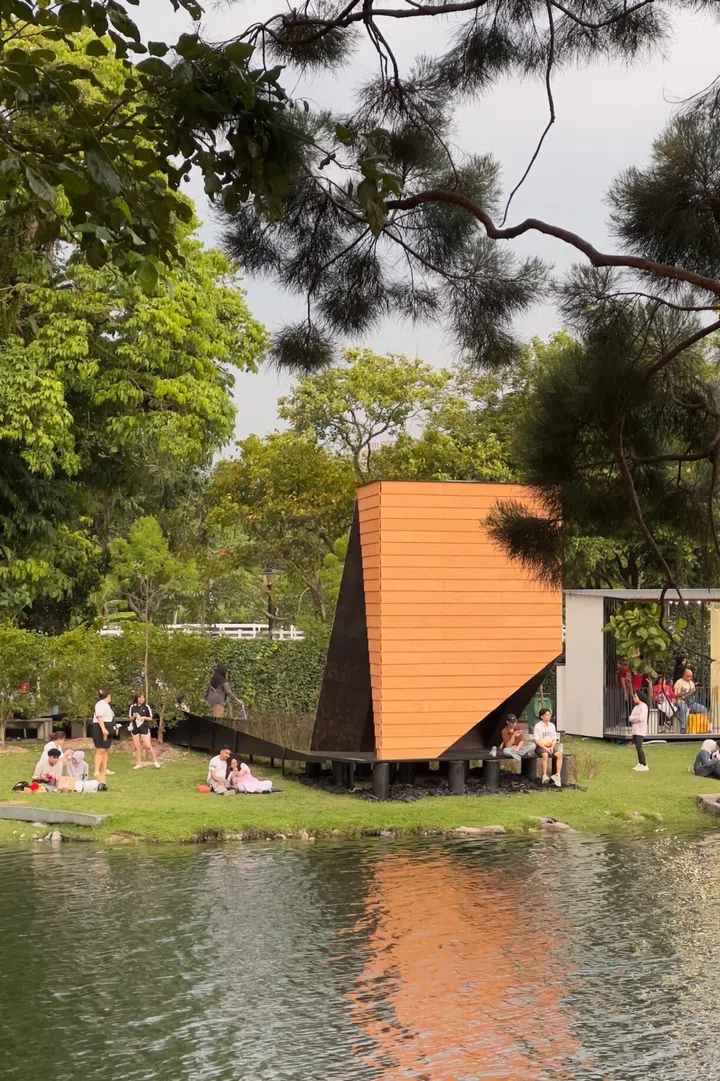
The firm was invited to design and build a second pavilion in 2025, which coincided with the ASEAN Summit. Once again, they had the same tight budget, but this time they were provided with a contractor to build the monolithic pavilion named Bakhoor Bakhoor Pavilion (Temple of Darkness).
This time, he chose a site near the water. The cave-like interior featured a poem by the famous Palestinian Mahmoud Darwish. “I wanted to deliver a message to the world about the occupation in Gaza at that time,” says Fahmi.
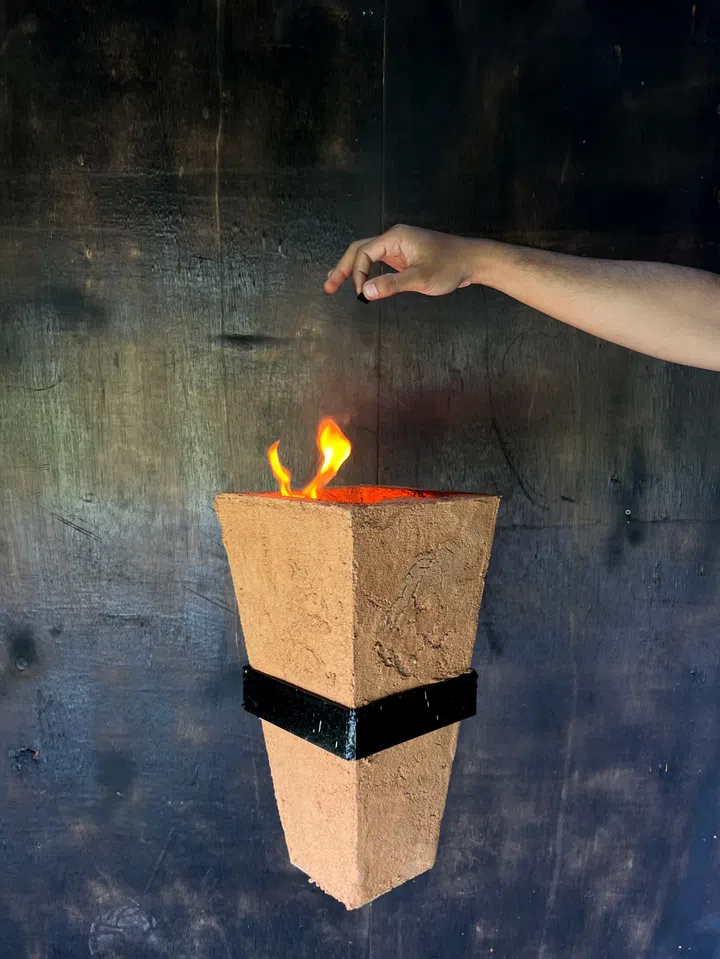
Bakhoor (fragrant wood smoke) is a traditional ritual of burning incense. Visitors could smell the fragrance of the burning wood inside the pavilion. “People always associate darkness with emptiness, but actually, darkness is very spiritual; it allows for reflection, so it is filled, not empty. Darkness can also change a person’s state; let us reflect and trigger our other senses,” Mior ruminates.
His aim really is to create projects with soul, unlike many modern projects that feel like “a checklist we need to follow”. Mior continues, “In doing that, we lose the soul of the project, or what we say in Malay, the jiwa of the project. And it is the jiwa that holds the project, makes it last in our memory.”