%22%3E%0A%3Cpath%20d%3D%22M412%20101.2H393.7C393.1%20101.2%20392.3%20100.9%20391.8%20100.5C377.3%2087.6004%20362.9%2074.6004%20348.4%2061.6004C344.8%2058.4004%20341.3%2055.2004%20337.7%2052.0004C337.1%2051.5004%20336.2%2051.1004%20335.5%2051.0004C334.2%2050.8004%20333%2051.0004%20331.5%2051.0004V101.1H316.7V0.100391H331.4V44.3004C331.9%2044.3004%20332.2%2044.4004%20332.5%2044.4004C334.9%2044.4004%20337.2%2044.5004%20339.6%2044.4004C340.4%2044.4004%20341.3%2044.0004%20341.8%2043.5004C351.6%2034.4004%20361.4%2025.2004%20371.1%2016.0004C376.5%2010.9004%20381.9%205.90039%20387.3%200.800391C387.9%200.200391%20388.5%200.000390626%20389.3%200.000390626H400.9C384.2%2015.8004%20367.8%2031.3004%20351.2%2047.0004C371.5%2065.0004%20391.8%2082.9004%20412.1%20100.9C412.1%20101%20412.1%20101.1%20412%20101.2ZM180.9%20101.2C184.1%2094.9004%20187.2%2088.9004%20190.3%2082.8004C198.3%2067.3004%20206.2%2051.8004%20214.2%2036.2004C220.3%2024.4004%20226.4%2012.5004%20232.4%200.700391C232.7%200.100391%20233%20-0.0996094%20233.7%20-0.0996094H248.1C248.8%20-0.0996094%20249.2%200.100391%20249.6%200.800391C256%2013.3004%20262.4%2025.7004%20268.8%2038.2004C279.3%2058.6004%20289.8%2079.0004%20300.3%2099.5004C300.5%20100%20300.8%20100.4%20301.1%20101.1C300.5%20101.1%20300.1%20101.2%20299.7%20101.2H286.5C285.6%20101.2%20285.1%20100.9%20284.7%20100.2C280.1%2091.3004%20275.4%2082.4004%20270.8%2073.4004C270.1%2072.1004%20269.3%2071.6004%20267.8%2071.6004H209.9C208.7%2071.6004%20208.1%2072.0004%20207.5%2073.1004C202.9%2082.1004%20198.2%2091.0004%20193.6%20100C193.1%20101%20192.6%20101.3%20191.5%20101.3C188.4%20101.2%20185.3%20101.3%20182.3%20101.3C182%20101.2%20181.6%20101.2%20180.9%20101.2ZM239.1%2011.4004C230%2029.2004%20221.1%2046.7004%20212.1%2064.3004H266.4C257.2%2046.7004%20248.2%2029.2004%20239.1%2011.4004ZM0%200.000390626H43.4C51.2%200.000390626%2058.7%201.20039%2065.7%204.80039C75.9%2010.0004%2078.9%2018.0004%2078.6%2027.4004C78.3%2034.3004%2076%2040.5004%2071.2%2045.5004C67.3%2049.6004%2062.4%2052.3004%2057.1%2054.3004C50.6%2056.7004%2043.9%2058.0004%2037.1%2058.6004C30.1%2059.2004%2023.1%2059.4004%2016.2%2059.7004C15.8%2059.7004%2015.3%2059.8004%2014.8%2059.8004V101.1H0.1C0%2067.4004%200%2033.8004%200%200.000390626ZM14.8%207.10039V52.2004C23.7%2052.4004%2032.6%2052.3004%2041.2%2050.1004C44.4%2049.3004%2047.6%2048.2004%2050.6%2046.7004C58.4%2043.0004%2062.3%2036.7004%2062.7%2028.0004C63%2019.9004%2059.5%2014.1004%2052.4%2010.5004C47.6%208.00039%2042.5%207.10039%2037.2%207.10039H14.8ZM95.9%20101.1V0.100391H167.3V7.20039H110.7V44.7004H158.1V51.9004H110.8V93.9004H171.1V101C146.1%20101.1%20121%20101.1%2095.9%20101.1Z%22%20fill%3D%22black%22%2F%3E%0A%3Cpath%20d%3D%22M35.0004%2025.7996H42.5004V20.6996H44.8004V33.1996H42.6004V27.5996H34.9004V33.2996H32.7004V20.7996H35.0004V25.7996ZM54.4004%2025.8996V27.2996H48.9004V31.6996H55.9004C55.9004%2032.1996%2056.0004%2032.5996%2056.0004%2033.0996H46.5004V20.5996H55.5004V21.8996H49.0004V25.7996C50.7004%2025.8996%2052.5004%2025.8996%2054.4004%2025.8996ZM25.9004%2033.0996H23.5004V21.9996H17.9004V20.6996H31.6004V22.0996H27.1004C26.2004%2022.0996%2025.9004%2022.2996%2025.9004%2023.1996C26.0004%2026.0996%2025.9004%2028.9996%2025.9004%2031.7996V33.0996Z%22%20fill%3D%22black%22%2F%3E%0A%3C%2Fg%3E%0A%3Cdefs%3E%0A%3CclipPath%20id%3D%22clip0_388_462%22%3E%0A%3Crect%20width%3D%22411%22%20height%3D%22101.2%22%20fill%3D%22white%22%2F%3E%0A%3C%2FclipPath%3E%0A%3C%2Fdefs%3E%0A%3C%2Fsvg%3E%0A)
This Singaporean artisan is giving rattan a contemporary makeover and reviving the craft
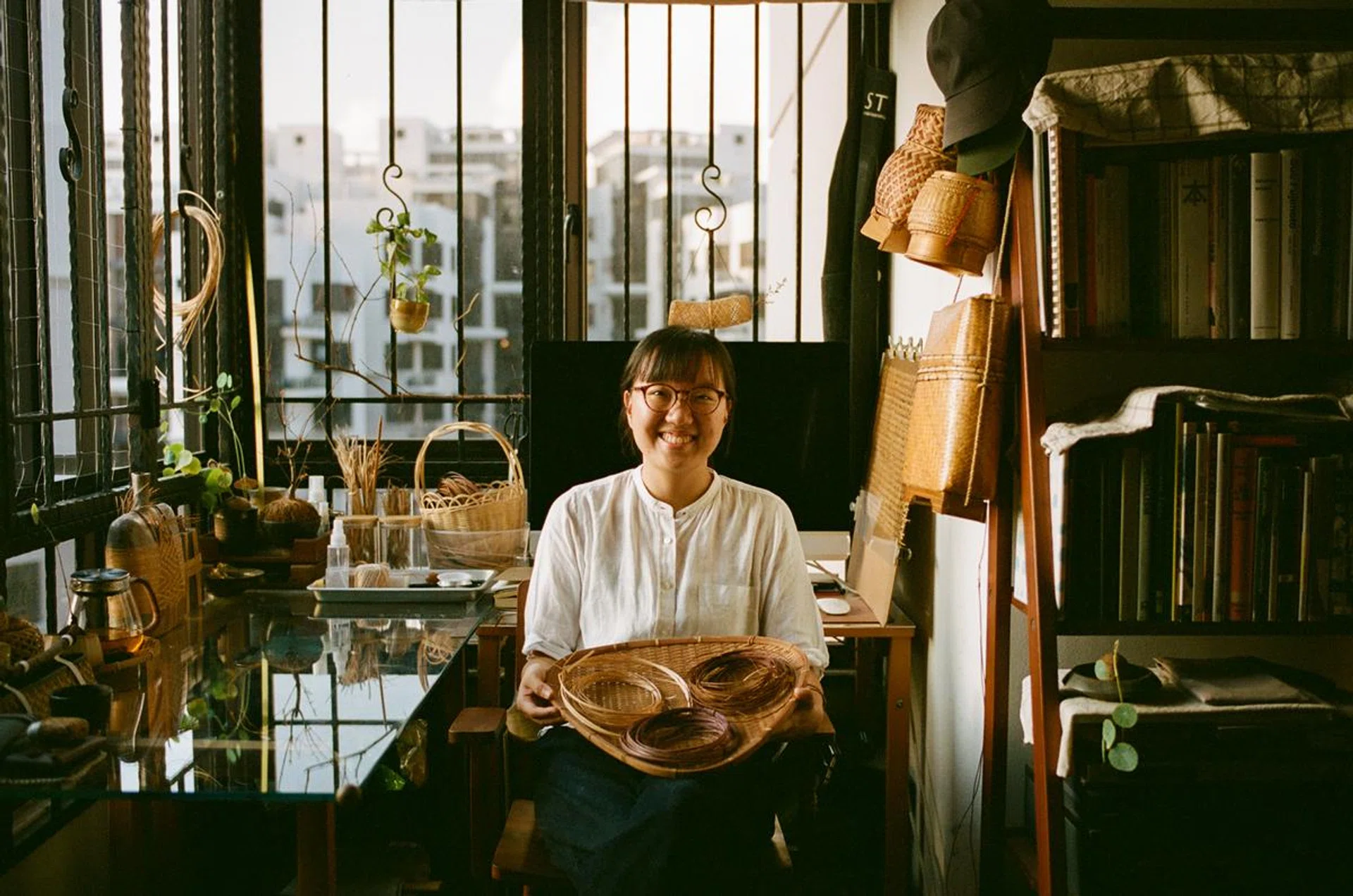
With her intricate rattan creations, Ng Si Ying of atinymaker is proving that this traditional craft has endless potential in contemporary design.
By Zawani Abdul Ghani /
Share this article
Rattan weaving wasn’t always part of Ng Si Ying’s story. A graduate in visual communications from Nanyang Technological University, the 31-year-old initially envisioned a creative career in design. But a chance encounter with one of Singapore’s oldest rattan furniture shops, Chun Mee Lee Rattan Furniture, set her on an entirely different path.
Fascinated by the intricate artistry of rattan craftsmanship and the stories behind it, she persuaded the shop’s owners to teach her the techniques of this traditional trade.
Her early days as an apprentice were a lesson in patience and persistence. She immersed herself in the meticulous process of weaving and restoring rattan furniture, learning to respect the material’s quirks and adaptability.
Over time, Ng’s understanding of rattan deepened — not just as a craft but as a medium for storytelling. She began experimenting, blending traditional methods with modern design sensibilities to create art pieces that are both functional and visually captivating.
Fascination turned adoration
What started as a quiet fascination since 2017, has now evolved into a full-fledged passion. Through her brand, atinymaker, she breathes new life into rattan weaving, transforming it into a medium that bridges heritage and modernity while managing her full-time career as a UX designer.
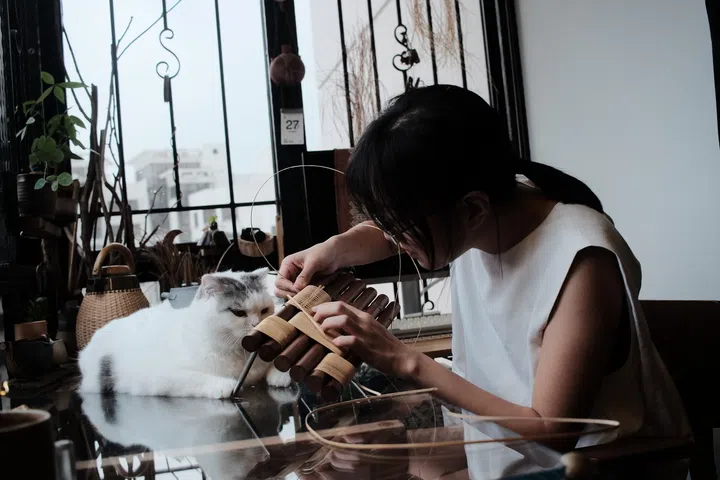
Ng working on a commissioned project for Coconut Club. (Photo: Ng Si Ying)
Yet her journey with rattan is as much about discovery as it is about intention. “It is a relationship of coincidence — an unintentional discovery,” Ng shares. “I chanced upon rattan, and it charmed me. Perhaps it is also one of affinity, as if the material chose me rather than vice versa. Over time, it has become a deepening adoration; rattan surprises me as I understand it.”
This reverence for her chosen medium extends to her approach to design, which balances the weight of tradition with a modern sensibility. “Tradition offers invaluable insight into what has been done, but it doesn’t confine what can be imagined,” she reflects.
“Rather than treating rattan solely as a traditional artefact, I see it as a versatile material that can meet contemporary needs. How we live shapes what we create, and what we create, in turn, shapes how we live — a continuous conversation to which I’ve yet to find an answer. And maybe that is the point.”
The complexity of rattan weaving
For Ng, the creation process is a journey of discovery and fulfilment. “I spend a long time deciding on the final design — sometimes to push myself, sometimes just because I’m striving for something beyond my current abilities,” she explains. But once she begins weaving, the repetitive rhythm becomes a source of joy. “It feels like bringing what I have in mind to life.”
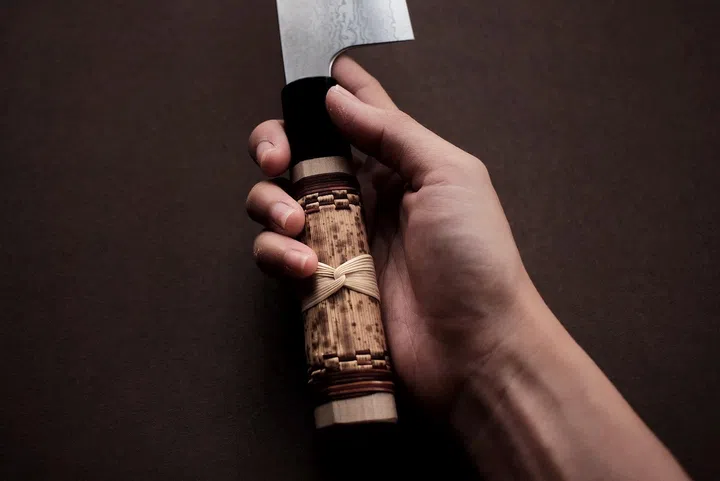
Rattan weaved around a knife handle. (Photo: Ng Si Ying)
Her work also tells a story that grows alongside her as an artisan. “Each new piece reflects my growth as a maker, showcasing techniques and ideas I couldn’t achieve in previous years,” she says. These narratives are deeply tied to her evolution and the broader possibilities of rattan.
“Since my work with rattan is small-scale and more like personal research, I do what I can by continuously experimenting and deepening my understanding. And hopefully, through that, I’m creating new conversations around rattan and bringing more attention to its cultural significance and potential in contemporary design.”
Navigating the intricacies of working with rattan requires patience and a tactile understanding of the material. “Rattan is a forgiving material, and working with it teaches me to listen — feeling its compliance, resistance, and how it responds,” she says. “It is through this continuous dialogue between hand and material that the work takes shape.”
Crafting the future
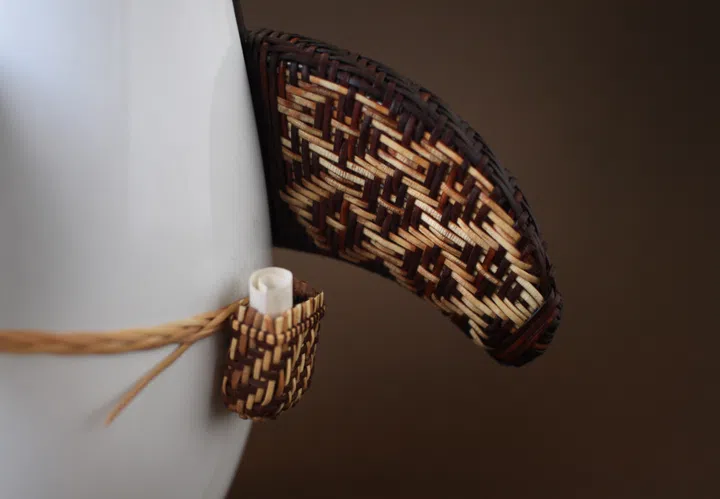
Using weaved rattan to fix a penguin figurine’s broken wing and adding an adorable waist pouch while at it. (Photo: Ng Si Ying)
As she looks to the future, Ng remains committed to expanding her practice and contributing to the craft community. “I hope to continue learning more about different weaving techniques from master weavers,” she says.
“Through this journey, I’ve encountered the scarcity of accessible educational materials. This has inspired a larger project I hope to undertake: creating a resource to document all I’ve learned — for anyone interested in rattan and its weaving.”
Ng’s work is a meaningful contribution to Singapore’s art scene. By blending traditional craftsmanship with modern design, she ensures that rattan weaving remains relevant and vibrant. Her journey is a celebration of heritage, innovation, and the enduring beauty of handmade art — a reminder of the stories that craftsmanship can tell and the connections it can foster in a fast-moving world.