%22%3E%0A%3Cpath%20d%3D%22M412%20101.2H393.7C393.1%20101.2%20392.3%20100.9%20391.8%20100.5C377.3%2087.6004%20362.9%2074.6004%20348.4%2061.6004C344.8%2058.4004%20341.3%2055.2004%20337.7%2052.0004C337.1%2051.5004%20336.2%2051.1004%20335.5%2051.0004C334.2%2050.8004%20333%2051.0004%20331.5%2051.0004V101.1H316.7V0.100391H331.4V44.3004C331.9%2044.3004%20332.2%2044.4004%20332.5%2044.4004C334.9%2044.4004%20337.2%2044.5004%20339.6%2044.4004C340.4%2044.4004%20341.3%2044.0004%20341.8%2043.5004C351.6%2034.4004%20361.4%2025.2004%20371.1%2016.0004C376.5%2010.9004%20381.9%205.90039%20387.3%200.800391C387.9%200.200391%20388.5%200.000390626%20389.3%200.000390626H400.9C384.2%2015.8004%20367.8%2031.3004%20351.2%2047.0004C371.5%2065.0004%20391.8%2082.9004%20412.1%20100.9C412.1%20101%20412.1%20101.1%20412%20101.2ZM180.9%20101.2C184.1%2094.9004%20187.2%2088.9004%20190.3%2082.8004C198.3%2067.3004%20206.2%2051.8004%20214.2%2036.2004C220.3%2024.4004%20226.4%2012.5004%20232.4%200.700391C232.7%200.100391%20233%20-0.0996094%20233.7%20-0.0996094H248.1C248.8%20-0.0996094%20249.2%200.100391%20249.6%200.800391C256%2013.3004%20262.4%2025.7004%20268.8%2038.2004C279.3%2058.6004%20289.8%2079.0004%20300.3%2099.5004C300.5%20100%20300.8%20100.4%20301.1%20101.1C300.5%20101.1%20300.1%20101.2%20299.7%20101.2H286.5C285.6%20101.2%20285.1%20100.9%20284.7%20100.2C280.1%2091.3004%20275.4%2082.4004%20270.8%2073.4004C270.1%2072.1004%20269.3%2071.6004%20267.8%2071.6004H209.9C208.7%2071.6004%20208.1%2072.0004%20207.5%2073.1004C202.9%2082.1004%20198.2%2091.0004%20193.6%20100C193.1%20101%20192.6%20101.3%20191.5%20101.3C188.4%20101.2%20185.3%20101.3%20182.3%20101.3C182%20101.2%20181.6%20101.2%20180.9%20101.2ZM239.1%2011.4004C230%2029.2004%20221.1%2046.7004%20212.1%2064.3004H266.4C257.2%2046.7004%20248.2%2029.2004%20239.1%2011.4004ZM0%200.000390626H43.4C51.2%200.000390626%2058.7%201.20039%2065.7%204.80039C75.9%2010.0004%2078.9%2018.0004%2078.6%2027.4004C78.3%2034.3004%2076%2040.5004%2071.2%2045.5004C67.3%2049.6004%2062.4%2052.3004%2057.1%2054.3004C50.6%2056.7004%2043.9%2058.0004%2037.1%2058.6004C30.1%2059.2004%2023.1%2059.4004%2016.2%2059.7004C15.8%2059.7004%2015.3%2059.8004%2014.8%2059.8004V101.1H0.1C0%2067.4004%200%2033.8004%200%200.000390626ZM14.8%207.10039V52.2004C23.7%2052.4004%2032.6%2052.3004%2041.2%2050.1004C44.4%2049.3004%2047.6%2048.2004%2050.6%2046.7004C58.4%2043.0004%2062.3%2036.7004%2062.7%2028.0004C63%2019.9004%2059.5%2014.1004%2052.4%2010.5004C47.6%208.00039%2042.5%207.10039%2037.2%207.10039H14.8ZM95.9%20101.1V0.100391H167.3V7.20039H110.7V44.7004H158.1V51.9004H110.8V93.9004H171.1V101C146.1%20101.1%20121%20101.1%2095.9%20101.1Z%22%20fill%3D%22black%22%2F%3E%0A%3Cpath%20d%3D%22M35.0004%2025.7996H42.5004V20.6996H44.8004V33.1996H42.6004V27.5996H34.9004V33.2996H32.7004V20.7996H35.0004V25.7996ZM54.4004%2025.8996V27.2996H48.9004V31.6996H55.9004C55.9004%2032.1996%2056.0004%2032.5996%2056.0004%2033.0996H46.5004V20.5996H55.5004V21.8996H49.0004V25.7996C50.7004%2025.8996%2052.5004%2025.8996%2054.4004%2025.8996ZM25.9004%2033.0996H23.5004V21.9996H17.9004V20.6996H31.6004V22.0996H27.1004C26.2004%2022.0996%2025.9004%2022.2996%2025.9004%2023.1996C26.0004%2026.0996%2025.9004%2028.9996%2025.9004%2031.7996V33.0996Z%22%20fill%3D%22black%22%2F%3E%0A%3C%2Fg%3E%0A%3Cdefs%3E%0A%3CclipPath%20id%3D%22clip0_388_462%22%3E%0A%3Crect%20width%3D%22411%22%20height%3D%22101.2%22%20fill%3D%22white%22%2F%3E%0A%3C%2FclipPath%3E%0A%3C%2Fdefs%3E%0A%3C%2Fsvg%3E%0A)
Nuanu Creative City wants to be the answer to Bali’s rapid overdevelopment
An ambitious project has taken shape in Tabanan, where culture and technology intersect without compromising on the environment and local traditions.
By Lu Yawen /
Share this article
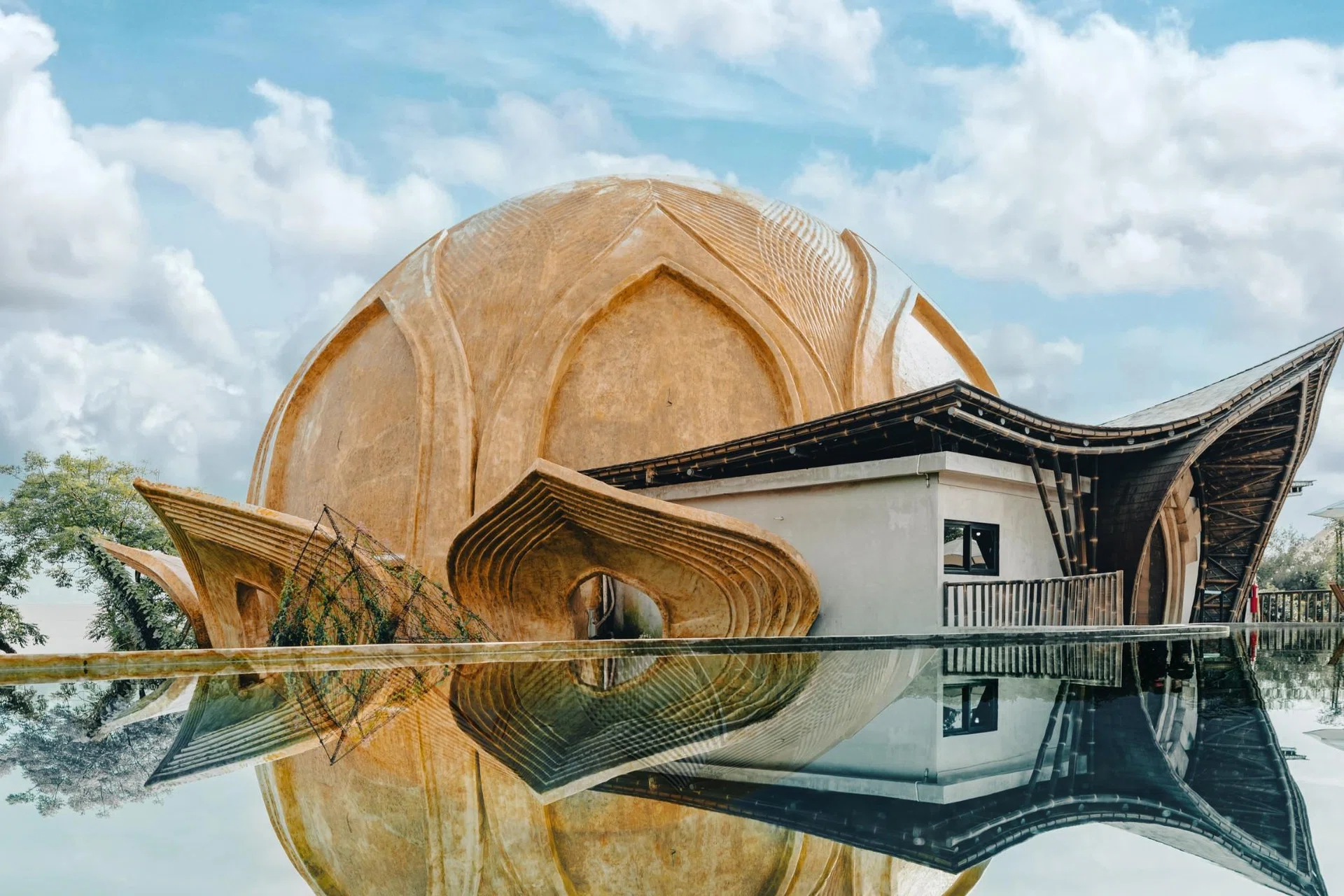
As Lev Kroll, CEO of Nuanu Creative City said, “We’re trying to do 25 things at once… And then it becomes harder to explain what exactly we are in one sentence.” The 44ha property in Tabanan, Bali, first came to my attention in April last year. Back then, it was still mainly an ambitious concept with artist impressions, and things grew quiet after I inquired.
The name nuanu is derived from the Balinese meaning “in the process”; the idea was founded by Russian tech entrepreneur and millionaire Sergey Solonin, who fell in love with the island and moved in. Inspired by Burning Man, he had one goal: to create a never-been-done-before community at the intersection of culture, innovation, and nature.
More than a year later, I received an invitation to stay at Oshom Bali, a luxury hotel that had opened on the compound. I was intrigued and had to see for myself.
Overlooking the black sand beach at Pantai Nyanyi, my accommodation was a cosy 18-key property comprising beach suites, outdoor massage treatment areas, a saltwater pool, a library, an all-day dining restaurant, and Treehouse Hideaways over the mangrove.
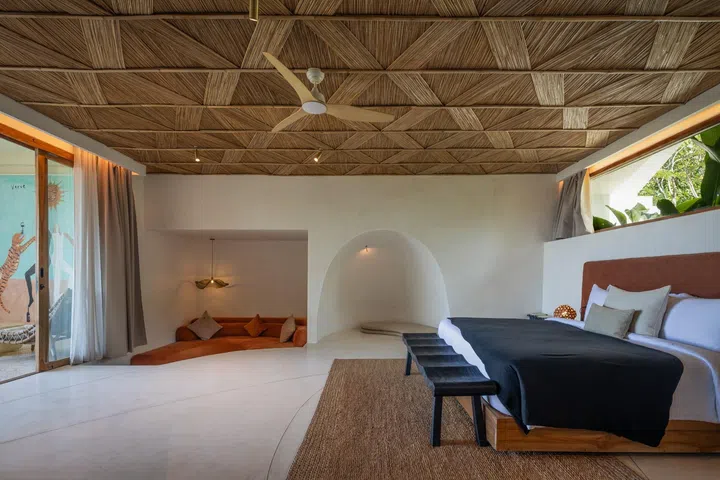
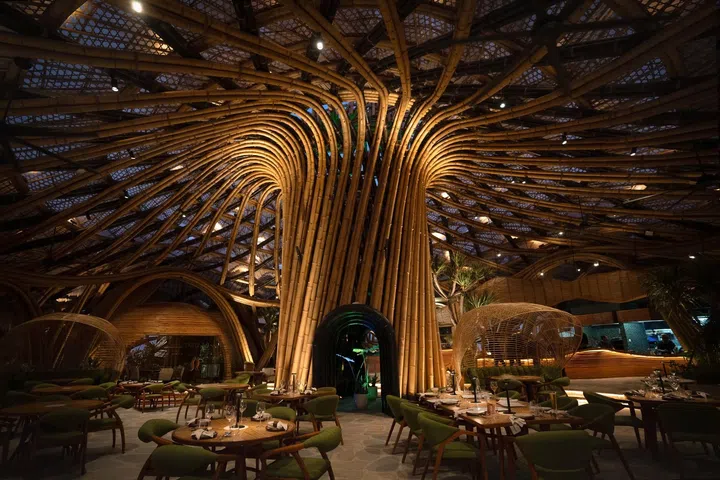
Opened by Briton Daisy Angus, its contemporary rustic design embraces curved lines, natural materials such as bamboo and reclaimed teak, and eclectic tongue-in-cheek Balinese artwork. Situated on the edge of the compound, it felt like an idyllic getaway from the rest of the Creative City.
A city in the making
It is hard to describe precisely what Nuanu is. Officially opened to the public in August 2025, the sprawling grounds away from Canggu or Seminyak felt like a gated community of sorts. Only buggies and EVs are allowed to drive within (there’s a drop-off point at the entrance for regular vehicles).
While some sections are open to the public, some require tickets or entrance fees.
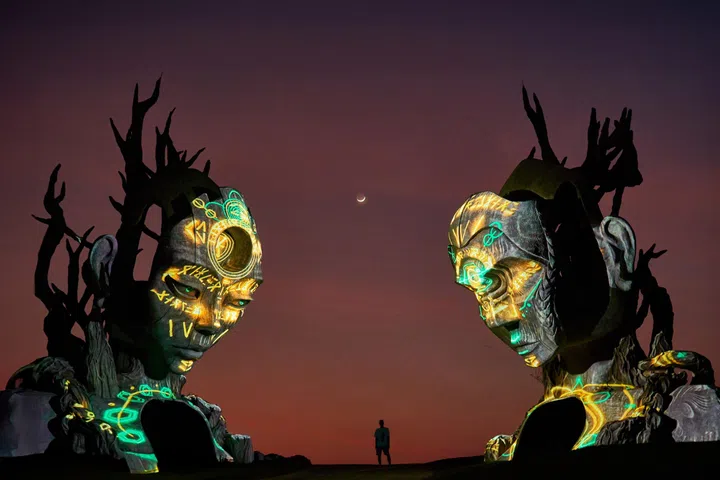
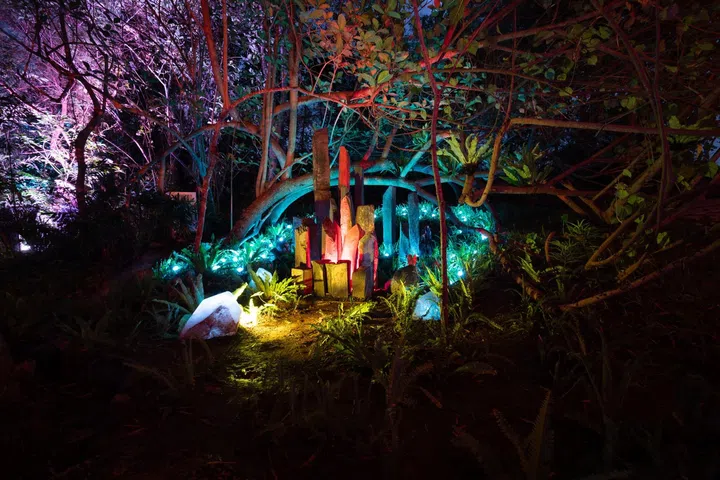
Areas cordoned off for construction are interspersed with grand sculptures, such as enormous busts (Earth Sentinels), which light up nightly with AI-driven projections that “converse” with each other.
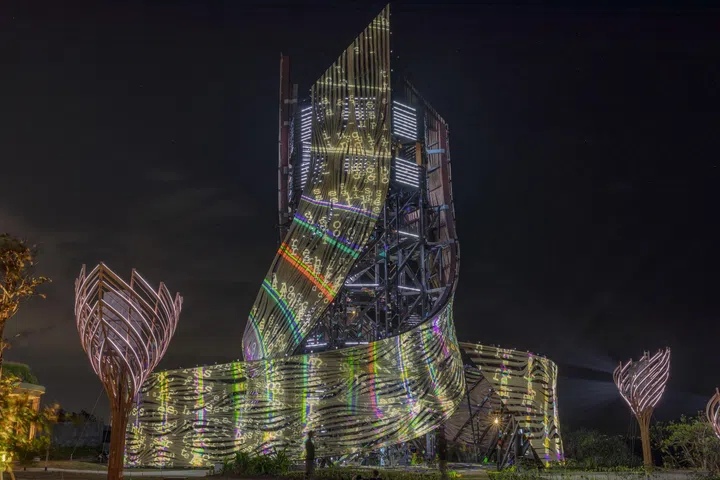
A tower (Tri Hita Kirana Tower) made with recycled timber that glitches with numbers and symbols for a futuristic supplement at the sunset show in the property’s mega Luna Beach Club.
Other attractions open to the public include the Aurora Media Park, a nature trail with eight interactive light installations, the Labyrinth Art Gallery that hosted FOTO Bali Festival (the island’s first international photography festival), The Dome that screens 360-degree short films ranging from psychedelic to sci-fi, social wellness complex Lumeira, an alpaca farm, and Magic Garden with a butterfly breeding programme.
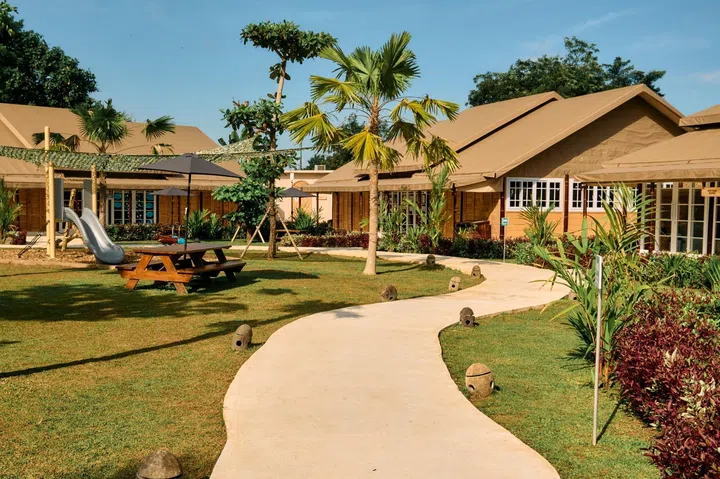
The more private areas range from suites for extended stays, including one with its own recording studio attached, to private residences such as EcoVerse apartments, the wellness residence The Pavilions, the ProEd Global Nuanu international school, which runs a Cambridge curriculum, and a Kids Academy and art village offering free informal learning for local children.
Our Balinese guide shared with pride that the large construction on the hill would soon be a shopping mall with two nightclubs in the basement, accessible via a hidden entrance. We drove past a long house slated to be a showcase of Balinese arts and crafts, and a cloister of metal shipping containers repurposed as studio spaces.
Its driving force and philosophy
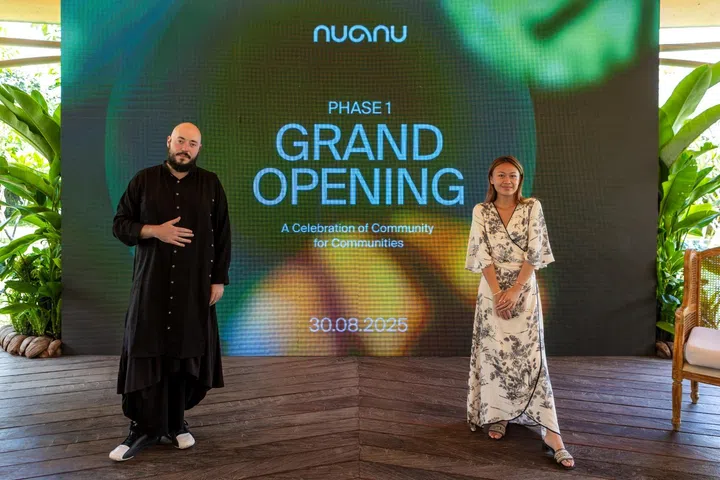
When I caught up with Kroll a week later over Zoom, he explained Nuanu’s vision. Like founder Solonin, Kroll came from the IT and investment industry, a fitting candidate to lead the project. “We’re trying to build a park of curiosities. We are trying to go from surface to deeper… (where) we’d like to have a place that’s amazing to live (in) and… a lot of meaningful conversations, connections, actions, etc.”
Driving the projects in Nuanu is a set of rules and a general philosophy that aims to strike a balance between development and the existing natural environment.
Some of the regulations include using only 30 per cent of the land for construction, a reforestation initiative and mangrove conservation, recycling 70 per cent of waste, a no-cut rule for large trees, and enhancing the biodiversity of local butterflies and insects.
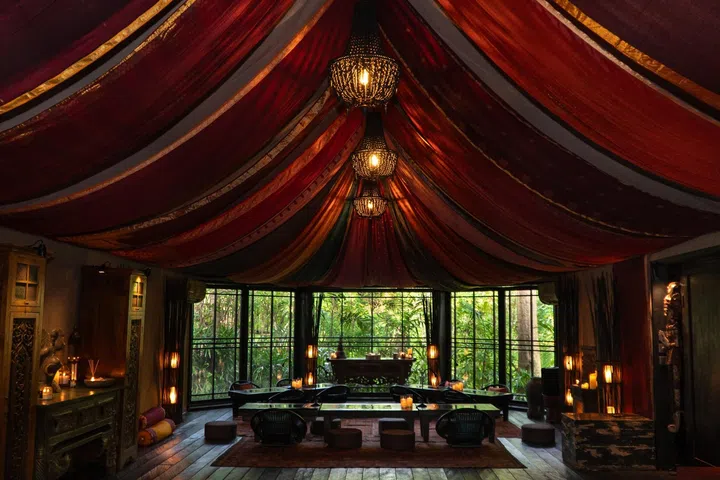
Other initiatives extend to the local community: five per cent of net revenue from each project goes to the Nuanu Social Fund that supports smaller movements or NGOs; free art programmes for children from Banjar Beraban (from the area it’s built on); improving local dog welfare; free health checkups for locals; and organising beach clean-ups.
Borrowing a “professional amateur mindset” often used in the tech industry with the goal of “disrupting” the status quo, Nuanu is a large-scale experimentation of how developers can create a business that is both commercially viable and mindful of its community and environment.
By using real-time feedback, incremental improvements are made until it’s “scalable and stable”.
In addition, the city’s management model is based on the Balinese banjar, a cooperative composed of every married man in the village or neighbourhood. Its members are responsible for maintaining social order when organising community events and for helping members in a crisis.
Similarly, Nuanu operates on a structure that Kroll described as similar to “an investment holding… (where) every project within Nuanu has its own team, often its own entity” or banjar. Consisting of more than 25 nationalities from Europe to New Zealand, it’s essential that everyone feels a sense of autonomy and ownership.
For now, about 60 per cent of projects are led by foreigners and the remaining by Indonesians. He hopes to get the number to 50-50.
An innovative solution to Bali’s overdevelopment
A lot to take in at once, the tour of Nuanu left me with more questions than answers. Who is Nuanu actually for, and who does it benefit? Kroll seemed to be aware of this: “It’s important not to become a souvenir shop… I think often places with amazing culture are deprived of… a voice in that conversation (having been) mined for their culture rather than becoming a real stakeholder.”
Still, there are parts of Nuanu that don’t land the way they should. The Earth Sentinels’ AI, conversing in English amidst locals taking photos of the projections, oblivious and rightfully not understanding the conversation (peppered with lots of abstract concepts and jargon that even I had difficulty following), happening above, appeared performative.
While the light installations in Aurora Media Park felt like randomly placed audio-visual loops vacant of true meaning, compared to the blink-and-you’ll-miss-it relic of a small Hindu statue that came with the original land, signalling that this place was once sacred ground.
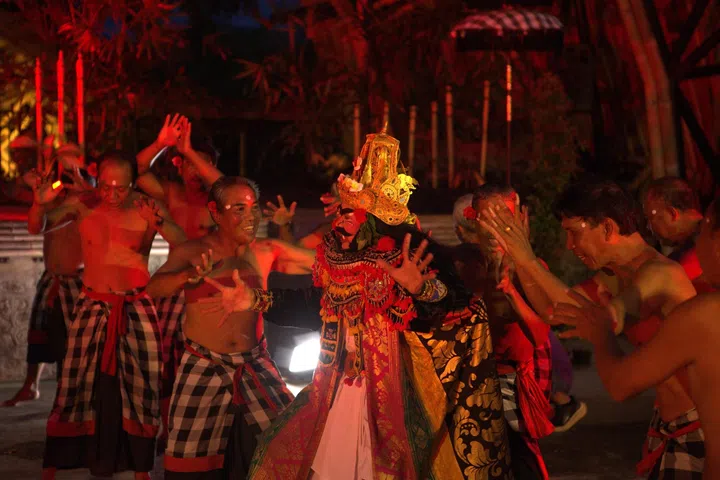
At a time when Bali is struggling with overtourism, since global Covid-19 lockdowns were lifted, the island has seen a boom in tourist numbers — it seems necessary to be more discerning. The island’s infrastructure is feeling the strain, resulting in long traffic jams, poor waste management and worsening water quality.
Bali’s famed idyllic green landscape is fast changing; farmers are leasing agrarian land to beach club and villa developers, as authorities crack down on local businesses at Bingin Beach in Uluwatu.
No doubt, Kroll’s optimism is refreshing to hear. “We are trying to prove that there is a way a developer should think, act, and operate… That doing development sustainably is a valid financial and economic strategy. I hope that within the next 10 to 15 years, we will be the model for developing territories in Bali.”
An openness to try and make mistakes allows for space to experiment in more ways than one. He spoke of using AI to “manage the practical aspect of the city”, including a more energy-efficient transport system. In September, Nuanu hosted the island’s first art fair, Art & Bali 2025.
For the past four years, it has also hosted Suara Festival, a meeting of arts and music where international and local artists were showcased on the same stages.
Its most recent $14 million deal in September was with Genius Group Limited, an AI-powered, Bitcoin-first education group to create Genius City, which comprises co-managing ProEd Education by integrating the Genius School model and apprentice programme, and the city’s co-working, corporate retreat, and entrepreneur community.
Healthy skepticism
As genuine as the intentions may be, it is an enormous project for Nuanu’s team to undertake and cannot be accomplished just on “good vibes”, although alignment in energy seems to be one of the criteria for its investors. There’s still a lot more work to be done before the founder’s vision of utopia comes to life.
From an outsider’s perspective, I can’t help but think of the colonial saviour complex much of Southeast Asia has been subjected to in the past, as well as Indonesia’s own struggles with corruption and power. Development is inevitable, but is the way forward really to build more luxury residences sold to digital nomads and the affluent from the wider region (including Singapore)?
Ultimately, whether these bold and novel approaches truly benefit the Balinese will remain to be seen as Nuanu Creative City takes its final form in 2028. By then, it’ll hopefully offer an equal playing field for both foreign and local stakeholders, with Kroll keeping his word and creating a unique melting pot of cultures set against the backdrop of Indonesia’s only Hindu province.