%22%3E%0A%3Cpath%20d%3D%22M412%20101.2H393.7C393.1%20101.2%20392.3%20100.9%20391.8%20100.5C377.3%2087.6004%20362.9%2074.6004%20348.4%2061.6004C344.8%2058.4004%20341.3%2055.2004%20337.7%2052.0004C337.1%2051.5004%20336.2%2051.1004%20335.5%2051.0004C334.2%2050.8004%20333%2051.0004%20331.5%2051.0004V101.1H316.7V0.100391H331.4V44.3004C331.9%2044.3004%20332.2%2044.4004%20332.5%2044.4004C334.9%2044.4004%20337.2%2044.5004%20339.6%2044.4004C340.4%2044.4004%20341.3%2044.0004%20341.8%2043.5004C351.6%2034.4004%20361.4%2025.2004%20371.1%2016.0004C376.5%2010.9004%20381.9%205.90039%20387.3%200.800391C387.9%200.200391%20388.5%200.000390626%20389.3%200.000390626H400.9C384.2%2015.8004%20367.8%2031.3004%20351.2%2047.0004C371.5%2065.0004%20391.8%2082.9004%20412.1%20100.9C412.1%20101%20412.1%20101.1%20412%20101.2ZM180.9%20101.2C184.1%2094.9004%20187.2%2088.9004%20190.3%2082.8004C198.3%2067.3004%20206.2%2051.8004%20214.2%2036.2004C220.3%2024.4004%20226.4%2012.5004%20232.4%200.700391C232.7%200.100391%20233%20-0.0996094%20233.7%20-0.0996094H248.1C248.8%20-0.0996094%20249.2%200.100391%20249.6%200.800391C256%2013.3004%20262.4%2025.7004%20268.8%2038.2004C279.3%2058.6004%20289.8%2079.0004%20300.3%2099.5004C300.5%20100%20300.8%20100.4%20301.1%20101.1C300.5%20101.1%20300.1%20101.2%20299.7%20101.2H286.5C285.6%20101.2%20285.1%20100.9%20284.7%20100.2C280.1%2091.3004%20275.4%2082.4004%20270.8%2073.4004C270.1%2072.1004%20269.3%2071.6004%20267.8%2071.6004H209.9C208.7%2071.6004%20208.1%2072.0004%20207.5%2073.1004C202.9%2082.1004%20198.2%2091.0004%20193.6%20100C193.1%20101%20192.6%20101.3%20191.5%20101.3C188.4%20101.2%20185.3%20101.3%20182.3%20101.3C182%20101.2%20181.6%20101.2%20180.9%20101.2ZM239.1%2011.4004C230%2029.2004%20221.1%2046.7004%20212.1%2064.3004H266.4C257.2%2046.7004%20248.2%2029.2004%20239.1%2011.4004ZM0%200.000390626H43.4C51.2%200.000390626%2058.7%201.20039%2065.7%204.80039C75.9%2010.0004%2078.9%2018.0004%2078.6%2027.4004C78.3%2034.3004%2076%2040.5004%2071.2%2045.5004C67.3%2049.6004%2062.4%2052.3004%2057.1%2054.3004C50.6%2056.7004%2043.9%2058.0004%2037.1%2058.6004C30.1%2059.2004%2023.1%2059.4004%2016.2%2059.7004C15.8%2059.7004%2015.3%2059.8004%2014.8%2059.8004V101.1H0.1C0%2067.4004%200%2033.8004%200%200.000390626ZM14.8%207.10039V52.2004C23.7%2052.4004%2032.6%2052.3004%2041.2%2050.1004C44.4%2049.3004%2047.6%2048.2004%2050.6%2046.7004C58.4%2043.0004%2062.3%2036.7004%2062.7%2028.0004C63%2019.9004%2059.5%2014.1004%2052.4%2010.5004C47.6%208.00039%2042.5%207.10039%2037.2%207.10039H14.8ZM95.9%20101.1V0.100391H167.3V7.20039H110.7V44.7004H158.1V51.9004H110.8V93.9004H171.1V101C146.1%20101.1%20121%20101.1%2095.9%20101.1Z%22%20fill%3D%22black%22%2F%3E%0A%3Cpath%20d%3D%22M35.0004%2025.7996H42.5004V20.6996H44.8004V33.1996H42.6004V27.5996H34.9004V33.2996H32.7004V20.7996H35.0004V25.7996ZM54.4004%2025.8996V27.2996H48.9004V31.6996H55.9004C55.9004%2032.1996%2056.0004%2032.5996%2056.0004%2033.0996H46.5004V20.5996H55.5004V21.8996H49.0004V25.7996C50.7004%2025.8996%2052.5004%2025.8996%2054.4004%2025.8996ZM25.9004%2033.0996H23.5004V21.9996H17.9004V20.6996H31.6004V22.0996H27.1004C26.2004%2022.0996%2025.9004%2022.2996%2025.9004%2023.1996C26.0004%2026.0996%2025.9004%2028.9996%2025.9004%2031.7996V33.0996Z%22%20fill%3D%22black%22%2F%3E%0A%3C%2Fg%3E%0A%3Cdefs%3E%0A%3CclipPath%20id%3D%22clip0_388_462%22%3E%0A%3Crect%20width%3D%22411%22%20height%3D%22101.2%22%20fill%3D%22white%22%2F%3E%0A%3C%2FclipPath%3E%0A%3C%2Fdefs%3E%0A%3C%2Fsvg%3E%0A)
30 hours on the Belmond Venice Simplon-Orient-Express train from Paris to Venice
A night aboard the Venice Simplon-Orient-Express reveals how the grand rail service remains relevant in an age primed for speed.
By Azimin Saini /
Share this article
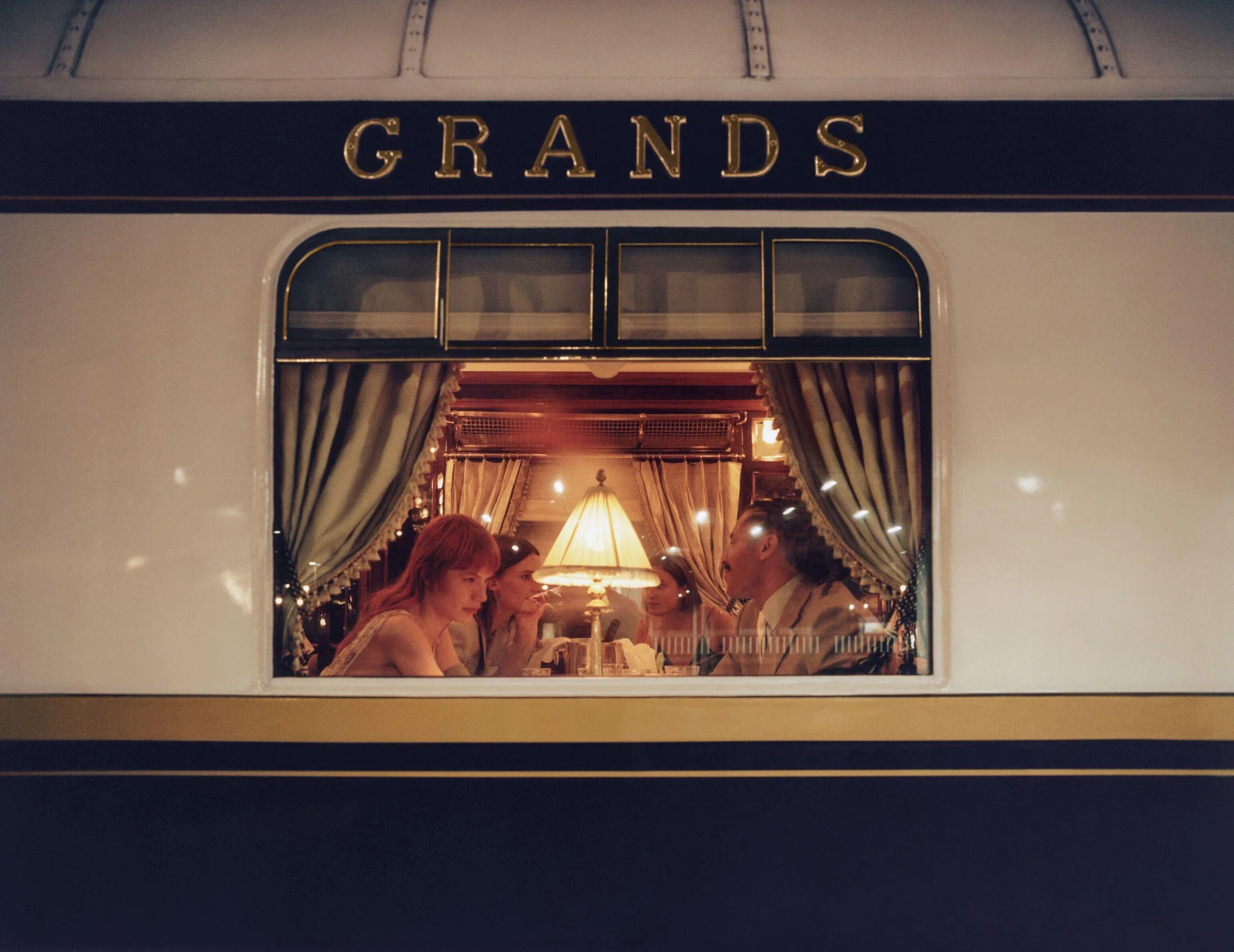
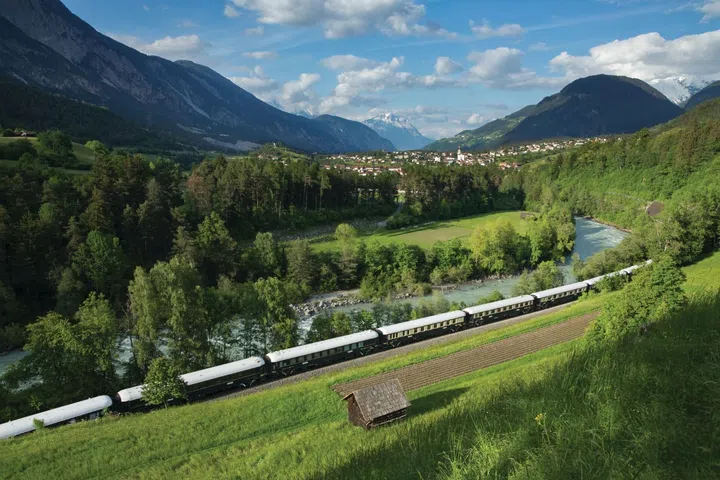
The cold from the morning had not quite lifted. It clung to the rail tracks at Paris’ Gare d’Austerlitz, turning breath into mist and sharpening the air around the platform. Against that winter light, the Venice Simplon-Orient-Express (VSOE) stood in deep navy lacquer, its brass fittings catching stray sunbeams.
The train is an arresting sight. It snakes through the station at nearly half a kilometre long, totalling 16 carriages carrying 104 guests supported by a cast of 48 staff. This is the behemoth that will take us from Paris to Venice on a journey stretching 30 hours.
At a time when data moves at the speed of light, that duration feels wilfully excessive. Yet, here, that excess is precisely the point. The VSOE demands commitment, and guests willingly surrender to its timetable, dress codes, and rituals.
Revived in 1982 from original 1920s and 1930s Wagons-Lits carriages, the train has long travelled on its own mythology, immortalised in novels and films. Today, it is owned and operated by Belmond, the luxury hospitality group behind the Eastern & Oriental Express that runs from Singapore to Penang or Langkawi.
One night in the Historic Cabin starts at $6,000 per person and rises to over $46,000 for the Grand Suite if you wish to occupy it solo.
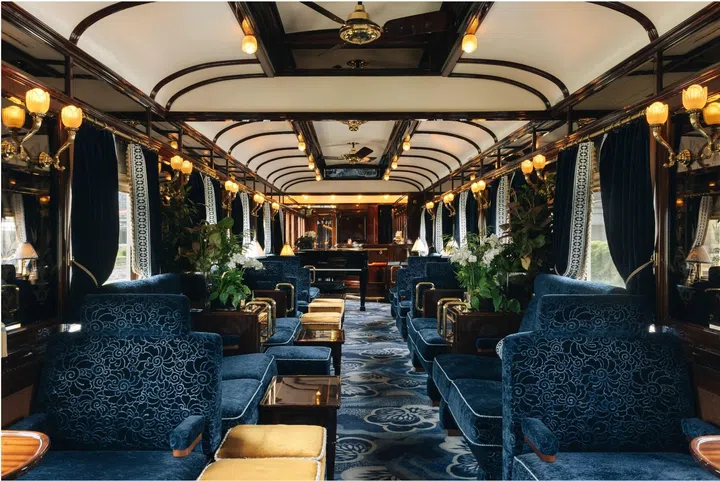
It’s a handsome sum, but its justification becomes apparent upon stepping on board: banquettes in jewel tones, polished marquetry, crystalware glowing softly in the dining cars — all warmed by coal-fired stoves on a morning that had fallen to minus one degree.
Yet, neither mythology nor luxury alone guarantees relevance, especially when it’s a century old.
In an age defined by constant novelty, can a railway service that’s distinctly antique stand its ground? Or has Belmond understood something more counterintuitive — that in 2026, slowness may be the most prized experience of all?
Connection as a luxury
As the train pulls away from the station, the ballet begins. Outside, Paris’ industrial edges shift to pastoral fields, then quaint villages, before mountains rise in the distance. WiFi in Europe’s remote reaches is patchy, so there is no feed to doomscroll, no emails or texts to respond to.
Dinner is announced at a fixed hour, and preparing for it becomes part of the ritual. Jackets are brushed down, lipstick reapplied, and bow ties are pulled taut. Assigned tables bring together guests who, under ordinary circumstances, might never have met as champagne is served by bowing staff.
“Luxury traveller expectations have shifted,” says Franklin. “People now prize connections. They want to find meaning, to be able to slow down, because we all live in busy worlds where we’re connected all of the time.”
As dinner progressed, a temporary society began to form. When The Peak Singapore set out on its journey, the carriages carried a fascinating cross-section of travellers. French rugby captain Antoine Dupont travelled with his girlfriend, Iris Mittenaere, the former Miss Universe 2016.
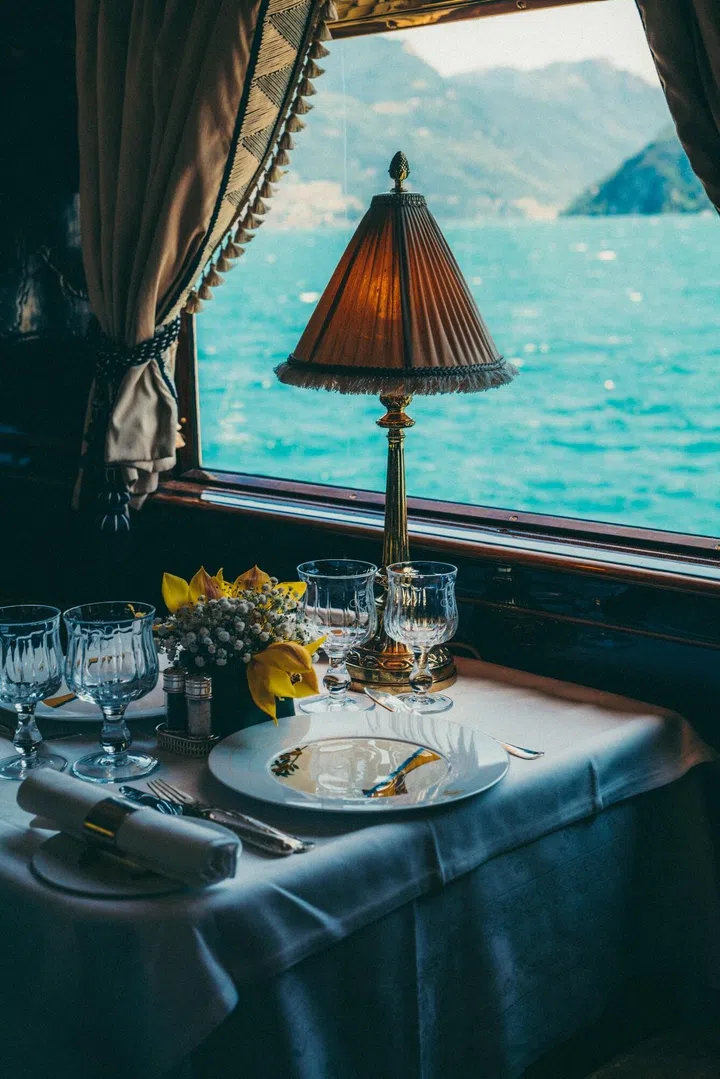
At another table, a taxidermist spoke in careful detail about her work and her intention to visit one of the world’s few preserved human bodies in Venice; her towering husband, who sported a kilt and a precise handlebar moustache, listened enthusiastically.
Behind her, a young Japanese woman adjusted diamond earrings so long they brushed her collarbone each time the train curved. Nearby, an elderly British woman in a Harrods teddy-bear pullover spoke of taking the journey in memory of her late husband, who had loved railways all his life.
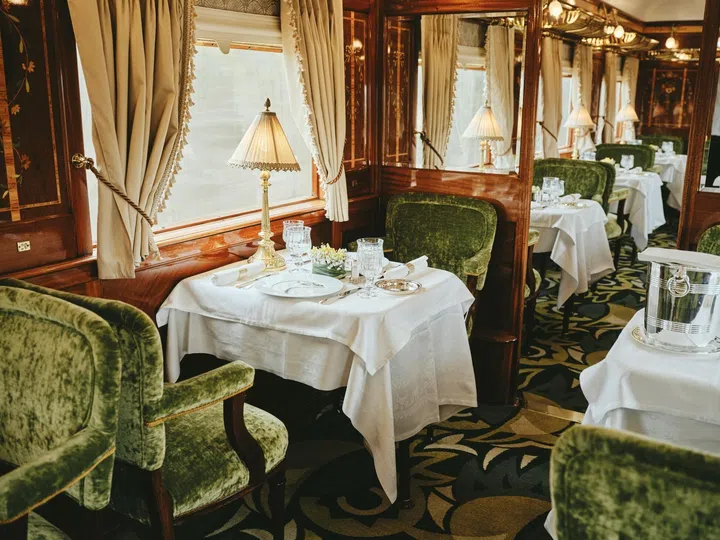
Over successive courses, introductions deepen into stories — how they found the train, what the journey marks, what the appeal of the Venice Simplon-Orient-Express was. What bound them was not profile but proximity.
Over the course of thirty hours, anonymity gave way to laughter. The carriage felt smaller, warmer, cosy even.
That familiarity did not arise by accident.
Crafting space and time
The train’s social intimacy is architectural, and the space shapes encounters long before guests are fully aware of it.
“The environment (guests are) in is additive to their experience,” explains Franklin. “Nobody wants to travel in a chamber where it could be anywhere.”
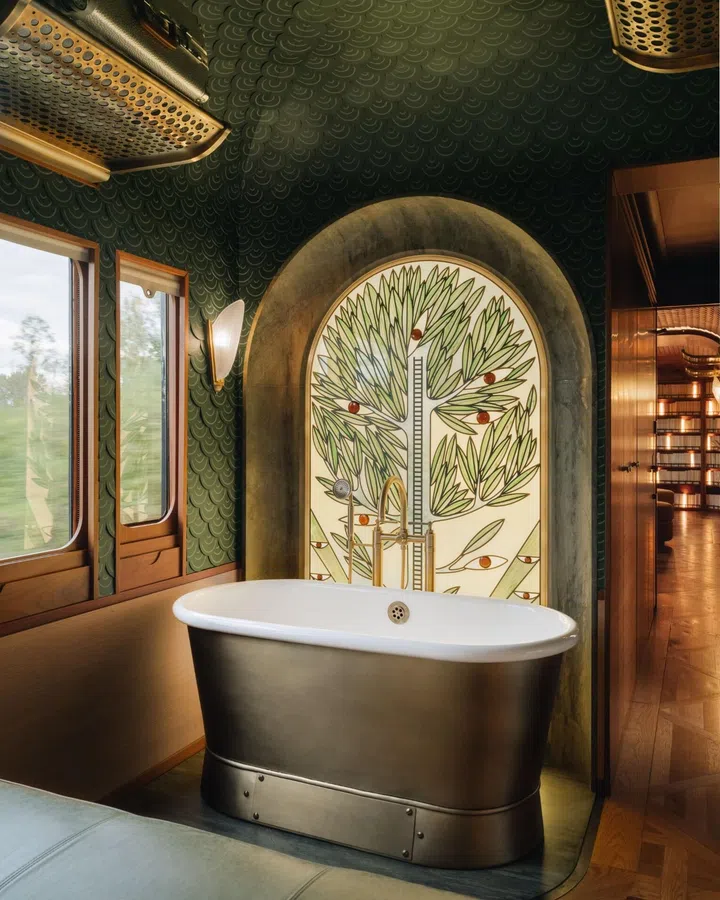
Craftsmanship plays a huge part in the experience. In the suites, hand-blown Murano glass basins catch the light against polished wood. Restored marquetry panels in floral and geometric shapes line the corridors. These decorative flourishes prevent the illusion from slipping, ensuring the carriages feel authored.
Then in 2023, the VSOE unveiled L’Observatoire — a new sleeper carriage conceived by French artist JR. The move is perhaps surprising, as JR is known more for his large-scale sociopolitical art installations.
“He is very inspiring,” says Franklin. “He has this energy and incredible ideas. What he brings is exactly that — contemporary heritage and discerning innovation brought together in this ultimate slow travel environment.”
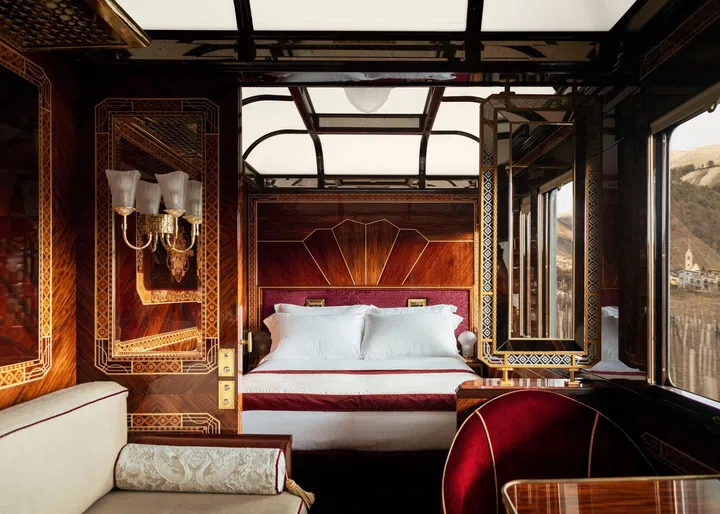
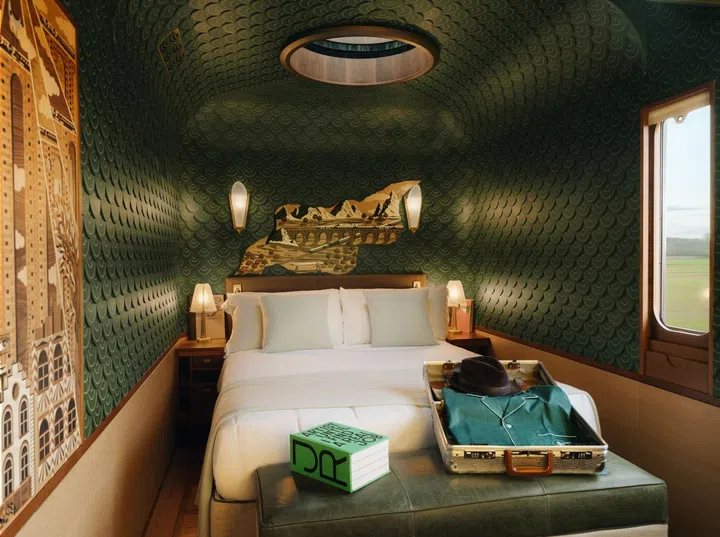
Unlike the restored coaches, this suite is unapologetically contemporary: a curved skylight above the bed, a hidden oculus for stargazing, a private library, and a secret tearoom concealed behind sliding panels — all made by the same craftsmen who restored the rest of the carriages.
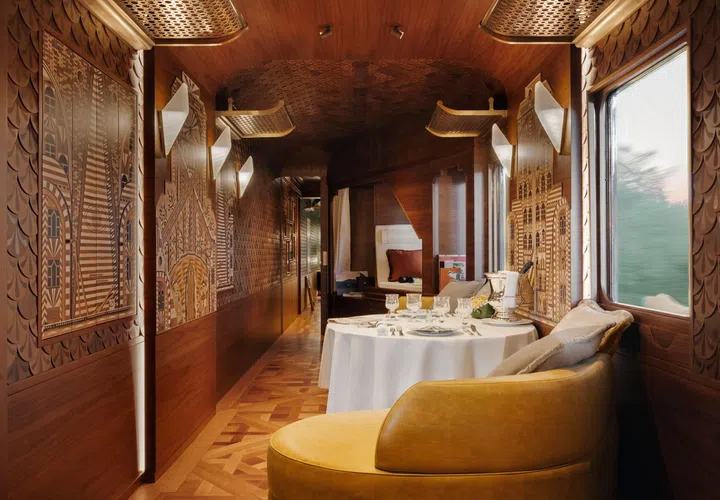
The influence of Art Deco appears less through overt references than through material language, forms and proportion. The stained glass, lacquered timber, marquetry, and brass detailing all recall the decorative richness that once defined luxury rail travel in the 1920s, though interpreted with a softer and more intimate sensibility.
Curved forms recur throughout the suite, giving the interiors a fluidity that contrasts with the rigid geometry of many contemporary luxury spaces.
Its most daring design statement, though, has to be the overlapping olive-green tiles that envelop the entire sleeping space, meticulously arranged to resemble fish scales. Only on closer inspection does it become apparent that the tiles are made entirely of leather.
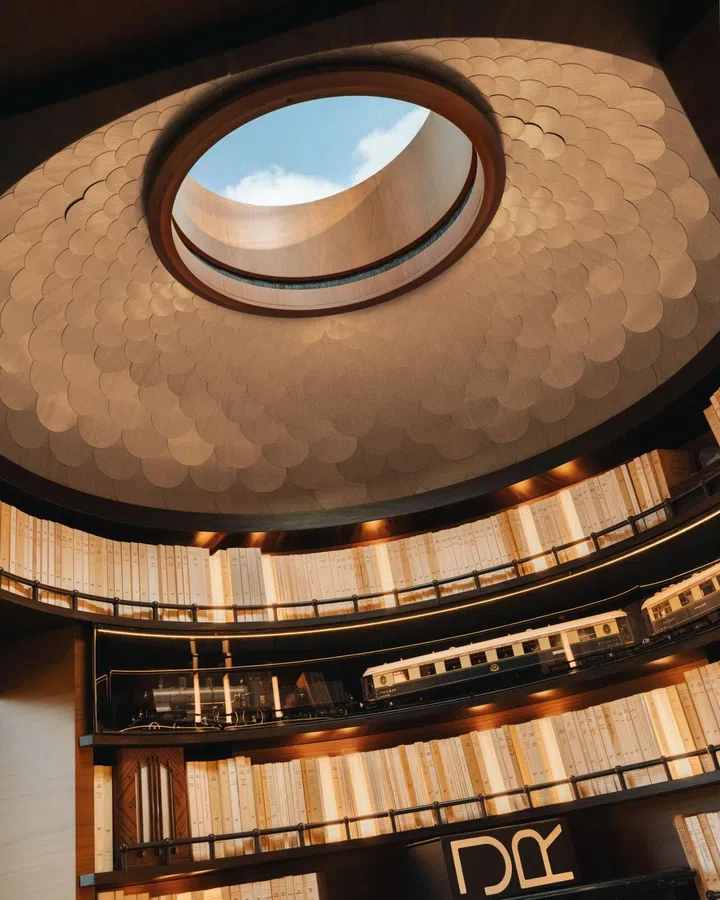
Underfoot, wooden floors laid in the intricate Parquet de Versailles pattern lend the suite the quiet grandeur of an old French apartment rather than a conventional train carriage. The result feels less like a radical redesign than a continuation of the train’s long relationship with craftsmanship and slow travel.
The same recalibration is visible in the dining cars. Menus are not relics of Escoffier-era formality. Belmond has collaborated with Michelin-starred chefs to reinterpret the journey through regional produce and modern techniques, ensuring that the culinary experience meets present-day expectations while maintaining its ceremonial structure.
In 2026, speed is the default and efficiency is expected. The Venice Simplon-Orient-Express refuses both. In doing so, it makes time tangible again.
When the final doors open and Venice waits beyond the platform, the illusion dissolves. Phones light up, and schedules resume. One hears the sharp tapping of manicured fingernails on phone screens.
Yet, there is a noticeable hesitation before full dispersal. A final photograph is exchanged. A handshake lingers half a beat longer than necessary. A longing glance back at the navy carriages as the crew waves goodbye.
For a measured stretch across Europe, time was suspended. In that suspension lies its relevance.
The Venice Simplon-Orient-Express endures because it understands something counterintuitive: When life today is governed by algorithms, people will pay handsome sums to escape, if just for 30 hours.