%22%3E%0A%3Cpath%20d%3D%22M412%20101.2H393.7C393.1%20101.2%20392.3%20100.9%20391.8%20100.5C377.3%2087.6004%20362.9%2074.6004%20348.4%2061.6004C344.8%2058.4004%20341.3%2055.2004%20337.7%2052.0004C337.1%2051.5004%20336.2%2051.1004%20335.5%2051.0004C334.2%2050.8004%20333%2051.0004%20331.5%2051.0004V101.1H316.7V0.100391H331.4V44.3004C331.9%2044.3004%20332.2%2044.4004%20332.5%2044.4004C334.9%2044.4004%20337.2%2044.5004%20339.6%2044.4004C340.4%2044.4004%20341.3%2044.0004%20341.8%2043.5004C351.6%2034.4004%20361.4%2025.2004%20371.1%2016.0004C376.5%2010.9004%20381.9%205.90039%20387.3%200.800391C387.9%200.200391%20388.5%200.000390626%20389.3%200.000390626H400.9C384.2%2015.8004%20367.8%2031.3004%20351.2%2047.0004C371.5%2065.0004%20391.8%2082.9004%20412.1%20100.9C412.1%20101%20412.1%20101.1%20412%20101.2ZM180.9%20101.2C184.1%2094.9004%20187.2%2088.9004%20190.3%2082.8004C198.3%2067.3004%20206.2%2051.8004%20214.2%2036.2004C220.3%2024.4004%20226.4%2012.5004%20232.4%200.700391C232.7%200.100391%20233%20-0.0996094%20233.7%20-0.0996094H248.1C248.8%20-0.0996094%20249.2%200.100391%20249.6%200.800391C256%2013.3004%20262.4%2025.7004%20268.8%2038.2004C279.3%2058.6004%20289.8%2079.0004%20300.3%2099.5004C300.5%20100%20300.8%20100.4%20301.1%20101.1C300.5%20101.1%20300.1%20101.2%20299.7%20101.2H286.5C285.6%20101.2%20285.1%20100.9%20284.7%20100.2C280.1%2091.3004%20275.4%2082.4004%20270.8%2073.4004C270.1%2072.1004%20269.3%2071.6004%20267.8%2071.6004H209.9C208.7%2071.6004%20208.1%2072.0004%20207.5%2073.1004C202.9%2082.1004%20198.2%2091.0004%20193.6%20100C193.1%20101%20192.6%20101.3%20191.5%20101.3C188.4%20101.2%20185.3%20101.3%20182.3%20101.3C182%20101.2%20181.6%20101.2%20180.9%20101.2ZM239.1%2011.4004C230%2029.2004%20221.1%2046.7004%20212.1%2064.3004H266.4C257.2%2046.7004%20248.2%2029.2004%20239.1%2011.4004ZM0%200.000390626H43.4C51.2%200.000390626%2058.7%201.20039%2065.7%204.80039C75.9%2010.0004%2078.9%2018.0004%2078.6%2027.4004C78.3%2034.3004%2076%2040.5004%2071.2%2045.5004C67.3%2049.6004%2062.4%2052.3004%2057.1%2054.3004C50.6%2056.7004%2043.9%2058.0004%2037.1%2058.6004C30.1%2059.2004%2023.1%2059.4004%2016.2%2059.7004C15.8%2059.7004%2015.3%2059.8004%2014.8%2059.8004V101.1H0.1C0%2067.4004%200%2033.8004%200%200.000390626ZM14.8%207.10039V52.2004C23.7%2052.4004%2032.6%2052.3004%2041.2%2050.1004C44.4%2049.3004%2047.6%2048.2004%2050.6%2046.7004C58.4%2043.0004%2062.3%2036.7004%2062.7%2028.0004C63%2019.9004%2059.5%2014.1004%2052.4%2010.5004C47.6%208.00039%2042.5%207.10039%2037.2%207.10039H14.8ZM95.9%20101.1V0.100391H167.3V7.20039H110.7V44.7004H158.1V51.9004H110.8V93.9004H171.1V101C146.1%20101.1%20121%20101.1%2095.9%20101.1Z%22%20fill%3D%22black%22%2F%3E%0A%3Cpath%20d%3D%22M35.0004%2025.7996H42.5004V20.6996H44.8004V33.1996H42.6004V27.5996H34.9004V33.2996H32.7004V20.7996H35.0004V25.7996ZM54.4004%2025.8996V27.2996H48.9004V31.6996H55.9004C55.9004%2032.1996%2056.0004%2032.5996%2056.0004%2033.0996H46.5004V20.5996H55.5004V21.8996H49.0004V25.7996C50.7004%2025.8996%2052.5004%2025.8996%2054.4004%2025.8996ZM25.9004%2033.0996H23.5004V21.9996H17.9004V20.6996H31.6004V22.0996H27.1004C26.2004%2022.0996%2025.9004%2022.2996%2025.9004%2023.1996C26.0004%2026.0996%2025.9004%2028.9996%2025.9004%2031.7996V33.0996Z%22%20fill%3D%22black%22%2F%3E%0A%3C%2Fg%3E%0A%3Cdefs%3E%0A%3CclipPath%20id%3D%22clip0_388_462%22%3E%0A%3Crect%20width%3D%22411%22%20height%3D%22101.2%22%20fill%3D%22white%22%2F%3E%0A%3C%2FclipPath%3E%0A%3C%2Fdefs%3E%0A%3C%2Fsvg%3E%0A)
Share this article
Hotels have long monetised the threshold. Beyond the doorman, the discreet reception desk and the lift accessible only with a room key lies a controlled environment from which the city may be observed without being allowed to intrude.
Public House Bangkok complicates that arrangement from the moment it names itself.
On Sukhumvit Soi 31, the ten-storey hotel attempts to function as both private accommodation and public cultural venue: somewhere to sleep, certainly, but also to eat, work, record a podcast, encounter art, listen to vinyl or spend several hours without ever approaching a guest room. Hotel residents share its lower floors with diners, artists, remote workers, and Bangkok locals who may have no intention of staying overnight.
“For us, true luxury today is not marble floors or gold taps,” says co-founder Angie Sachdev. “It’s human connection.”
An address with a public face
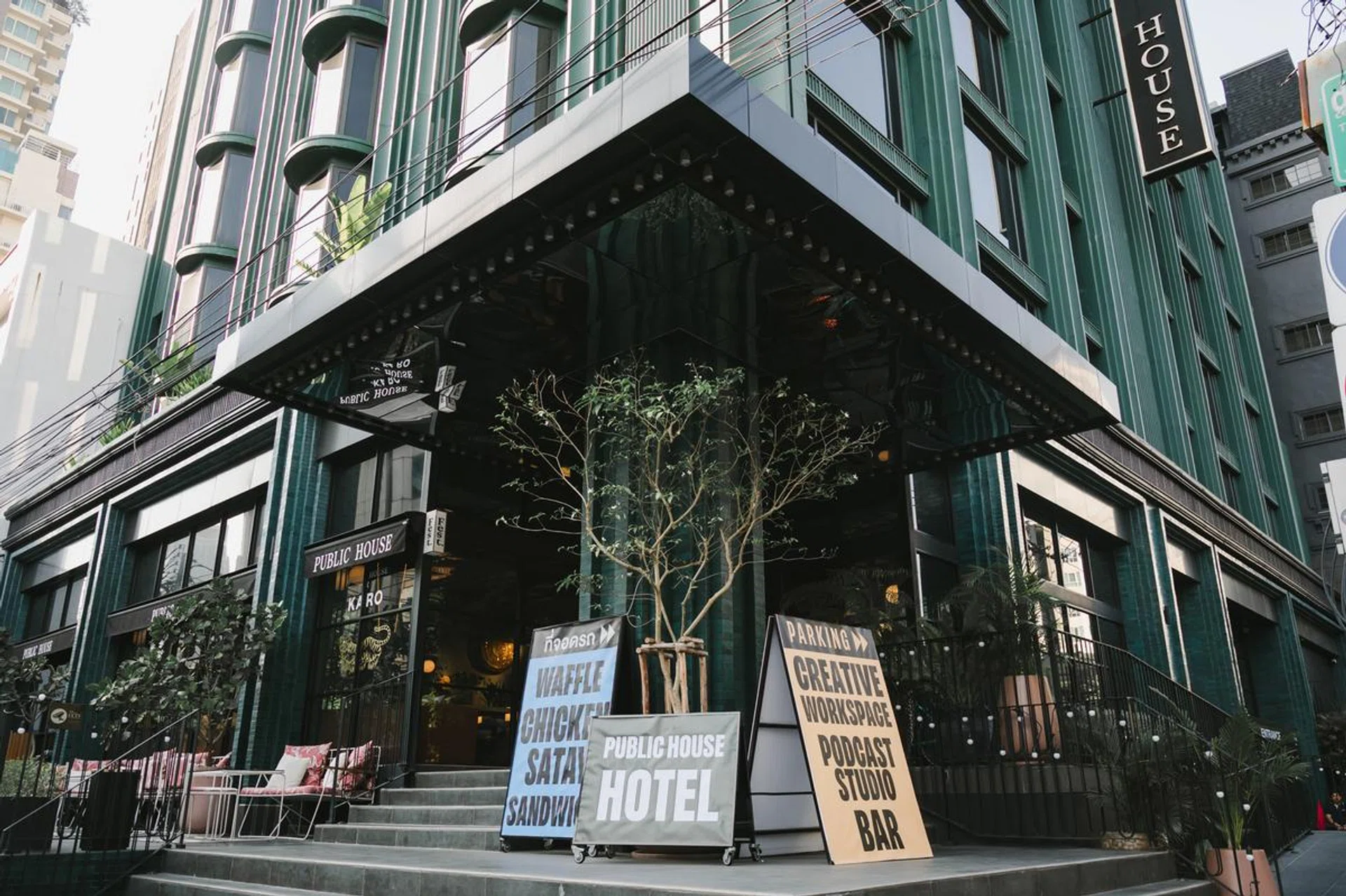
The building announces its intentions through an exterior that attracts attention without resorting to architectural histrionics. Deep-green vertical lines lend the façade an Art Deco severity, while generous glazing across the lower levels exposes the life inside to the street.
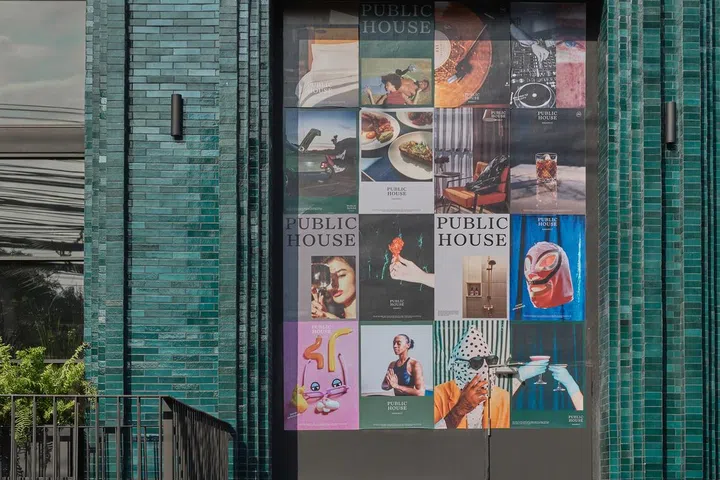
At ground level, handcrafted terracotta tiles cover the exterior. Artisans in Chiang Mai produced them using a green glaze developed specifically for the hotel, creating slight differences in colour and finish across the surface. From a distance, the building appears composed and metropolitan; at closer range, the tiles reveal the irregularities of something made by hand.
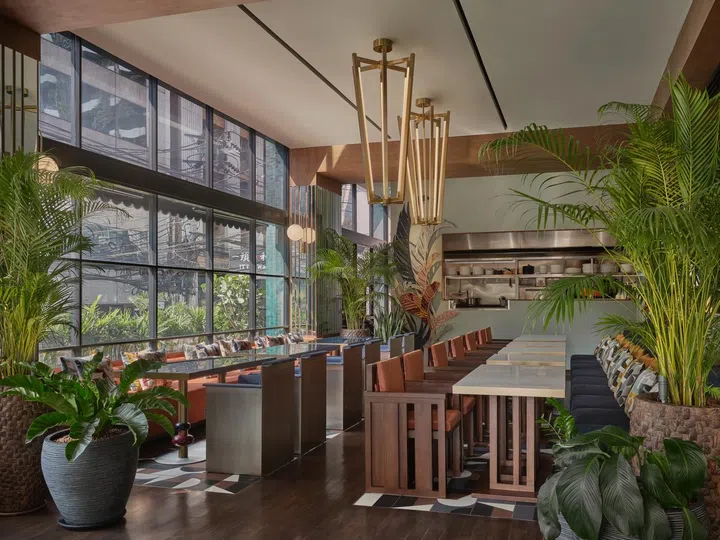
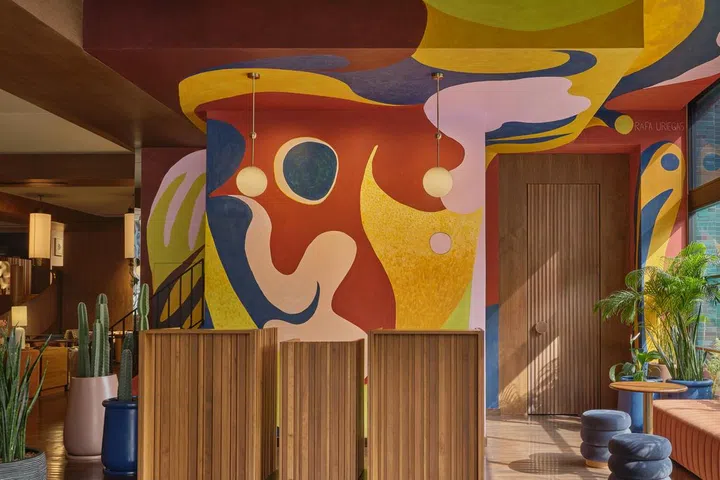
This interplay between urban polish and Thai craftsmanship continues inside. Art Deco geometry, Mid-century Modern furniture and Contemporary Tropical references occupy the same rooms, held together by warm timber, herringbone floors, smoked mirrors, brass-toned metal and richly coloured upholstery. Large-leaf plants and green accents introduce the tropics, although darker surfaces, glass and graphic art prevent the hotel from slipping into the familiar theatre of the urban resort.
How to engineer spontaneity
The ground floor carries the hotel’s central idea. The lobby, restaurant and art space flow into one another, replacing the usual sequence of reception desk, waiting area and dining room with a continuous social landscape.
Long sofas, communal tables and lounge chairs accommodate different kinds of occupation. Mirrors, planting and vertical timber screens establish territories without closing them off, allowing diners, visitors and hotel guests to remain aware of one another without necessarily having to interact.
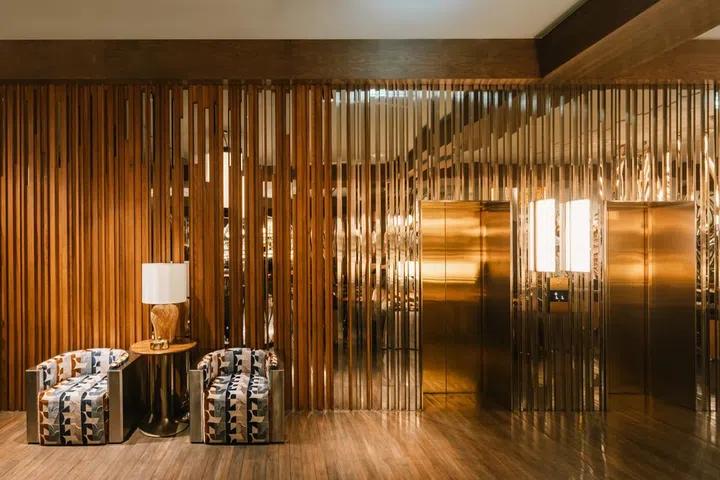
“We’ve always believed in creating spaces that feel special, not just look special,” says Paul Sachdev, who founded the hotel with Angie after working in fashion and lifestyle distribution.
That distinction carries some weight. Hospitality brands frequently promise community when they mean fashionable furniture placed beside a power socket. Public House at least gives social activity physical infrastructure.
Its Forum coworking area includes private booths and a meeting room; a dedicated studio supports podcasting, recording and streaming; and its evolving programme of exhibitions, vinyl markets, music events and rooftop yoga invites the surrounding creative community into the building.
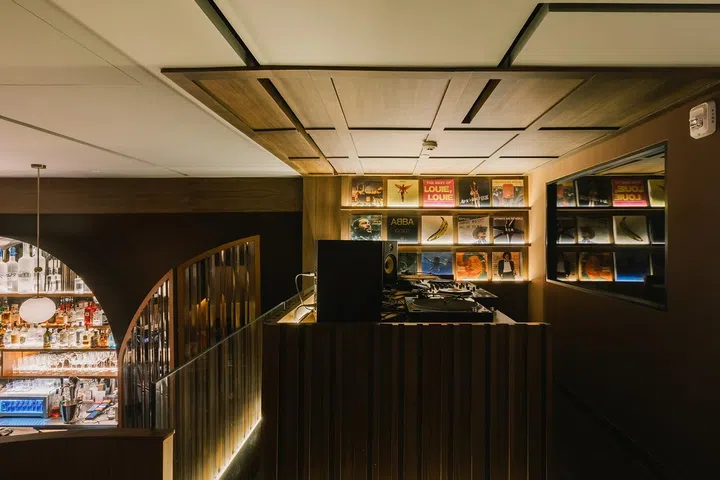
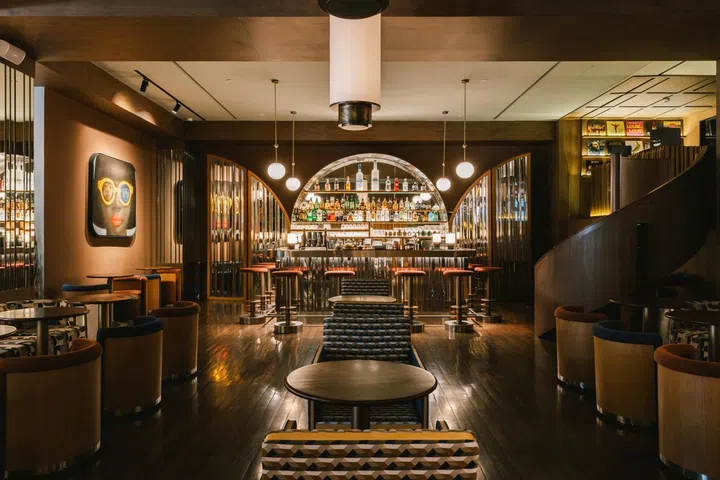
Still, architecture cannot manufacture conviviality. The same open lobby that enables an unexpected conversation can become a room of people silently staring at laptops. Public House’s design manages that risk through variety rather than coercion, creating sufficient proximity for encounters while preserving enough distance for solitude.
The right to withdraw
Upstairs, the guest rooms provide the counterargument to the public spaces below. Herringbone timber floors, textured walls, wood-and-leather furnishings and industrial reading lights continue the hotel’s material vocabulary in a quieter register.
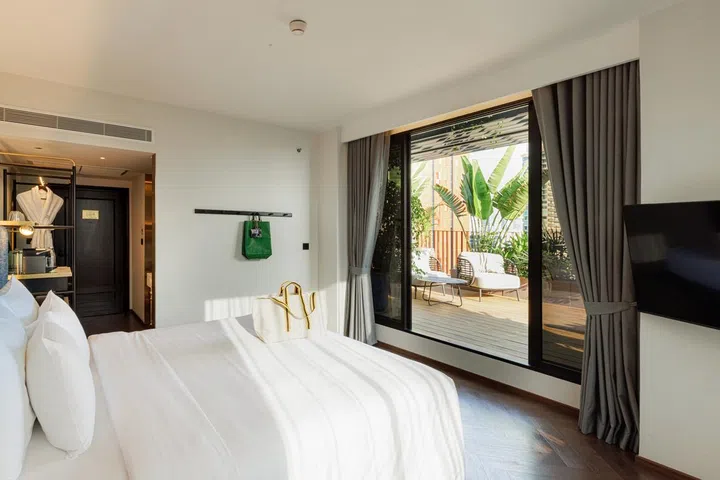
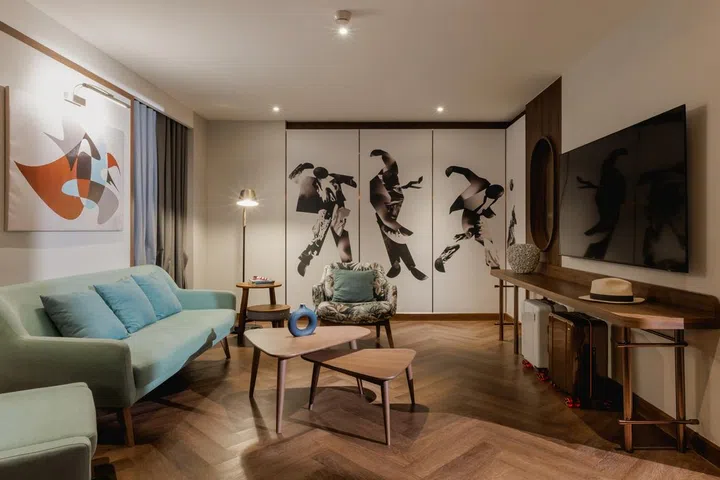
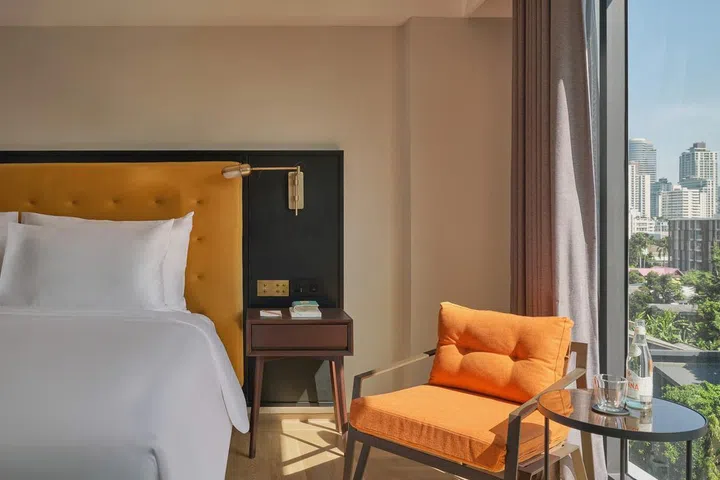
Headboard colours vary according to room position and natural light. In the lower-floor Downtown rooms, where the outlook is less generous, full-height geometric window patterns provide privacy and turn a compromised view into a decorative feature. Each room receives a different pattern, making architectural limitation part of the hotel’s identity rather than something to disguise.
Public House does not abolish the boundary between hotel and city. Its version of “the public” remains designed, programmed and commercially curated. Yet that unresolved contradiction gives the project its character. The hotel offers retreat, but refuses to treat withdrawal as the only form of luxury.
Here, the privilege lies equally in having somewhere private to return to and somewhere interesting to emerge into.