%22%3E%0A%3Cpath%20d%3D%22M412%20101.2H393.7C393.1%20101.2%20392.3%20100.9%20391.8%20100.5C377.3%2087.6004%20362.9%2074.6004%20348.4%2061.6004C344.8%2058.4004%20341.3%2055.2004%20337.7%2052.0004C337.1%2051.5004%20336.2%2051.1004%20335.5%2051.0004C334.2%2050.8004%20333%2051.0004%20331.5%2051.0004V101.1H316.7V0.100391H331.4V44.3004C331.9%2044.3004%20332.2%2044.4004%20332.5%2044.4004C334.9%2044.4004%20337.2%2044.5004%20339.6%2044.4004C340.4%2044.4004%20341.3%2044.0004%20341.8%2043.5004C351.6%2034.4004%20361.4%2025.2004%20371.1%2016.0004C376.5%2010.9004%20381.9%205.90039%20387.3%200.800391C387.9%200.200391%20388.5%200.000390626%20389.3%200.000390626H400.9C384.2%2015.8004%20367.8%2031.3004%20351.2%2047.0004C371.5%2065.0004%20391.8%2082.9004%20412.1%20100.9C412.1%20101%20412.1%20101.1%20412%20101.2ZM180.9%20101.2C184.1%2094.9004%20187.2%2088.9004%20190.3%2082.8004C198.3%2067.3004%20206.2%2051.8004%20214.2%2036.2004C220.3%2024.4004%20226.4%2012.5004%20232.4%200.700391C232.7%200.100391%20233%20-0.0996094%20233.7%20-0.0996094H248.1C248.8%20-0.0996094%20249.2%200.100391%20249.6%200.800391C256%2013.3004%20262.4%2025.7004%20268.8%2038.2004C279.3%2058.6004%20289.8%2079.0004%20300.3%2099.5004C300.5%20100%20300.8%20100.4%20301.1%20101.1C300.5%20101.1%20300.1%20101.2%20299.7%20101.2H286.5C285.6%20101.2%20285.1%20100.9%20284.7%20100.2C280.1%2091.3004%20275.4%2082.4004%20270.8%2073.4004C270.1%2072.1004%20269.3%2071.6004%20267.8%2071.6004H209.9C208.7%2071.6004%20208.1%2072.0004%20207.5%2073.1004C202.9%2082.1004%20198.2%2091.0004%20193.6%20100C193.1%20101%20192.6%20101.3%20191.5%20101.3C188.4%20101.2%20185.3%20101.3%20182.3%20101.3C182%20101.2%20181.6%20101.2%20180.9%20101.2ZM239.1%2011.4004C230%2029.2004%20221.1%2046.7004%20212.1%2064.3004H266.4C257.2%2046.7004%20248.2%2029.2004%20239.1%2011.4004ZM0%200.000390626H43.4C51.2%200.000390626%2058.7%201.20039%2065.7%204.80039C75.9%2010.0004%2078.9%2018.0004%2078.6%2027.4004C78.3%2034.3004%2076%2040.5004%2071.2%2045.5004C67.3%2049.6004%2062.4%2052.3004%2057.1%2054.3004C50.6%2056.7004%2043.9%2058.0004%2037.1%2058.6004C30.1%2059.2004%2023.1%2059.4004%2016.2%2059.7004C15.8%2059.7004%2015.3%2059.8004%2014.8%2059.8004V101.1H0.1C0%2067.4004%200%2033.8004%200%200.000390626ZM14.8%207.10039V52.2004C23.7%2052.4004%2032.6%2052.3004%2041.2%2050.1004C44.4%2049.3004%2047.6%2048.2004%2050.6%2046.7004C58.4%2043.0004%2062.3%2036.7004%2062.7%2028.0004C63%2019.9004%2059.5%2014.1004%2052.4%2010.5004C47.6%208.00039%2042.5%207.10039%2037.2%207.10039H14.8ZM95.9%20101.1V0.100391H167.3V7.20039H110.7V44.7004H158.1V51.9004H110.8V93.9004H171.1V101C146.1%20101.1%20121%20101.1%2095.9%20101.1Z%22%20fill%3D%22black%22%2F%3E%0A%3Cpath%20d%3D%22M35.0004%2025.7996H42.5004V20.6996H44.8004V33.1996H42.6004V27.5996H34.9004V33.2996H32.7004V20.7996H35.0004V25.7996ZM54.4004%2025.8996V27.2996H48.9004V31.6996H55.9004C55.9004%2032.1996%2056.0004%2032.5996%2056.0004%2033.0996H46.5004V20.5996H55.5004V21.8996H49.0004V25.7996C50.7004%2025.8996%2052.5004%2025.8996%2054.4004%2025.8996ZM25.9004%2033.0996H23.5004V21.9996H17.9004V20.6996H31.6004V22.0996H27.1004C26.2004%2022.0996%2025.9004%2022.2996%2025.9004%2023.1996C26.0004%2026.0996%2025.9004%2028.9996%2025.9004%2031.7996V33.0996Z%22%20fill%3D%22black%22%2F%3E%0A%3C%2Fg%3E%0A%3Cdefs%3E%0A%3CclipPath%20id%3D%22clip0_388_462%22%3E%0A%3Crect%20width%3D%22411%22%20height%3D%22101.2%22%20fill%3D%22white%22%2F%3E%0A%3C%2FclipPath%3E%0A%3C%2Fdefs%3E%0A%3C%2Fsvg%3E%0A)
With Samsung Galaxy Z Fold 5, have we reached the peak of foldable phones?
Samsung’s foldables, the flagship Galaxy Z Fold 5 and Flip 5, now have no-gap hinges. This is why this upgrade is of game-changing significance.
By Alvin Lim /
Share this article
Modern smartphones like the recently released Galaxy Z Fold 5 and Flip 5 are typically the culmination of iterative improvements and design revolutions, some of which were so radical that they rewrote the entire game.
Still, they don’t always stick the first time around. The LG KE850, released by its namesake company in 2006, was actually the first phone with a capacitive touchscreen, meaning it didn’t require a stylus. Yet, it was only until Apple’s iPhone was released a year later that the technology received its dues, spreading like wildfire throughout the nascent smartphone market.
Similarly, building upon the advancements of the past, the recently released Galaxy Z Fold 5 and Flip 5 continue to push the boundaries of innovation. Samsung's latest offerings, showcased during the Galaxy Unpacked event on July 26, reveal improvements in flexible glass and folding hinge technology, addressing previous design challenges and presenting users with a seamless experience.
Related: The most anticipated tech gadget launches of 2023
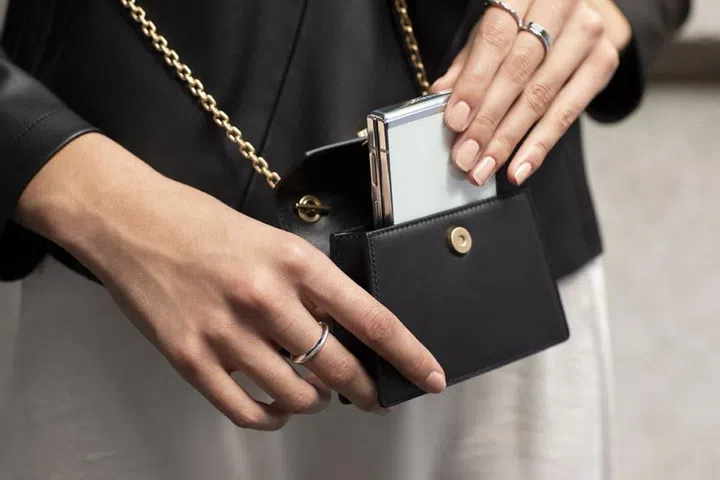
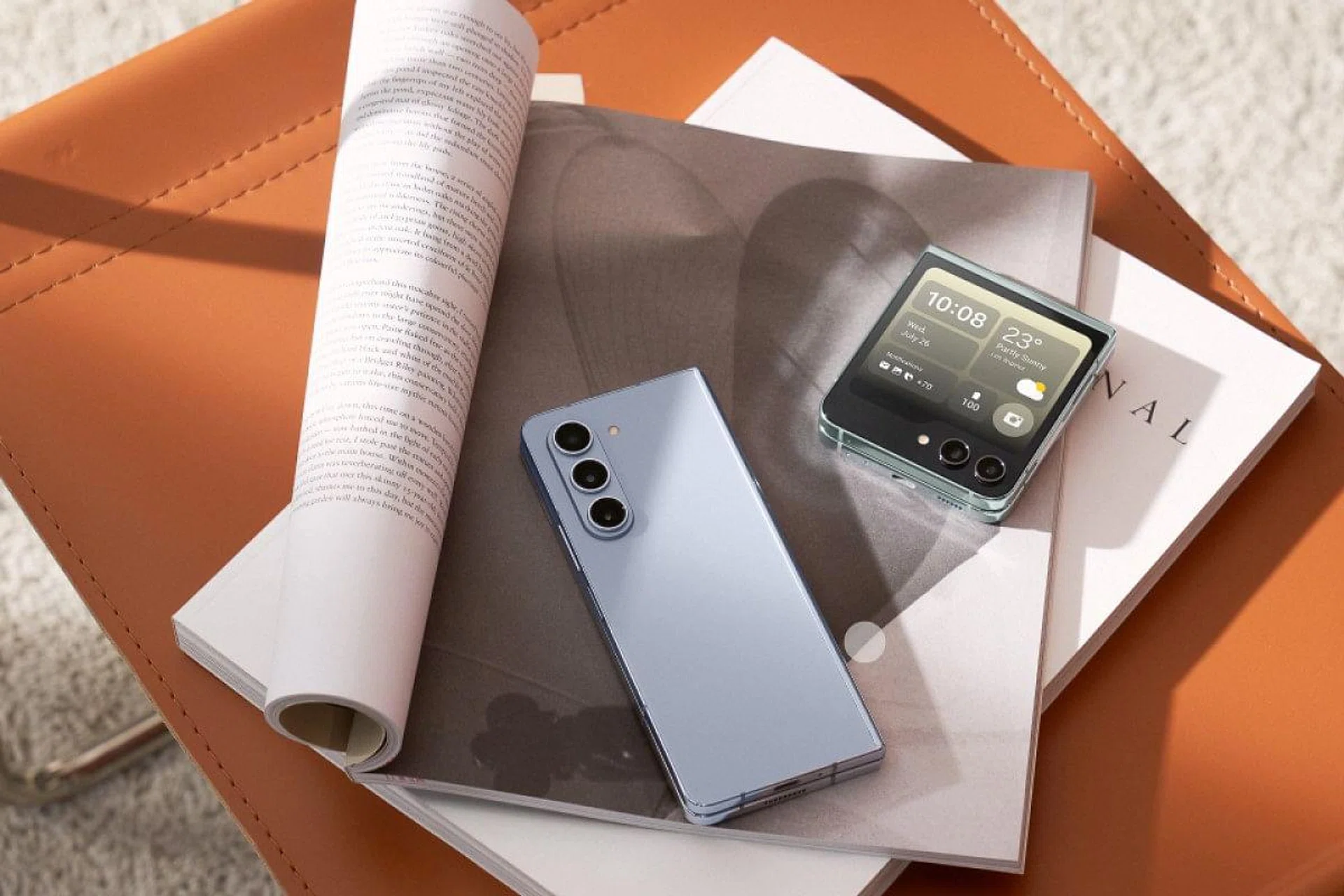
Samsung’s Galaxy Z Fold 5 and Flip 5’s new teardrop hinge allow for a slimmer profile and zero allowance for dust. (Photo: Samsung)
The flagship Galaxy Z Fold 5, which folds vertically like a book, and the cheaper Galaxy Z Flip 5, which is split horizontally down the middle, like a clamshell, are finally able to close completely flat, with no air gap, reducing their form factor and eliminating the chance of dust and fluff entering said gap.
Closing the gap
This elusive gap has been a major issue for Samsung since their much-beleaguered first foldable, 2019’s Galaxy Fold, lost out by just a few months to Chinese startup Royole’s FlexPai in claiming the title of the world’s first commercially available foldable. The OG Fold, despite a reported six years’ and US$130 million (S$173 million) spent on development, was widely panned for various technical deficiencies, including a crease where the screen folds, a folding hinge vulnerable to dust, and, yes, a noticeable gap.
These teething issues became bugbears for the brand, which couldn’t quite solve them after five iterations, a quick tune-up and re-release of the first Fold, and the subsequent introduction of the Z branding for successive foldables.
Fast forward four years, and today, people who’ve gotten their hands on the Galaxy Z Fold and Flip 5 happily reported that the new teardrop hinge that allows the flexible glass to fold gently into a droplet shape within the hinge minimises creases and solves the issue of the gap. This brings them up to par with competitors like Google, Huawei, and Oppo.
Related: CES 2023: The coolest tech gadgets to look forward to
Bigger blips for the Flip
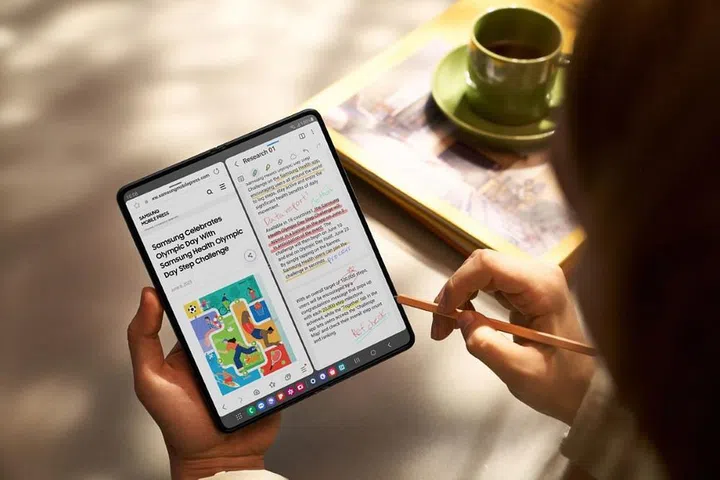
Multi-tasking capabilities — one main selling point of foldable smartphones — are made better with software updates for the Fold and Flip 5. (Photo: Samsung)
This is by far the biggest improvement for Samsung’s flagship foldable, as it allows users to focus on all the promised goodies of a foldable phone. We’re talking a bigger, almost-tablet-esque screen and better multitasking capabilities packed into a device with the pocket footprint of a smartphone. All this without worrying that the phone — which retails from $2,398 for 256GB of built-in memory — will fall apart at its seams.
Being able to close flat has also contributed to the Z Fold 5’s slimmer profile and weight than its predecessor — 13.4mm thick when closed, versus 14.2mm previously; and 253g, down from 263g — despite boasting an uprated Qualcomm Snapdragon Gen 2 chipset, the same found in Samsung’s S23 flagship models.
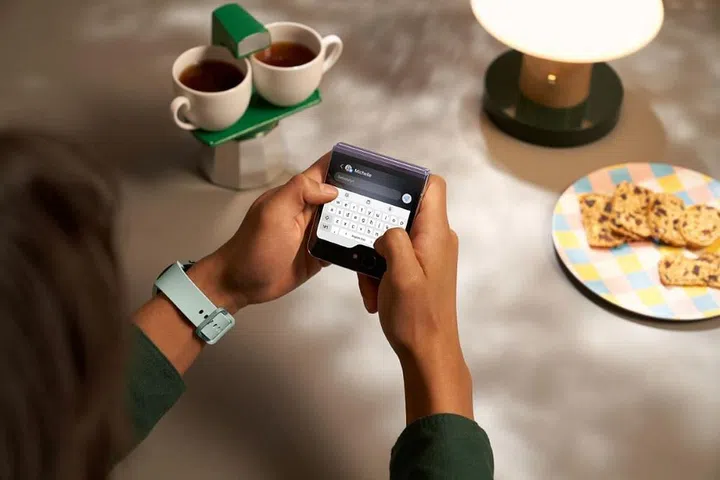
Whereas the cover display for the Z Flip 4 only allowed for programmed responses, its successor now packs a full keyboard. (Photo: Samsung)
The Z Fold 5’s remaining specs will be familiar to anyone who already owns Samsung’s previous foldable. It ships with a similarly sized 6.2-inch external and 7.6-inch internal screen, the same 4400 mAh battery, and an identically powered camera suite (50MP wide, 12MP ultra-wide, and 10MP telephoto).
Still, it is Samsung’s sister foldable, the Z Flip 5, that received more notable upgrades aside from a better and more reliable hinge. It now folds at 15.1mm, compared to 17.1mm previously — starting off with a 3.4-inch front display that is significantly larger than the 1.9-inch version available with the Z Flip 4.
While it’s not something you’d necessarily want to use to watch movies, this extra screen real estate makes it comfortably easier to read notifications or craft replies using the new full-sized keyboard on the go.
In line with the Fold, most of the phone’s other vital specs remain unchanged. It weighs 187g, just like before, with a similar 6.7-inch inner display, 3,700 mAh battery and camera suite (12MP main, 12MP ultra-wide, and 10MP selfie). The phone now retails from $1,498 with a minimum of 256GB built-in memory, with Samsung having done away with the 128GB version.
Related: Remembering Creative CEO Sim Wong Hoo, Singapore’s first technopreneur
Samsung gears up for a fight
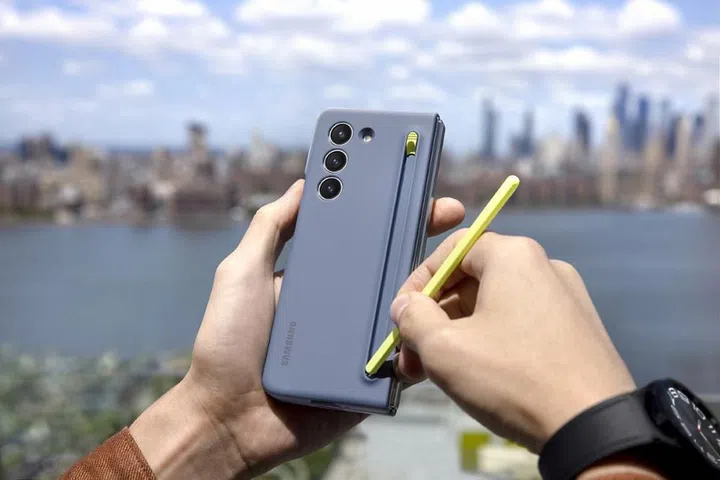
What the Galaxy Z Fold 5 doesn’t have is a built-in S Pen slot. There’s one in the case though. Photo: Samsung
Samsung, a dominant force with a 70 per cent share in the foldable smartphone space, has clearly decided that their heroes of this year’s Galaxy Unpacked should represent polished products that aren’t only watertight enough to attract new customers rather than entice old ones, but also justifiably priced in a shrinking economy and steadfast in the face of growing competition.
This could come from the likes of none other than Apple, which has so far kept mum about plans for a foldable device — though that’s to be expected, seeing as how they usually take their time to unveil a compelling product once new technology settles in (read: augmented reality goggles).
Nevertheless, CNET reported that a foldable iPhone could indeed be on the horizon as early as 2025. If that day comes, it might turn flexible glass from an expensive but growing novelty into the next big thing. We’ll see if Samsung’s patient strategy with the Galaxy Z Fold 5 and Flip 5 puts it in good stead to ride that wave.
Pre-orders for Samsung’s Galaxy Fold 5 and Flip 5 can be made here.