%22%3E%0A%3Cpath%20d%3D%22M412%20101.2H393.7C393.1%20101.2%20392.3%20100.9%20391.8%20100.5C377.3%2087.6004%20362.9%2074.6004%20348.4%2061.6004C344.8%2058.4004%20341.3%2055.2004%20337.7%2052.0004C337.1%2051.5004%20336.2%2051.1004%20335.5%2051.0004C334.2%2050.8004%20333%2051.0004%20331.5%2051.0004V101.1H316.7V0.100391H331.4V44.3004C331.9%2044.3004%20332.2%2044.4004%20332.5%2044.4004C334.9%2044.4004%20337.2%2044.5004%20339.6%2044.4004C340.4%2044.4004%20341.3%2044.0004%20341.8%2043.5004C351.6%2034.4004%20361.4%2025.2004%20371.1%2016.0004C376.5%2010.9004%20381.9%205.90039%20387.3%200.800391C387.9%200.200391%20388.5%200.000390626%20389.3%200.000390626H400.9C384.2%2015.8004%20367.8%2031.3004%20351.2%2047.0004C371.5%2065.0004%20391.8%2082.9004%20412.1%20100.9C412.1%20101%20412.1%20101.1%20412%20101.2ZM180.9%20101.2C184.1%2094.9004%20187.2%2088.9004%20190.3%2082.8004C198.3%2067.3004%20206.2%2051.8004%20214.2%2036.2004C220.3%2024.4004%20226.4%2012.5004%20232.4%200.700391C232.7%200.100391%20233%20-0.0996094%20233.7%20-0.0996094H248.1C248.8%20-0.0996094%20249.2%200.100391%20249.6%200.800391C256%2013.3004%20262.4%2025.7004%20268.8%2038.2004C279.3%2058.6004%20289.8%2079.0004%20300.3%2099.5004C300.5%20100%20300.8%20100.4%20301.1%20101.1C300.5%20101.1%20300.1%20101.2%20299.7%20101.2H286.5C285.6%20101.2%20285.1%20100.9%20284.7%20100.2C280.1%2091.3004%20275.4%2082.4004%20270.8%2073.4004C270.1%2072.1004%20269.3%2071.6004%20267.8%2071.6004H209.9C208.7%2071.6004%20208.1%2072.0004%20207.5%2073.1004C202.9%2082.1004%20198.2%2091.0004%20193.6%20100C193.1%20101%20192.6%20101.3%20191.5%20101.3C188.4%20101.2%20185.3%20101.3%20182.3%20101.3C182%20101.2%20181.6%20101.2%20180.9%20101.2ZM239.1%2011.4004C230%2029.2004%20221.1%2046.7004%20212.1%2064.3004H266.4C257.2%2046.7004%20248.2%2029.2004%20239.1%2011.4004ZM0%200.000390626H43.4C51.2%200.000390626%2058.7%201.20039%2065.7%204.80039C75.9%2010.0004%2078.9%2018.0004%2078.6%2027.4004C78.3%2034.3004%2076%2040.5004%2071.2%2045.5004C67.3%2049.6004%2062.4%2052.3004%2057.1%2054.3004C50.6%2056.7004%2043.9%2058.0004%2037.1%2058.6004C30.1%2059.2004%2023.1%2059.4004%2016.2%2059.7004C15.8%2059.7004%2015.3%2059.8004%2014.8%2059.8004V101.1H0.1C0%2067.4004%200%2033.8004%200%200.000390626ZM14.8%207.10039V52.2004C23.7%2052.4004%2032.6%2052.3004%2041.2%2050.1004C44.4%2049.3004%2047.6%2048.2004%2050.6%2046.7004C58.4%2043.0004%2062.3%2036.7004%2062.7%2028.0004C63%2019.9004%2059.5%2014.1004%2052.4%2010.5004C47.6%208.00039%2042.5%207.10039%2037.2%207.10039H14.8ZM95.9%20101.1V0.100391H167.3V7.20039H110.7V44.7004H158.1V51.9004H110.8V93.9004H171.1V101C146.1%20101.1%20121%20101.1%2095.9%20101.1Z%22%20fill%3D%22black%22%2F%3E%0A%3Cpath%20d%3D%22M35.0004%2025.7996H42.5004V20.6996H44.8004V33.1996H42.6004V27.5996H34.9004V33.2996H32.7004V20.7996H35.0004V25.7996ZM54.4004%2025.8996V27.2996H48.9004V31.6996H55.9004C55.9004%2032.1996%2056.0004%2032.5996%2056.0004%2033.0996H46.5004V20.5996H55.5004V21.8996H49.0004V25.7996C50.7004%2025.8996%2052.5004%2025.8996%2054.4004%2025.8996ZM25.9004%2033.0996H23.5004V21.9996H17.9004V20.6996H31.6004V22.0996H27.1004C26.2004%2022.0996%2025.9004%2022.2996%2025.9004%2023.1996C26.0004%2026.0996%2025.9004%2028.9996%2025.9004%2031.7996V33.0996Z%22%20fill%3D%22black%22%2F%3E%0A%3C%2Fg%3E%0A%3Cdefs%3E%0A%3CclipPath%20id%3D%22clip0_388_462%22%3E%0A%3Crect%20width%3D%22411%22%20height%3D%22101.2%22%20fill%3D%22white%22%2F%3E%0A%3C%2FclipPath%3E%0A%3C%2Fdefs%3E%0A%3C%2Fsvg%3E%0A)
In search of orangutans in a 130-million-year-old Borneo rainforest
Deep in the heart of Sabah, the Danum Valley Conservation Area is the only place in Malaysia where you can find Orangutans in the wild.
By Charukesi Ramadurai /
Share this article
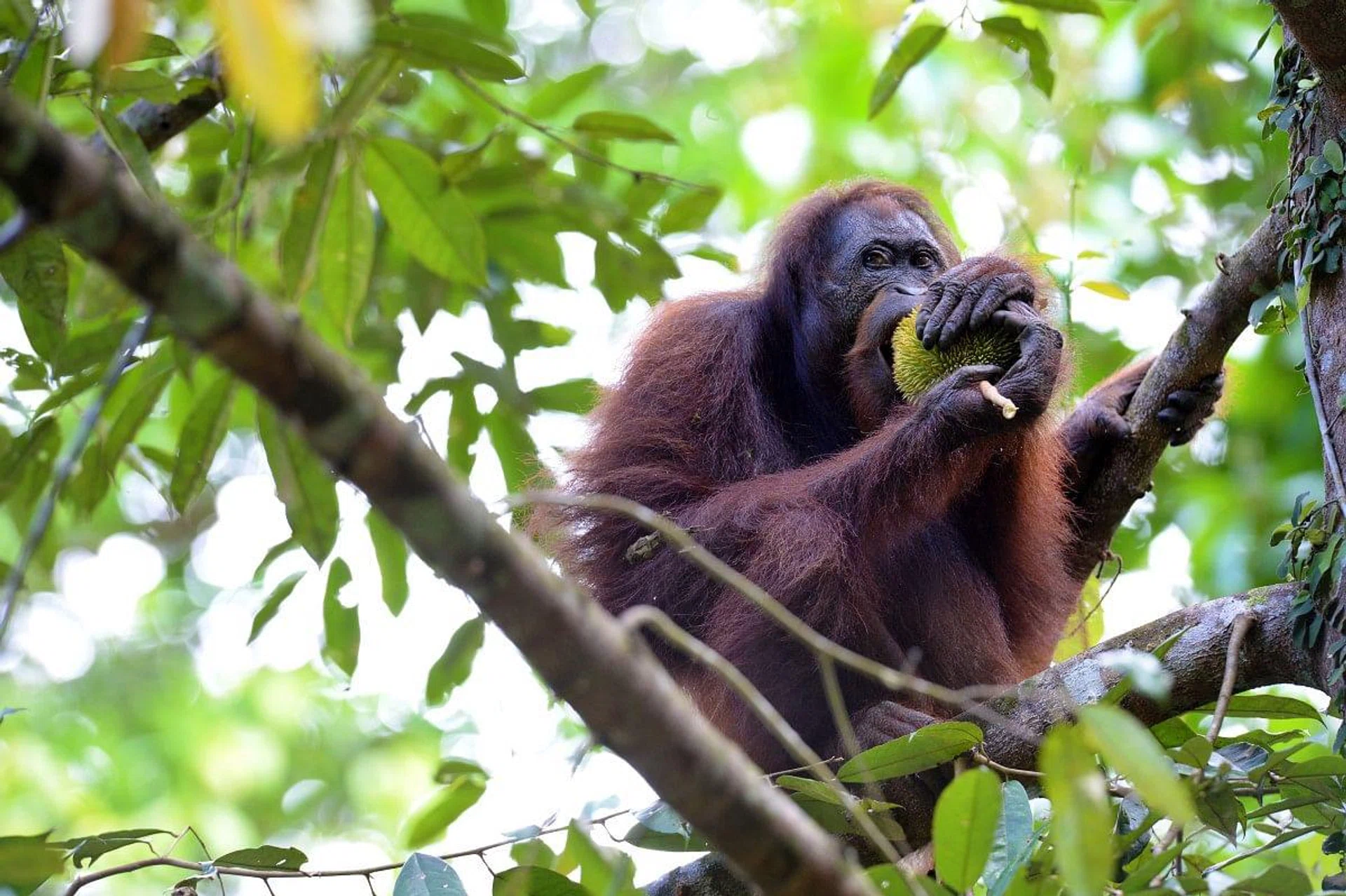
A few decades ago, orangutans in Borneo could swing from one end of the rainforest to the other without ever having to touch the ground. Today, these intelligent primates, with whom humans share 97 per cent of their DNA, are critically endangered, according to the IUCN Red List of Threatened Species.
With most of their forest habitat destroyed to make way for palm oil plantations, it has become tougher and tougher to spot them in the wild. Most visitors to Borneo end up going to conservation centers or sanctuaries, but I head to Danum Valley with dreams of seeing one swinging high among the treetops.
Related: How this environmental project is protecting world heritage sites from climate change
An Orangutan paradise
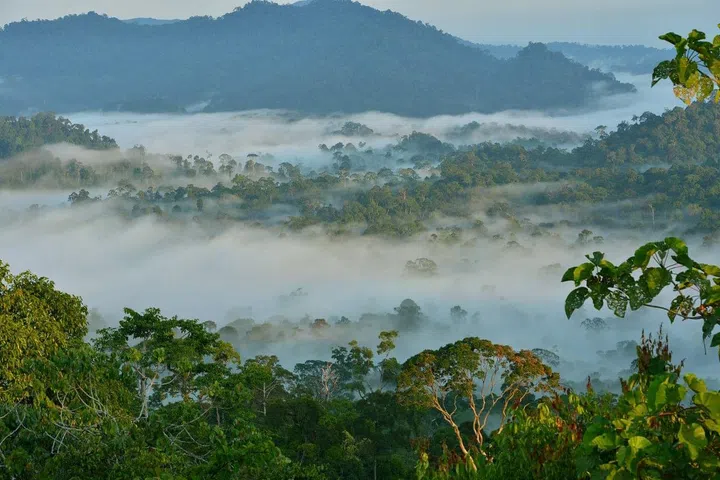
Danum Valley Conservation Area (Photo: Borneo Rainforest Lodge)
Nestled deep in the heart of the Malaysian Borneo state of Sabah, Danum Valley Conservation Area sprawls over 438 sq km. It is estimated to be roughly 130 million years old, which makes it much older than the Amazon rainforest.
More importantly, it is also virgin land without palm oil plantations — a primary forest with no prior logging activity. Conservation experts say this makes it an incredibly biodiverse ecosystem, where dozens of rare mammals such as clouded leopards, sunda pangolins, red leaf monkeys, flying lemurs, mouse deer, and pygmy elephants live, as well as reptiles like monitor lizards, giant saltwater crocodiles, and Malcolm’s pit vipers.
Not to mention, over 200 species of birds (including eight kinds of hornbills alone), many of which are endemic to this area, are not found anywhere else.
Some of the tallest tropical trees flourish here, including the Yellow Meranti that has been known to grow to a height of over 330 feet, earning it the Malay nickname Menara (meaning tower).
The anticipation builds

As excited as I am about a chance sighting of an elusive clouded leopard or a playful pygmy elephant, I am really here for the orangutans.
Given the relative isolation of Danum Valley, it is one of the best places to watch orangutans in their natural habitats among the rainforest canopy. And the only way to explore this region is by staying at the Borneo Rainforest Lodge and going out on hikes with a trained naturalist who knows the landscape thoroughly.
My villa is at one end of the wooden walkway connecting the rooms, with the back porch opening up to views of the meandering Danum River against the backdrop of glossy green hills.
“If you are lucky, you can sometimes see orangutans from here,” says our naturalist Farah, right after her welcome speech.
It is tempting to laze on the porch with a pint of chilled beer and watch the afternoon sun play hide and seek with the tempestuous rainforest clouds. But I overhear other guests excitedly talking about their orangutan sightings during their hikes, and I can’t wait to step out on my own search for these magnificent primates.
A small disappointment
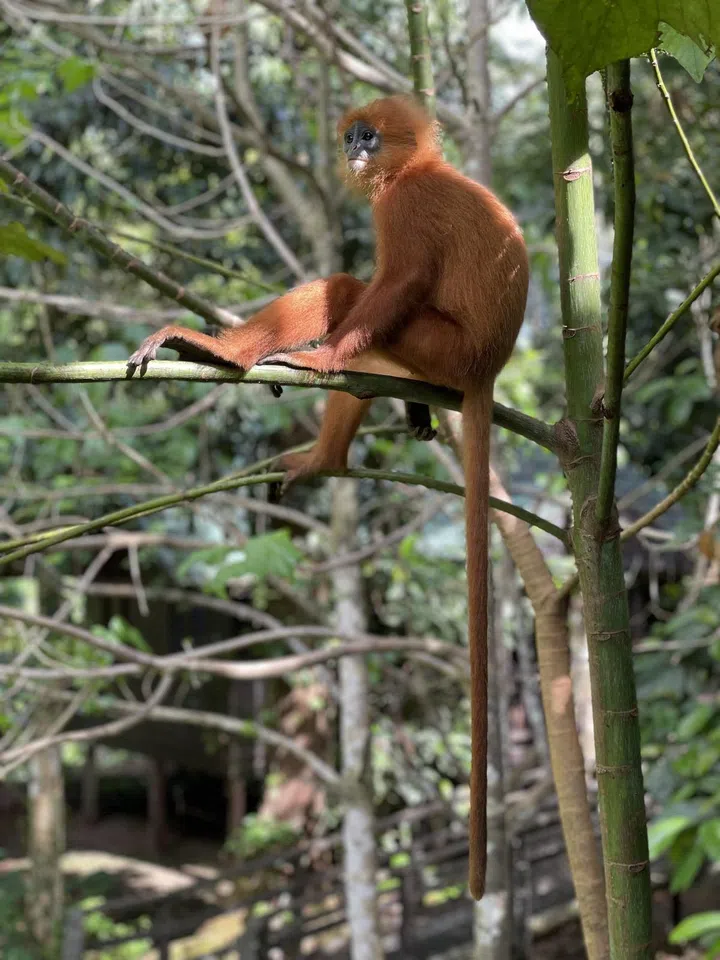
Photo: Borneo Rainforest Lodge
On our introductory walk around the lodge, Farah shows us the gigantic strangler fig tree, whose fruit is a favourite food for orangutans. She explains how the flora and fauna within this conservation area are all mutually dependent and collectively sustain the biodiversity of this lowland tropical ecosystem.
Suddenly, we spot some movement high up on the tree. When the leaves start shaking, I wonder if I’ve lucked out on my very first outing. Alas, as it turns out, these are red leaf monkeys.
As adorable as they are with their curious faces and childish antics, I am a bit disappointed that these are not the great apes I travelled here for. Farah assures me that we will try our best tomorrow morning.
And finally, the great apes
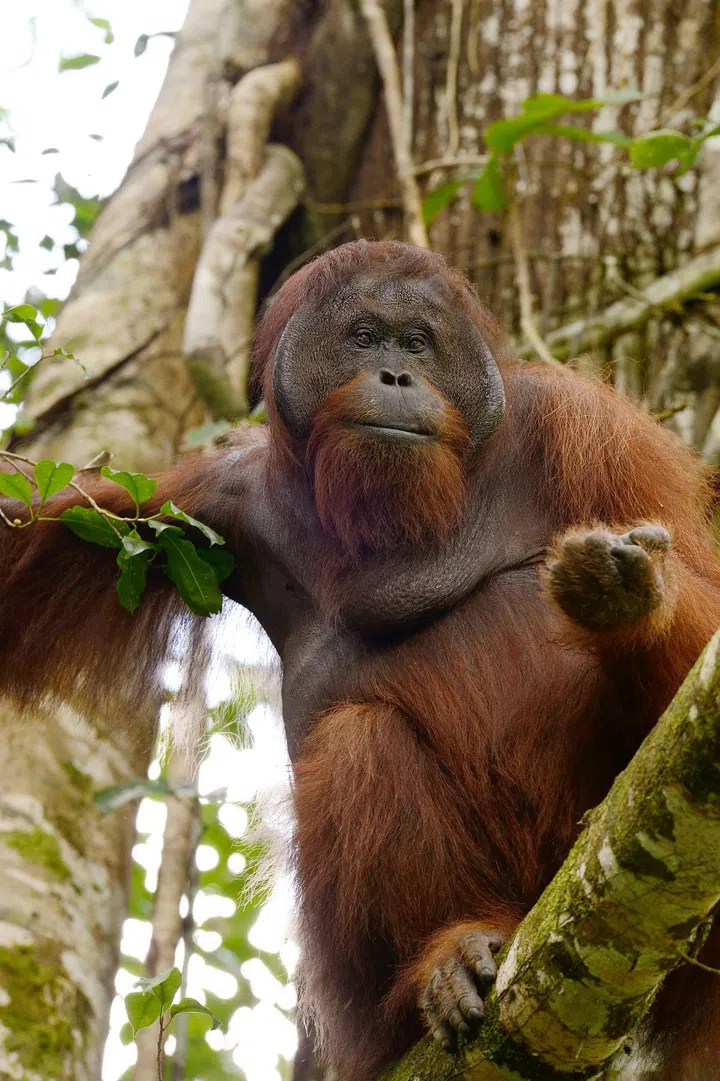
Photo: Borneo Rainforest Lodge
At night, I fall asleep to nature’s own playlist in the form of cicada and gecko cries and awake early to the mellifluous hoots of gibbons. I rush out to the patio, hoping for a glimpse of these shy primates, but they remain resolutely hidden. The morning has been devoted to the pursuit of orangutans and we set off — binoculars in hand and leech socks on our feet.
As I march on to the orchestra of birdsong and animal calls, I realise that without a good nature guide, there is no way to spot anything at all in this dense foliage. Luckily for me, Farah has her eyes peeled for orangutan movement, and soon enough, she is hurrying us on a rough trail through thick shrubbery.
I follow her carefully, trying not to trip on the straggly, knobby roots that have taken over the forest floor. Suddenly, she stops and points up a tree.
For a moment, I see nothing, and then a flash of orange — an orangutan. “It is a female,” Farah whispers, “and there may be a baby nearby.”
Sure enough, another furry, orange ball slowly becomes visible. We watch mesmerised, as mother and child tuck into their breakfast of leaves and fruit, swinging nimbly from branch to branch.
“Orangutan!”
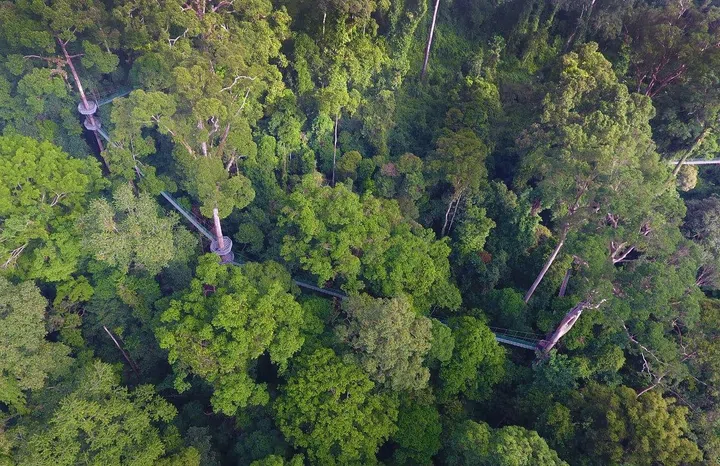
Treetop Canopy Walk (Photo: Borneo Rainforest Lodge)
It is only after the duo vanish from sight that we make our way to the Treetop Canopy Walkway, a remarkable 300m aerial path strung between trees — 26m above ground at its highest point.
The canopy bridge swings gently as we walk and stop frequently to look for birds and to admire the expansive views of the ancient rainforest. It is a silent, special world up here.
Silent, until Farah shouts, “Orangutan!”. Up ahead on a tree is an adult male, poking his head out from between branches. And just as quickly, he is gone.
I walk back to the lodge, clutching the morning’s precious encounters close to my heart. I am acutely aware of how fortunate I have been in my orangutan sightings and hope that future generations get to experience this thrill just as I have.
How to get there: The nearest airport is 2.5 hours drive away, at Lahad Datu, connected to Singapore and Kuala Lumpur via Kota Kinabalu.