%22%3E%0A%3Cpath%20d%3D%22M412%20101.2H393.7C393.1%20101.2%20392.3%20100.9%20391.8%20100.5C377.3%2087.6004%20362.9%2074.6004%20348.4%2061.6004C344.8%2058.4004%20341.3%2055.2004%20337.7%2052.0004C337.1%2051.5004%20336.2%2051.1004%20335.5%2051.0004C334.2%2050.8004%20333%2051.0004%20331.5%2051.0004V101.1H316.7V0.100391H331.4V44.3004C331.9%2044.3004%20332.2%2044.4004%20332.5%2044.4004C334.9%2044.4004%20337.2%2044.5004%20339.6%2044.4004C340.4%2044.4004%20341.3%2044.0004%20341.8%2043.5004C351.6%2034.4004%20361.4%2025.2004%20371.1%2016.0004C376.5%2010.9004%20381.9%205.90039%20387.3%200.800391C387.9%200.200391%20388.5%200.000390626%20389.3%200.000390626H400.9C384.2%2015.8004%20367.8%2031.3004%20351.2%2047.0004C371.5%2065.0004%20391.8%2082.9004%20412.1%20100.9C412.1%20101%20412.1%20101.1%20412%20101.2ZM180.9%20101.2C184.1%2094.9004%20187.2%2088.9004%20190.3%2082.8004C198.3%2067.3004%20206.2%2051.8004%20214.2%2036.2004C220.3%2024.4004%20226.4%2012.5004%20232.4%200.700391C232.7%200.100391%20233%20-0.0996094%20233.7%20-0.0996094H248.1C248.8%20-0.0996094%20249.2%200.100391%20249.6%200.800391C256%2013.3004%20262.4%2025.7004%20268.8%2038.2004C279.3%2058.6004%20289.8%2079.0004%20300.3%2099.5004C300.5%20100%20300.8%20100.4%20301.1%20101.1C300.5%20101.1%20300.1%20101.2%20299.7%20101.2H286.5C285.6%20101.2%20285.1%20100.9%20284.7%20100.2C280.1%2091.3004%20275.4%2082.4004%20270.8%2073.4004C270.1%2072.1004%20269.3%2071.6004%20267.8%2071.6004H209.9C208.7%2071.6004%20208.1%2072.0004%20207.5%2073.1004C202.9%2082.1004%20198.2%2091.0004%20193.6%20100C193.1%20101%20192.6%20101.3%20191.5%20101.3C188.4%20101.2%20185.3%20101.3%20182.3%20101.3C182%20101.2%20181.6%20101.2%20180.9%20101.2ZM239.1%2011.4004C230%2029.2004%20221.1%2046.7004%20212.1%2064.3004H266.4C257.2%2046.7004%20248.2%2029.2004%20239.1%2011.4004ZM0%200.000390626H43.4C51.2%200.000390626%2058.7%201.20039%2065.7%204.80039C75.9%2010.0004%2078.9%2018.0004%2078.6%2027.4004C78.3%2034.3004%2076%2040.5004%2071.2%2045.5004C67.3%2049.6004%2062.4%2052.3004%2057.1%2054.3004C50.6%2056.7004%2043.9%2058.0004%2037.1%2058.6004C30.1%2059.2004%2023.1%2059.4004%2016.2%2059.7004C15.8%2059.7004%2015.3%2059.8004%2014.8%2059.8004V101.1H0.1C0%2067.4004%200%2033.8004%200%200.000390626ZM14.8%207.10039V52.2004C23.7%2052.4004%2032.6%2052.3004%2041.2%2050.1004C44.4%2049.3004%2047.6%2048.2004%2050.6%2046.7004C58.4%2043.0004%2062.3%2036.7004%2062.7%2028.0004C63%2019.9004%2059.5%2014.1004%2052.4%2010.5004C47.6%208.00039%2042.5%207.10039%2037.2%207.10039H14.8ZM95.9%20101.1V0.100391H167.3V7.20039H110.7V44.7004H158.1V51.9004H110.8V93.9004H171.1V101C146.1%20101.1%20121%20101.1%2095.9%20101.1Z%22%20fill%3D%22black%22%2F%3E%0A%3Cpath%20d%3D%22M35.0004%2025.7996H42.5004V20.6996H44.8004V33.1996H42.6004V27.5996H34.9004V33.2996H32.7004V20.7996H35.0004V25.7996ZM54.4004%2025.8996V27.2996H48.9004V31.6996H55.9004C55.9004%2032.1996%2056.0004%2032.5996%2056.0004%2033.0996H46.5004V20.5996H55.5004V21.8996H49.0004V25.7996C50.7004%2025.8996%2052.5004%2025.8996%2054.4004%2025.8996ZM25.9004%2033.0996H23.5004V21.9996H17.9004V20.6996H31.6004V22.0996H27.1004C26.2004%2022.0996%2025.9004%2022.2996%2025.9004%2023.1996C26.0004%2026.0996%2025.9004%2028.9996%2025.9004%2031.7996V33.0996Z%22%20fill%3D%22black%22%2F%3E%0A%3C%2Fg%3E%0A%3Cdefs%3E%0A%3CclipPath%20id%3D%22clip0_388_462%22%3E%0A%3Crect%20width%3D%22411%22%20height%3D%22101.2%22%20fill%3D%22white%22%2F%3E%0A%3C%2FclipPath%3E%0A%3C%2Fdefs%3E%0A%3C%2Fsvg%3E%0A)
Singapore's F&B incubation spaces are giving new businesses a leg up
With the help of incubation spaces and programmes, aspiring chefs, hawkers, and bakers can test their ideas before diving into the deep end.
By Grace Ma /
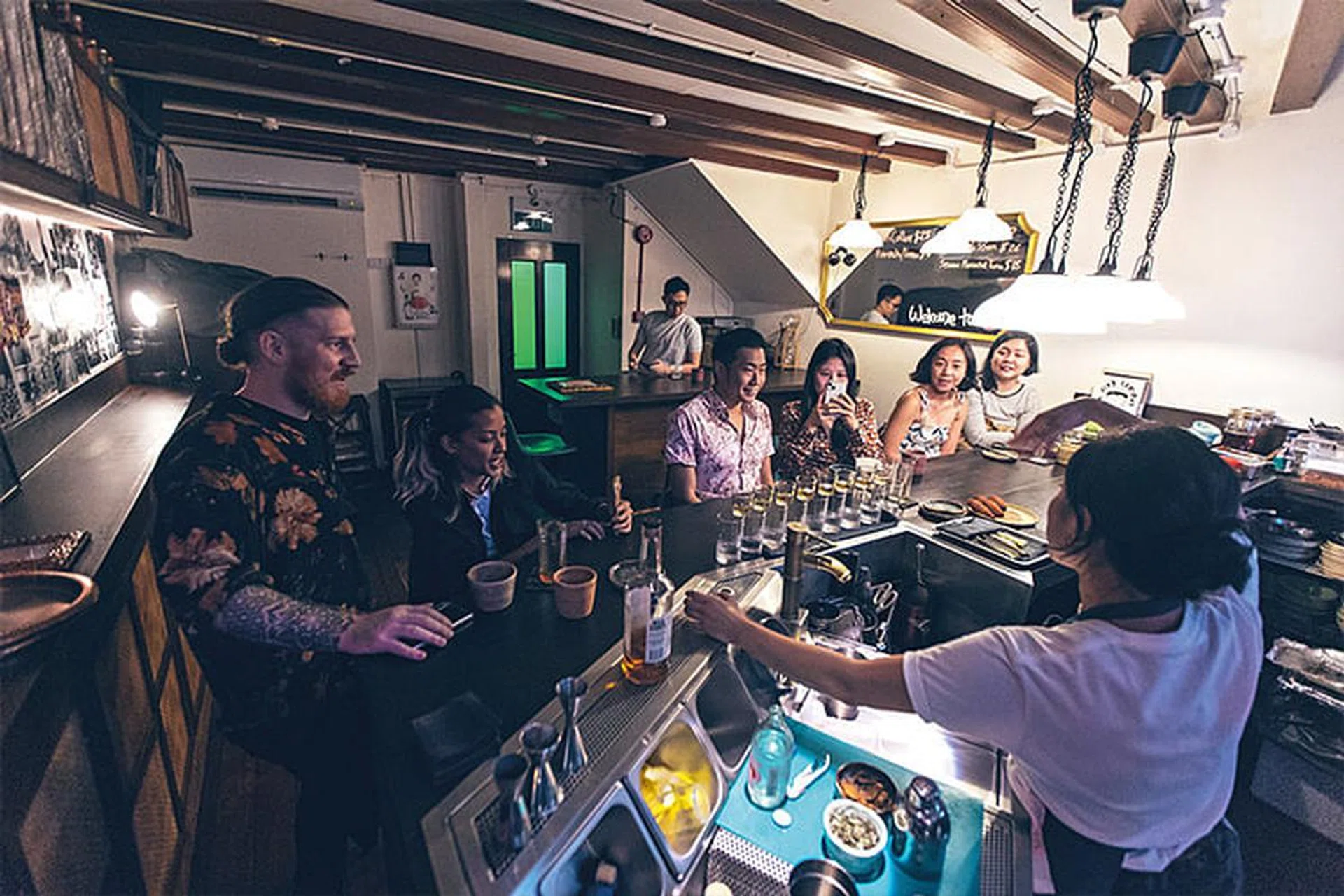
Behind a nondescript door on the second floor of an Ann Siang Hill shophouse, bartender June Baek and chef Son Pham are dishing out izakaya-style dishes, shaking up cocktails, handling reservations and payment, all with cheery smiles as customers stream into the 10-seater space.
The two are the first to test their gastrobar concept Guerilla at Ghostwriter, the latest incubation space in Singapore’s food and beverage scene. Launched by Jay Gray, who is behind cocktail bars Low Tide and Sago House, as well as Underdog Inn, which specialises in smoked meats and seafood, Ghostwriter also housed chef Pete Smit’s pop-up supper club collaborations Dirty Suppers, which moved on last year to bigger, permanent premises.
Gray wants Ghostwriter to address the gap in training young food and beverage operators to take an idea from proposal to launch. He says: “It’s good to know whether you can work with someone, if an idea you’ve done at home or for friends would work before you pour your life savings into it. There are few opportunities for operators to try something out at a low cost and risk. We want to give back to a community that has always looked after people.”
Related: Top Singapore restaurant trends 2023 by chefs and F&B experts
The duo have both worked in international establishments for over 20 years — Pham launched Sonny’s Pizza last year, while Baek has worked at Seoul’s Bar Cham and Singapore’s MO Bar — but running a new concept for the first time in an unfamiliar space proved to be a completely different experience.
“We had to think about what we could do with the limited space and equipment we had,” Pham shares. “We were still adjusting the menu in the first week of operations.” For now, the duo plan to keep it a pop-up, due to their respective work commitments — he at Sonny’s Pizza and she as bar manager of new bar Seoul Salon in New York.
Getting support from food incubator and culinary mentorship programmes
Incubator and culinary mentorship programmes have been around from as early as 2017, when Timbre Group, known for its social enterprises, started a hawker incubation programme at the Yishun Park Hawker Centre in 2017 and expanded it last year to the One Punggol Hawker Centre. There were also government initiatives such as the National Environment Agency’s Incubation Stall Programme and the Hawkers Development Programme, which started in 2018 and 2020 respectively.
Seafood restaurant Naked Finn’s owner Tan Ken Loon launched Magic Square in 2018 to challenge up-and-coming young chefs to create uniquely Singaporean cuisine while producing nine-course menus on a monthly rotation. Far East Organization launched Baker X at Orchard Central in December 2021, a fully outfitted baking studio cum café for budding home-based bakers to experience running a full-fledged retail business.
The stints at these incubators range from several weeks to a year and include professional mentorship and support in areas such as marketing, public relations, accounting and operations. Overheads, rental and even ingredient costs are usually heavily subsidised by the companies. Gray and Tan, for example, personally vet business proposals and recipes with the respective operators and chefs.
Related: Technology and food distribution key to F&B growth, says founder of Ebb & Flow
Timbre Group’s general manager Pauline Low says: “Our incubation programme includes mentoring and training for both operations and marketing. Regarding financial investment, we offer heavily subsidised rental and service charges to reduce the upfront costs of setting up a hawker stall.”
Fei Zhuang Yuan Herbal Bak Kut Teh and the second outlet of Michelin Bib Gourmand Kwang Kee Fish Porridge are examples of first-timers who continued with their stalls at One Punggol Hawker Centre after taking part in Timbre Group’s incubation programme.
Whether or not they go on to open physical outlets, participants agree on the importance of gaining practical experience and being stretched in their entrepreneurial journey.
Marcus Leow, who was in the pioneer batch of chefs at Magic Square, is now chef de cuisine at Naked Finn and head of menu development for the group’s outlets, which includes BurgerLabo and 2280 by BurgerLabo. Additionally, he mentors younger chefs at Magic Square, including Chia Yong Jin, who will join Noma this June for a one-year internship.
Baking culinary dreams
Chia, who has worked at Michelin-starred Odette and Thevar says: “It’s very different from working in other restaurants where there’s a fixed menu. In Magic Square, you’re expected to be responsible to learn quickly. We were often asked, ‘Can you try this and that?’ I learnt to see and handle ingredients from a different perspective.”
Since Baker X’s inception in December 2021, 16 bakers have tested their products with another six more slated for the first half of this year. Past participants such as Ree and Mummy and Flourcrafts Patisserie have launched physical stores while others have opted to keep their businesses home-based for reasons such as family commitments and challenges in finding suitable manpower.
The bakers cited a number of valuable lessons, including adjusting production to customer demand and footfall, reducing wastage, and having good assistants to promote products. In addition, there was the reality shock of working long hours and balancing production with customer interaction.
Driven by a passion to grow the local F&B scene
Those behind the incubators readily acknowledge that there are few monetary gains in these projects, which are driven by a passion to grow the local F&B scene.
Far East Organization’s deputy director for the retail business group Deborah Tan says the aim of Baker X was to encourage the entry of new brands and to help home bakers “gain a meaningful experience regardless of whether they open a physical store”.
Magic Square’s Tan Ken Loon says frankly: “We are doing all these things not because we’re making money out of it, but because we are genuinely excited about what we can do to shape the younger generation.”
However, the constant search for new talent has taken its toll, and he has decided it would be better to rotate the chefs within its group of restaurants — Magic Square will close after April. He says: “Creativity is not just about knowing the specific techniques, but how to judge whether a dish is ready to be served. That takes time and mentoring from within our group of restaurants makes more sense for now.”
Timbre’s Low adds: “There are few F&B incubators in Singapore primarily because the process involves opportunity costs. It requires a team aligned with the mission to grow together, which can be challenging. However, it is necessary to have more F&B incubators for Singapore’s F&B landscape to flourish and develop its identity, especially in the current challenging economic landscape.”