%22%3E%0A%3Cpath%20d%3D%22M412%20101.2H393.7C393.1%20101.2%20392.3%20100.9%20391.8%20100.5C377.3%2087.6004%20362.9%2074.6004%20348.4%2061.6004C344.8%2058.4004%20341.3%2055.2004%20337.7%2052.0004C337.1%2051.5004%20336.2%2051.1004%20335.5%2051.0004C334.2%2050.8004%20333%2051.0004%20331.5%2051.0004V101.1H316.7V0.100391H331.4V44.3004C331.9%2044.3004%20332.2%2044.4004%20332.5%2044.4004C334.9%2044.4004%20337.2%2044.5004%20339.6%2044.4004C340.4%2044.4004%20341.3%2044.0004%20341.8%2043.5004C351.6%2034.4004%20361.4%2025.2004%20371.1%2016.0004C376.5%2010.9004%20381.9%205.90039%20387.3%200.800391C387.9%200.200391%20388.5%200.000390626%20389.3%200.000390626H400.9C384.2%2015.8004%20367.8%2031.3004%20351.2%2047.0004C371.5%2065.0004%20391.8%2082.9004%20412.1%20100.9C412.1%20101%20412.1%20101.1%20412%20101.2ZM180.9%20101.2C184.1%2094.9004%20187.2%2088.9004%20190.3%2082.8004C198.3%2067.3004%20206.2%2051.8004%20214.2%2036.2004C220.3%2024.4004%20226.4%2012.5004%20232.4%200.700391C232.7%200.100391%20233%20-0.0996094%20233.7%20-0.0996094H248.1C248.8%20-0.0996094%20249.2%200.100391%20249.6%200.800391C256%2013.3004%20262.4%2025.7004%20268.8%2038.2004C279.3%2058.6004%20289.8%2079.0004%20300.3%2099.5004C300.5%20100%20300.8%20100.4%20301.1%20101.1C300.5%20101.1%20300.1%20101.2%20299.7%20101.2H286.5C285.6%20101.2%20285.1%20100.9%20284.7%20100.2C280.1%2091.3004%20275.4%2082.4004%20270.8%2073.4004C270.1%2072.1004%20269.3%2071.6004%20267.8%2071.6004H209.9C208.7%2071.6004%20208.1%2072.0004%20207.5%2073.1004C202.9%2082.1004%20198.2%2091.0004%20193.6%20100C193.1%20101%20192.6%20101.3%20191.5%20101.3C188.4%20101.2%20185.3%20101.3%20182.3%20101.3C182%20101.2%20181.6%20101.2%20180.9%20101.2ZM239.1%2011.4004C230%2029.2004%20221.1%2046.7004%20212.1%2064.3004H266.4C257.2%2046.7004%20248.2%2029.2004%20239.1%2011.4004ZM0%200.000390626H43.4C51.2%200.000390626%2058.7%201.20039%2065.7%204.80039C75.9%2010.0004%2078.9%2018.0004%2078.6%2027.4004C78.3%2034.3004%2076%2040.5004%2071.2%2045.5004C67.3%2049.6004%2062.4%2052.3004%2057.1%2054.3004C50.6%2056.7004%2043.9%2058.0004%2037.1%2058.6004C30.1%2059.2004%2023.1%2059.4004%2016.2%2059.7004C15.8%2059.7004%2015.3%2059.8004%2014.8%2059.8004V101.1H0.1C0%2067.4004%200%2033.8004%200%200.000390626ZM14.8%207.10039V52.2004C23.7%2052.4004%2032.6%2052.3004%2041.2%2050.1004C44.4%2049.3004%2047.6%2048.2004%2050.6%2046.7004C58.4%2043.0004%2062.3%2036.7004%2062.7%2028.0004C63%2019.9004%2059.5%2014.1004%2052.4%2010.5004C47.6%208.00039%2042.5%207.10039%2037.2%207.10039H14.8ZM95.9%20101.1V0.100391H167.3V7.20039H110.7V44.7004H158.1V51.9004H110.8V93.9004H171.1V101C146.1%20101.1%20121%20101.1%2095.9%20101.1Z%22%20fill%3D%22black%22%2F%3E%0A%3Cpath%20d%3D%22M35.0004%2025.7996H42.5004V20.6996H44.8004V33.1996H42.6004V27.5996H34.9004V33.2996H32.7004V20.7996H35.0004V25.7996ZM54.4004%2025.8996V27.2996H48.9004V31.6996H55.9004C55.9004%2032.1996%2056.0004%2032.5996%2056.0004%2033.0996H46.5004V20.5996H55.5004V21.8996H49.0004V25.7996C50.7004%2025.8996%2052.5004%2025.8996%2054.4004%2025.8996ZM25.9004%2033.0996H23.5004V21.9996H17.9004V20.6996H31.6004V22.0996H27.1004C26.2004%2022.0996%2025.9004%2022.2996%2025.9004%2023.1996C26.0004%2026.0996%2025.9004%2028.9996%2025.9004%2031.7996V33.0996Z%22%20fill%3D%22black%22%2F%3E%0A%3C%2Fg%3E%0A%3Cdefs%3E%0A%3CclipPath%20id%3D%22clip0_388_462%22%3E%0A%3Crect%20width%3D%22411%22%20height%3D%22101.2%22%20fill%3D%22white%22%2F%3E%0A%3C%2FclipPath%3E%0A%3C%2Fdefs%3E%0A%3C%2Fsvg%3E%0A)
Award-winning film, Amoeba, celebrates girlhood and self-discovery in all its messiness
Singaporean director-writer Tan Siyou’s first feature film is a personal story on finding agency and courage to step out of one’s comfort zone.
By Lu Yawen /
Share this article
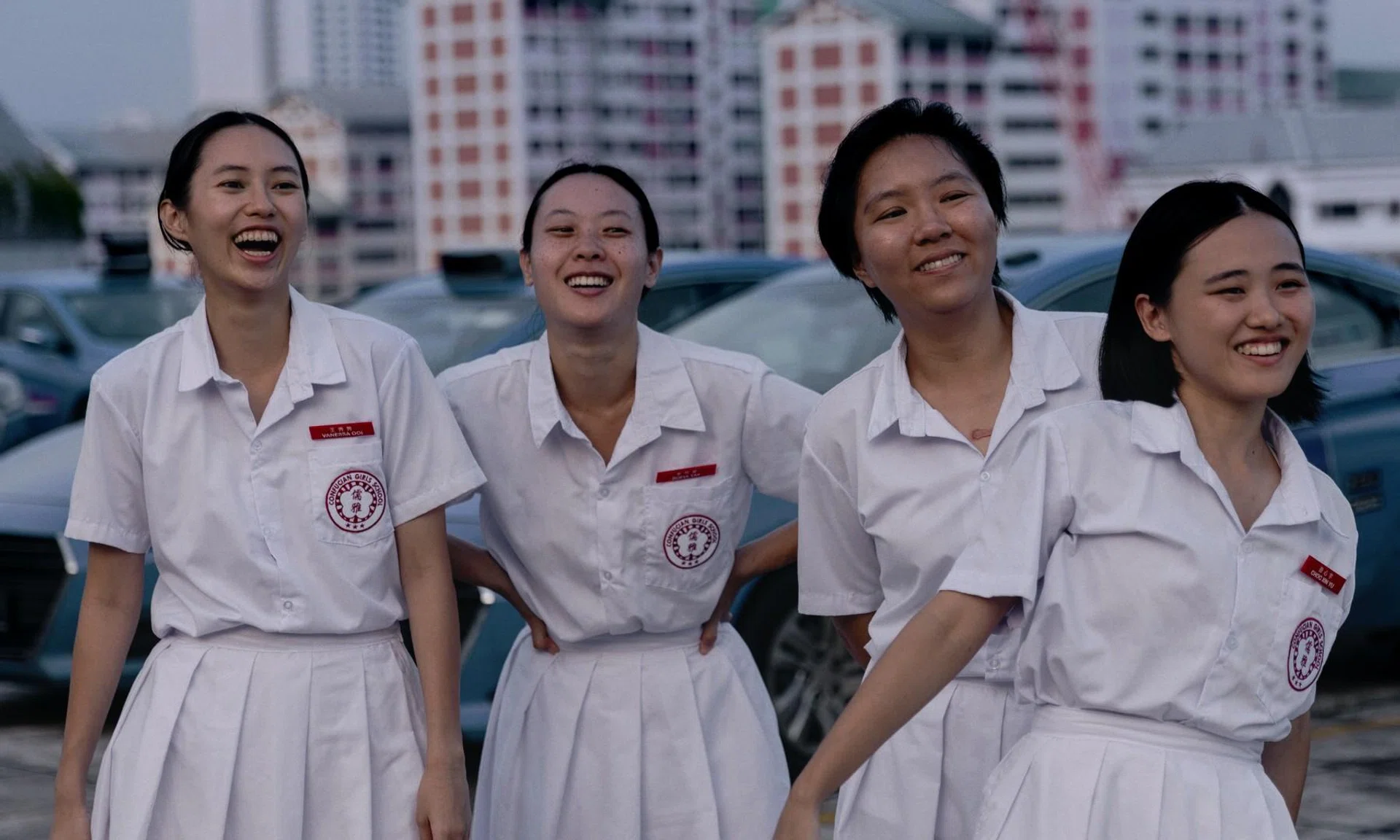
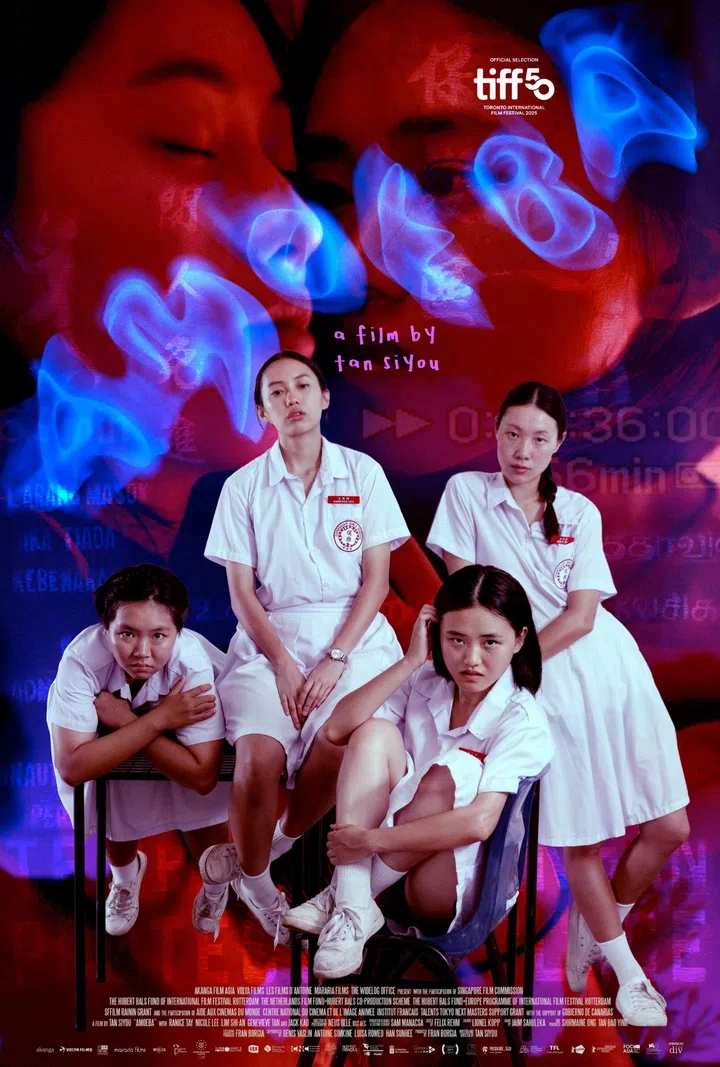
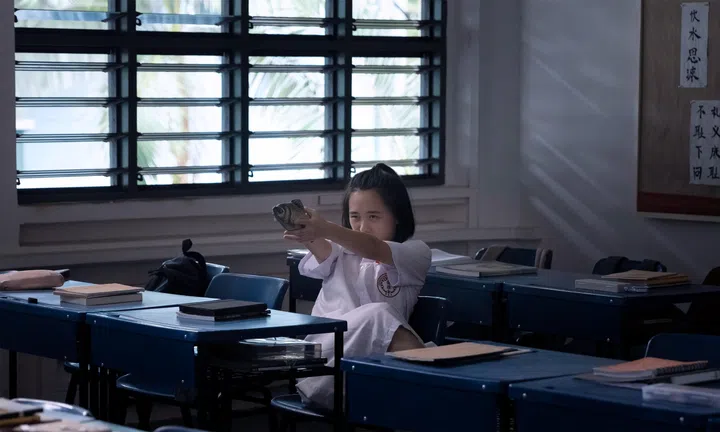
Four school girls in an all-girls’ school find their own extracurricular activities — they create their own secret gang and cement their sisterhood in a cave found at a construction site, and hunt for a ghost using a camcorder.
The premise for Amoeba, a Singaporean film by Tan Siyou, might sound like a fever dream on paper, but it manages to endear and resonate with audiences abroad.
Since premiering at the Toronto Film Festival 2025 in September, Amoeba has had a great run in the film festival circuit. It’s picked up seven awards at the Golden Horse Film Festival in Taiwan, the Asia Pacific Screen Awards in Australia, the QCinema International Film Festival in the Philippines, and the Pingyao International Film Festival in China.
And finally, on March 26, it returned home with a premiere at Filmhouse (the former Projector at Golden Mile Tower).
Taking it personal
Much of Tan’s first feature film is a reflection of her own formative years in an all-girls’ secondary school in Singapore. “It feels a bit raw and naked, like my throbbing heart for everyone to see,” she added.
A coming-of-age story that examines the complexities of young female friendships within the strict confines of the education system, the film felt like a mirror of my own teenage years, growing up with sisters and attending a religious convent school.
The film’s characters, played by rising actresses Ranice Tay, Nicole Lee, Lim Shi-An, and Genevieve Tan, struggle to find their voices in a system that rewards conformity. The incidents that move the plot along are seemingly mundane, such as organising a play and choosing which school to apply for after graduation, but are felt tenfold by the girls, reminiscent of the emotional intensity of puberty.
“I think mundane things make up the bulk of our lives, and they are very important,” she quipped. A discovery of self and carving a path of their own, as the film reminds, requires rebellion in micro ways. Each knock against the hardened mould predetermined for them — a future at a prestigious university or as an athlete — reveals cracks that they choose to bury or dig deeper into.
This exploration of self also ties strongly back to Tan’s personal journey. She’s done a directing fellowship at the American Film Institute in Los Angeles, where she stayed for 10 years, and is now based in New York.
Living overseas made her reflect on her identity and her deep attachment to Singapore, especially during the Covid-19 pandemic. “I’m preoccupied with Singapore; I’m always thinking of Singapore,” she explained, “it’s this tension of living abroad, and you’re yearning for something here.”
Making art as an act of rebellion
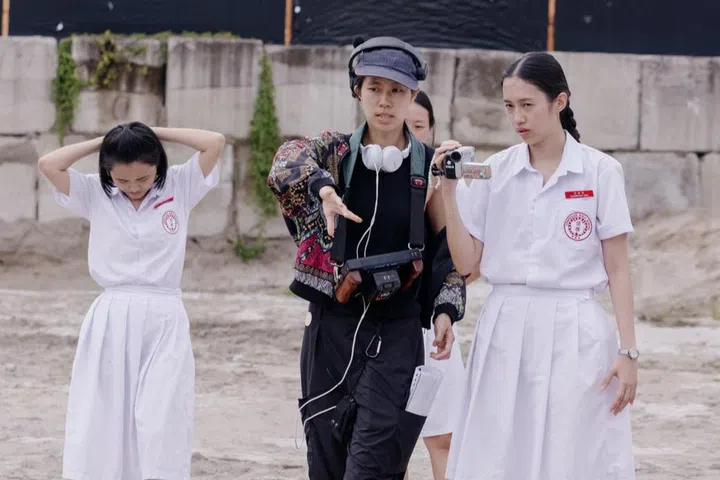
Written in 2019, the film received multiple grants from governments in France, the Netherlands, and Spain, as well as a South Korean producer who personally funded a portion, bringing it to fruition in 2024 and shooting over 24 days. Most of the scenes were filmed in Singapore, apart from the cave that was filmed in the Philippines, by an all-female production team; a rarity in the industry.
Tan likened the film’s production to “a girls’ school” where women from all walks of life came together for a singular vision. “Behind and in front of the camera, it was that kind of energy… it was very collaborative and communal,” she said.
It’s a work environment that is hard to find in the male-dominated field and one that she’s grateful for, recognising that it was a conscious choice for them to take five weeks away from better-paying jobs elsewhere.
The struggles of being a female director are something that Tan is acutely aware of. She opined on gender stereotypes, the lack of support, and resistance to change in the arts here. “We could support our artistic and cultural workers more, in the sense that we shouldn’t see it as frivolous.”
She mentioned her peers who are bogged down by daily life, unable to create the films, no matter how unique their stories are. In the US, she worked with production houses creating documentaries, music videos, and commercials, and did F&B gigs, including bartending and waitressing.
Feeling Singaporean abroad, she’s treated as foreign when back. A universal sentiment of being “neither this nor that” has become a main theme in her body of work.
Her short films Hello Ahma (2019) — a girl who sees her grandma in a turtle when she can’t come back to Singapore to pay her last respects — and Strawberry Cheesecake (2021) — three schoolgirls are caught smoking by their principal — both explore the “transitional moment of formation of younger people caught between two worlds” and as a response “rebel against conventional narratives by using imagination”.
For now, having spent the past year travelling with Amoeba for panels and screenings, Tan is eager to settle into her life in New York, help her Film Facilitation Grant mentee Izzy Osman produce her short film, and slow down in search of inspiration while indulging in a ritual most cinephiles are familiar with — “sitting in a dark room with strangers and watching something, feeling this collective emotion”.