%22%3E%0A%3Cpath%20d%3D%22M412%20101.2H393.7C393.1%20101.2%20392.3%20100.9%20391.8%20100.5C377.3%2087.6004%20362.9%2074.6004%20348.4%2061.6004C344.8%2058.4004%20341.3%2055.2004%20337.7%2052.0004C337.1%2051.5004%20336.2%2051.1004%20335.5%2051.0004C334.2%2050.8004%20333%2051.0004%20331.5%2051.0004V101.1H316.7V0.100391H331.4V44.3004C331.9%2044.3004%20332.2%2044.4004%20332.5%2044.4004C334.9%2044.4004%20337.2%2044.5004%20339.6%2044.4004C340.4%2044.4004%20341.3%2044.0004%20341.8%2043.5004C351.6%2034.4004%20361.4%2025.2004%20371.1%2016.0004C376.5%2010.9004%20381.9%205.90039%20387.3%200.800391C387.9%200.200391%20388.5%200.000390626%20389.3%200.000390626H400.9C384.2%2015.8004%20367.8%2031.3004%20351.2%2047.0004C371.5%2065.0004%20391.8%2082.9004%20412.1%20100.9C412.1%20101%20412.1%20101.1%20412%20101.2ZM180.9%20101.2C184.1%2094.9004%20187.2%2088.9004%20190.3%2082.8004C198.3%2067.3004%20206.2%2051.8004%20214.2%2036.2004C220.3%2024.4004%20226.4%2012.5004%20232.4%200.700391C232.7%200.100391%20233%20-0.0996094%20233.7%20-0.0996094H248.1C248.8%20-0.0996094%20249.2%200.100391%20249.6%200.800391C256%2013.3004%20262.4%2025.7004%20268.8%2038.2004C279.3%2058.6004%20289.8%2079.0004%20300.3%2099.5004C300.5%20100%20300.8%20100.4%20301.1%20101.1C300.5%20101.1%20300.1%20101.2%20299.7%20101.2H286.5C285.6%20101.2%20285.1%20100.9%20284.7%20100.2C280.1%2091.3004%20275.4%2082.4004%20270.8%2073.4004C270.1%2072.1004%20269.3%2071.6004%20267.8%2071.6004H209.9C208.7%2071.6004%20208.1%2072.0004%20207.5%2073.1004C202.9%2082.1004%20198.2%2091.0004%20193.6%20100C193.1%20101%20192.6%20101.3%20191.5%20101.3C188.4%20101.2%20185.3%20101.3%20182.3%20101.3C182%20101.2%20181.6%20101.2%20180.9%20101.2ZM239.1%2011.4004C230%2029.2004%20221.1%2046.7004%20212.1%2064.3004H266.4C257.2%2046.7004%20248.2%2029.2004%20239.1%2011.4004ZM0%200.000390626H43.4C51.2%200.000390626%2058.7%201.20039%2065.7%204.80039C75.9%2010.0004%2078.9%2018.0004%2078.6%2027.4004C78.3%2034.3004%2076%2040.5004%2071.2%2045.5004C67.3%2049.6004%2062.4%2052.3004%2057.1%2054.3004C50.6%2056.7004%2043.9%2058.0004%2037.1%2058.6004C30.1%2059.2004%2023.1%2059.4004%2016.2%2059.7004C15.8%2059.7004%2015.3%2059.8004%2014.8%2059.8004V101.1H0.1C0%2067.4004%200%2033.8004%200%200.000390626ZM14.8%207.10039V52.2004C23.7%2052.4004%2032.6%2052.3004%2041.2%2050.1004C44.4%2049.3004%2047.6%2048.2004%2050.6%2046.7004C58.4%2043.0004%2062.3%2036.7004%2062.7%2028.0004C63%2019.9004%2059.5%2014.1004%2052.4%2010.5004C47.6%208.00039%2042.5%207.10039%2037.2%207.10039H14.8ZM95.9%20101.1V0.100391H167.3V7.20039H110.7V44.7004H158.1V51.9004H110.8V93.9004H171.1V101C146.1%20101.1%20121%20101.1%2095.9%20101.1Z%22%20fill%3D%22black%22%2F%3E%0A%3Cpath%20d%3D%22M35.0004%2025.7996H42.5004V20.6996H44.8004V33.1996H42.6004V27.5996H34.9004V33.2996H32.7004V20.7996H35.0004V25.7996ZM54.4004%2025.8996V27.2996H48.9004V31.6996H55.9004C55.9004%2032.1996%2056.0004%2032.5996%2056.0004%2033.0996H46.5004V20.5996H55.5004V21.8996H49.0004V25.7996C50.7004%2025.8996%2052.5004%2025.8996%2054.4004%2025.8996ZM25.9004%2033.0996H23.5004V21.9996H17.9004V20.6996H31.6004V22.0996H27.1004C26.2004%2022.0996%2025.9004%2022.2996%2025.9004%2023.1996C26.0004%2026.0996%2025.9004%2028.9996%2025.9004%2031.7996V33.0996Z%22%20fill%3D%22black%22%2F%3E%0A%3C%2Fg%3E%0A%3Cdefs%3E%0A%3CclipPath%20id%3D%22clip0_388_462%22%3E%0A%3Crect%20width%3D%22411%22%20height%3D%22101.2%22%20fill%3D%22white%22%2F%3E%0A%3C%2FclipPath%3E%0A%3C%2Fdefs%3E%0A%3C%2Fsvg%3E%0A)
Temasek Shophouse 2.0 combines four shophouses in the Dhoby Ghaut area for an upsized resource hub for social impact causes
The new and improved headquarters is a collaborative project with multiple local artists, designers, and enterprises.
By Luo Jingmei /
Share this article
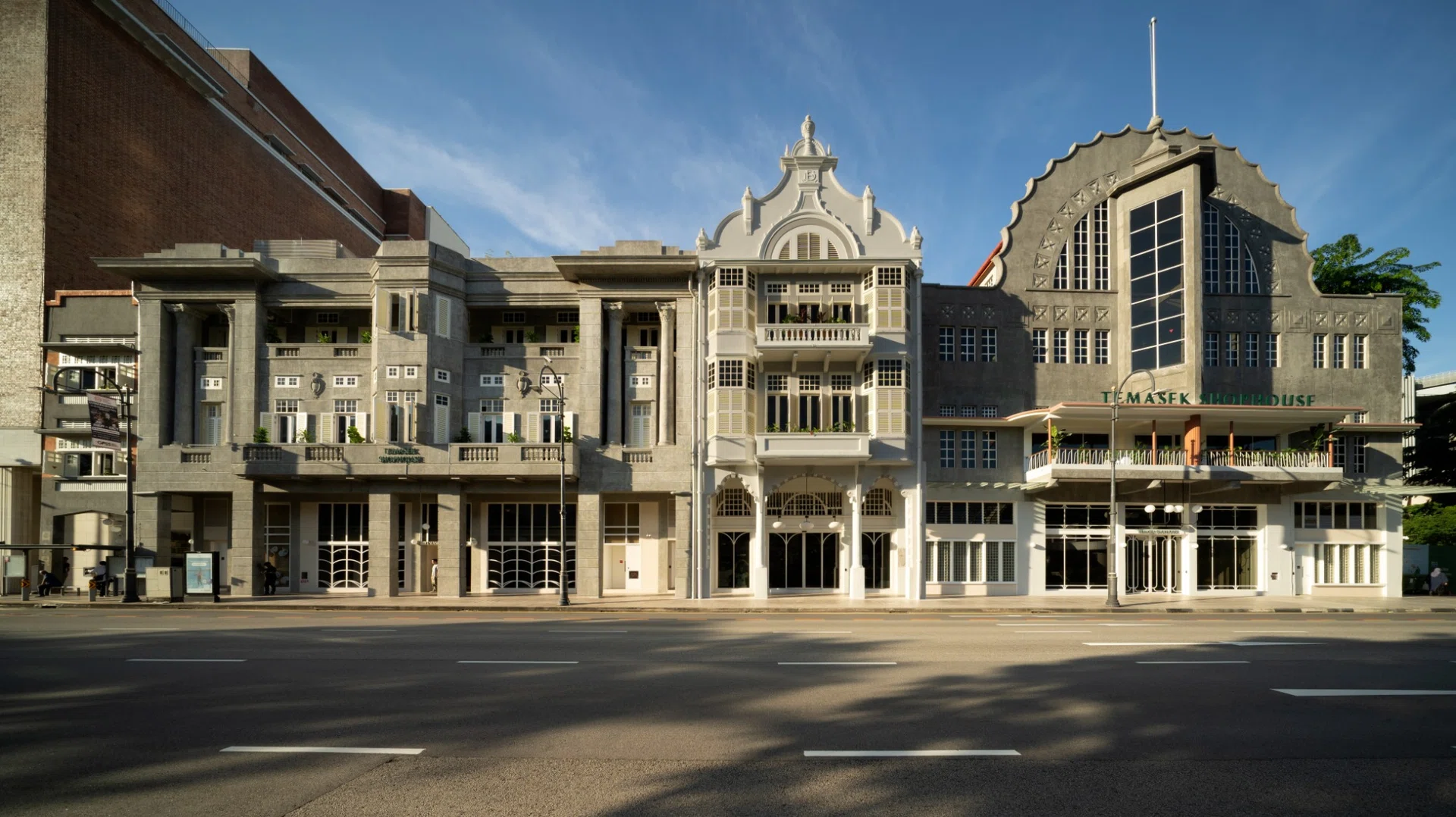
In 1927, Wearne Brothers built a shophouse that served as Malayan Motors’ showroom until 1980. The building had a striking Art Deco exterior with a crowning, scallop-shaped arch.
It was one of many car showrooms that emerged in the Dhoby Ghaut area during the late 1900s, replacing the horse carriage companies and stables from the 1800s.

Today, it is part of Temasek Shophouse, along with three other shophouses, all from different eras. The organisation that brings together and supports changemakers from the public, private, and philanthropic sectors was initially housed in one of the shophouses.
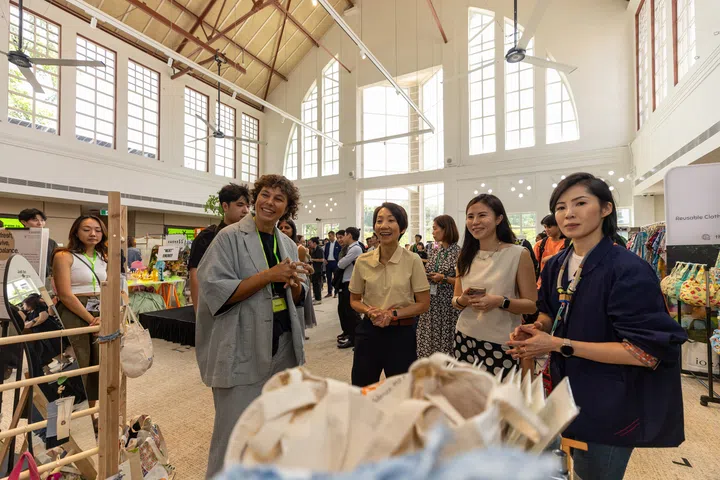
The expansion increases Temasek Shophouse’s co-working and event spaces threefold, alongside a new media production studio. There is now also Foreword Coffee, retail outlet Martket by ABRY, and Peranakan restaurant Bibik Violet, which welcomes the public.

“Many of our partners have great stories to tell but lack the tools to share them, so we built the media studio and provided some resources to help amplify their voices,” explains Temasek Shophouse’s general manager, Yvonne Tay.
A coming together of histories
The building is categorised into four blocks: A, B, C, and D. The latter is designed by Swan & Maclaren, also the former Malayan Motors showroom at Block D. Its open, ground-floor space that displays cars is ideal for large-scale events, such as the recent GREEN-HOUSE 2025, Singapore’s largest sustainability festival that ran from November 8 to 9.
Next to it, Block C was built in 1921. Also designed by Swan & Maclaren, it housed Mid Film House’s film distribution showroom and warehouse. Block B, which was Temasek Shophouse’s former space, was built in 1928 and designed by Westerhout & Oman. It housed apartments upstairs and retail stores downstairs.
The slimmest block is Block A, which was built in 1937 and designed by Ho Kwong Yew — the first locally born, registered Asian architect who also designed Haw Par Villa. One of the tenants on the ground floor was Orchard Restaurant & Bar, whose name was uncovered on a pillar along the five-foot-way during renovations.
“Since the four shophouses were designed and built in different architectural styles and for different uses, we had to resolve numerous structural inconsistencies between the units — from gaps between units to varying floor and ceiling heights,” says Ivy Koh, executive director and Singapore lead for Architecture + Design, SJ Group and SAA Architects, part of the SJ Group.
When old and new meet

As with older structures, exciting discoveries were made during the renovation, including a lofty space under the pitched roof. Removing the false ceiling resulted in a grand, well-lit private event space now named Tembusu Canopy.
She elaborated, “Where possible, we preserved and showcased original design features such as the original metal roof trusses manufactured in the United Kingdom to spotlight the building’s structural heritage.” A new “spine” now connects all the shophouses on the interior.
Co-founder of Studio Lapis, Ho Weng Hin, provided vital research and restoration advice on the intricate structures. He shares an example of findings indicating the original hexagonal mosaic on the showroom floor concealed beneath a layer of screed.
“Portions were carefully uncovered and restored. Vision panels along the heritage spine now allow visitors to view these mosaics in situ, while accompanying the raised floor levels required to connect the four buildings.”
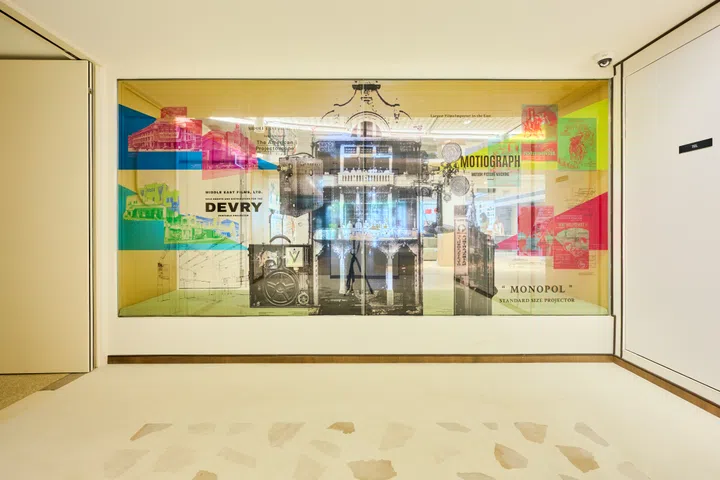
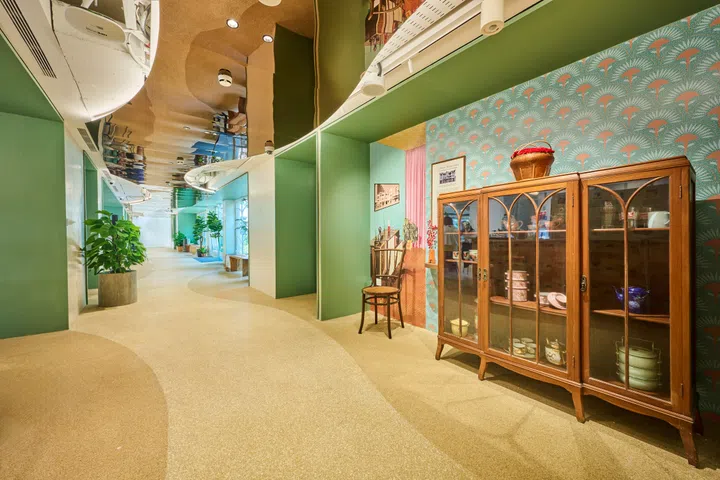
For the “soft touches”, FARM brought a storytelling approach through a unifying ‘Straits identity’ interior scheme — “one defined by timeless tones, subtle material contrasts, and accents of green that draw nature into the interior and garden spaces,” describes Tiah Nan Chyuan, director at FARM.
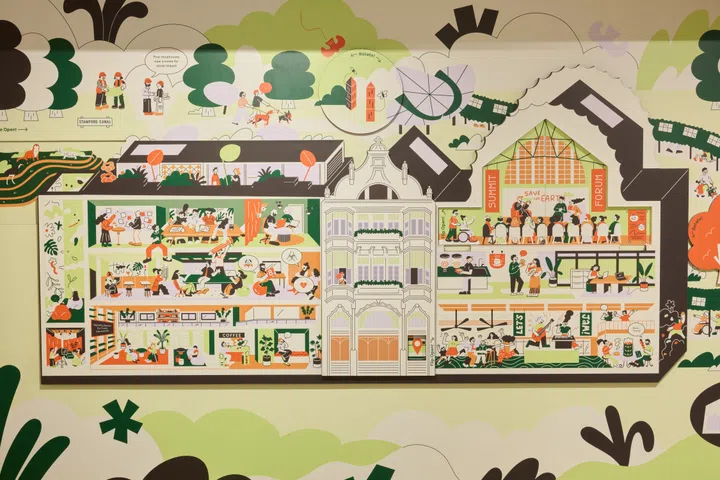
He invited local creatives to contribute to the Singapore story: Lekker Architects conceived an installation at Block A’s air well; Studio Juju designed a Singapore-themed room; Roger & Sons constructed benches out of a fallen tree that was behind the shophouse; Messymsxi drew the wallpapers with narratives of local stories; and AI artist Lip Chiong made an AI film from old photographs.
“Through these partnerships, the interior becomes a platform for local design dialogue — a space that feels both rooted and contemporary,” Tiah comments.
Space for good

The new spaces align with Temasek Shophouse’s latest initiatives. The Temasek Shophouse Collective is a membership programme offering social enterprises, charities and ground-up priority access to the co-working and event spaces at subsidised rates, as well as workshops, mentorship and networking opportunities.
The Impact Storytellers Collective provides training, access to media facilities and opportunities for the production and sharing of impact stories.
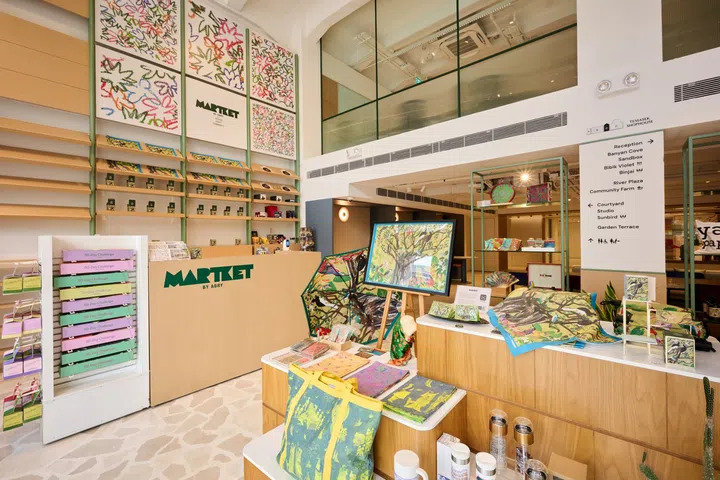
“With more event spaces, we can now host a wider range of activities that make social impact accessible to all. Our partnership with Dementia Singapore, for example, brings together people living with dementia and their caregivers for monthly music sessions, and recently saw the launch of their study on dementia care costs at TSH,” says Tay.
Beyond architectural restoration, this is where the new-and-improved Temasek Shophouse shines — providing a home and space for collaboration, community building and impacting the lives of individuals from all walks of life.