%22%3E%0A%3Cpath%20d%3D%22M412%20101.2H393.7C393.1%20101.2%20392.3%20100.9%20391.8%20100.5C377.3%2087.6004%20362.9%2074.6004%20348.4%2061.6004C344.8%2058.4004%20341.3%2055.2004%20337.7%2052.0004C337.1%2051.5004%20336.2%2051.1004%20335.5%2051.0004C334.2%2050.8004%20333%2051.0004%20331.5%2051.0004V101.1H316.7V0.100391H331.4V44.3004C331.9%2044.3004%20332.2%2044.4004%20332.5%2044.4004C334.9%2044.4004%20337.2%2044.5004%20339.6%2044.4004C340.4%2044.4004%20341.3%2044.0004%20341.8%2043.5004C351.6%2034.4004%20361.4%2025.2004%20371.1%2016.0004C376.5%2010.9004%20381.9%205.90039%20387.3%200.800391C387.9%200.200391%20388.5%200.000390626%20389.3%200.000390626H400.9C384.2%2015.8004%20367.8%2031.3004%20351.2%2047.0004C371.5%2065.0004%20391.8%2082.9004%20412.1%20100.9C412.1%20101%20412.1%20101.1%20412%20101.2ZM180.9%20101.2C184.1%2094.9004%20187.2%2088.9004%20190.3%2082.8004C198.3%2067.3004%20206.2%2051.8004%20214.2%2036.2004C220.3%2024.4004%20226.4%2012.5004%20232.4%200.700391C232.7%200.100391%20233%20-0.0996094%20233.7%20-0.0996094H248.1C248.8%20-0.0996094%20249.2%200.100391%20249.6%200.800391C256%2013.3004%20262.4%2025.7004%20268.8%2038.2004C279.3%2058.6004%20289.8%2079.0004%20300.3%2099.5004C300.5%20100%20300.8%20100.4%20301.1%20101.1C300.5%20101.1%20300.1%20101.2%20299.7%20101.2H286.5C285.6%20101.2%20285.1%20100.9%20284.7%20100.2C280.1%2091.3004%20275.4%2082.4004%20270.8%2073.4004C270.1%2072.1004%20269.3%2071.6004%20267.8%2071.6004H209.9C208.7%2071.6004%20208.1%2072.0004%20207.5%2073.1004C202.9%2082.1004%20198.2%2091.0004%20193.6%20100C193.1%20101%20192.6%20101.3%20191.5%20101.3C188.4%20101.2%20185.3%20101.3%20182.3%20101.3C182%20101.2%20181.6%20101.2%20180.9%20101.2ZM239.1%2011.4004C230%2029.2004%20221.1%2046.7004%20212.1%2064.3004H266.4C257.2%2046.7004%20248.2%2029.2004%20239.1%2011.4004ZM0%200.000390626H43.4C51.2%200.000390626%2058.7%201.20039%2065.7%204.80039C75.9%2010.0004%2078.9%2018.0004%2078.6%2027.4004C78.3%2034.3004%2076%2040.5004%2071.2%2045.5004C67.3%2049.6004%2062.4%2052.3004%2057.1%2054.3004C50.6%2056.7004%2043.9%2058.0004%2037.1%2058.6004C30.1%2059.2004%2023.1%2059.4004%2016.2%2059.7004C15.8%2059.7004%2015.3%2059.8004%2014.8%2059.8004V101.1H0.1C0%2067.4004%200%2033.8004%200%200.000390626ZM14.8%207.10039V52.2004C23.7%2052.4004%2032.6%2052.3004%2041.2%2050.1004C44.4%2049.3004%2047.6%2048.2004%2050.6%2046.7004C58.4%2043.0004%2062.3%2036.7004%2062.7%2028.0004C63%2019.9004%2059.5%2014.1004%2052.4%2010.5004C47.6%208.00039%2042.5%207.10039%2037.2%207.10039H14.8ZM95.9%20101.1V0.100391H167.3V7.20039H110.7V44.7004H158.1V51.9004H110.8V93.9004H171.1V101C146.1%20101.1%20121%20101.1%2095.9%20101.1Z%22%20fill%3D%22black%22%2F%3E%0A%3Cpath%20d%3D%22M35.0004%2025.7996H42.5004V20.6996H44.8004V33.1996H42.6004V27.5996H34.9004V33.2996H32.7004V20.7996H35.0004V25.7996ZM54.4004%2025.8996V27.2996H48.9004V31.6996H55.9004C55.9004%2032.1996%2056.0004%2032.5996%2056.0004%2033.0996H46.5004V20.5996H55.5004V21.8996H49.0004V25.7996C50.7004%2025.8996%2052.5004%2025.8996%2054.4004%2025.8996ZM25.9004%2033.0996H23.5004V21.9996H17.9004V20.6996H31.6004V22.0996H27.1004C26.2004%2022.0996%2025.9004%2022.2996%2025.9004%2023.1996C26.0004%2026.0996%2025.9004%2028.9996%2025.9004%2031.7996V33.0996Z%22%20fill%3D%22black%22%2F%3E%0A%3C%2Fg%3E%0A%3Cdefs%3E%0A%3CclipPath%20id%3D%22clip0_388_462%22%3E%0A%3Crect%20width%3D%22411%22%20height%3D%22101.2%22%20fill%3D%22white%22%2F%3E%0A%3C%2FclipPath%3E%0A%3C%2Fdefs%3E%0A%3C%2Fsvg%3E%0A)
Hotel Review: The Standard Pattaya Na Jomtien wants to change your impression of the beachside city
The newest cool kid on the block in Pattaya city brings some much-needed fresh energy to Thailand’s third-largest city.
By Lu Yawen /
Share this article
Pattaya has a reputation that precedes it. Formerly a fishing village that turned into a beach city filled with neon-lit bars that sprouted up for American sailors’ R&R in the 1960s, it’s famously known for a darker side of tourism. But things have been changing.
In 2018, the Neo Pattaya project commenced development to make the city an economic and investment hub. It was named the centre of Thailand’s Eastern Economic Corridor (EEC), a designated special economic zone.
Though progress has been slow, there’s been a general clean-up of illegal businesses to improve and beautify the city’s infrastructure, with talks to turn the town into a MICE destination.
While the Walking Street, the city’s red light district, still exists along with its customer base of caucasian retirees, the wider Pattaya district attracts Asian tourists (Malaysia, China, and India were the top three countries with the most visiting tourists in the first six months of 2025) who flock to the other manmade attractions — water parks, temples, and zoos nearby.
Further down the coast, in Jomtien, things are noticeably quieter, with residential properties vying for sea views. And it’s here that The Standard Pattaya Na Jomtien has staked its claim, as the fourth Southeast Asian outpost following its opening in Singapore last year.
Hyperlocal design
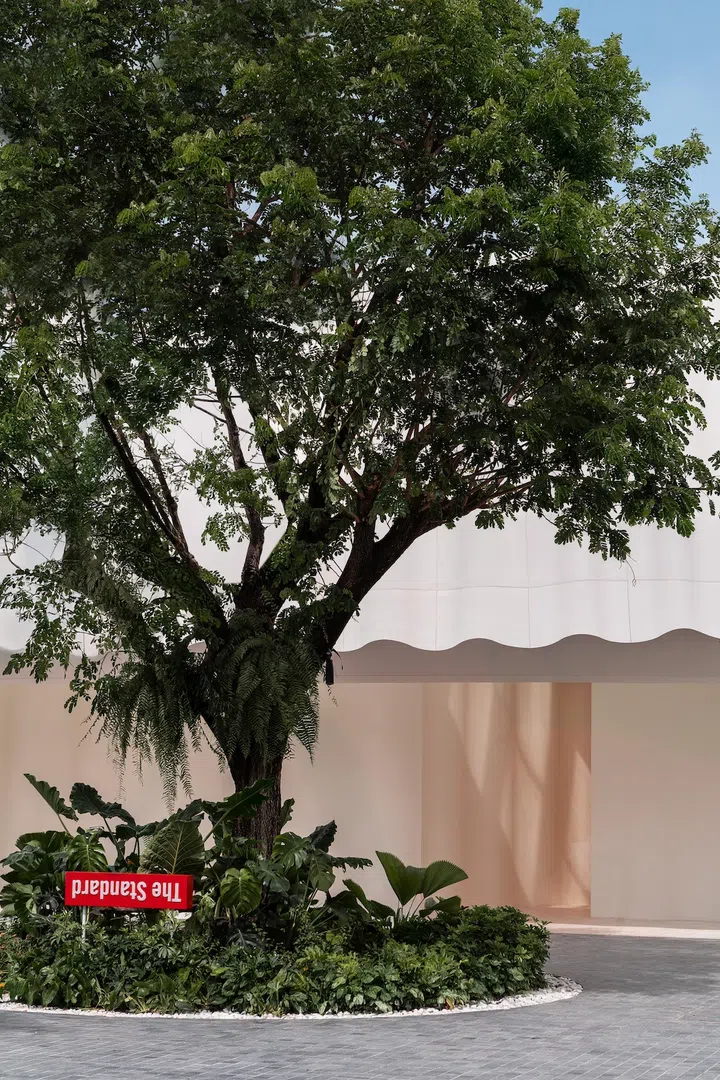
For now, there’s nothing as charismatic in Pattaya yet. Toting a chic and vibrant energy, the lifestyle hotel brand is a stark contrast to the weathered streets. A lifestyle brand synonymous with the buzz of big cities like London and New York, it brings a novel flavour to the coastal town and easily stands apart from the mix of luxury chain hotels and low-tier accommodation.
The first differentiating factor: its design. Tall blank off-white walls greeted us as we drove up to the hotel, a visual reset from the overwhelming sights and sounds of central Pattaya.
A narrow walkway to the lobby snakes inwards, flanked by smooth, undulating curves, then opens into an airy courtyard adorned with an expressive palette of earthen tones.
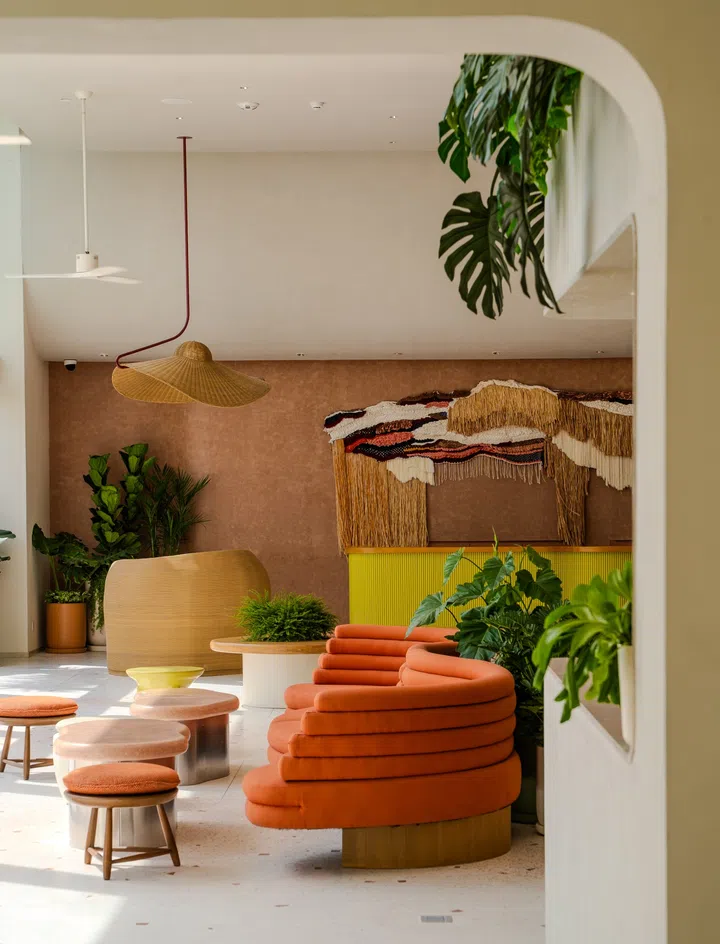
The Standard’s modernist DNA is evident and at times exaggerated, acting as the blank slate for a much-appreciated hyperlocal Thai design; its interiors are done by DIN Studio (responsible for the popular Supanniga restaurant in Bangkok) and women-led Studio Lupine, architecture by ONION, and landscaping by PLA.
Thai collective The Yarn Story Studio’s woven textile artwork hangs in the main lobby and the group check-in area, adding organic textures to the clean lines aesthetic.
The property’s sole international artist is Chloé Kelly Miller, a 30-year-old French artist known for her surrealistic and neo-expressionist visual artworks, who had her first international show in Bangkok three years ago.
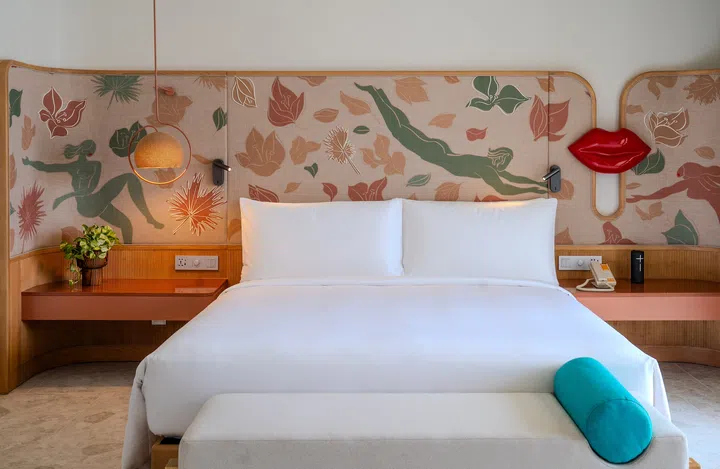
Her hand-carved stone sculptures, named Unity of the Double, inject a sense of playfulness that sets the tone for the look of all the 161 rooms and suites.
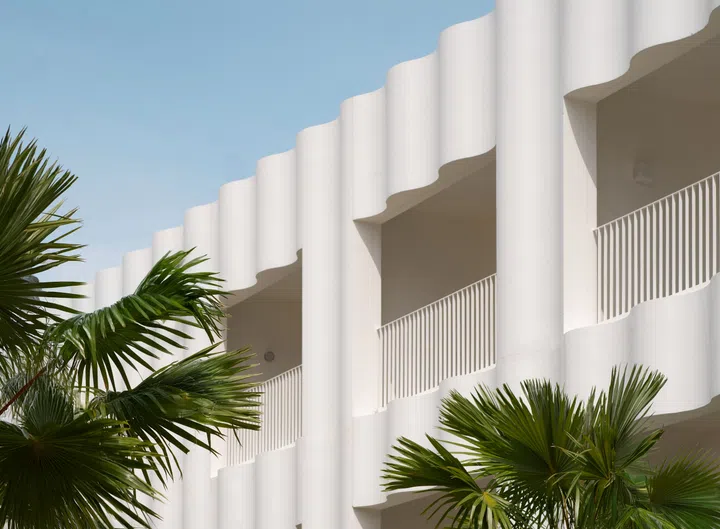
Most of the 11 accommodation options are situated in the main building, except for the Penthouse and Deluxe One Bedroom Suites with Ocean View and Private Pool, which peek out into the common pool area.
The rooms are functional, with fun details such as terrazzo flooring, a red lip lamp that dims into a nightlight, geometric-shaped yellow glass wardrobes, and a portable JBL speaker.
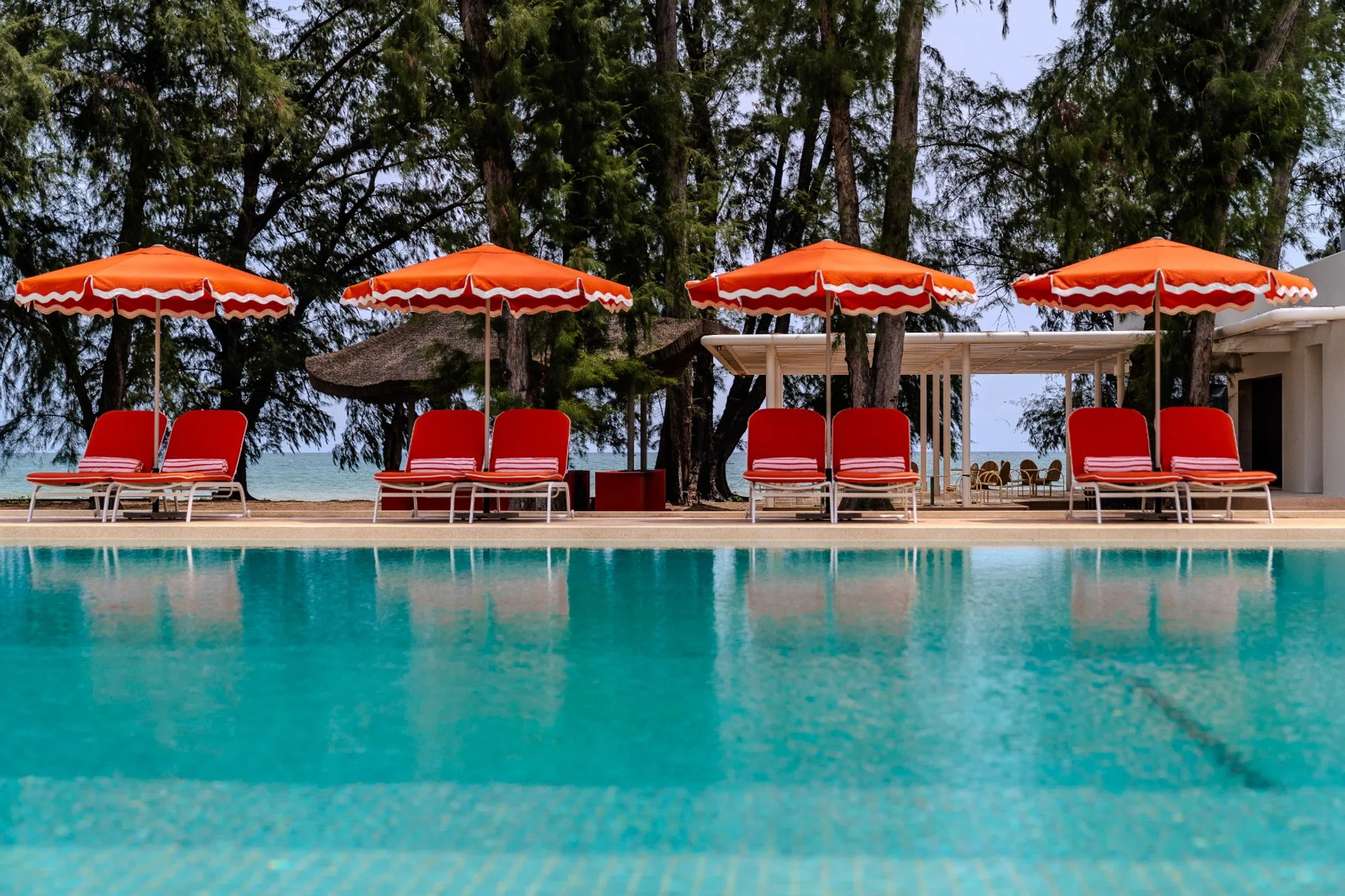
A similar colour theme extends to the rest of the common areas, including the pool, the brand’s first beach club, Esmé, and the all-day dining restaurant Sereia. There’s also Mmhmmm, an adults-only social spa that was still in completion when I visited in September, before its official opening. It promises a bar, a mud lounge, an ice bath, and a pool overlooking the beach.
Breaking new territory
There’s a sense of restraint in the hotel’s party persona, perhaps from the recent acquisition by Hyatt last year, or to suit the more family-friendly Na Jomtien clientele. There’s even a spacious kids’ club called The Hut. Instead, slowness and relaxation are encouraged with a certain debauchery still at arm’s length, of course.
Unlike its city counterparts, The Standard Pattaya Na Jomtien has the luxury of space. Transitional zones, such as corridors and breezeways, are kept empty and clean (though we’re told they could be used as pop-up galleries in the future), offering pockets to pause.
One even has a circle cut-out in the ceiling, reminiscent of the Rue Nishizawa-designed Teshima Art Museum in Japan, as daylight carves moving shadows onto the floor.
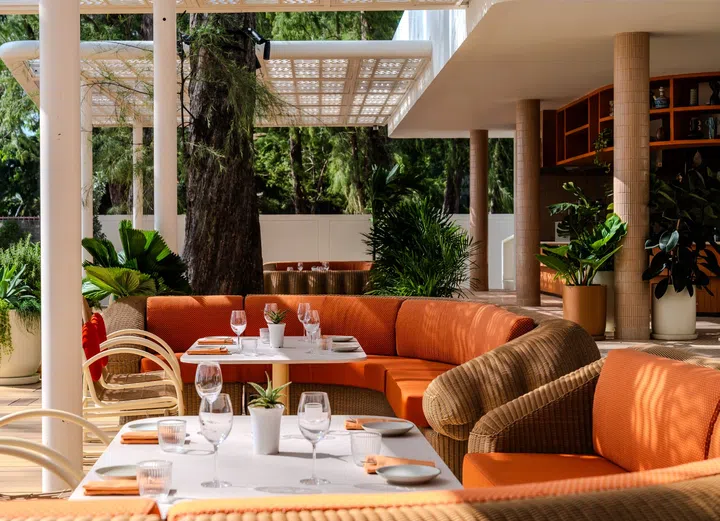
Party vibes are dialled up as the sun sets, and Esmé comes alive with loungey house beats and a short meditative handpan performance. Helmed by chefs Gaby Espinosa and Diego Zarco of Mexican eatery Delia in Bangkok’s Chinatown, the beach club’s nosh ranges from elevated street food to grilled seafood, designed to be eaten in small bites between sips of Micheladas or margaritas.
Halfway through dinner, for reasons unclear, we were treated to a sparkler dance procession and coloured shooters.
There are plans to host major pool parties and partnerships with large festivals held nearby, such as Wonderfruit, Tomorrowland, and Pelupo. In fact, I set up base not too far from the hotel when I attended Wonderfruit for the third time two years ago.
Between multi-night raves and the chaos of festivals, The Standard Pattaya Na Jomtien seems like it could be the perfect place to recharge before going at it again.
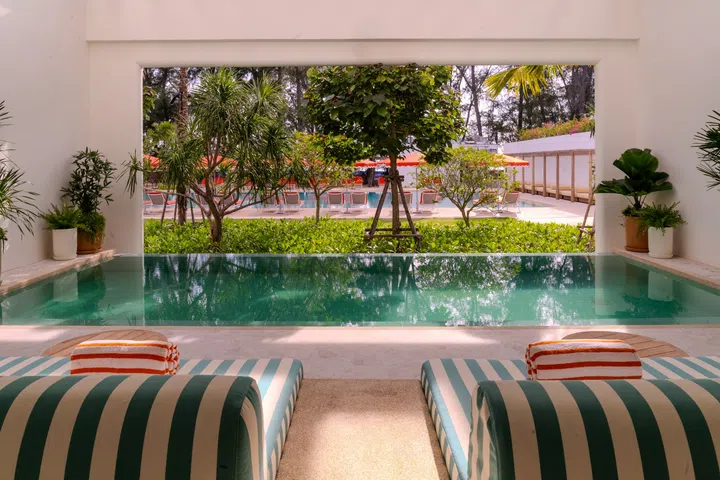
Undoubtedly, Pattaya’s newest cool kid on the block does have the hardware it needs, but there’s more to personality than style. After all, each of The Standard’s properties creates its own brand of playfulness that reflects the city it’s in.
And in the next few years, I’m looking forward to seeing how this outpost melds legendary Thai high energy with a slower pace and more intentional coterie.