%22%3E%0A%3Cpath%20d%3D%22M412%20101.2H393.7C393.1%20101.2%20392.3%20100.9%20391.8%20100.5C377.3%2087.6004%20362.9%2074.6004%20348.4%2061.6004C344.8%2058.4004%20341.3%2055.2004%20337.7%2052.0004C337.1%2051.5004%20336.2%2051.1004%20335.5%2051.0004C334.2%2050.8004%20333%2051.0004%20331.5%2051.0004V101.1H316.7V0.100391H331.4V44.3004C331.9%2044.3004%20332.2%2044.4004%20332.5%2044.4004C334.9%2044.4004%20337.2%2044.5004%20339.6%2044.4004C340.4%2044.4004%20341.3%2044.0004%20341.8%2043.5004C351.6%2034.4004%20361.4%2025.2004%20371.1%2016.0004C376.5%2010.9004%20381.9%205.90039%20387.3%200.800391C387.9%200.200391%20388.5%200.000390626%20389.3%200.000390626H400.9C384.2%2015.8004%20367.8%2031.3004%20351.2%2047.0004C371.5%2065.0004%20391.8%2082.9004%20412.1%20100.9C412.1%20101%20412.1%20101.1%20412%20101.2ZM180.9%20101.2C184.1%2094.9004%20187.2%2088.9004%20190.3%2082.8004C198.3%2067.3004%20206.2%2051.8004%20214.2%2036.2004C220.3%2024.4004%20226.4%2012.5004%20232.4%200.700391C232.7%200.100391%20233%20-0.0996094%20233.7%20-0.0996094H248.1C248.8%20-0.0996094%20249.2%200.100391%20249.6%200.800391C256%2013.3004%20262.4%2025.7004%20268.8%2038.2004C279.3%2058.6004%20289.8%2079.0004%20300.3%2099.5004C300.5%20100%20300.8%20100.4%20301.1%20101.1C300.5%20101.1%20300.1%20101.2%20299.7%20101.2H286.5C285.6%20101.2%20285.1%20100.9%20284.7%20100.2C280.1%2091.3004%20275.4%2082.4004%20270.8%2073.4004C270.1%2072.1004%20269.3%2071.6004%20267.8%2071.6004H209.9C208.7%2071.6004%20208.1%2072.0004%20207.5%2073.1004C202.9%2082.1004%20198.2%2091.0004%20193.6%20100C193.1%20101%20192.6%20101.3%20191.5%20101.3C188.4%20101.2%20185.3%20101.3%20182.3%20101.3C182%20101.2%20181.6%20101.2%20180.9%20101.2ZM239.1%2011.4004C230%2029.2004%20221.1%2046.7004%20212.1%2064.3004H266.4C257.2%2046.7004%20248.2%2029.2004%20239.1%2011.4004ZM0%200.000390626H43.4C51.2%200.000390626%2058.7%201.20039%2065.7%204.80039C75.9%2010.0004%2078.9%2018.0004%2078.6%2027.4004C78.3%2034.3004%2076%2040.5004%2071.2%2045.5004C67.3%2049.6004%2062.4%2052.3004%2057.1%2054.3004C50.6%2056.7004%2043.9%2058.0004%2037.1%2058.6004C30.1%2059.2004%2023.1%2059.4004%2016.2%2059.7004C15.8%2059.7004%2015.3%2059.8004%2014.8%2059.8004V101.1H0.1C0%2067.4004%200%2033.8004%200%200.000390626ZM14.8%207.10039V52.2004C23.7%2052.4004%2032.6%2052.3004%2041.2%2050.1004C44.4%2049.3004%2047.6%2048.2004%2050.6%2046.7004C58.4%2043.0004%2062.3%2036.7004%2062.7%2028.0004C63%2019.9004%2059.5%2014.1004%2052.4%2010.5004C47.6%208.00039%2042.5%207.10039%2037.2%207.10039H14.8ZM95.9%20101.1V0.100391H167.3V7.20039H110.7V44.7004H158.1V51.9004H110.8V93.9004H171.1V101C146.1%20101.1%20121%20101.1%2095.9%20101.1Z%22%20fill%3D%22black%22%2F%3E%0A%3Cpath%20d%3D%22M35.0004%2025.7996H42.5004V20.6996H44.8004V33.1996H42.6004V27.5996H34.9004V33.2996H32.7004V20.7996H35.0004V25.7996ZM54.4004%2025.8996V27.2996H48.9004V31.6996H55.9004C55.9004%2032.1996%2056.0004%2032.5996%2056.0004%2033.0996H46.5004V20.5996H55.5004V21.8996H49.0004V25.7996C50.7004%2025.8996%2052.5004%2025.8996%2054.4004%2025.8996ZM25.9004%2033.0996H23.5004V21.9996H17.9004V20.6996H31.6004V22.0996H27.1004C26.2004%2022.0996%2025.9004%2022.2996%2025.9004%2023.1996C26.0004%2026.0996%2025.9004%2028.9996%2025.9004%2031.7996V33.0996Z%22%20fill%3D%22black%22%2F%3E%0A%3C%2Fg%3E%0A%3Cdefs%3E%0A%3CclipPath%20id%3D%22clip0_388_462%22%3E%0A%3Crect%20width%3D%22411%22%20height%3D%22101.2%22%20fill%3D%22white%22%2F%3E%0A%3C%2FclipPath%3E%0A%3C%2Fdefs%3E%0A%3C%2Fsvg%3E%0A)
Beyond the clean-up: Bali’s waste management changemakers are confronting its pollution crisis
As plastic pollution continues to strain Bali’s environment, community-led organisations are exposing the limits of clean-ups and short-term fixes — and the deeper structural work required to manage waste at scale.
By Zawani Abdul Ghani /
Share this article
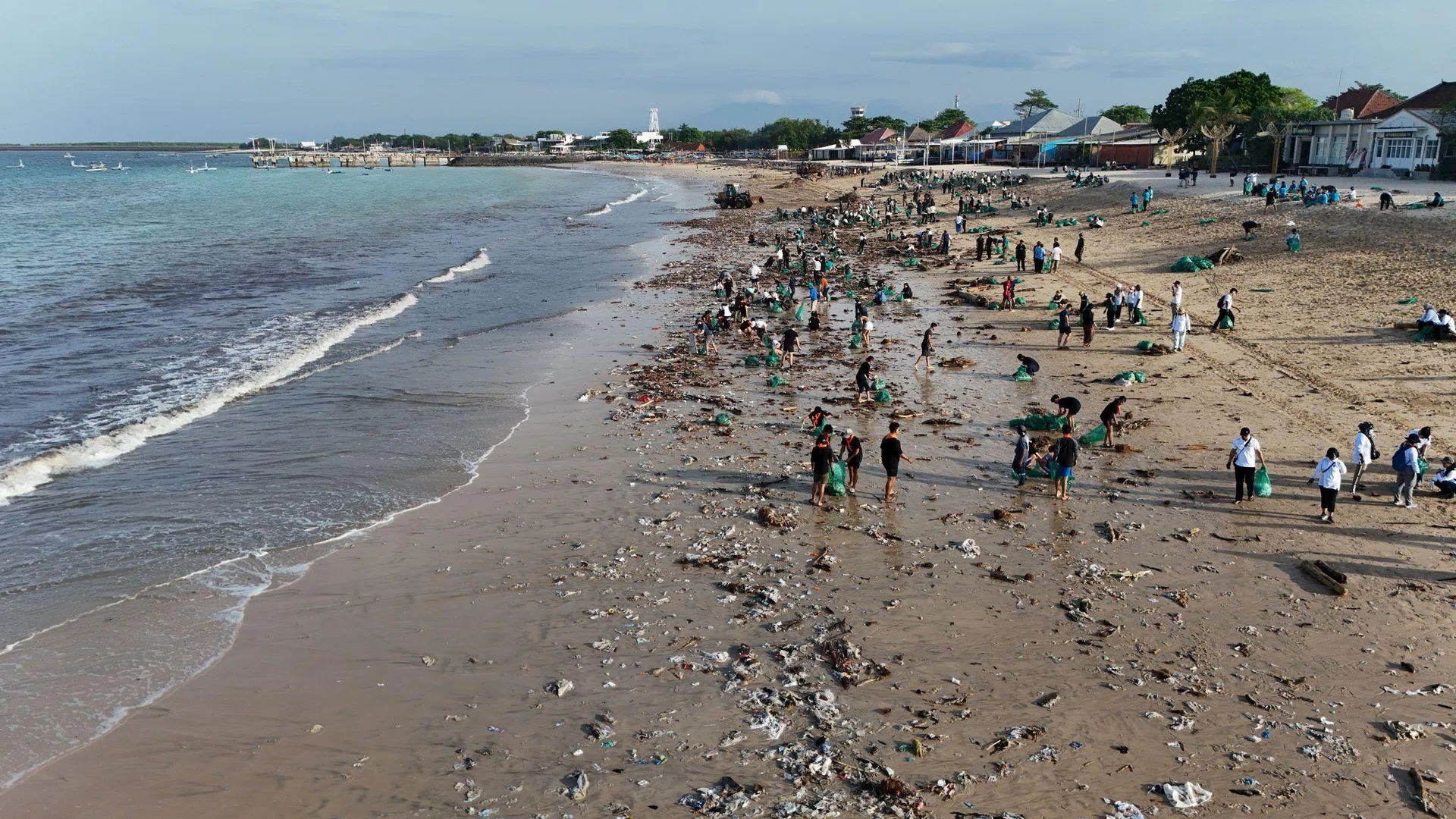
Bali’s waste problem is easy to recognise, and harder to truly understand. After the monsoon season, rivers swell, and beaches darken with debris — plastic sachets, food packaging, fragments of daily life carried downstream. These images travel quickly, ricocheting across social media and international headlines, reinforcing a familiar narrative of paradise under threat.
But what plays out along Bali’s coastlines is only the final act of a much longer story. Long before waste reaches the sea, it moves through villages without collection services, households without clear systems, and landfills already stretched beyond capacity.
What presents itself as an environmental crisis is, at its core, a question of infrastructure, behaviour, and responsibility — one that cannot be solved through clean-ups alone.
For Amanda Marcella, sustainability director at Community Waste Project, the most consequential part of the problem is also the least visible. “The real issue starts much earlier, with how much we buy and bring in,” she says. “That part isn’t dramatic. It doesn’t look like a crisis. But it’s where the biggest impact actually is.”
For organisations working on the ground, the challenge is not simply to intercept waste once it becomes visible, but to confront the systems — economic, political, and cultural — that allow it to accumulate quietly for years before anyone pays attention.
When policy meets volume
Bali’s waste challenge is reflected not only in viral beach clean-up photos, but in hard numbers and uneven policy responses. The island generates an estimated 1.6 million tonnes of waste each year, a significant portion of it plastic that evades formal recycling systems.
In recent years, the provincial government has taken steps to curb pollution at its source, including an April 2025 ban on the production and distribution of single-use plastic water bottles under one litre.
Yet, regulation has struggled to keep pace with reality. Across Indonesia — Bali included — waste systems remain under strain, with overflowing dumpsites, unregulated burning, and persistent leakage into waterways that eventually feed the ocean.
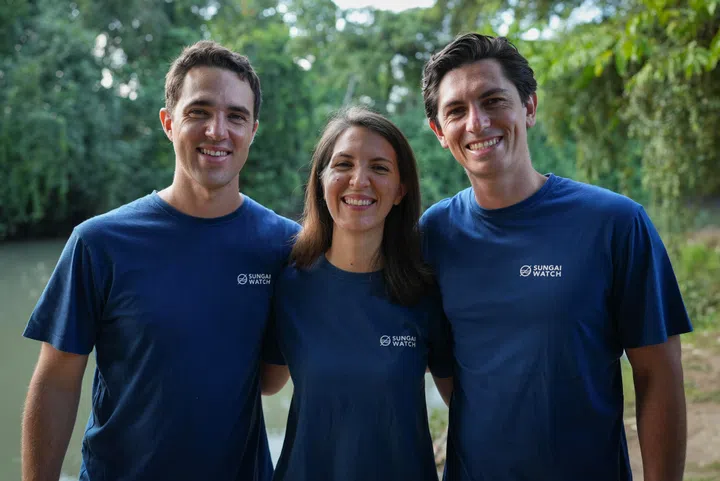
“What we see on the beach is the end of an entire ecosystem of failure,” says Sam Bencheghib, co-founder of Sungai Watch. “By the time trash reaches a tourist beach, it has already travelled through communities that don’t have access to basic waste management. The real battle is upstream.”
That upstream reality has complicated the idea of responsibility. Tourism — a cornerstone of Bali’s economy — contributes heavily to the island’s waste load, prompting officials to press hotels and resorts to take greater accountability for what they generate.
But for many communities, the consequences of inaction are immediate, regardless of who the waste ultimately serves.
Rivers as the first point of failure
Rivers make this imbalance impossible to ignore. If beaches are where Bali’s waste crisis is photographed, rivers are where it is formed — slowly, invisibly, and far from public attention.
Sungai Watch, founded in 2020 by Bencheghib and his siblings (Gary and Kelly), arrived at this conclusion early on. Weekly beach clean-ups, Bencheghib recalls, offered little more than momentary relief. “We’d clean a beach on Saturday, and by Sunday it would be covered again,” he says. “That’s when we realised we were treating symptoms, not the disease.”
The problem, as he saw it, was not simply the plastic already in the water, but what lay upstream: villages without collection services, households with no viable alternatives, and systems that demanded behaviour change without providing infrastructure.
Rivers, cutting across these realities, became a kind of diagnostic tool — showing how waste moves, accumulates, and ultimately escapes.
Sungai Watch’s river barriers — now installed across hundreds of waterways — were designed to interrupt that flow. Simple in design, they prevent plastic from reaching the sea while making the problem visible to communities living alongside it.
A clogged barrier is difficult to ignore; it forces a confrontation with what would otherwise pass unnoticed.
But Bencheghib is careful not to frame interception as a solution in itself. “Interception without behaviour change is just an expensive band-aid,” he says. “It buys time, but it doesn’t fix the root problem.”
That root problem, in his view, is access — to waste services, to affordable alternatives, to systems that make better choices possible. “When income is low, and single-use sachets are the cheapest option, blaming consumers misses the point,” he adds. “This is a design problem — created far away from the rivers it pollutes.”
The barriers do not solve Bali’s waste crisis, but they make it harder to deny — shifting the conversation from what washes up on shore to what flows through the island every day.
Once waste is removed from a river or collected from a property, it enters the least understood phase of Bali’s waste system — the point where materials are either properly handled or quietly lost.
This is where Community Waste Project, founded in October 2024, operates.
The organisation works primarily with businesses — particularly in hospitality, such as Brunch Club, Finns Beach Club, Kynd Community — to manage what happens after waste leaves the bin.
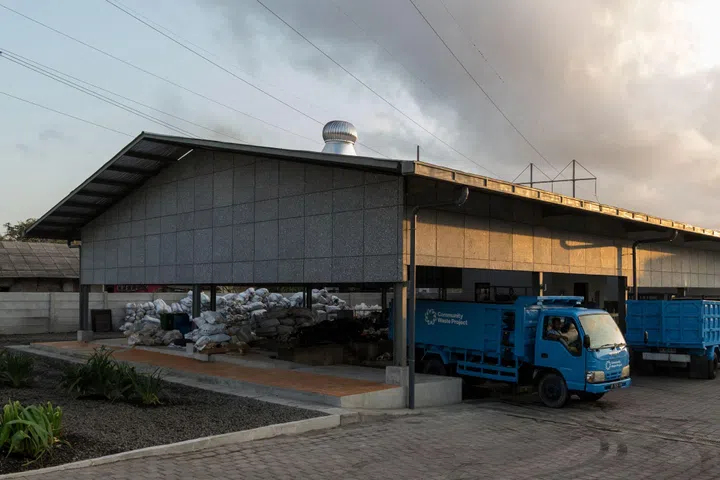
Instead of sending mixed refuse directly to landfills or third-party collectors, waste is separated at source, then transported to the organisation’s zero-waste facility, where it is processed in full view of the system to which it belongs.
“At the centre, waste doesn’t disappear,” says Marcella. “It’s weighed, sorted again, cleaned, processed, and transformed. Every step is intentional.”
Organic waste is composted or sent to local pig farms. Certain plastics are cleaned, shredded, and remade into usable materials. Other recyclables are channelled through verified downstream partners. What cannot be reused is documented and treated as a last resort rather than a default.
The point, Marcella explains, is not perfection. It is accountability.
“Waste has been engineered to vanish from our consciousness,” she says. “You put it in a bin, and someone else deals with it. That’s where responsibility ends.”
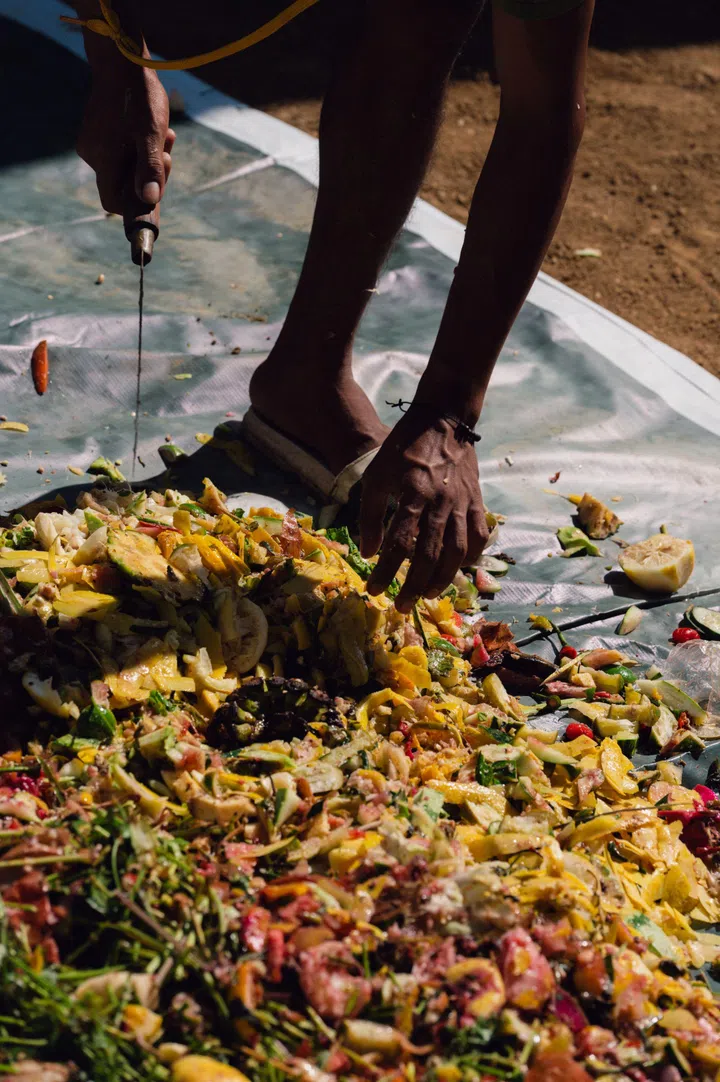
By slowing the system down, Community Waste Project makes waste legible again. Businesses receive monthly reports detailing how much waste they generate and where it goes.
“When people see real numbers — not estimates — behaviour starts to change,” Marcella says. “Teams become more careful. More curious. They start asking where waste comes from, not just where it goes.”
Her own perspective shifted in the same way. “At the beginning, I thought this was a technical problem,” she says. “Better machines, better infrastructure. Over time, I realised it’s mostly about people — habits, routines, consistency.”
This position — between collection and disposal — gives Community Waste Project a particular vantage point on Bali’s waste crisis. They see what happens when materials are mixed too early, rushed through the system, or treated as someone else’s problem. They also see how much waste could be avoided altogether.
“Reduce, reuse, recycle sounds simple,” Marcella says. “But it really starts with buying less and being more thoughtful. That part isn’t dramatic, and it’s definitely not Instagrammable. But it’s where the biggest impact actually is.”
When systems don’t last, communities pay
For all the attention given to rivers and processing facilities, the durability of Bali’s waste system ultimately hinges on something more fragile: whether communities are supported long enough for new systems to take root.
This is where Merah Putih Hijau puts in the work — often in villages far from centralised landfills, where waste collection is unreliable or entirely absent. In these areas, waste does not wait for policy to catch up. It is burned, dumped, or washed into irrigation channels out of necessity.
“Waste generation happens every day,” says Hermitianta Prasetya Putra, the organisation’s programme director. “If there is no system, people will create their own — even if it damages their environment.”
Since 2016, Merah Putih Hijau’s work has focused on what happens after a facility is built. Decentralised waste processing centres such as TPS 3R are often introduced as technical fixes — concrete structures meant to absorb household waste and divert it from landfills.
However, Hermitianta has seen how easily these facilities fail when treated as endpoints rather than as parts of a wider ecosystem.
“Many TPS 3R facilities are launched with optimism, then left without long-term assistance,” he explains. “They’re expected to become self-sufficient almost immediately. Without business planning, professional support, or consistent enforcement, they are planned to fail.”
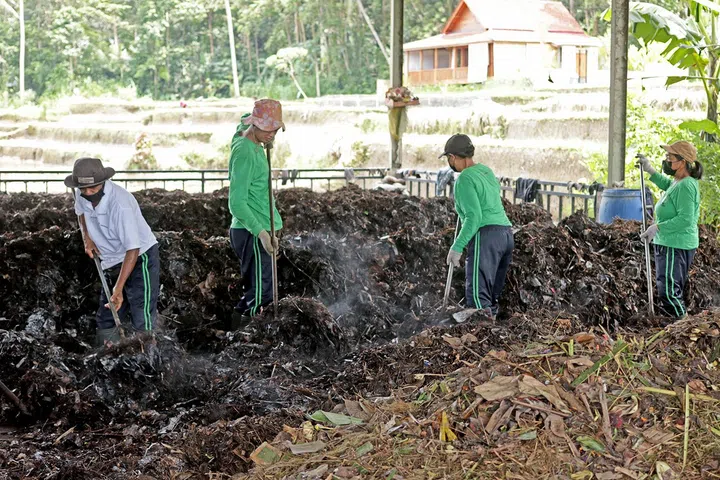
When that happens, the burden does not disappear. It shifts back onto households, farmers, and informal workers — the very communities the facilities were meant to support. Waste leaks into rivers. Burning resumes. Trust in new systems erodes.
For Hermitianta, the issue is not a lack of technical knowledge. “The idea that Bali’s waste problem exists because we don’t know what to do is a misconception,” he says. “We have the research. We have the models. What’s missing is coordination, long-term commitment, and political consistency.”
Behaviour change, he adds, cannot be separated from economic reality. In some villages, separation rates improve rapidly once systems become reliable and fair. In others, residents are willing to pay more simply to maintain familiar habits.
“Information alone doesn’t change behaviour,” Hermitianta says. “Time, convenience, cost — these shape decisions far more than awareness.”
This is why Merah Putih Hijau places so much emphasis on community ownership. Systems designed with villages, rather than imposed upon them, are more likely to survive leadership changes, funding gaps, and shifting political priorities.
“When people see the system as ‘ours’ rather than ‘a project’, participation becomes normal,” Hermitianta explains.
His concern, looking ahead, is not collapse, but stagnation — a cycle in which pilot programmes are endlessly repeated while underlying structures remain untouched. Without alignment between policy, infrastructure, and community governance, he warns, Bali risks moving from one waste crisis to the next without ever resolving the conditions that create them.
What it will take to hold
Across these different approaches, a shared understanding emerges: Bali’s waste crisis will not be solved by a single intervention, organisation, or policy. Clean-ups that don’t involve processing merely move the problem. Infrastructure without education fails to change behaviour. Community systems without long-term support struggle to survive.
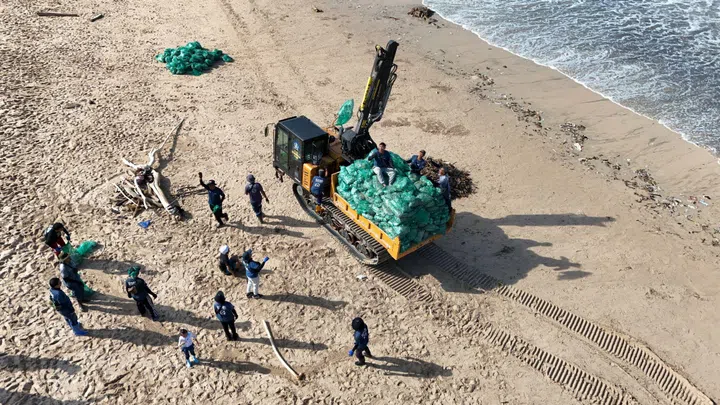
“There’s no one solution to this,” Marcella says. “It’s daily work, done consistently, across many hands.”
For Bencheghib, time is a scarce resource. “Interception buys time,” he says. “But time only matters if you use it to change the system upstream.”
For Hermitianta, the risk is structural. Without alignment between policy, infrastructure, and community ownership, Bali risks cycling endlessly between crisis response and short-lived reform.
What effective waste management looks like, then, is deliberately unremarkable: waste separated at source; local recyclers supported; landfills used sparingly; data shared; responsibilities clearly assigned.
In Bali, the most meaningful shift may not be whether waste disappears altogether, but whether the systems built to manage it are finally allowed to hold.