%22%3E%0A%3Cpath%20d%3D%22M412%20101.2H393.7C393.1%20101.2%20392.3%20100.9%20391.8%20100.5C377.3%2087.6004%20362.9%2074.6004%20348.4%2061.6004C344.8%2058.4004%20341.3%2055.2004%20337.7%2052.0004C337.1%2051.5004%20336.2%2051.1004%20335.5%2051.0004C334.2%2050.8004%20333%2051.0004%20331.5%2051.0004V101.1H316.7V0.100391H331.4V44.3004C331.9%2044.3004%20332.2%2044.4004%20332.5%2044.4004C334.9%2044.4004%20337.2%2044.5004%20339.6%2044.4004C340.4%2044.4004%20341.3%2044.0004%20341.8%2043.5004C351.6%2034.4004%20361.4%2025.2004%20371.1%2016.0004C376.5%2010.9004%20381.9%205.90039%20387.3%200.800391C387.9%200.200391%20388.5%200.000390626%20389.3%200.000390626H400.9C384.2%2015.8004%20367.8%2031.3004%20351.2%2047.0004C371.5%2065.0004%20391.8%2082.9004%20412.1%20100.9C412.1%20101%20412.1%20101.1%20412%20101.2ZM180.9%20101.2C184.1%2094.9004%20187.2%2088.9004%20190.3%2082.8004C198.3%2067.3004%20206.2%2051.8004%20214.2%2036.2004C220.3%2024.4004%20226.4%2012.5004%20232.4%200.700391C232.7%200.100391%20233%20-0.0996094%20233.7%20-0.0996094H248.1C248.8%20-0.0996094%20249.2%200.100391%20249.6%200.800391C256%2013.3004%20262.4%2025.7004%20268.8%2038.2004C279.3%2058.6004%20289.8%2079.0004%20300.3%2099.5004C300.5%20100%20300.8%20100.4%20301.1%20101.1C300.5%20101.1%20300.1%20101.2%20299.7%20101.2H286.5C285.6%20101.2%20285.1%20100.9%20284.7%20100.2C280.1%2091.3004%20275.4%2082.4004%20270.8%2073.4004C270.1%2072.1004%20269.3%2071.6004%20267.8%2071.6004H209.9C208.7%2071.6004%20208.1%2072.0004%20207.5%2073.1004C202.9%2082.1004%20198.2%2091.0004%20193.6%20100C193.1%20101%20192.6%20101.3%20191.5%20101.3C188.4%20101.2%20185.3%20101.3%20182.3%20101.3C182%20101.2%20181.6%20101.2%20180.9%20101.2ZM239.1%2011.4004C230%2029.2004%20221.1%2046.7004%20212.1%2064.3004H266.4C257.2%2046.7004%20248.2%2029.2004%20239.1%2011.4004ZM0%200.000390626H43.4C51.2%200.000390626%2058.7%201.20039%2065.7%204.80039C75.9%2010.0004%2078.9%2018.0004%2078.6%2027.4004C78.3%2034.3004%2076%2040.5004%2071.2%2045.5004C67.3%2049.6004%2062.4%2052.3004%2057.1%2054.3004C50.6%2056.7004%2043.9%2058.0004%2037.1%2058.6004C30.1%2059.2004%2023.1%2059.4004%2016.2%2059.7004C15.8%2059.7004%2015.3%2059.8004%2014.8%2059.8004V101.1H0.1C0%2067.4004%200%2033.8004%200%200.000390626ZM14.8%207.10039V52.2004C23.7%2052.4004%2032.6%2052.3004%2041.2%2050.1004C44.4%2049.3004%2047.6%2048.2004%2050.6%2046.7004C58.4%2043.0004%2062.3%2036.7004%2062.7%2028.0004C63%2019.9004%2059.5%2014.1004%2052.4%2010.5004C47.6%208.00039%2042.5%207.10039%2037.2%207.10039H14.8ZM95.9%20101.1V0.100391H167.3V7.20039H110.7V44.7004H158.1V51.9004H110.8V93.9004H171.1V101C146.1%20101.1%20121%20101.1%2095.9%20101.1Z%22%20fill%3D%22black%22%2F%3E%0A%3Cpath%20d%3D%22M35.0004%2025.7996H42.5004V20.6996H44.8004V33.1996H42.6004V27.5996H34.9004V33.2996H32.7004V20.7996H35.0004V25.7996ZM54.4004%2025.8996V27.2996H48.9004V31.6996H55.9004C55.9004%2032.1996%2056.0004%2032.5996%2056.0004%2033.0996H46.5004V20.5996H55.5004V21.8996H49.0004V25.7996C50.7004%2025.8996%2052.5004%2025.8996%2054.4004%2025.8996ZM25.9004%2033.0996H23.5004V21.9996H17.9004V20.6996H31.6004V22.0996H27.1004C26.2004%2022.0996%2025.9004%2022.2996%2025.9004%2023.1996C26.0004%2026.0996%2025.9004%2028.9996%2025.9004%2031.7996V33.0996Z%22%20fill%3D%22black%22%2F%3E%0A%3C%2Fg%3E%0A%3Cdefs%3E%0A%3CclipPath%20id%3D%22clip0_388_462%22%3E%0A%3Crect%20width%3D%22411%22%20height%3D%22101.2%22%20fill%3D%22white%22%2F%3E%0A%3C%2FclipPath%3E%0A%3C%2Fdefs%3E%0A%3C%2Fsvg%3E%0A)
Four youth organisations making a meaningful impact on Singapore’s next generation
On World Day of Social Justice, we highlight four youth development organisations that help young people overcome systemic barriers and shape their own futures.
By Toh Ee Ming /
Share this article
Bleak prospects for graduating youths dominate the conversation in a world that doesn’t always feel hopeful. Intergenerational trauma, poverty, systemic inequities, and unequal access to education and mentorship still shape which youths get opportunities — and which don’t.
When youth development is framed solely as leadership positions, achievements, or accolades, it can be excluded from social justice conversations. The quieter gaps — who feel they belong, who have role models, who access networks — become easier to ignore.
This World Day of Social Justice (February 20), we focus on youth development: the belief that every young person deserves a future shaped by their talents and choices, not predetermined by family income, school, or social networks.
More critically, future-readiness isn’t just an individual pursuit — it’s shaped by the broader systems and environments in which young people grow up. Youth development is a shared responsibility across families, schools, workplaces, and communities, and the stakes are urgent: critical trajectories can narrow quickly if support isn’t in place.
As Ivy Tse, CEO of Halogen Singapore, puts it: “Youth development can sometimes feel intangible compared to issues like housing, healthcare, or wages — yet the young people growing up in those systems are the ones who will inherit and eventually shape them.
In Singapore, we are good at talking about academic pathways and employability, but less comfortable talking about voice, agency and how we prepare a generation we’ll eventually hand the baton to.”
“But if we recognise that investing in a young person’s confidence, relationships, and networks is one way we correct structural imbalances that society creates, then youth work stops being a “nice-to-have” and becomes essential to how we build a fairer, more resilient society,” she adds.
Ahead, The Peak Singapore profiles four youth development organisations driving real change for young people.
Access Singapore
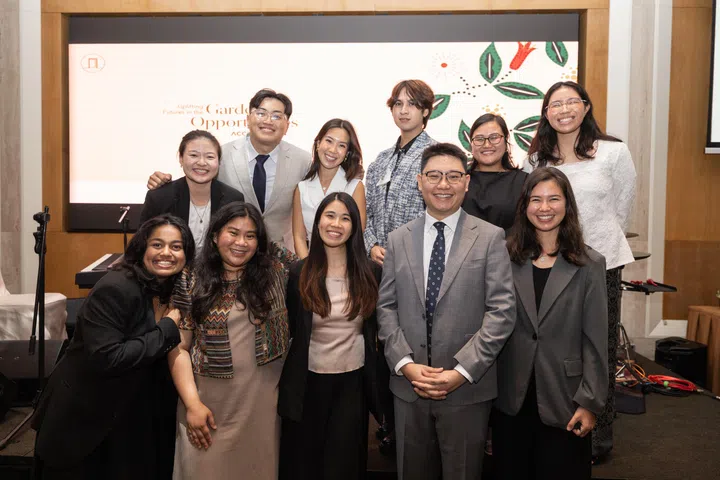
As a former Normal (Academic) student, Clarence Ching grew up acutely aware of the stark differences in access to social capital and career resources between students in elite and neighbourhood schools. In 2019, while still at university, he founded Access Singapore to address the issue of youths falling through the cracks.
What began with Ching cold-emailing corporations to make the case for social mobility through career guidance has since grown into a full-fledged Institution of a Public Character (IPC) charity.
Today, Access Singapore supports youth throughout the education-to-work journey — an approach that sets it apart in a landscape where many programmes intervene only briefly at critical transition points.
That philosophy is reflected in Access’s two flagship initiatives. The Access Career Exploration (ACE!) programme supports secondary school and junior college students through early exposure to mentorship, skills-building and real-world problem-solving, while the Access Fellowship Programme (AFP) provides bursary-supported tertiary students with sustained corporate mentorship and professional development.
All participants remain connected through the Access Alumni Network, which offers ongoing support and opportunities to give back, ensuring long-term impact.
As of December 2025, Access has supported over 3,400 students across 35 school partners, including ITE Colleges and heartland secondary schools, and works with over 35 corporate and government partners such as LinkedIn, the British High Commission, Marina Bay Sands, and the Ministry of Culture, Community and Youth (MCCY).
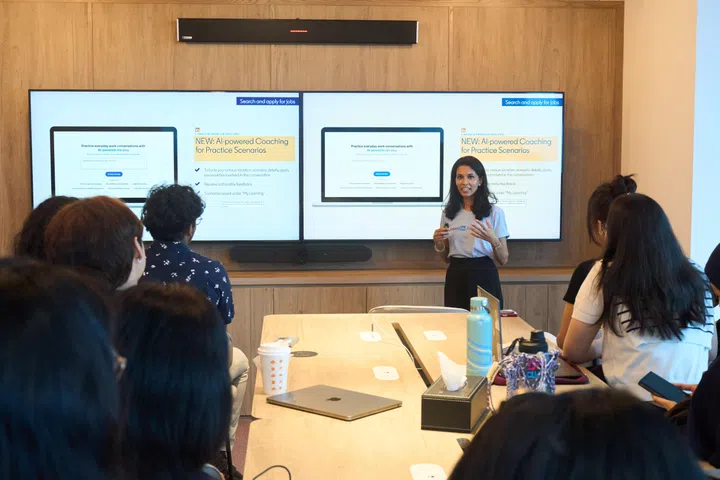
In January, Access launched Access Apprenticeships, a structured, paid talent programme designed to open doors to established companies such as EY, bp, and Pontiac Land Group and fast-track young people into the workforce. Developed in response to surveys highlighting the difficulty polytechnic graduates face in securing jobs after graduation, the initiative provides competitive remuneration, peer support, and coaching.
The impact of this sustained support is evident in stories like Jia Jun’s. Raised in a fractured household, disengaged from school, and unable to secure an ITE course after Secondary 4, he enlisted in National Service early before eventually enrolling in the NITEC Mechanical Engineering programme.
After a lecturer recommended he join the Access Fellowship Programme, he found mentors who continue to guide him to this day. He has since won the Lee Kuan Yew Technology Award and received the Edusave Award.
Although eligible for polytechnic, he chose the Higher NITEC for its industry focus and AI-powered internships, carving out a path that may be unconventional but is firmly his own.
“Access taught me that growth isn’t just about skills or opportunities — it’s about having someone who sees your potential before you do,” Jia Jun says. “That’s what my mentors gave me, and I carry it with me every single day.”
For Ching, youth development is often relegated to the “soft” side of social justice — seen as important but not urgent, developmental rather than structural. “We have a cultural tendency to individualise youth struggles. When a young person does not succeed academically, we ask, ‘What’s wrong with them?’ rather than, ‘What systems are failing them?’ This obscures the structural nature of youth inequity,” he says.
There is also, Ching adds, discomfort with explicitly naming class and inequality in Singapore’s success narrative. “Youth inequity forces us to confront the reality that meritocracy does not function on a level playing field — that some youths start behind their peers through no fault of their own. While this is an uncomfortable conversation, it is one we must have if we are serious about justice.”
Kita
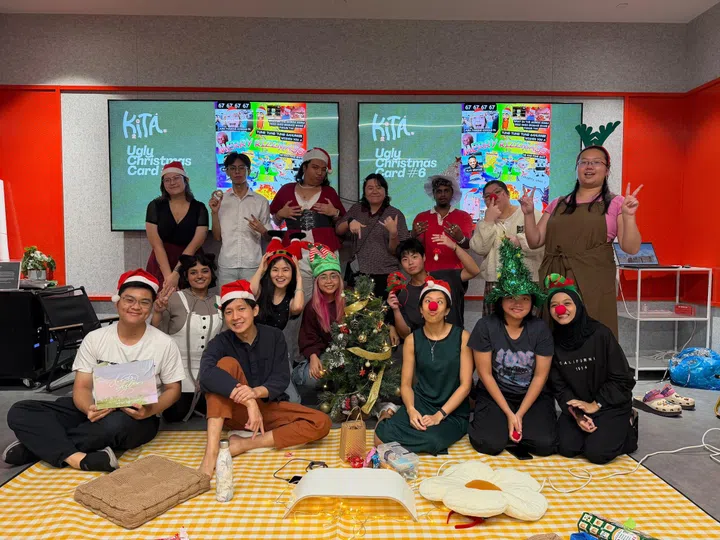
Rather than treating young people as passive recipients of help, Kita’s core approach is to centre them as experts of their own lives. Instead of swooping in with ready-made solutions or leaving them to figure things out on their own, Kita’s team walks alongside youth and builds supportive scaffolds that turn overwhelming goals into manageable steps while retaining ownership of their path.
Even its name (Kita, meaning “we” or “ours” in Malay) reflects the aim: returning agency to where it belongs, grounded in co-creation and community-building.
That philosophy comes to life at Kita Studios, a career-focused programme where young people build industry skills, build portfolios, and receive support in landing real opportunities. Along the way, they also develop in-demand skills such as digital marketing and UX/UI design, while connecting with mentors and partners across sectors.
Founded in 2025 in response to systemic barriers faced by youth from under-resourced backgrounds, Kita aims to break down these hurdles: limited access to opportunity pathways, career guidance, and supportive networks.
Since then, the organisation has supported 1,268 youths across under-resourced communities in Singapore, working with 73 community partners and delivering 96 youth development programmes.
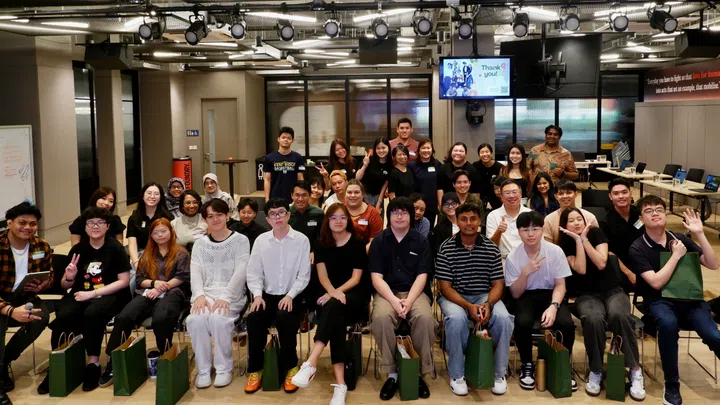
One of those youths is Angel. Referred to Kita Studios by her probation officer, she was initially quiet and struggled to express herself. Hands-on learning and encouragement from her trainers helped her find her footing.
Her breakthrough came while creating a UX prototype for a real-world company. That experience led to an internship at iShopChangi, and soon after, she enrolled in a part-time diploma in interaction design. Today, she works full-time as a UI/UX web designer at Hatch Mediahouse, a media agency focused on social impact communications.
“Participation and co-creation guide a lot of what we do at Kita, from how we develop our strategy, formulate our brand, design our programmes, to how we run our day-to-day,” says Victor Zhu, Kita’s executive director. “This is critical in youth development work, and it leads to better outcomes in the development of agency and ownership.”

“Untapped potential is difficult to imagine and hard to qualify, and we cannot feel what we cannot see. But it is all the more important to have these conversations and properly equip youths as both participants and agents of social justice,” he adds.
This year, Kita will expand Kita Labs, an experimental platform where youths explore creative projects and entrepreneurial ideas alongside industry partners, turning curiosity into real-world experience. It is also launching a youth-built “third space”, a community living room beyond home and school.
For Kita, the hope is simple: that youths feel safe to explore who they are and take ownership of shaping their aspirations and futures.
Halogen
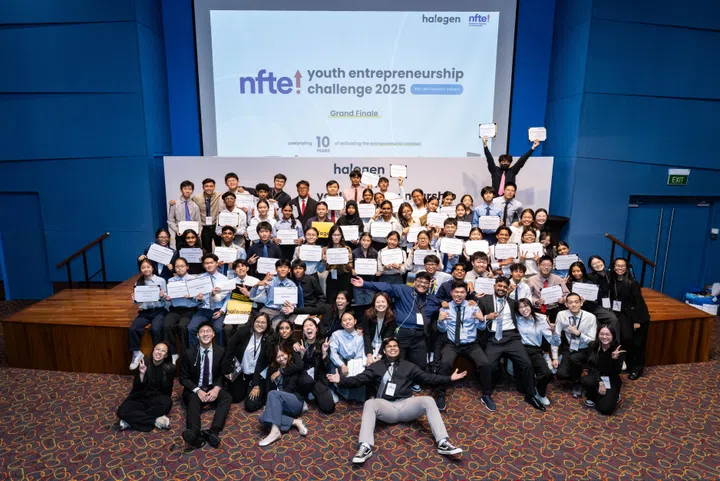
When Roshini first joined Halogen Singapore’s Network for Teaching Entrepreneurship (NFTE) programme, she was fairly certain that business was not for her. Like many youth in the programme, she was uncomfortable taking risks and hesitant to stand out.
NFTE Singapore is a year-long entrepreneurship education programme for underserved secondary school students, designed to build entrepreneurial mindsets and foster greater social mobility.
It blends a structured curriculum covering opportunity spotting, financial literacy and pitching, with a strong emphasis on confidence, creativity and resilience.
During the programme, Roshini developed an AI-powered study buddy app for students who struggle to ask questions in class. Encouraged by her trainers and mentors, she won the National Youth Entrepreneurship Challenge 2025 and will represent Singapore at the global showcase later this year.
What stayed with the Halogen team was not the award, but the shift in how Roshini saw herself. “If you think you can’t do it, believe in yourself and keep your heart in the right place,” she said after the competition.
Founded in 2003, Halogen began with a simple belief: every young person has a sphere of influence, with their words and actions shaping the people around them — in families, classrooms, friendships and online.
When Halogen started, leadership opportunities and recognition were often concentrated among already visible students. For many young people — particularly those from more challenging family or financial backgrounds — access to leadership development, confidence-building, and even the idea that they could lead felt out of reach.
That inequity prompted Halogen’s founders to begin this work.
Since then, Halogen has grown into a non-profit Institution of a Public Character (IPC) youth development charity supporting youths from diverse backgrounds across Singapore.
Complementing the NFTE is the National Young Leaders Fellowship (NYLF) programme, which brings together around 40 outstanding youths aged 15 to 19 each year from Singapore and across ASEAN. Over nine months, fellows receive leadership development, mentorship, and a regional peer network as they deepen and scale initiatives across mental health, sustainability, and digital literacy.
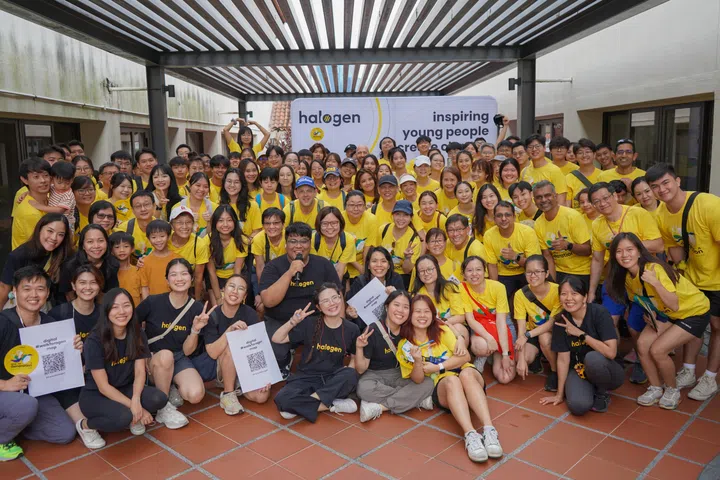
Since 2003, Halogen has worked with more than 245,000 youths across Singapore, alongside 13,700 youth enablers (educators, parents, mentors, and community workers) and over 10,600 volunteers. In 2024, it received the Charity Transparency Award for its efforts to uphold strong governance and accountability.
This year, Halogen will expand graduate mentorship for NFTE alumni and deepen its regional work through NYLF. It also aims to reframe youth development as a long-term investment, rather than a set of standalone programmes, with partners across sectors supporting youth-led solutions and building the conditions for future-ready youth.
“Social justice is making sure a young person’s starting point doesn’t decide their future,” says Ivy Tse, CEO of Halogen Singapore. “That’s why we build programmes that grow capable, confident adults who shape the world, not just survive it.”
Generation Singapore
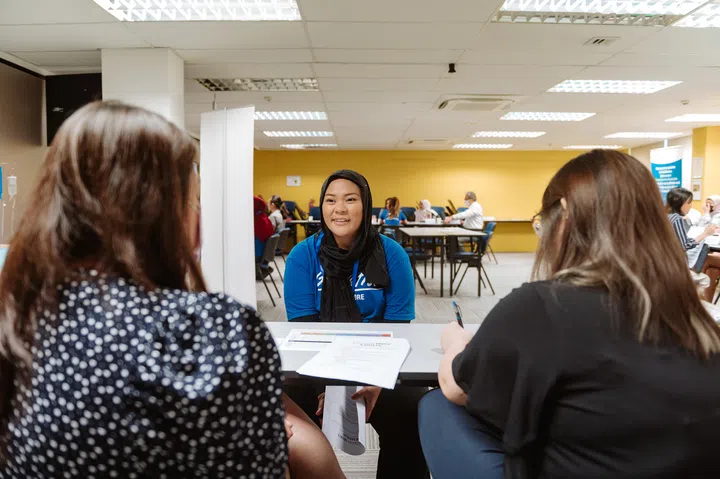
Across the globe, countless young people are out of work, even as employers struggle to fill entry-level roles. That paradox of joblessness alongside labour shortages is what Generation Singapore seeks to address.
Established in 2019 as part of a global nonprofit network launched by McKinsey & Company, Generation Singapore focuses on a straightforward promise: training and placing people into life-changing careers that would otherwise feel out of reach.
In Singapore’s youth support ecosystem, many organisations focus on education, mentoring or confidence-building. Generation complements that work by addressing what it calls the “last mile” gap — the gap between training and securing a job, especially in high-growth sectors in Singapore such as tech and healthcare.
Beyond technical and job-readiness training, the differentiator lies in what happens next. Youth profiles are sent directly to employers, who conduct interviews immediately upon graduation from the training bootcamp.
The organisation places data at the heart of its model, measuring impact not just by participation, but by long-term outcomes. Across its Generation Singapore programmes for those aged 29 and below, it’s helped 676 learners.
The graduation rate stands at 94 per cent, with 82 per cent placed in jobs within six months. Nearly half were unemployed before the programme; 73 per cent do not hold a bachelor’s degree.
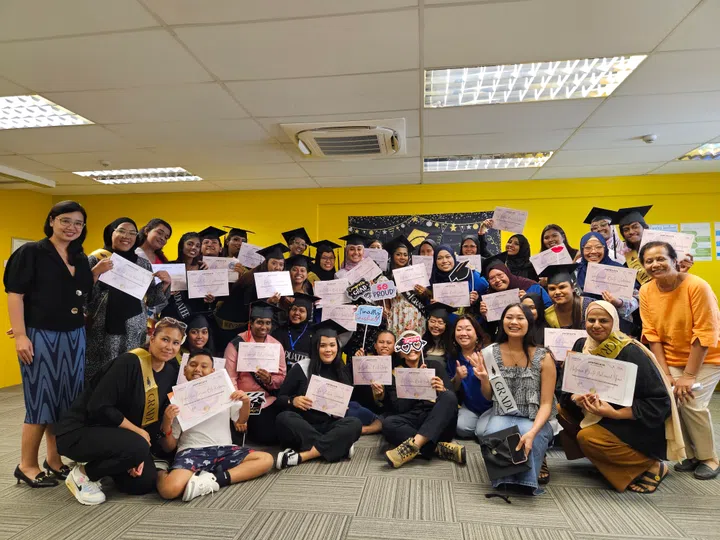
One alumna, in her mid-twenties, worked part-time as a petrol pump attendant, had O-Levels as her highest qualification, and frequently accompanied her father to the hospital for his medical treatments. It sparked a desire to contribute meaningfully in her career.
After completing Generation’s healthcare training boot camp, she secured a role as a patient service associate at a local hospital, securing stable and meaningful employment.
This year, Generation is part of the inaugural cohort of the ImpactCollab Outcomes Marketplace by AVPN (the largest network of social investors in Asia) and Tri-Sector Associates, a new outcomes-based model that links capital to measurable results — in this case, supporting NEET youths (those not in education, employment or training) and underserved youths to be trained, placed, and retained in jobs.
The shift toward outcomes-based funding reflects a broader move to channel resources toward demonstrable impact rather than activities alone.
It is also partnering with the Institute of Technical Education and a corporate partner on a new employability and mentorship initiative that matches graduating vocational students with industry professionals to strengthen job readiness and ease their transition into the workforce.
Programmes are also being updated with AI literacy components to help graduates navigate an increasingly automated job market.
For Gloria Arlini, chief executive officer of Generation Singapore, the work is anchored in a clear principle: “Social justice is helping youth, regardless of where they are in life today, to hold their own key towards unlocking the doors towards economic mobility and better lives through employment.”