
Why Alan Koh, director of Affordable Art Fair Singapore believes money alone cannot buy cultural confidence
Koh on why even the most affluent collectors hesitate in front of a gallery wall and how learning to trust your own taste matters far more than the size of your wallet.
By Zat Astha /
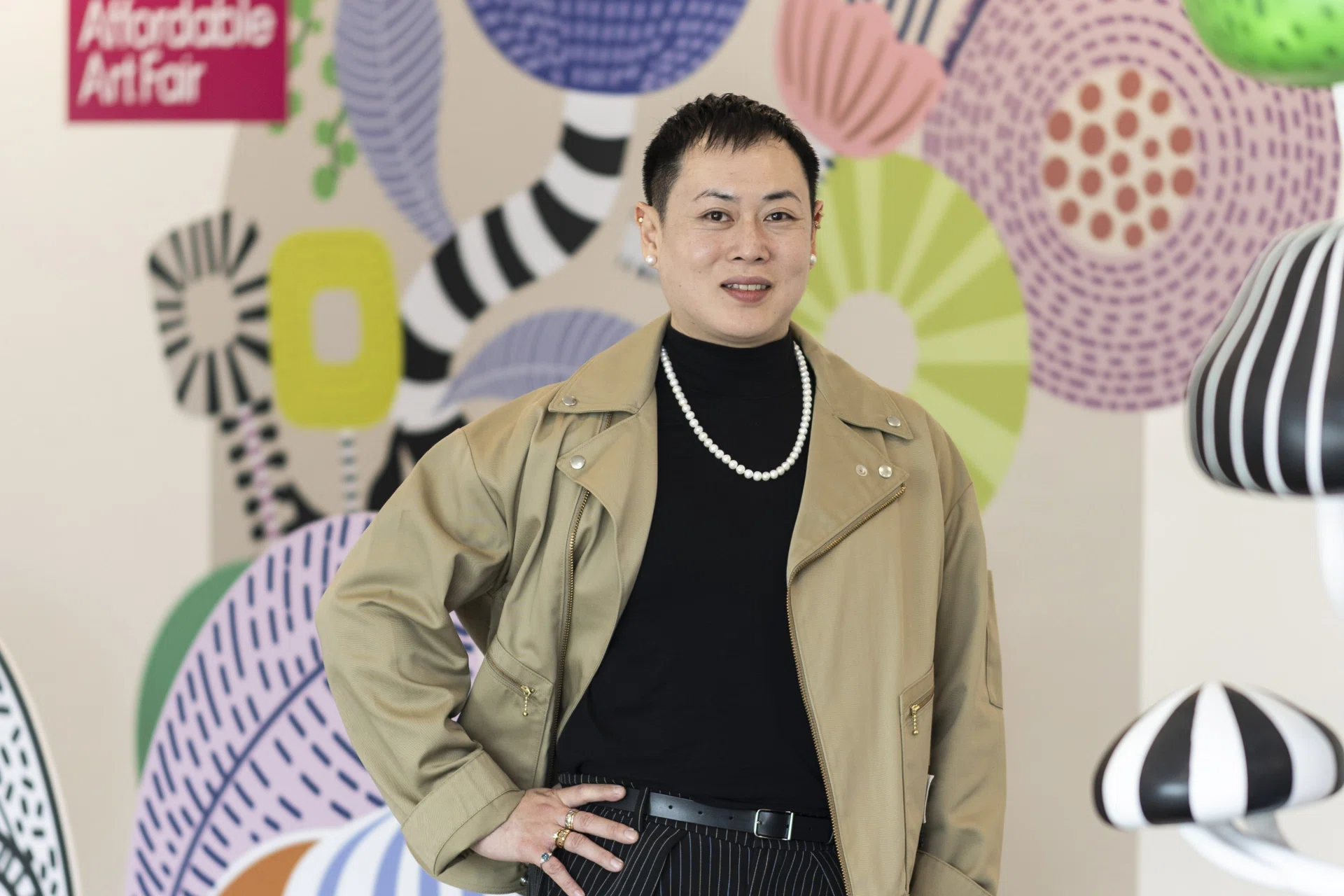
A person can walk into an art fair with enough money to buy almost anything in the room and still be terrified of asking what a painting means. The problem is hardly financial. Rather, it’s the possibility of appearing ignorant, of admiring something that everyone else considers dreadful, or, perhaps worse, of spending a considerable sum on something that turns out to be dreadfully unfashionable.
Alan Koh knows this peculiar anxiety well. In his years running Affordable Art Fair Singapore, he has encountered enough prospective collectors to recognise that wealth provides little immunity against the fear of getting art wrong. Even successful, affluent individuals, he discovered, could become surprisingly hesitant when confronted with a gallery wall.
His own introduction to the industry hardly prepared him for this. Koh joined Sotheby’s Institute of Art – Singapore in 2007, entering a milieu where conversations revolved around blue-chip artists and auction houses. The vocabulary was specialised, the hierarchies established. For those already comfortable within it, the art world could appear perfectly navigable. To outsiders, it was another matter.
“I learnt that no matter how successful or affluent one can be (in different ways), or no matter who you are, people are intimidated when it comes to buying art,” he admits. What surprised him was the number of people who genuinely wanted to learn about art but hesitated because of an “invisible wall”. Once visitors felt comfortable asking questions without exposing their ignorance, purchasing became considerably less intimidating.
It is a curious predicament for Singapore, where private wealth has grown considerably and luxury consumption requires little introduction. Acquiring an expensive object is one thing. Knowing whether one actually likes it, particularly when an expert suggests otherwise, demands a different sort of assurance.
And that, perhaps, is where the conversation about Singapore’s collecting culture becomes more interesting than the usual discussion of how much art its residents can afford.
The cost of confidence
When Affordable Art Fair made its Singapore debut in 2010, 50 galleries welcomed 9,500 visitors and generated S$1.75 million in sales. In 2025, the fair drew 15,000 visitors, hosted 95 galleries, and recorded S$5.7 million in transactions. Sales volumes also increased, from 2,000 artworks in 2024 to 2,100 last year.
The market has clearly grown. Yet the figures invite a more difficult question: have Singaporeans become more discerning, or simply more comfortable spending money on art?
Koh sees progress in the confidence with which visitors now articulate their preferences. Some arrive knowing precisely what interests them; others discover something unexpected. He has also noticed a surprising shift. “Over the past 17 years, I have seen people become more comfortable expressing their own preferences rather than assuming there must be one correct answer,” he observes.
Consider Prasana, who began collecting at Affordable Art Fair in 2022. Four years later, she has acquired more than 30 works, approximately 80 per cent of them through the fair. Koh regards her experience as an example of how an initial purchase can develop into sustained engagement.
“The greatest lesson is that collecting is a relationship that develops over time, rather than a transaction that ends when somebody takes an artwork home.”
But quantity remains an imperfect measure of discernment. A collector might own dozens of expensive works without developing much understanding of the artists behind them. Another might spend years contemplating a single purchase. Nor does the willingness to spend necessarily indicate the capacity to appreciate something that challenges one’s existing preferences.
Koh is reluctant to reduce cultural sophistication to the size or monetary value of a collection. What interests him instead is an individual’s “openness to different perspectives and a lasting interest in the artists behind the work”.
His position creates an interesting dilemma for a commercial art fair. If the ultimate ambition is to cultivate more thoughtful audiences, transactions offer only a partial account of success. An artwork sold is easy to record; a visitor who leaves with a more complicated understanding of art is considerably harder to measure.
The peculiar business of being affordable
There is something almost contradictory about the phrase affordable art. Much of the art market derives its mystique from scarcity, reputation, and the suggestion that certain objects possess a value beyond ordinary comprehension. Affordability, meanwhile, implies accessibility, familiarity, and the removal of barriers.
The tension becomes especially apparent in a culture accustomed to associating luxury with exclusivity. When something becomes easier to acquire, does it also become less desirable?
Koh rejects the assumption that accessibility diminishes artistic value. An artwork’s worth, he argues, originates in its ideas, execution, imagination, and the perspective of its creator, none of which necessarily changes because a wider audience can encounter it.
“The word ‘affordable’,” he posits, “describes an approach to opening doors; it is not a judgment about artistic quality.”
This philosophy shapes the fair’s emphasis on transparent pricing, approachable galleries, and opportunities to speak with people who understand the works on display. Koh initially assumed that making art accessible would involve primarily its price and presentation. Experience taught him that confidence, trust, and emotional connection were equally consequential.
The fair’s 2025 figures lend some support to that thinking. First-time visitors accounted for 37.5 per cent of attendance, and 21 per cent of those newcomers purchased art. Creating an inviting environment can evidently turn curiosity into commerce.
What the figures cannot establish is how visitors evaluate the work they buy. Removing the intimidation of entering a gallery does not automatically equip someone to navigate questions of originality, artistic merit, or long-term value. Accessibility may open the door, but judgement still requires cultivation.
There is also a distinction between making challenging art approachable and making art less challenging. Koh insists that experimental work can reach unfamiliar audiences without compromising the artist’s intentions. Whether visitors embrace such work, rather than gravitating towards what is immediately attractive or comfortably familiar, presents a more demanding test of the fair’s ambitions.
The performance of taste
Art has always served as a form of self-expression, although the boundary between expressing one’s identity and advertising one’s status can be difficult to locate. A painting displayed prominently above a sofa might evoke a cherished memory. It might equally announce the owner’s prosperity, education, or membership in a particular social circle.
Koh makes room for these overlapping impulses. A collection, he suggests, can become a “very personal portrait, assembled over time”, reflecting everything from cultural interests and aspirations to memories and private pleasures. The social enjoyment of collecting need not invalidate a genuine attachment to the work itself.
But the audience for that performance has expanded beyond the living room. According to ArtTactic research commissioned by Affordable Art Fair, 47 per cent of surveyed Gen Z collectors globally say social media influences their purchasing decisions.
Younger collectors can now encounter artists through screens long before entering a gallery. That access has broadened discovery, although it has also complicated the formation of individual taste. An artwork that attracts considerable online attention may seem more desirable precisely because others have already endorsed it.
The danger is that collecting becomes another exercise in identifying what is fashionable, rather than discovering what one finds compelling. Social media can introduce someone to unfamiliar artistic practices, but it can also reproduce the very anxieties about approval and belonging that Koh hopes to dismantle.
Still, he remains enthusiastic about digital discovery, particularly when it encourages people to experience artworks in person.
“Seeing an artwork’s scale, texture and detail, and speaking with the gallery about the artist’s practice, can completely change your appreciation of it.”
An image, after all, cannot fully convey the physical presence of a work. Nor can popularity settle questions of artistic merit. Somewhere between the initial encounter and the decision to purchase, a collector must eventually exercise independent judgement.
The paradox is that an industry sustained partly by expertise, reputation, and perceived value must now persuade newcomers that they can disagree with the people who possess all three. Developing confidence requires learning from those who know more, while resisting the temptation to surrender one’s preferences entirely to their authority.
Can a collecting culture be manufactured?
Singapore has spent decades building the infrastructure of an international arts hub. Museums, commercial galleries, public initiatives, and major fairs have expanded opportunities to encounter art.
Remove the institutions and festivals and what remains? Would Singaporeans continue visiting galleries, following artists, and discussing art with the same enthusiasm, or would collecting retreat into a narrower circle of enthusiasts and affluent buyers?
Koh resists the premise. He considers institutional support and organic enthusiasm mutually reinforcing rather than opposing forces. Museums and fairs provide the exposure from which independent interest can emerge, while commercial galleries and artists sustain relationships that extend beyond major events.
“Without education and awareness it is not easy to build an organic culture of collecting,” he argues, emphasising the groundwork required before appreciation becomes habitual.
He recalls Eugenia Tan and Kamal, whose relationship with Art Forum developed from appreciating and collecting artworks to learning to paint and eventually presenting their own creations. Their experience suggests that cultural participation can evolve beyond the acquisition of objects, although individual examples cannot establish how widespread that progression has become.
Koh would like to see more regular gallery visits, meaningful exchanges with artists, and families treating exhibitions as an ordinary part of life. These habits would arguably reveal more about the depth of Singapore’s artistic engagement than the attendance figures of any annual fair.
There is, however, a circularity to the challenge. Institutions help introduce audiences to art, while those audiences must eventually develop enough independent curiosity to sustain the galleries and artists working between major exhibitions. The success of the former does not guarantee the vitality of the latter.
A mature cultural ecosystem requires people who continue participating even when there is no major opening to attend, no fashionable exhibition to photograph, and no particular artwork they intend to purchase.
When art don’t sell
Then comes the unavoidable matter of commerce. An art fair must sell art, galleries need paying customers, and artists require sustainable livelihoods. Yet artistic experimentation rarely follows commercial logic.
Koh sees the two — commerce and creativity — as interdependent. Successful galleries can support artists over extended periods, while sales provide resources for further experimentation. But he also recognises that the consequences of artistic engagement may take years to become apparent.
“Sales matter because they can help make that support possible. At the same time, the value of a fair cannot be measured by transactions alone: it also lies in the discoveries, conversations and relationships that continue long after the event.”
The fair’s Young Talent Programme offers an example of this longer perspective. Its inaugural winner in 2012, Alecia Neo, subsequently co-founded the cross-border Ubah Rumah residency with Ernest Goh, which appeared at the 2025 fair. The trajectory of her practice illustrates how an artist’s career can develop in directions that an immediate sale could scarcely predict.
Yet the tension between artistic independence and commercial expectations remains unresolved. A platform devoted to selling art must inevitably accommodate buyers’ preferences, even while encouraging them to encounter work they might initially resist.
For collectors, this presents another version of the problem Koh identified years ago. It is relatively easy to purchase something beautiful, reassuring, or widely admired. Developing an appetite for difficult work requires a willingness to experience uncertainty, and perhaps even discomfort, without immediately seeking reassurance that one’s response is correct.
Affordable Art Fair’s growth demonstrates that Singapore has developed a larger market for art — that much is undeniable. Koh’s greater ambition, however, concerns what people do with the confidence that greater access might give them.
He would like people to stop waiting until they possess sufficient money, master the terminology, or receive external approval before allowing art into their lives. “You can begin simply by looking at what interests you, asking questions and allowing your preferences to develop. There is no single correct way to appreciate art.”