%22%3E%0A%3Cpath%20d%3D%22M412%20101.2H393.7C393.1%20101.2%20392.3%20100.9%20391.8%20100.5C377.3%2087.6004%20362.9%2074.6004%20348.4%2061.6004C344.8%2058.4004%20341.3%2055.2004%20337.7%2052.0004C337.1%2051.5004%20336.2%2051.1004%20335.5%2051.0004C334.2%2050.8004%20333%2051.0004%20331.5%2051.0004V101.1H316.7V0.100391H331.4V44.3004C331.9%2044.3004%20332.2%2044.4004%20332.5%2044.4004C334.9%2044.4004%20337.2%2044.5004%20339.6%2044.4004C340.4%2044.4004%20341.3%2044.0004%20341.8%2043.5004C351.6%2034.4004%20361.4%2025.2004%20371.1%2016.0004C376.5%2010.9004%20381.9%205.90039%20387.3%200.800391C387.9%200.200391%20388.5%200.000390626%20389.3%200.000390626H400.9C384.2%2015.8004%20367.8%2031.3004%20351.2%2047.0004C371.5%2065.0004%20391.8%2082.9004%20412.1%20100.9C412.1%20101%20412.1%20101.1%20412%20101.2ZM180.9%20101.2C184.1%2094.9004%20187.2%2088.9004%20190.3%2082.8004C198.3%2067.3004%20206.2%2051.8004%20214.2%2036.2004C220.3%2024.4004%20226.4%2012.5004%20232.4%200.700391C232.7%200.100391%20233%20-0.0996094%20233.7%20-0.0996094H248.1C248.8%20-0.0996094%20249.2%200.100391%20249.6%200.800391C256%2013.3004%20262.4%2025.7004%20268.8%2038.2004C279.3%2058.6004%20289.8%2079.0004%20300.3%2099.5004C300.5%20100%20300.8%20100.4%20301.1%20101.1C300.5%20101.1%20300.1%20101.2%20299.7%20101.2H286.5C285.6%20101.2%20285.1%20100.9%20284.7%20100.2C280.1%2091.3004%20275.4%2082.4004%20270.8%2073.4004C270.1%2072.1004%20269.3%2071.6004%20267.8%2071.6004H209.9C208.7%2071.6004%20208.1%2072.0004%20207.5%2073.1004C202.9%2082.1004%20198.2%2091.0004%20193.6%20100C193.1%20101%20192.6%20101.3%20191.5%20101.3C188.4%20101.2%20185.3%20101.3%20182.3%20101.3C182%20101.2%20181.6%20101.2%20180.9%20101.2ZM239.1%2011.4004C230%2029.2004%20221.1%2046.7004%20212.1%2064.3004H266.4C257.2%2046.7004%20248.2%2029.2004%20239.1%2011.4004ZM0%200.000390626H43.4C51.2%200.000390626%2058.7%201.20039%2065.7%204.80039C75.9%2010.0004%2078.9%2018.0004%2078.6%2027.4004C78.3%2034.3004%2076%2040.5004%2071.2%2045.5004C67.3%2049.6004%2062.4%2052.3004%2057.1%2054.3004C50.6%2056.7004%2043.9%2058.0004%2037.1%2058.6004C30.1%2059.2004%2023.1%2059.4004%2016.2%2059.7004C15.8%2059.7004%2015.3%2059.8004%2014.8%2059.8004V101.1H0.1C0%2067.4004%200%2033.8004%200%200.000390626ZM14.8%207.10039V52.2004C23.7%2052.4004%2032.6%2052.3004%2041.2%2050.1004C44.4%2049.3004%2047.6%2048.2004%2050.6%2046.7004C58.4%2043.0004%2062.3%2036.7004%2062.7%2028.0004C63%2019.9004%2059.5%2014.1004%2052.4%2010.5004C47.6%208.00039%2042.5%207.10039%2037.2%207.10039H14.8ZM95.9%20101.1V0.100391H167.3V7.20039H110.7V44.7004H158.1V51.9004H110.8V93.9004H171.1V101C146.1%20101.1%20121%20101.1%2095.9%20101.1Z%22%20fill%3D%22black%22%2F%3E%0A%3Cpath%20d%3D%22M35.0004%2025.7996H42.5004V20.6996H44.8004V33.1996H42.6004V27.5996H34.9004V33.2996H32.7004V20.7996H35.0004V25.7996ZM54.4004%2025.8996V27.2996H48.9004V31.6996H55.9004C55.9004%2032.1996%2056.0004%2032.5996%2056.0004%2033.0996H46.5004V20.5996H55.5004V21.8996H49.0004V25.7996C50.7004%2025.8996%2052.5004%2025.8996%2054.4004%2025.8996ZM25.9004%2033.0996H23.5004V21.9996H17.9004V20.6996H31.6004V22.0996H27.1004C26.2004%2022.0996%2025.9004%2022.2996%2025.9004%2023.1996C26.0004%2026.0996%2025.9004%2028.9996%2025.9004%2031.7996V33.0996Z%22%20fill%3D%22black%22%2F%3E%0A%3C%2Fg%3E%0A%3Cdefs%3E%0A%3CclipPath%20id%3D%22clip0_388_462%22%3E%0A%3Crect%20width%3D%22411%22%20height%3D%22101.2%22%20fill%3D%22white%22%2F%3E%0A%3C%2FclipPath%3E%0A%3C%2Fdefs%3E%0A%3C%2Fsvg%3E%0A)
Day one of the Ocean Collective Summit looks at innovative strategies for the future of the oceans
Organised by The International SeaKeepers Society and The Fabien Cousteau Ocean Learning Center, Day 1’s agenda held a range of events and panels related to innovative sustainability solutions to reduce and reverse the present environmental impact on the seas.
By Jamie Wong /
Share this article
This year’s annual two-day Ocean Collective Summit (TOCS) started yesterday at Sheraton Towers. This iteration is the third edition of the summit, bringing together stakeholders, including conservationists, business leaders, and policymakers with the shared objective of protecting the world’s ocean.
Regenerative focus
With the theme “Uniting Businesses in Ocean Conservation,” the summit will be an platform for business leaders and other stakeholders to discuss the challenges and opportunities present in the blue economy and marine conservation.
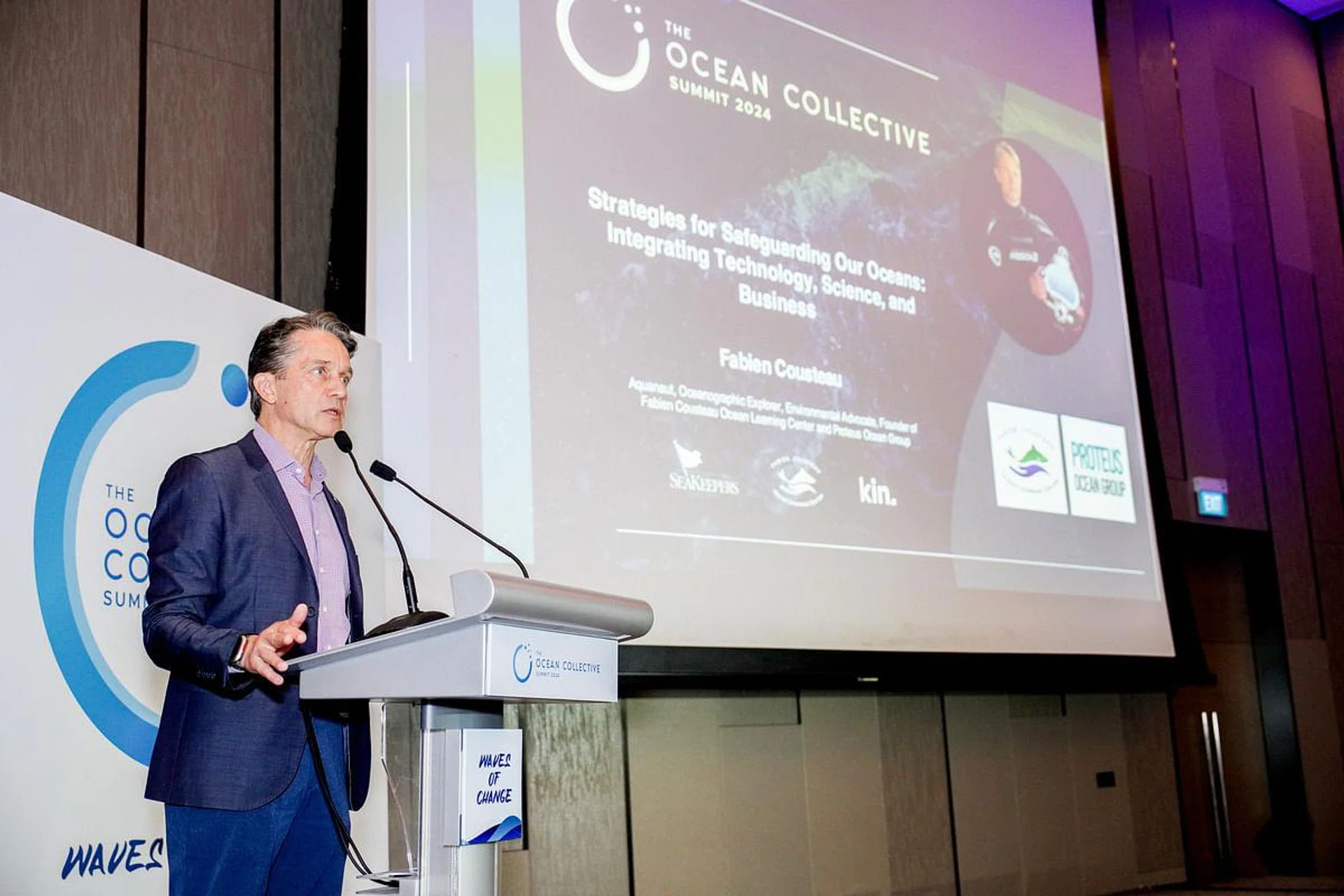
Organised by The International SeaKeepers Society (SeaKeepers) and The Fabien Cousteau Ocean Learning Center, Day 1’s agenda held a range of events and panels related to innovative sustainability solutions. The opening keynote speech was given by Fabien Cousteau, founder of the Proteus Ocean Group and one of the organisers, the Fabien Cousteau Ocean Learning Center.
He said: “At the core of marine conservation, it’s not just about saving the oceans—it’s about safeguarding our own future. As intelligent beings, we have the knowledge and the tools to envision a sustainable world where business, science, and technology work hand-in-hand to protect our oceans.”
“But the real question is: do we have the wisdom to make those necessary choices? This summit is a call to action for each of you to form partnerships, innovate, and create solutions that will secure our planet’s future.”
Sustainability entrepreneurs
Cousteau was also one of the judges for the Ocean Innovators Challenge. This activity saw three entrepreneurs presenting their business ideas, centering around conservation, to a panel of judges. Sitting on the panel alongside Cousteau was Alan Wah, Chief Strategy & Business Development Officer at nanofiber and chemical fiber manufacturer, M-TEchX Asia; and Mr Justin Lee, Principal at venture capital firm, TRIREC.
The winner was Nuryanee Anisah, who is the co-founder and CEO of Commenhers, a business that focuses on upcycling textile waste into high quality products.
Anisah said: “This journey has been incredibly rewarding, and I’ve gained valuable insights into the Ocean community. While textiles may seem unrelated to ocean conservation, the truth is we are all interconnected. The clothes we wear contribute to the ocean’s microplastic pollution, showing just how significant the impact can be.”
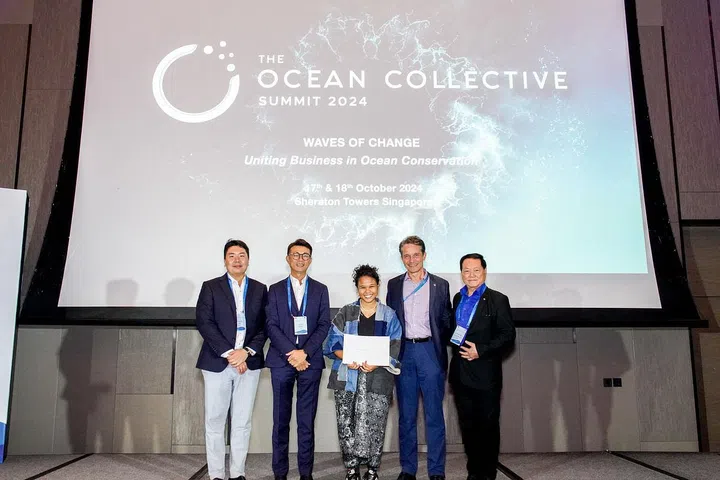
At the center is Nuryanee Anisah, winner of the Ocean Innovator's Challenge, alongside judges, from left to right: Justin Lee, Alan Wah, Fabien Cousteau and Julian Chang. (Photo: The International SeaKeepers Society)
Invention showcase
The afternoon of the first day also featured a presentation of new technologies, and a sustainability boot camp.
Developments in technology can present numerous opportunities, especially for sustainability. Aspects such as real-time ecosystem monitoring and advanced data analytics enables data-driven conservation strategies to be created. One of the presenters was Dan Lundqvist, Director of Overseas Business at M-TEchX Asia, who showcased how nanofibers can be used to reverse existing environmental degradation in the oceans by cleaning oil spills and as filters to help solve water pollution issues.
For ways that technology can mitigate existing issues, Dr Jerome Lombardi, Senior Research Fellow and Urbax Venture Lead at NUS Center for Advanced 2D materials showcased a new type of cement that he calls “green cement,” which reduces the carbon footprint of cement.
Another professor from NUS, Professor Lawerence Loh, Director of the Centre for Governance and Sustainability at NUS Business School, was the one to conduct the sustainable business boot camp. This looked at how to drive sustainable change within an organisation, and why companies might want to do so.
The blue economy
Along with these events were talks on specific industries and their relationship to the blue economy, such as eco-tourism and trade. Overall, TOCS aims to put stakeholders in conversation with each other, so that they can learn and create actionable plans to move towards a future of clean oceans.
Tan Kiat How, Senior Minister of State for National Development and Digital Development and Information, gave the opening address. He said: “I am heartened to know that the SeaKeepers have been supporting our local marine conservation efforts, such as reef cleanups, providing research grants for local students, as well as awards for local marine champions.”
“We will continue to work with the local scientific and nature community here in Singapore, as well as learn from international leaders at platforms like today’s summit, to protect and conserve our marine biodiversity and ecosystems.”