%22%3E%0A%3Cpath%20d%3D%22M412%20101.2H393.7C393.1%20101.2%20392.3%20100.9%20391.8%20100.5C377.3%2087.6004%20362.9%2074.6004%20348.4%2061.6004C344.8%2058.4004%20341.3%2055.2004%20337.7%2052.0004C337.1%2051.5004%20336.2%2051.1004%20335.5%2051.0004C334.2%2050.8004%20333%2051.0004%20331.5%2051.0004V101.1H316.7V0.100391H331.4V44.3004C331.9%2044.3004%20332.2%2044.4004%20332.5%2044.4004C334.9%2044.4004%20337.2%2044.5004%20339.6%2044.4004C340.4%2044.4004%20341.3%2044.0004%20341.8%2043.5004C351.6%2034.4004%20361.4%2025.2004%20371.1%2016.0004C376.5%2010.9004%20381.9%205.90039%20387.3%200.800391C387.9%200.200391%20388.5%200.000390626%20389.3%200.000390626H400.9C384.2%2015.8004%20367.8%2031.3004%20351.2%2047.0004C371.5%2065.0004%20391.8%2082.9004%20412.1%20100.9C412.1%20101%20412.1%20101.1%20412%20101.2ZM180.9%20101.2C184.1%2094.9004%20187.2%2088.9004%20190.3%2082.8004C198.3%2067.3004%20206.2%2051.8004%20214.2%2036.2004C220.3%2024.4004%20226.4%2012.5004%20232.4%200.700391C232.7%200.100391%20233%20-0.0996094%20233.7%20-0.0996094H248.1C248.8%20-0.0996094%20249.2%200.100391%20249.6%200.800391C256%2013.3004%20262.4%2025.7004%20268.8%2038.2004C279.3%2058.6004%20289.8%2079.0004%20300.3%2099.5004C300.5%20100%20300.8%20100.4%20301.1%20101.1C300.5%20101.1%20300.1%20101.2%20299.7%20101.2H286.5C285.6%20101.2%20285.1%20100.9%20284.7%20100.2C280.1%2091.3004%20275.4%2082.4004%20270.8%2073.4004C270.1%2072.1004%20269.3%2071.6004%20267.8%2071.6004H209.9C208.7%2071.6004%20208.1%2072.0004%20207.5%2073.1004C202.9%2082.1004%20198.2%2091.0004%20193.6%20100C193.1%20101%20192.6%20101.3%20191.5%20101.3C188.4%20101.2%20185.3%20101.3%20182.3%20101.3C182%20101.2%20181.6%20101.2%20180.9%20101.2ZM239.1%2011.4004C230%2029.2004%20221.1%2046.7004%20212.1%2064.3004H266.4C257.2%2046.7004%20248.2%2029.2004%20239.1%2011.4004ZM0%200.000390626H43.4C51.2%200.000390626%2058.7%201.20039%2065.7%204.80039C75.9%2010.0004%2078.9%2018.0004%2078.6%2027.4004C78.3%2034.3004%2076%2040.5004%2071.2%2045.5004C67.3%2049.6004%2062.4%2052.3004%2057.1%2054.3004C50.6%2056.7004%2043.9%2058.0004%2037.1%2058.6004C30.1%2059.2004%2023.1%2059.4004%2016.2%2059.7004C15.8%2059.7004%2015.3%2059.8004%2014.8%2059.8004V101.1H0.1C0%2067.4004%200%2033.8004%200%200.000390626ZM14.8%207.10039V52.2004C23.7%2052.4004%2032.6%2052.3004%2041.2%2050.1004C44.4%2049.3004%2047.6%2048.2004%2050.6%2046.7004C58.4%2043.0004%2062.3%2036.7004%2062.7%2028.0004C63%2019.9004%2059.5%2014.1004%2052.4%2010.5004C47.6%208.00039%2042.5%207.10039%2037.2%207.10039H14.8ZM95.9%20101.1V0.100391H167.3V7.20039H110.7V44.7004H158.1V51.9004H110.8V93.9004H171.1V101C146.1%20101.1%20121%20101.1%2095.9%20101.1Z%22%20fill%3D%22black%22%2F%3E%0A%3Cpath%20d%3D%22M35.0004%2025.7996H42.5004V20.6996H44.8004V33.1996H42.6004V27.5996H34.9004V33.2996H32.7004V20.7996H35.0004V25.7996ZM54.4004%2025.8996V27.2996H48.9004V31.6996H55.9004C55.9004%2032.1996%2056.0004%2032.5996%2056.0004%2033.0996H46.5004V20.5996H55.5004V21.8996H49.0004V25.7996C50.7004%2025.8996%2052.5004%2025.8996%2054.4004%2025.8996ZM25.9004%2033.0996H23.5004V21.9996H17.9004V20.6996H31.6004V22.0996H27.1004C26.2004%2022.0996%2025.9004%2022.2996%2025.9004%2023.1996C26.0004%2026.0996%2025.9004%2028.9996%2025.9004%2031.7996V33.0996Z%22%20fill%3D%22black%22%2F%3E%0A%3C%2Fg%3E%0A%3Cdefs%3E%0A%3CclipPath%20id%3D%22clip0_388_462%22%3E%0A%3Crect%20width%3D%22411%22%20height%3D%22101.2%22%20fill%3D%22white%22%2F%3E%0A%3C%2FclipPath%3E%0A%3C%2Fdefs%3E%0A%3C%2Fsvg%3E%0A)
From P&G to Circles.Life to Coffee Meets Bagel, Delbert Ty has built a career not on louder messages, but smarter ones
The tools have changed, and so have the tactics. But for this fractional CMO, the art of communication still begins with insight, empathy, and the courage to reframe a bad idea into a winning one.
By Zat Astha /
Share this article
Ten years ago, if Delbert Ty had wanted to reach an audience, he’d have found himself fighting for a precious few seconds of primetime airtime. Today, he simply logs onto LinkedIn and, with a few clicks, his thoughts ripple across thousands of screens. “The microphone,” Delbert reflects, “has been democratised.”
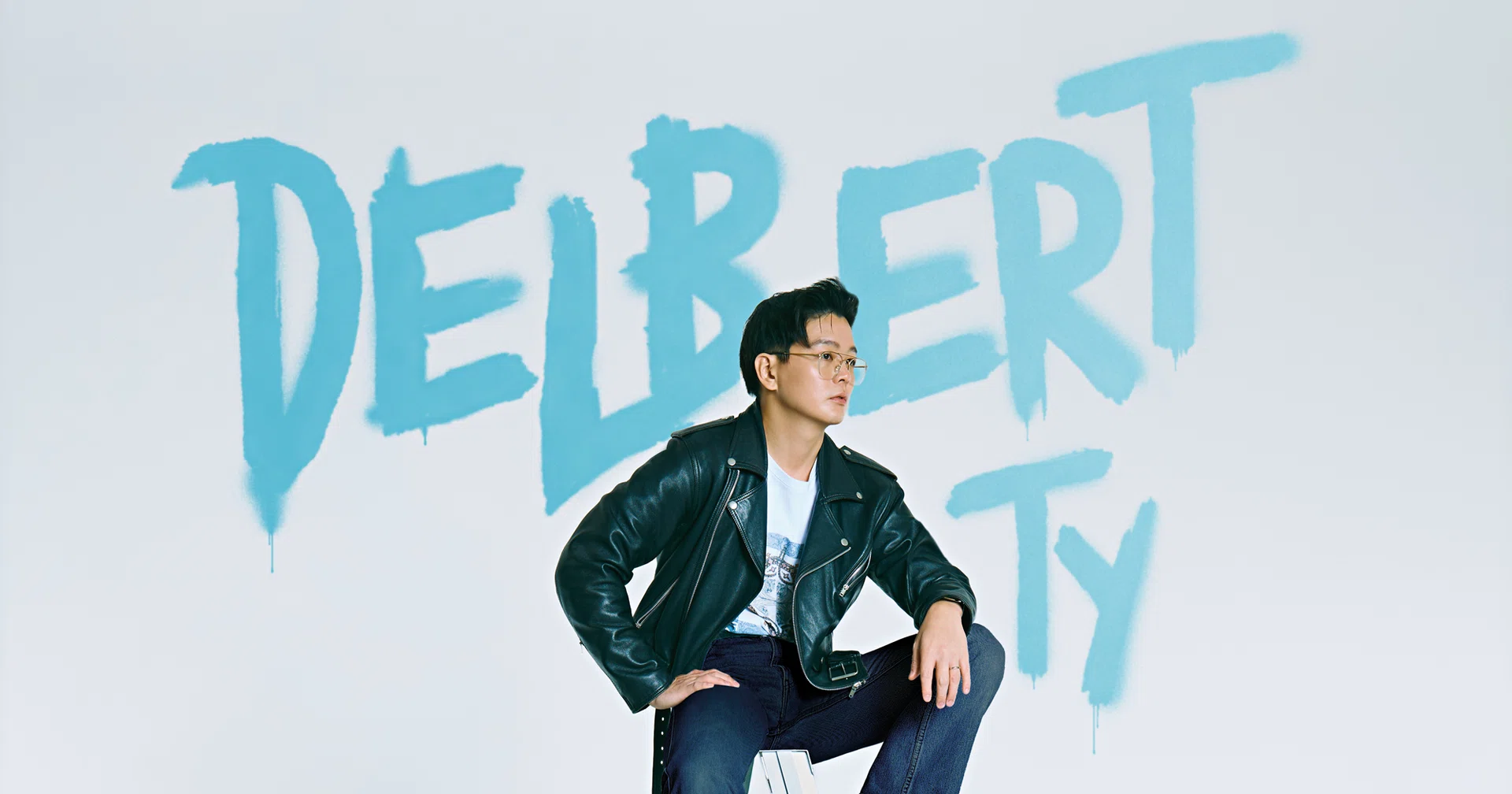
Delbert Ty’s professional journey — from marketing powerhouses like Procter & Gamble to disruptive startups such as Circles.Life and Coffee Meets Bagel — has consistently hinged on his acute understanding of how communication evolves and, crucially, how it shapes markets.
At each juncture, his capacity to grasp the heart of what resonates with an audience has been pivotal, enabling him to leave distinctive marks on vastly different companies and sectors.
Still, it wasn’t always this accessible. When the 38-year-old started his career, he navigated a more rigid media landscape. “If you wanted your message out, you had to book that all-elusive primetime ad slot,” he recalls.
“Limited ad slots meant limited opportunity.” Now, however, the playing field is wide open. Anyone with compelling content can find an audience. But ease of access hasn’t diluted quality — it has intensified competition. More content means audiences have grown discerning, demanding originality and authenticity.
“Imagine an open mic night,” Delbert explains. “Just because everyone can speak doesn’t mean everyone will be good. In fact, it actually levels the playing field so the outstanding ones can rise above.” This shift underscores his core belief: content and ideas, not connections and capital, now hold the real power. He argues that the real skill lies in consistently creating content that resonates, a challenge that demands talent and relentless creativity.
No bad ideas, ideally

Delbert doesn’t romanticise this newfound openness. With democratisation comes risk — the unchecked proliferation of “bad ideas”. Yet his response is surprisingly optimistic, rooted in his experience across starkly different media landscapes of the Philippines and Singapore. “Ideas, for the most part, aren’t inherently good or bad,” he asserts. They simply need the proper context and timing to thrive.
Sometimes, even so-called “bad ideas” can trigger profound shifts. “In marketing, we’re so programmed to do things a certain way because that’s how it’s always been done,” he notes. “But if you dare to try something crazy — and do it the right way — it can actually give you a huge advantage.”
One memorable instance occurred at Circles.Life, where Delbert masterminded a provocative campaign involving graffiti in Singapore’s MRT spaces. Initially rebuffed by the advertising media owners, Delbert cleverly reframed his proposal: “I told them I wanted to do a doodling installation. They agreed, thinking it was art, not vandalism.”
The campaign exploded in popularity, sparking controversy and conversation.
“Within 24 hours, we got so many complaints that they had to take it down,” he recalls, “but by then, I already had my viral story.” The boldness of this strategy exemplifies Delbert’s willingness to challenge norms and highlights his deep understanding of audience psychology.

Reframing, Delbert emphasises, is foundational to effective communication. He draws from lessons learned at P&G: “You don’t always need product upgrades. Creative reframing can take you where you need to go.” His approach requires both strategic thinking and an intimate understanding of human psychology.
Delbert practised this skill personally when transitioning Circles.Life from obscure startup to household name. “I went to roadshows and stood outside MRT stations handing out flyers,” he shares. “You’ve got literal seconds to catch their attention. Whatever stops them, that’s your insight.”
Such attention to human nuance remains timeless. Delbert recounts another pivotal experience at Coffee Meets Bagel, where the company implemented a four-day workweek. “We needed to get super obsessed with operational discipline,” he explains.
“In isolation, my team would’ve rejected this as micromanagement. But framed within the context of maintaining productivity while working fewer days — they got it.” The result, he recalls, was that productivity surged despite fewer hours worked. It was a masterclass in understanding the delicate interplay between motivation, communication, and operational effectiveness.
From AI to empathy
Today, these experiences have shaped Delbert’s current approach as a fractional executive, where he consults across multiple ventures. It’s an exhilarating path because it exposes him to varied challenges. “Being fractional allows me to tackle different kinds of problems,” he says, “from bleeding-edge AI to familiar scenarios where I have a playbook ready.”
Fractional work, he points out, is not just variety for variety’s sake — it provides a broad canvas on which he can apply his deep and varied expertise.

Yet, even as AI democratises technical skills like programming and writing — making them widely accessible — Delbert harbours a thoughtful concern. “The flip side is echo chambers,” he notes. “You can now live entirely within one perspective. That’s scary. Debate isn’t bad, disagreement isn’t bad — but intellectual honesty is critical.”
His caution highlights a nuanced understanding of the delicate balance between freedom and responsibility in communication.
Ultimately, for Delbert, effective communication isn’t about gimmicks or quick wins. It’s about a deep, empathetic understanding of the audience. This truth, he believes, is enduring. “Understanding between humans is a craft,” he says, “and if you can’t do that, you’re going to struggle to find success.”
His career, rich with stories of transformative strategies and inventive reframing, provides ample evidence that genuine insight into human nature truly propels meaningful communication. The microphone might have changed hands, but the voice behind it — the insight, empathy, and craft — remains as crucial as ever.
Delbert’s work reminds us that, despite technological advances, human connection remains deeply rooted in authenticity, understanding, and thoughtful engagement. In his world, communication will always be fundamentally human.