%22%3E%0A%3Cpath%20d%3D%22M412%20101.2H393.7C393.1%20101.2%20392.3%20100.9%20391.8%20100.5C377.3%2087.6004%20362.9%2074.6004%20348.4%2061.6004C344.8%2058.4004%20341.3%2055.2004%20337.7%2052.0004C337.1%2051.5004%20336.2%2051.1004%20335.5%2051.0004C334.2%2050.8004%20333%2051.0004%20331.5%2051.0004V101.1H316.7V0.100391H331.4V44.3004C331.9%2044.3004%20332.2%2044.4004%20332.5%2044.4004C334.9%2044.4004%20337.2%2044.5004%20339.6%2044.4004C340.4%2044.4004%20341.3%2044.0004%20341.8%2043.5004C351.6%2034.4004%20361.4%2025.2004%20371.1%2016.0004C376.5%2010.9004%20381.9%205.90039%20387.3%200.800391C387.9%200.200391%20388.5%200.000390626%20389.3%200.000390626H400.9C384.2%2015.8004%20367.8%2031.3004%20351.2%2047.0004C371.5%2065.0004%20391.8%2082.9004%20412.1%20100.9C412.1%20101%20412.1%20101.1%20412%20101.2ZM180.9%20101.2C184.1%2094.9004%20187.2%2088.9004%20190.3%2082.8004C198.3%2067.3004%20206.2%2051.8004%20214.2%2036.2004C220.3%2024.4004%20226.4%2012.5004%20232.4%200.700391C232.7%200.100391%20233%20-0.0996094%20233.7%20-0.0996094H248.1C248.8%20-0.0996094%20249.2%200.100391%20249.6%200.800391C256%2013.3004%20262.4%2025.7004%20268.8%2038.2004C279.3%2058.6004%20289.8%2079.0004%20300.3%2099.5004C300.5%20100%20300.8%20100.4%20301.1%20101.1C300.5%20101.1%20300.1%20101.2%20299.7%20101.2H286.5C285.6%20101.2%20285.1%20100.9%20284.7%20100.2C280.1%2091.3004%20275.4%2082.4004%20270.8%2073.4004C270.1%2072.1004%20269.3%2071.6004%20267.8%2071.6004H209.9C208.7%2071.6004%20208.1%2072.0004%20207.5%2073.1004C202.9%2082.1004%20198.2%2091.0004%20193.6%20100C193.1%20101%20192.6%20101.3%20191.5%20101.3C188.4%20101.2%20185.3%20101.3%20182.3%20101.3C182%20101.2%20181.6%20101.2%20180.9%20101.2ZM239.1%2011.4004C230%2029.2004%20221.1%2046.7004%20212.1%2064.3004H266.4C257.2%2046.7004%20248.2%2029.2004%20239.1%2011.4004ZM0%200.000390626H43.4C51.2%200.000390626%2058.7%201.20039%2065.7%204.80039C75.9%2010.0004%2078.9%2018.0004%2078.6%2027.4004C78.3%2034.3004%2076%2040.5004%2071.2%2045.5004C67.3%2049.6004%2062.4%2052.3004%2057.1%2054.3004C50.6%2056.7004%2043.9%2058.0004%2037.1%2058.6004C30.1%2059.2004%2023.1%2059.4004%2016.2%2059.7004C15.8%2059.7004%2015.3%2059.8004%2014.8%2059.8004V101.1H0.1C0%2067.4004%200%2033.8004%200%200.000390626ZM14.8%207.10039V52.2004C23.7%2052.4004%2032.6%2052.3004%2041.2%2050.1004C44.4%2049.3004%2047.6%2048.2004%2050.6%2046.7004C58.4%2043.0004%2062.3%2036.7004%2062.7%2028.0004C63%2019.9004%2059.5%2014.1004%2052.4%2010.5004C47.6%208.00039%2042.5%207.10039%2037.2%207.10039H14.8ZM95.9%20101.1V0.100391H167.3V7.20039H110.7V44.7004H158.1V51.9004H110.8V93.9004H171.1V101C146.1%20101.1%20121%20101.1%2095.9%20101.1Z%22%20fill%3D%22black%22%2F%3E%0A%3Cpath%20d%3D%22M35.0004%2025.7996H42.5004V20.6996H44.8004V33.1996H42.6004V27.5996H34.9004V33.2996H32.7004V20.7996H35.0004V25.7996ZM54.4004%2025.8996V27.2996H48.9004V31.6996H55.9004C55.9004%2032.1996%2056.0004%2032.5996%2056.0004%2033.0996H46.5004V20.5996H55.5004V21.8996H49.0004V25.7996C50.7004%2025.8996%2052.5004%2025.8996%2054.4004%2025.8996ZM25.9004%2033.0996H23.5004V21.9996H17.9004V20.6996H31.6004V22.0996H27.1004C26.2004%2022.0996%2025.9004%2022.2996%2025.9004%2023.1996C26.0004%2026.0996%2025.9004%2028.9996%2025.9004%2031.7996V33.0996Z%22%20fill%3D%22black%22%2F%3E%0A%3C%2Fg%3E%0A%3Cdefs%3E%0A%3CclipPath%20id%3D%22clip0_388_462%22%3E%0A%3Crect%20width%3D%22411%22%20height%3D%22101.2%22%20fill%3D%22white%22%2F%3E%0A%3C%2FclipPath%3E%0A%3C%2Fdefs%3E%0A%3C%2Fsvg%3E%0A)
How Takeda incorporates access to medicines into their business ethos
Pharmaceutical companies like Takeda are meant to positively impact patients and families, but coming up with sustainable ways to do so can be difficult. Dion Warren of Takeda shares with us how Takeda tries to embed this philosophy in the work they do.
By Jamie Wong /
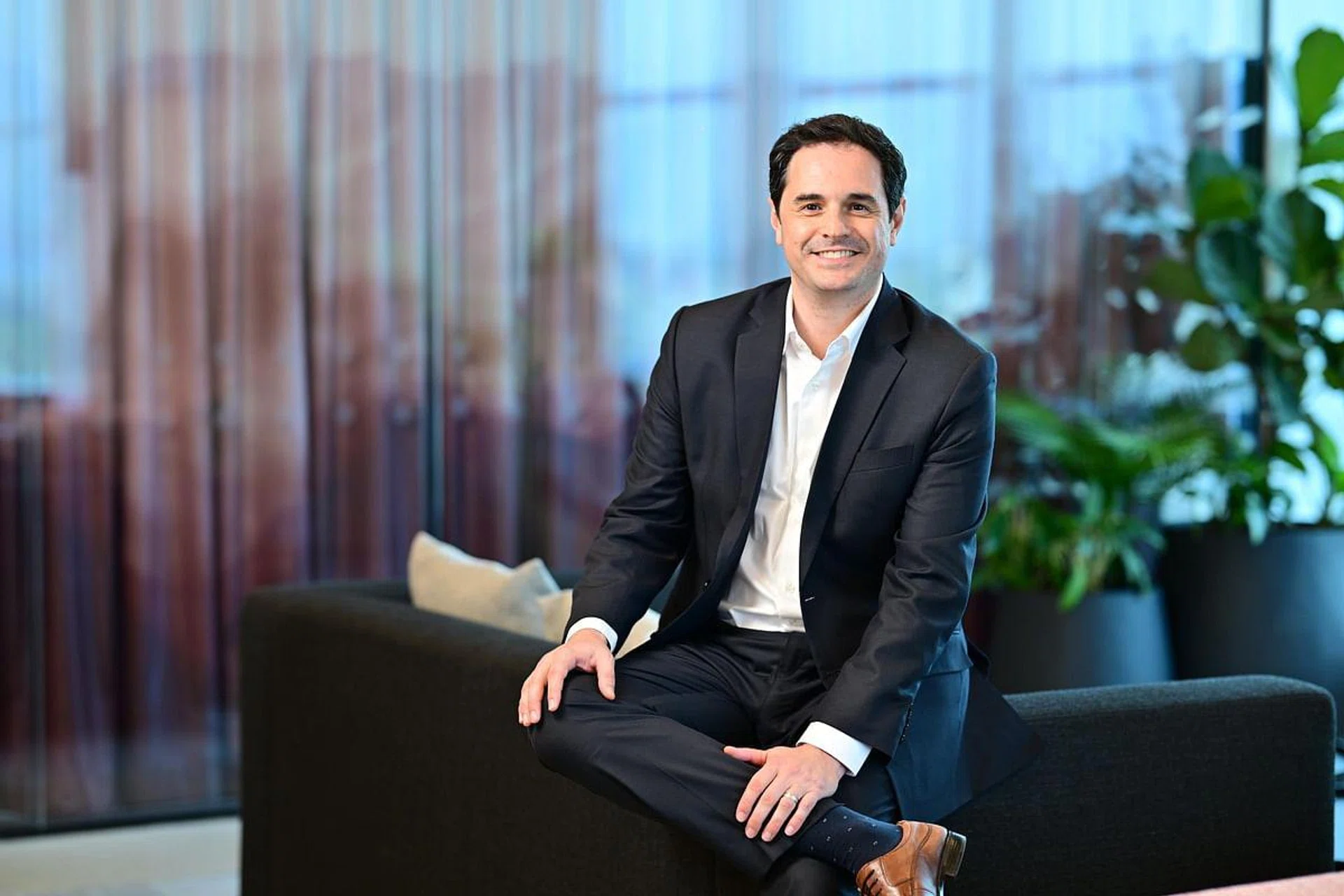
“How They See It” is where we delve into the minds of those steering the ships of today’s most dynamic companies. In this instalment, we ask Dion Warren, Area Head of India and Southeast Asia for Takeda Pharmaceutical Company, a leading Japanese multinational pharmaceutical company. He shares the unique barriers to accessing medical services in Southeast Asia, the strategies they employ to address these barriers, and about how Takeda has engraved a people first philosophy into their company ethos. Click here for more interviews with business leaders.
Over two billion people across the globe are unable to access essential healthcare, left waiting for life-saving treatments that never come. This is a reality that has shaped my life’s work in the pharmaceutical industry. I’m driven by the belief that medicine should reach everyone, regardless of where they happen to be. And yet, here in Southeast Asia, where healthcare disparities are as varied as the countries themselves, the barriers go beyond availability. It's about affordability, local expertise, and fragmented systems that can sometimes feel insurmountable.
To tackle this, Takeda has integrated Access to Medicines into part of their company ethos. The goal is to push for a larger goal of policy change in regions that struggle with complex healthcare needs and limited resources to ensure long term sustainable healthcare in the region. In the meantime, we are working with the communities to palleviate the financial burden of medicines on our patients.
My inspiration traces back to my mother. She was a radiology technician, eventually managing a department, and I still remember the weekends and late nights she spent at the hospital, sometimes bringing me along. Watching her, I understood early on that healthcare wasn’t just a profession — it was a service.
In my years in this industry, I’ve seen that same dedication reflected in pharmaceutical work. Our medicines and vaccines mean little without patients to receive them. It’s not about “doing good” as an add-on to our operations. Rather, it’s about embedding this service into the very core of what we do.
Region specific issues
One of the most pressing issues we face in Southeast Asia is the lack of government-funded reimbursement for medicines, which is common in places like Europe. Here, governments often operate within stringent budgets, and need to allocate their resources carefully, leaving little room for reimbursement initiatives.
In response, we looked for alternative ways to alleviate the financial burden on patients. Our tiered pricing model, adjusted based on a country’s economic profile, is one way we bridge that gap. Beyond that, we launched patient affordability-based programmes, where, if someone is diagnosed with a disease treatable with our medicine, a third party assesses their ability to pay. The patient covers what they can; we cover the rest.
This initiative extends across 19 low-and middle-income countries, helping 6,700 patients access medicines so far.
This approach serves as a crucial middle ground, recognising economic realities while enabling us to offer a lifeline where it’s most needed. I’m proud of this model, which started as a single pilot and has since grown across continents. In each place, we learn something new, refining our understanding of how healthcare systems vary — and how we must adapt to meet these differences.
Local, not global
Take Vietnam as an example. We discovered that the country had no reliable diagnostic infrastructure for a rare disease we treat, and yet, based on epidemiological data, there were likely thousands of undiagnosed patients. Without accurate diagnostics, we couldn’t effectively allocate resources or, more importantly, help those suffering.
Working closely with both the Vietnamese and Japanese governments, we established Centers of Excellence across Vietnam which also serve as training grounds for local talent to specialise in medical research, diagnostic skills, and treatment methodologies that will ultimately benefit the entire population. It’s a partnership that exemplifies what localised healthcare should look like — rooted in knowledge-sharing and cultural understanding.
Healthcare, to us, is fundamentally local. It’s about understanding the journey each patient takes, from first symptom to diagnosis and treatment, and recognising that no two journeys are identical. Our local teams know the cultural and systemic nuances of their communities. They’re the ones building trust on the ground, crafting solutions that respect the realities of each place. Without their expertise, Takeda’s work would be a mere template, far removed from the lived experiences of the patients we aim to serve.
Innovation and moving forward
In reflecting on the progress we’ve seen, I think back to those early days when I started in this field. It was never only about scientific innovation; it was about making that innovation count where it matters most. Right now, I’m working to introduce a dengue vaccine across Southeast Asia — a region where the disease is endemic, affecting millions yearly. Beyond launching a vaccine, my focus is on creating an infrastructure of prevention, control, and public awareness in partnership with governments. It’s an opportunity to redefine what public health can achieve in the region.
But the dengue vaccine is part of a broader vision. In the coming years, I believe healthcare across Southeast Asia will look vastly different. We’re already witnessing the beginnings of this transformation: improved diagnostics, strengthened patient care, and even policy shifts that will make healthcare more equitable and accessible.
I know that what we’re building now — whether through a new vaccine, a pricing model, or a localised healthcare approach — will have a lasting impact. It’s a legacy I hope will continue to grow, empowering patients and reshaping the healthcare landscape for years to come.
This work has always been about people, from my mother’s dedication to my own drive to find new paths in regions where conventional methods fall short. In every initiative, there’s a personal connection, a story that fuels the next step. For me, it’s a mission that extends far beyond boardrooms or balance sheets. It’s a testament to what’s possible when healthcare isn’t confined by geography but driven by a commitment to reach those who need it most.