%22%3E%0A%3Cpath%20d%3D%22M412%20101.2H393.7C393.1%20101.2%20392.3%20100.9%20391.8%20100.5C377.3%2087.6004%20362.9%2074.6004%20348.4%2061.6004C344.8%2058.4004%20341.3%2055.2004%20337.7%2052.0004C337.1%2051.5004%20336.2%2051.1004%20335.5%2051.0004C334.2%2050.8004%20333%2051.0004%20331.5%2051.0004V101.1H316.7V0.100391H331.4V44.3004C331.9%2044.3004%20332.2%2044.4004%20332.5%2044.4004C334.9%2044.4004%20337.2%2044.5004%20339.6%2044.4004C340.4%2044.4004%20341.3%2044.0004%20341.8%2043.5004C351.6%2034.4004%20361.4%2025.2004%20371.1%2016.0004C376.5%2010.9004%20381.9%205.90039%20387.3%200.800391C387.9%200.200391%20388.5%200.000390626%20389.3%200.000390626H400.9C384.2%2015.8004%20367.8%2031.3004%20351.2%2047.0004C371.5%2065.0004%20391.8%2082.9004%20412.1%20100.9C412.1%20101%20412.1%20101.1%20412%20101.2ZM180.9%20101.2C184.1%2094.9004%20187.2%2088.9004%20190.3%2082.8004C198.3%2067.3004%20206.2%2051.8004%20214.2%2036.2004C220.3%2024.4004%20226.4%2012.5004%20232.4%200.700391C232.7%200.100391%20233%20-0.0996094%20233.7%20-0.0996094H248.1C248.8%20-0.0996094%20249.2%200.100391%20249.6%200.800391C256%2013.3004%20262.4%2025.7004%20268.8%2038.2004C279.3%2058.6004%20289.8%2079.0004%20300.3%2099.5004C300.5%20100%20300.8%20100.4%20301.1%20101.1C300.5%20101.1%20300.1%20101.2%20299.7%20101.2H286.5C285.6%20101.2%20285.1%20100.9%20284.7%20100.2C280.1%2091.3004%20275.4%2082.4004%20270.8%2073.4004C270.1%2072.1004%20269.3%2071.6004%20267.8%2071.6004H209.9C208.7%2071.6004%20208.1%2072.0004%20207.5%2073.1004C202.9%2082.1004%20198.2%2091.0004%20193.6%20100C193.1%20101%20192.6%20101.3%20191.5%20101.3C188.4%20101.2%20185.3%20101.3%20182.3%20101.3C182%20101.2%20181.6%20101.2%20180.9%20101.2ZM239.1%2011.4004C230%2029.2004%20221.1%2046.7004%20212.1%2064.3004H266.4C257.2%2046.7004%20248.2%2029.2004%20239.1%2011.4004ZM0%200.000390626H43.4C51.2%200.000390626%2058.7%201.20039%2065.7%204.80039C75.9%2010.0004%2078.9%2018.0004%2078.6%2027.4004C78.3%2034.3004%2076%2040.5004%2071.2%2045.5004C67.3%2049.6004%2062.4%2052.3004%2057.1%2054.3004C50.6%2056.7004%2043.9%2058.0004%2037.1%2058.6004C30.1%2059.2004%2023.1%2059.4004%2016.2%2059.7004C15.8%2059.7004%2015.3%2059.8004%2014.8%2059.8004V101.1H0.1C0%2067.4004%200%2033.8004%200%200.000390626ZM14.8%207.10039V52.2004C23.7%2052.4004%2032.6%2052.3004%2041.2%2050.1004C44.4%2049.3004%2047.6%2048.2004%2050.6%2046.7004C58.4%2043.0004%2062.3%2036.7004%2062.7%2028.0004C63%2019.9004%2059.5%2014.1004%2052.4%2010.5004C47.6%208.00039%2042.5%207.10039%2037.2%207.10039H14.8ZM95.9%20101.1V0.100391H167.3V7.20039H110.7V44.7004H158.1V51.9004H110.8V93.9004H171.1V101C146.1%20101.1%20121%20101.1%2095.9%20101.1Z%22%20fill%3D%22black%22%2F%3E%0A%3Cpath%20d%3D%22M35.0004%2025.7996H42.5004V20.6996H44.8004V33.1996H42.6004V27.5996H34.9004V33.2996H32.7004V20.7996H35.0004V25.7996ZM54.4004%2025.8996V27.2996H48.9004V31.6996H55.9004C55.9004%2032.1996%2056.0004%2032.5996%2056.0004%2033.0996H46.5004V20.5996H55.5004V21.8996H49.0004V25.7996C50.7004%2025.8996%2052.5004%2025.8996%2054.4004%2025.8996ZM25.9004%2033.0996H23.5004V21.9996H17.9004V20.6996H31.6004V22.0996H27.1004C26.2004%2022.0996%2025.9004%2022.2996%2025.9004%2023.1996C26.0004%2026.0996%2025.9004%2028.9996%2025.9004%2031.7996V33.0996Z%22%20fill%3D%22black%22%2F%3E%0A%3C%2Fg%3E%0A%3Cdefs%3E%0A%3CclipPath%20id%3D%22clip0_388_462%22%3E%0A%3Crect%20width%3D%22411%22%20height%3D%22101.2%22%20fill%3D%22white%22%2F%3E%0A%3C%2FclipPath%3E%0A%3C%2Fdefs%3E%0A%3C%2Fsvg%3E%0A)
The MD of BYD Singapore on why Denza may be his boldest play yet
As BYD cements leadership, James Ng positions Denza as the strategic bridge between electrification at scale and credible luxury ambition.
By Zat Astha /
Share this article
In Singapore’s tightly regulated automotive market — where the price of a Certificate of Entitlement can eclipse the cost of the vehicle itself — dominance rarely happens by accident. By 2024, BYD had become the country’s number one car brand, a position it has maintained since.
The more compelling question now is not how it won, but what it does after winning. The answer begins with DENZA.
“Of course,” James Ng, managing director of BYD Singapore and the Philippines, says when asked whether BYD still holds the top position. “We have been number one since 2024.” Reaching that summit, he suggests, alters the psychology of growth.
“For us, the focus has always been on building the right foundations before expanding further. This means ensuring that product quality, safety standards, and after-sales capabilities are firmly in place, and that our dealer partners and teams are well-supported. We believe sustainable growth comes from consistency and discipline rather than short-term momentum.”
The real arms race
That discipline has since defined BYD’s global ascent. Founded in 1995 as a rechargeable battery manufacturer in Shenzhen, the company entered the automotive business in 2003 and spent two decades refining vertical integration.
It manufactures its own batteries, semiconductors, and core drivetrain components, insulating itself from supply chain volatility while maintaining cost control. By 2023, it had overtaken Tesla in several quarters of battery electric vehicle sales and emerged as the world’s largest producer of plug-in electric vehicles, including both fully electric and hybrid models.
In 2024, BYD delivered over 3 million new-energy vehicles globally — a scale few legacy automakers had matched in such a compressed timeframe.

In Singapore, where EV adoption has accelerated sharply — electric vehicles accounted for close to one-third of new car registrations in 2024, compared to single-digit penetration only a few years prior — that industrial scale translated into local credibility.
Government incentives, a target of 60,000 charging points by 2030, and the eventual phase-out of internal combustion engine registrations created structural momentum. But Ng insists that policy tailwinds alone do not explain consumer loyalty.
“Singapore consumers are discerning and tend to look at the full ownership experience rather than just the product itself,” he says. “Beyond the core strengths of proven electrification technology, everyday usability, and practical driving range, many customers also resonated with BYD’s approach to ownership as a lifestyle journey.”
A layered brand architecture
Today, that “lifestyle journey” has extended beyond showroom transactions. Retail spaces incorporate cafes; community engagements cultivate brand familiarity; partnerships embed mobility into daily routines. The car becomes part of an ecosystem rather than a standalone purchase.
Yet, market leadership creates its own tension. Once a brand becomes mainstream, aspiration shifts. That is where DENZA enters with strategic precision.
“Actually, when we look at DENZA, it is the premium brand of BYD,” Ng explains. “To us, ‘premium’ is about the experience, the technology, and the refinement of the vehicle — the outlook, the interior refinement, the touch, and all the sensors. That’s how we classify DENZA.”
DENZA’s origins trace back to 2010, when it was launched as a joint venture between BYD and Mercedes-Benz, intended to fuse Chinese electrification expertise with German engineering sensibility.
Over time, BYD consolidated control and repositioned DENZA as its flagship premium marque. In China, DENZA has gained traction among affluent urban buyers seeking high-tech luxury alternatives to established European brands.
Now, that premium ambition unfolds in Singapore.

The first DENZA model introduced locally was the D9 — a large executive MPV that quietly disrupted assumptions about what luxury could look like. Rather than defaulting to a sedan silhouette, DENZA began with space, comfort, and family-oriented refinement.
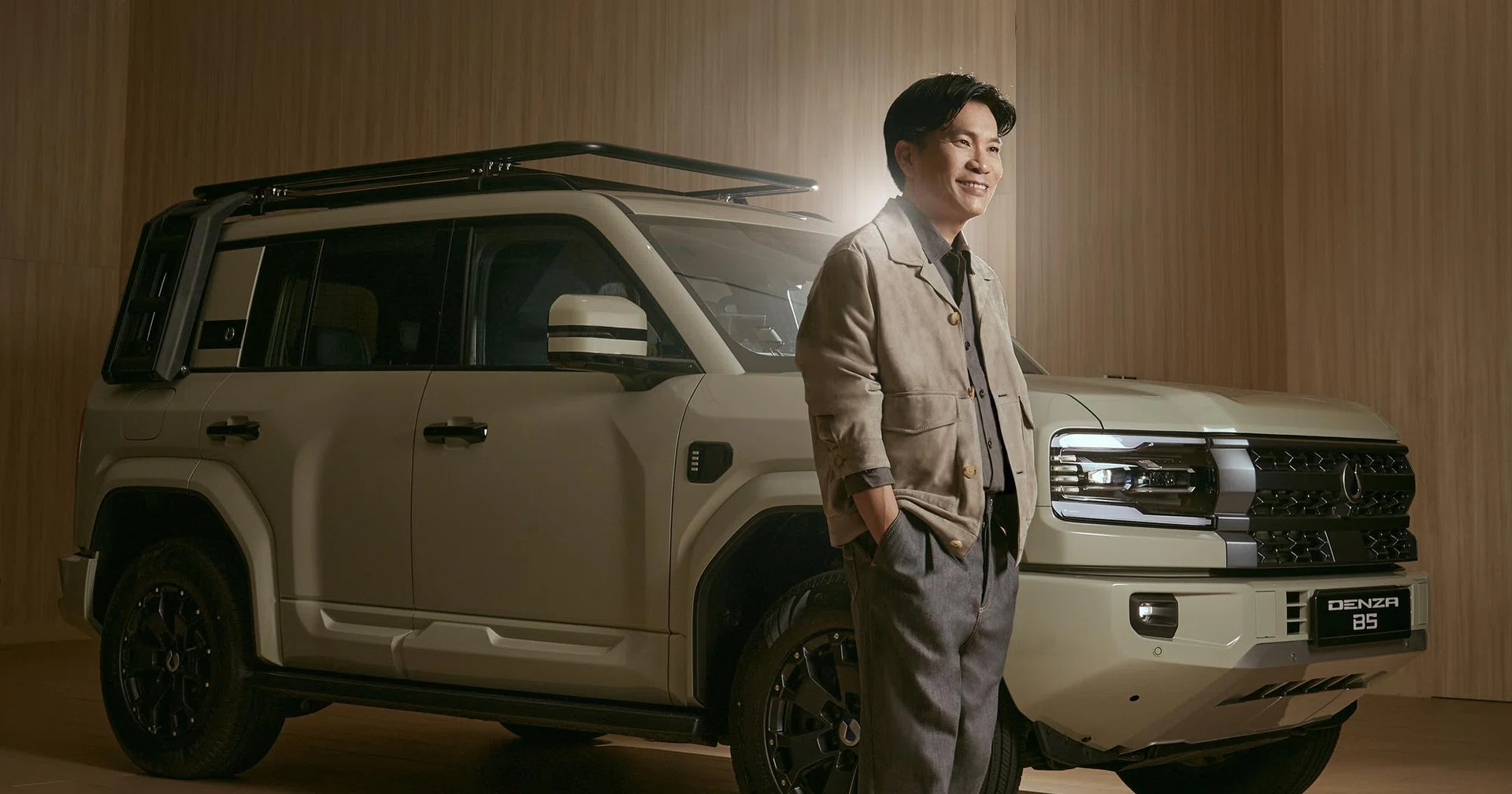
The second entrant, the DENZA B5 Orion — known in China as the Bao 5 or Leopard 5 — signals a different expression: a premium SUV that projects structural confidence.
“DENZA’s product planning is guided by a clear understanding that premium customers in Singapore have diverse lifestyles and expectations,” Ng says. “Rather than offering a one-size-fits-all solution, the line-up is designed to address distinct use cases while maintaining a consistent brand character centred on comfort, quality, and advanced technology.”
Composure as luxury
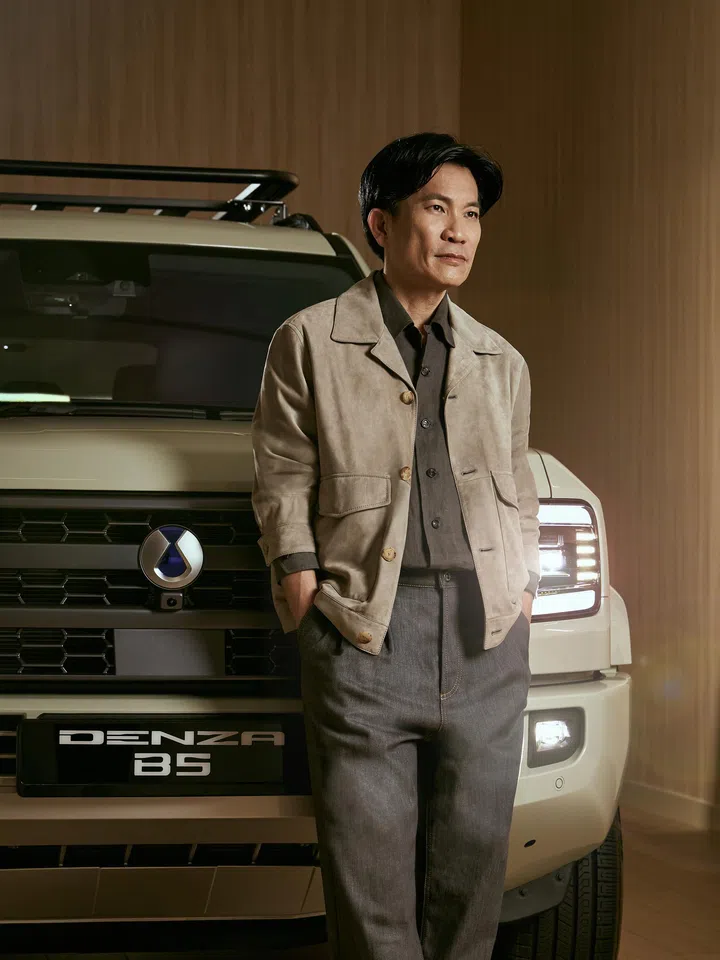
The B5 embodies that philosophy. “The DENZA B5 represents a more versatile expression of the DENZA brand. It is designed for customers who value refinement and comfort, but who also want the confidence to explore beyond everyday urban driving.”
That exploration is as much psychological as geographical. Singapore drivers may rarely encounter rugged terrain, yet the assurance of capability carries symbolic weight. “The emphasis is not on extreme performance, but on delivering capability in a way that feels controlled, composed, and reassuring,” Ng says.
When asked whether buyers will truly take it off-road, he acknowledges the nuance. “It’s possible in Malaysia. But even in Singapore, there are still some roads considered off-road where they can try it. But people like it even if they don’t go off-road because the driving experience is much different. The power, the stability, the control, the response — these are the things this vehicle can demonstrate.”
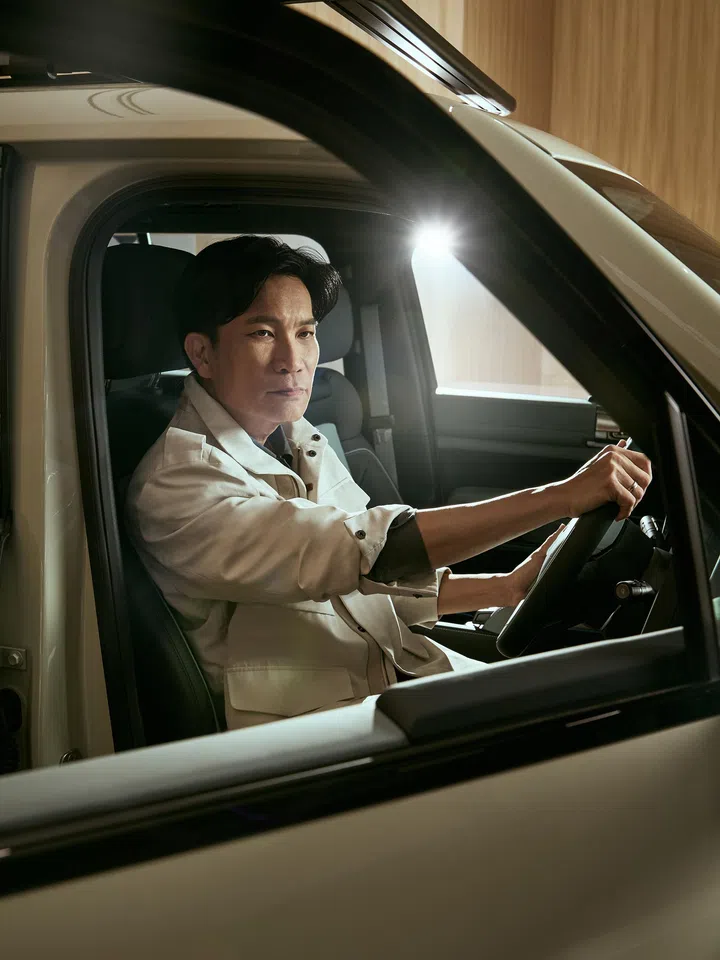
Premium, in this context, rests on composure — on how torque is delivered, how suspension absorbs irregularities, how cabin materials respond to touch, how sensor arrays coordinate invisibly to enhance safety. It is less about theatrics and more about orchestration.
The strategy does not end with the B5. In Q3 2026, the DENZA Z9 GT sedan will arrive, completing a three-pronged portfolio: MPV, SUV, and sedan. “If they choose to go premium, they will either like our MPV, our SUV, or the sedan,” Ng says. Together, they articulate a spectrum rather than a singular archetype of luxury.
Luxury anchored in lithium
Still, electrification remains the foundation beneath DENZA’s refinement. Consumer questions persist. “Of course, EV is a new technology, so if you look at it, people definitely ask: Is it safe to use? Is it safe to ride? Is it economical? Is the experience good?” Ng notes.
Concerns range from battery longevity to electromagnetic myths, from long-term resale value to ride comfort. BYD’s proprietary Blade Battery — engineered for structural rigidity and thermal stability — offers a technical counterpoint to safety concerns. Vertical integration strengthens the economic case. Local infrastructure expansion reduces range uncertainty. Over time, reassurance accumulates.
Ng frames long-term success in deceptively simple terms. “Long-term success is when someone wants to buy a car, their first reaction is, ‘Why not get a BYD?’ It is about whether customers continue to place their trust in BYD over time, and whether we contribute positively to Singapore’s broader mobility transition.”
That aspiration applies equally to DENZA. If BYD normalised electric mobility in Singapore, DENZA now attempts to elevate it — translating battery chemistry and software integration into tactile luxury. Whether that formula reshapes Singapore’s premium automotive hierarchy will unfold over the coming years. But the foundations, as Ng repeatedly emphasises, are already in place.
Photography: Angela Guo
Art direction: Fazlie Hashim
Styling: Dolphin Yeo
Grooming: Joanna Ong, using Charlotte Tilbury and Oribe