%22%3E%0A%3Cpath%20d%3D%22M412%20101.2H393.7C393.1%20101.2%20392.3%20100.9%20391.8%20100.5C377.3%2087.6004%20362.9%2074.6004%20348.4%2061.6004C344.8%2058.4004%20341.3%2055.2004%20337.7%2052.0004C337.1%2051.5004%20336.2%2051.1004%20335.5%2051.0004C334.2%2050.8004%20333%2051.0004%20331.5%2051.0004V101.1H316.7V0.100391H331.4V44.3004C331.9%2044.3004%20332.2%2044.4004%20332.5%2044.4004C334.9%2044.4004%20337.2%2044.5004%20339.6%2044.4004C340.4%2044.4004%20341.3%2044.0004%20341.8%2043.5004C351.6%2034.4004%20361.4%2025.2004%20371.1%2016.0004C376.5%2010.9004%20381.9%205.90039%20387.3%200.800391C387.9%200.200391%20388.5%200.000390626%20389.3%200.000390626H400.9C384.2%2015.8004%20367.8%2031.3004%20351.2%2047.0004C371.5%2065.0004%20391.8%2082.9004%20412.1%20100.9C412.1%20101%20412.1%20101.1%20412%20101.2ZM180.9%20101.2C184.1%2094.9004%20187.2%2088.9004%20190.3%2082.8004C198.3%2067.3004%20206.2%2051.8004%20214.2%2036.2004C220.3%2024.4004%20226.4%2012.5004%20232.4%200.700391C232.7%200.100391%20233%20-0.0996094%20233.7%20-0.0996094H248.1C248.8%20-0.0996094%20249.2%200.100391%20249.6%200.800391C256%2013.3004%20262.4%2025.7004%20268.8%2038.2004C279.3%2058.6004%20289.8%2079.0004%20300.3%2099.5004C300.5%20100%20300.8%20100.4%20301.1%20101.1C300.5%20101.1%20300.1%20101.2%20299.7%20101.2H286.5C285.6%20101.2%20285.1%20100.9%20284.7%20100.2C280.1%2091.3004%20275.4%2082.4004%20270.8%2073.4004C270.1%2072.1004%20269.3%2071.6004%20267.8%2071.6004H209.9C208.7%2071.6004%20208.1%2072.0004%20207.5%2073.1004C202.9%2082.1004%20198.2%2091.0004%20193.6%20100C193.1%20101%20192.6%20101.3%20191.5%20101.3C188.4%20101.2%20185.3%20101.3%20182.3%20101.3C182%20101.2%20181.6%20101.2%20180.9%20101.2ZM239.1%2011.4004C230%2029.2004%20221.1%2046.7004%20212.1%2064.3004H266.4C257.2%2046.7004%20248.2%2029.2004%20239.1%2011.4004ZM0%200.000390626H43.4C51.2%200.000390626%2058.7%201.20039%2065.7%204.80039C75.9%2010.0004%2078.9%2018.0004%2078.6%2027.4004C78.3%2034.3004%2076%2040.5004%2071.2%2045.5004C67.3%2049.6004%2062.4%2052.3004%2057.1%2054.3004C50.6%2056.7004%2043.9%2058.0004%2037.1%2058.6004C30.1%2059.2004%2023.1%2059.4004%2016.2%2059.7004C15.8%2059.7004%2015.3%2059.8004%2014.8%2059.8004V101.1H0.1C0%2067.4004%200%2033.8004%200%200.000390626ZM14.8%207.10039V52.2004C23.7%2052.4004%2032.6%2052.3004%2041.2%2050.1004C44.4%2049.3004%2047.6%2048.2004%2050.6%2046.7004C58.4%2043.0004%2062.3%2036.7004%2062.7%2028.0004C63%2019.9004%2059.5%2014.1004%2052.4%2010.5004C47.6%208.00039%2042.5%207.10039%2037.2%207.10039H14.8ZM95.9%20101.1V0.100391H167.3V7.20039H110.7V44.7004H158.1V51.9004H110.8V93.9004H171.1V101C146.1%20101.1%20121%20101.1%2095.9%20101.1Z%22%20fill%3D%22black%22%2F%3E%0A%3Cpath%20d%3D%22M35.0004%2025.7996H42.5004V20.6996H44.8004V33.1996H42.6004V27.5996H34.9004V33.2996H32.7004V20.7996H35.0004V25.7996ZM54.4004%2025.8996V27.2996H48.9004V31.6996H55.9004C55.9004%2032.1996%2056.0004%2032.5996%2056.0004%2033.0996H46.5004V20.5996H55.5004V21.8996H49.0004V25.7996C50.7004%2025.8996%2052.5004%2025.8996%2054.4004%2025.8996ZM25.9004%2033.0996H23.5004V21.9996H17.9004V20.6996H31.6004V22.0996H27.1004C26.2004%2022.0996%2025.9004%2022.2996%2025.9004%2023.1996C26.0004%2026.0996%2025.9004%2028.9996%2025.9004%2031.7996V33.0996Z%22%20fill%3D%22black%22%2F%3E%0A%3C%2Fg%3E%0A%3Cdefs%3E%0A%3CclipPath%20id%3D%22clip0_388_462%22%3E%0A%3Crect%20width%3D%22411%22%20height%3D%22101.2%22%20fill%3D%22white%22%2F%3E%0A%3C%2FclipPath%3E%0A%3C%2Fdefs%3E%0A%3C%2Fsvg%3E%0A)
Powering up Punggol Digital District for the green future
JTC appoints Univers and PacificLight Power to design, build, and operate Singapore’s first district-level Smart Grid. This project is the part of the district’s goals to achieve net-zero emissions by 2045.
By Jamie Wong /
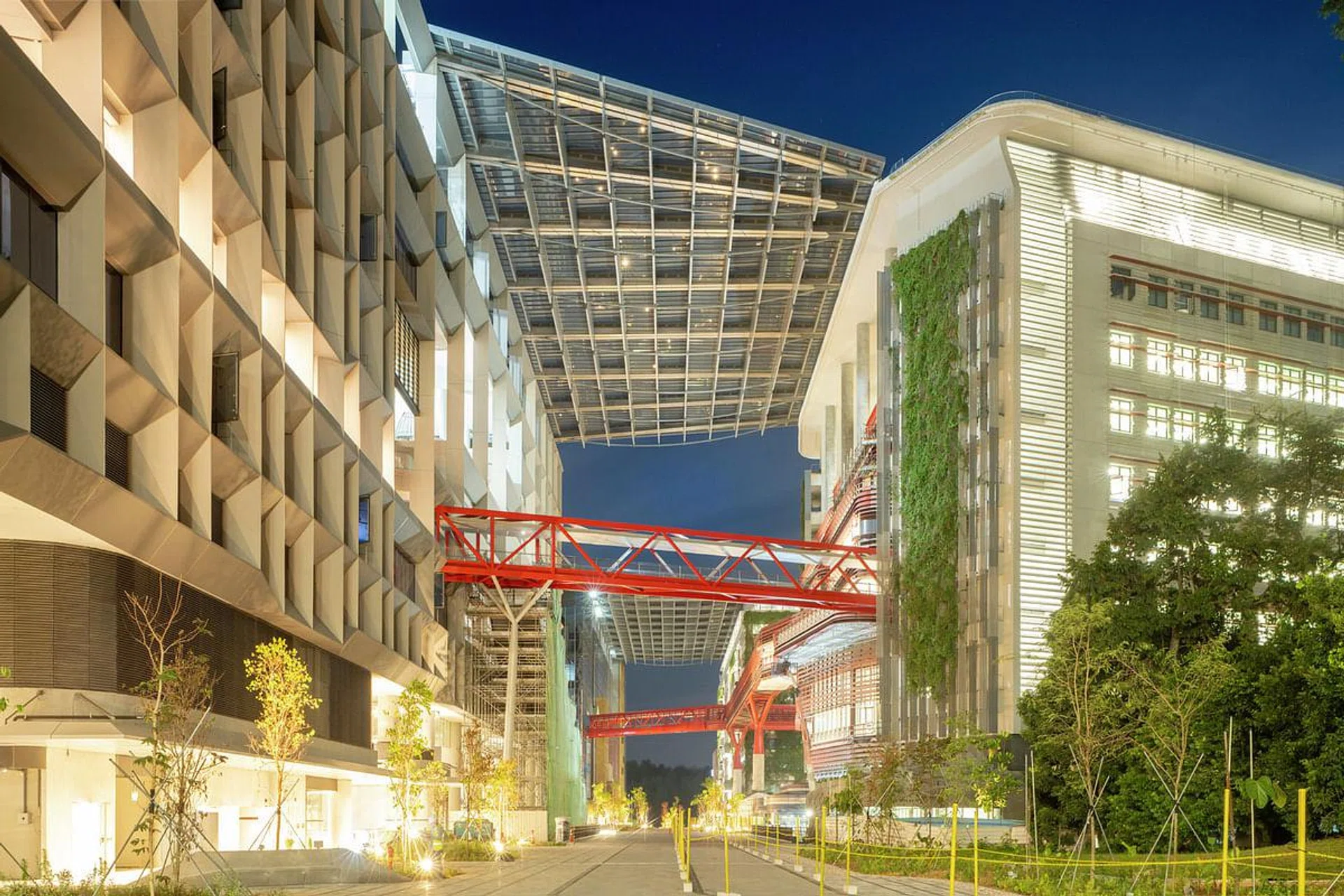
JTC appoints Univers, a global decarbonisation software firm, and PacificLight Power, a Singapore-based power generator and retailer, to design, build, and operate Singapore’s first district-level Smart Grid. This Smart Grid will be housed in Punggol Digital District (PDD), and is part of Singapore’s efforts to transition to green energy.
Stakeholders
Jurong Town Corporation (JTC), a statutory board under Singapore’s Ministry of Trade and Industry, plays a critical role as one of Singapore’s principal developers, managing industrial estates and facilities. By implementing a Smart Grid in PDD, JTC aims to support the district’s goal of achieving net-zero emissions by 2045. The project is a collaborative effort, with development oversight from the Energy Market Authority (EMA) and the Public Sector Science & Technology Policy & Plans Office (S&TPPO) under the Prime Minister’s Office.
Michael Ding, Global Executive Director, Univers, said, “Univers is proud to be partnering with JTC, EMA and S&TPPO on this transformative Smart Grid project. The project brings together our digital capabilities and energy management solutions to help businesses in PDD achieve energy efficiency and decarbonisation, underscoring our commitment to supporting Singapore’s smart nation and energy transition goals.”
Understanding the smart grid
A Smart Grid is an electricity network that uses digital means to monitor and manage the flow of energy. Unlike traditional grids that deliver power one way, smart grids allow for two-way communication, receiving data to adjust power distribution according to supply and demand, This technology ensures that energy is used efficiently, minimising waste and cost.
This is especially useful when used in conjunction with renewable energy, which can vary. In the case of the PDD project, the smart grid is used alongside solar panels — different days may have more or less solar energy than is necessary for the district’s daily operations. Therefore, the smart grid helps to balance the power supply and ensures that the grid stays reliable and stable despite these fluctuations. Overall, it supports clean energy goals while reducing the need to build costly new power infrastructure.
District goals
The solar panels on the Smart Grid are part of a larger installation in PDD. The total area of solar panels will produce over 3,000 megawatt-hours of clean energy annually, seemingly indicating that the system is designed to maximise renewable energy generation.
The PDD Smart Grid is also designed to help the district’s occupants participate in demand response. The energy produced by this installation will charge time-based rates, where charges during peak periods are higher. This will encourage consumers to reduce their usage during this time period.
“PDD is a living lab where companies can test their systems in an operational business park setting. The Smart Grid not only generates, transmits and stores energy efficiently, it also serves as a platform for testing innovative solutions to advance our sustainability goals,” said Nelson Liew, Group Director, New Estates, JTC.
“We look forward to working with Univers and PacificLight to leverage deep technological expertise and strong track record in energy solutions to bring this vision to life, setting a benchmark for future industrial developments. JTC and PDD tenants can then look forward to enjoying reduced cost of renewable electricity supply while leveraging onsite renewables energy generation.”
Sharing with the neighbours
The project is currently in the design phase, with completion expected in 2026. Once operational, PDD aims to improve its energy efficiency by over 50%, surpassing the Green Mark Platinum standard — a governmental green rating that assesses environmental impact of a building. JTC and its partners also aim to achieve an additional 20% energy savings through artificial intelligence and machine learning models that can study and propose more efficient and optimal uses of energy across the district.
While initially implemented in a business district, this Smart Grid model could eventually be extended to local neighbourhoods, combining renewable energy with real-time monitoring to enhance energy efficiency in domestic settings
Low Xin Wei, Assistant Chief Executive, Markets and Systems Division, EMA, said: “PDD, with its mix of commercial and educational facilities, is a microcosm of how such smart grid management capabilities can eventually be scaled island-wide. EMA is glad to partner JTC and S&TPPO on initiatives that will make an impact on the Singapore Energy Transition.”