%22%3E%0A%3Cpath%20d%3D%22M412%20101.2H393.7C393.1%20101.2%20392.3%20100.9%20391.8%20100.5C377.3%2087.6004%20362.9%2074.6004%20348.4%2061.6004C344.8%2058.4004%20341.3%2055.2004%20337.7%2052.0004C337.1%2051.5004%20336.2%2051.1004%20335.5%2051.0004C334.2%2050.8004%20333%2051.0004%20331.5%2051.0004V101.1H316.7V0.100391H331.4V44.3004C331.9%2044.3004%20332.2%2044.4004%20332.5%2044.4004C334.9%2044.4004%20337.2%2044.5004%20339.6%2044.4004C340.4%2044.4004%20341.3%2044.0004%20341.8%2043.5004C351.6%2034.4004%20361.4%2025.2004%20371.1%2016.0004C376.5%2010.9004%20381.9%205.90039%20387.3%200.800391C387.9%200.200391%20388.5%200.000390626%20389.3%200.000390626H400.9C384.2%2015.8004%20367.8%2031.3004%20351.2%2047.0004C371.5%2065.0004%20391.8%2082.9004%20412.1%20100.9C412.1%20101%20412.1%20101.1%20412%20101.2ZM180.9%20101.2C184.1%2094.9004%20187.2%2088.9004%20190.3%2082.8004C198.3%2067.3004%20206.2%2051.8004%20214.2%2036.2004C220.3%2024.4004%20226.4%2012.5004%20232.4%200.700391C232.7%200.100391%20233%20-0.0996094%20233.7%20-0.0996094H248.1C248.8%20-0.0996094%20249.2%200.100391%20249.6%200.800391C256%2013.3004%20262.4%2025.7004%20268.8%2038.2004C279.3%2058.6004%20289.8%2079.0004%20300.3%2099.5004C300.5%20100%20300.8%20100.4%20301.1%20101.1C300.5%20101.1%20300.1%20101.2%20299.7%20101.2H286.5C285.6%20101.2%20285.1%20100.9%20284.7%20100.2C280.1%2091.3004%20275.4%2082.4004%20270.8%2073.4004C270.1%2072.1004%20269.3%2071.6004%20267.8%2071.6004H209.9C208.7%2071.6004%20208.1%2072.0004%20207.5%2073.1004C202.9%2082.1004%20198.2%2091.0004%20193.6%20100C193.1%20101%20192.6%20101.3%20191.5%20101.3C188.4%20101.2%20185.3%20101.3%20182.3%20101.3C182%20101.2%20181.6%20101.2%20180.9%20101.2ZM239.1%2011.4004C230%2029.2004%20221.1%2046.7004%20212.1%2064.3004H266.4C257.2%2046.7004%20248.2%2029.2004%20239.1%2011.4004ZM0%200.000390626H43.4C51.2%200.000390626%2058.7%201.20039%2065.7%204.80039C75.9%2010.0004%2078.9%2018.0004%2078.6%2027.4004C78.3%2034.3004%2076%2040.5004%2071.2%2045.5004C67.3%2049.6004%2062.4%2052.3004%2057.1%2054.3004C50.6%2056.7004%2043.9%2058.0004%2037.1%2058.6004C30.1%2059.2004%2023.1%2059.4004%2016.2%2059.7004C15.8%2059.7004%2015.3%2059.8004%2014.8%2059.8004V101.1H0.1C0%2067.4004%200%2033.8004%200%200.000390626ZM14.8%207.10039V52.2004C23.7%2052.4004%2032.6%2052.3004%2041.2%2050.1004C44.4%2049.3004%2047.6%2048.2004%2050.6%2046.7004C58.4%2043.0004%2062.3%2036.7004%2062.7%2028.0004C63%2019.9004%2059.5%2014.1004%2052.4%2010.5004C47.6%208.00039%2042.5%207.10039%2037.2%207.10039H14.8ZM95.9%20101.1V0.100391H167.3V7.20039H110.7V44.7004H158.1V51.9004H110.8V93.9004H171.1V101C146.1%20101.1%20121%20101.1%2095.9%20101.1Z%22%20fill%3D%22black%22%2F%3E%0A%3Cpath%20d%3D%22M35.0004%2025.7996H42.5004V20.6996H44.8004V33.1996H42.6004V27.5996H34.9004V33.2996H32.7004V20.7996H35.0004V25.7996ZM54.4004%2025.8996V27.2996H48.9004V31.6996H55.9004C55.9004%2032.1996%2056.0004%2032.5996%2056.0004%2033.0996H46.5004V20.5996H55.5004V21.8996H49.0004V25.7996C50.7004%2025.8996%2052.5004%2025.8996%2054.4004%2025.8996ZM25.9004%2033.0996H23.5004V21.9996H17.9004V20.6996H31.6004V22.0996H27.1004C26.2004%2022.0996%2025.9004%2022.2996%2025.9004%2023.1996C26.0004%2026.0996%2025.9004%2028.9996%2025.9004%2031.7996V33.0996Z%22%20fill%3D%22black%22%2F%3E%0A%3C%2Fg%3E%0A%3Cdefs%3E%0A%3CclipPath%20id%3D%22clip0_388_462%22%3E%0A%3Crect%20width%3D%22411%22%20height%3D%22101.2%22%20fill%3D%22white%22%2F%3E%0A%3C%2FclipPath%3E%0A%3C%2Fdefs%3E%0A%3C%2Fsvg%3E%0A)
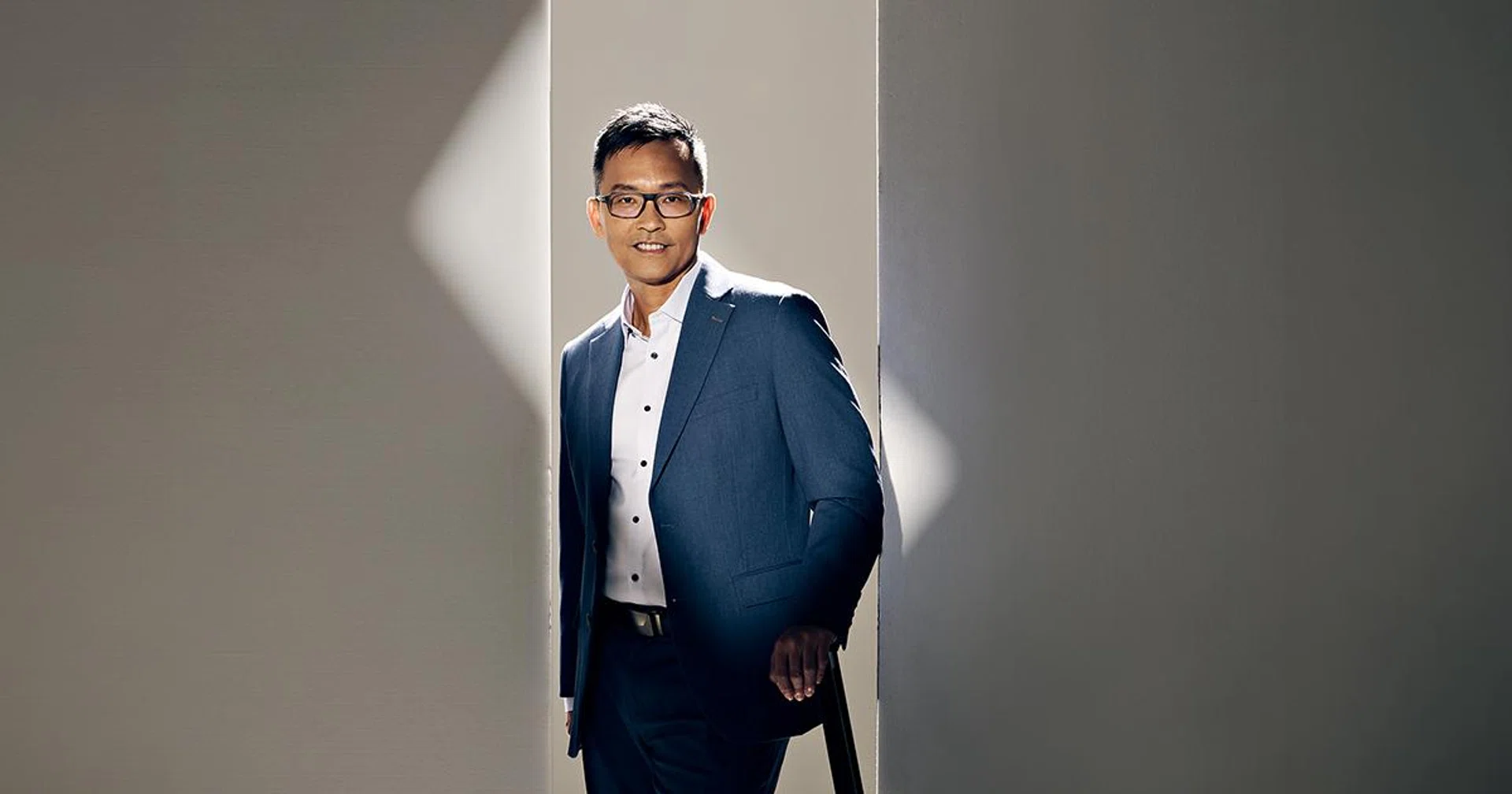
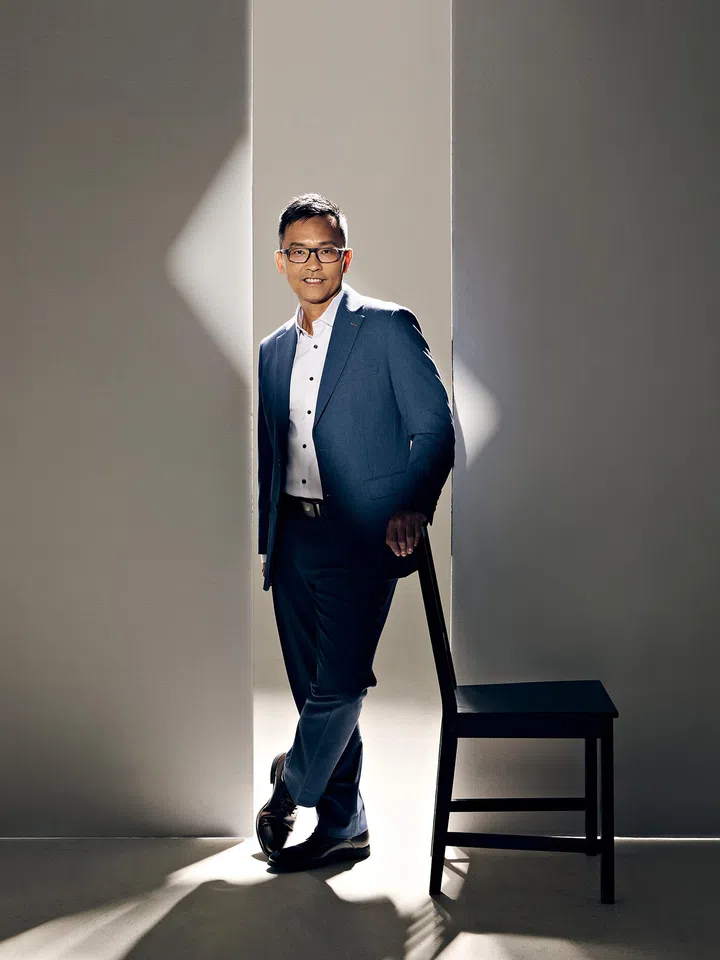
Mid-career professionals are helping Singapore build its healthcare scene, says Lee Mun Choon
Singapore’s wards and care centres are filling with former bankers, engineers and retail workers. What they bring to the bedside may be exactly what an ageing nation needs, according to the general manager of HMI Institute of Health Sciences.
By Lyn Chan /
Share this article
There’s a phrase general manager Lee Mun Choon hears a lot at HMI Institute of Health Sciences (HMI Institute). People walking in for course previews, often in their 40s or 50s, with decades of a completely different career behind them, will say some version of the same thing: I want to do something I can be proud to tell my family about.
More than two-thirds of HMI Institute’s recent learners are mid- or late-career switchers. They are former logistics engineers, retail workers, or bankers. These are people who spent decades building one kind of expertise and then, for reasons ranging from retrenchment to a desire for more meaningful work, decided to start over in healthcare.
The reasons are rarely simple. Lee is careful not to flatten them. “Mid-career switches into healthcare are often more intentional than people assume,” he says. “Many people we meet have already built meaningful careers. What they want now is relevance and direct human impact.”
Stability matters too, and the sector’s growth is real. What he finds genuinely interesting is how seamlessly prior experience transfers, be it service instincts, emotional composure, or the process discipline built over years, into completely different rooms. “With structured training, such strengths translate into frontline care.”
Getting those strengths into a clinical setting, though, takes more than goodwill.
Training the heart
HMI Institute’s programmes are built around three values: collaboration, competence, and compassion, and Lee points out that the third one doesn’t arrive fully formed. “Compassion, to us, isn’t just a trait,” he says. “It’s a capability we strengthen through training.” That means scenario-based simulations, role-play, and guided reflection.
Clinical attachments in full-time pathways add the real-world layer: progressive responsibility, timely feedback and the gradual accumulation of judgement. A memorandum of understanding signed in January 2026 with SingHealth will bring this closer still, aligning mentorship and placements more tightly with everyday hospital practice.
But Lee is also clear about what training alone can’t fix. “Healthcare is often described as meaningful work,” he says, “but meaning alone doesn’t carry people through night shifts, grief and burnout.” He pushes back on the tendency to frame care work as a calling rather than a profession. “Care work should not be framed as heroism. It is a skilled profession.”
Before anyone enrols in a full-time pathway, they attend a course preview and interview. Alumni share their experiences, and employer partners give firsthand accounts of what frontline practice actually looks like. The intention is less gatekeeping than honesty — because a mismatch that surfaces six weeks into a hospital placement helps nobody.
Among the alumni are people whose previous skills turned out to map onto healthcare in ways they hadn’t anticipated. Take the logistics engineer whose process discipline translates into meticulous patient preparation and calm coordination, or the maritime veteran whose decades of managing complexity now serve him in a therapy ward supporting stroke and dementia patients.
“Mid-career entrants bring something that cannot be taught quickly,” Lee says, referring to empathy, reliability and lived experience. To him, the ability to de-escalate a tense moment or to stay composed under pressure isn’t a soft advantage but a capability, and one that comes with years.
The long game
That kind of workforce may be exactly what Singapore needs. With an ageing population, more chronic conditions and care increasingly happening outside hospital walls, the system will need people who can build trust as readily as they administer treatment.
Much of the structural support is already in place. SkillsFuture subsidies, training allowances, and mid-career conversion programmes have widened access.
What Lee thinks matters most now is what happens after training ends: retention, on-the-ground mentorship and public education that presents healthcare honestly, as skilled, demanding, team-based work rather than a romanticised vocation for the selfless few. “When expectations are transparent, and support structures are visible,” he says, “we attract the right people.”
Underneath the policy language, Lee is thinking about people. When a learner tells him they’re afraid of slowing everyone down, he doesn’t hear hesitation. “I hear responsibility. They’re not asking for comfort. They’re asking to be ready.”
His north star, he says, is simple: “In care, trust is the work.” Patients don’t experience the curriculum or the policy architecture. They experience the person at their bedside. “And that,” he says, “can change someone’s day.”
Photography: Athirah Annissa
Art direction: Ashruddin Sani
Grooming: Benedict Choo