%22%3E%0A%3Cpath%20d%3D%22M412%20101.2H393.7C393.1%20101.2%20392.3%20100.9%20391.8%20100.5C377.3%2087.6004%20362.9%2074.6004%20348.4%2061.6004C344.8%2058.4004%20341.3%2055.2004%20337.7%2052.0004C337.1%2051.5004%20336.2%2051.1004%20335.5%2051.0004C334.2%2050.8004%20333%2051.0004%20331.5%2051.0004V101.1H316.7V0.100391H331.4V44.3004C331.9%2044.3004%20332.2%2044.4004%20332.5%2044.4004C334.9%2044.4004%20337.2%2044.5004%20339.6%2044.4004C340.4%2044.4004%20341.3%2044.0004%20341.8%2043.5004C351.6%2034.4004%20361.4%2025.2004%20371.1%2016.0004C376.5%2010.9004%20381.9%205.90039%20387.3%200.800391C387.9%200.200391%20388.5%200.000390626%20389.3%200.000390626H400.9C384.2%2015.8004%20367.8%2031.3004%20351.2%2047.0004C371.5%2065.0004%20391.8%2082.9004%20412.1%20100.9C412.1%20101%20412.1%20101.1%20412%20101.2ZM180.9%20101.2C184.1%2094.9004%20187.2%2088.9004%20190.3%2082.8004C198.3%2067.3004%20206.2%2051.8004%20214.2%2036.2004C220.3%2024.4004%20226.4%2012.5004%20232.4%200.700391C232.7%200.100391%20233%20-0.0996094%20233.7%20-0.0996094H248.1C248.8%20-0.0996094%20249.2%200.100391%20249.6%200.800391C256%2013.3004%20262.4%2025.7004%20268.8%2038.2004C279.3%2058.6004%20289.8%2079.0004%20300.3%2099.5004C300.5%20100%20300.8%20100.4%20301.1%20101.1C300.5%20101.1%20300.1%20101.2%20299.7%20101.2H286.5C285.6%20101.2%20285.1%20100.9%20284.7%20100.2C280.1%2091.3004%20275.4%2082.4004%20270.8%2073.4004C270.1%2072.1004%20269.3%2071.6004%20267.8%2071.6004H209.9C208.7%2071.6004%20208.1%2072.0004%20207.5%2073.1004C202.9%2082.1004%20198.2%2091.0004%20193.6%20100C193.1%20101%20192.6%20101.3%20191.5%20101.3C188.4%20101.2%20185.3%20101.3%20182.3%20101.3C182%20101.2%20181.6%20101.2%20180.9%20101.2ZM239.1%2011.4004C230%2029.2004%20221.1%2046.7004%20212.1%2064.3004H266.4C257.2%2046.7004%20248.2%2029.2004%20239.1%2011.4004ZM0%200.000390626H43.4C51.2%200.000390626%2058.7%201.20039%2065.7%204.80039C75.9%2010.0004%2078.9%2018.0004%2078.6%2027.4004C78.3%2034.3004%2076%2040.5004%2071.2%2045.5004C67.3%2049.6004%2062.4%2052.3004%2057.1%2054.3004C50.6%2056.7004%2043.9%2058.0004%2037.1%2058.6004C30.1%2059.2004%2023.1%2059.4004%2016.2%2059.7004C15.8%2059.7004%2015.3%2059.8004%2014.8%2059.8004V101.1H0.1C0%2067.4004%200%2033.8004%200%200.000390626ZM14.8%207.10039V52.2004C23.7%2052.4004%2032.6%2052.3004%2041.2%2050.1004C44.4%2049.3004%2047.6%2048.2004%2050.6%2046.7004C58.4%2043.0004%2062.3%2036.7004%2062.7%2028.0004C63%2019.9004%2059.5%2014.1004%2052.4%2010.5004C47.6%208.00039%2042.5%207.10039%2037.2%207.10039H14.8ZM95.9%20101.1V0.100391H167.3V7.20039H110.7V44.7004H158.1V51.9004H110.8V93.9004H171.1V101C146.1%20101.1%20121%20101.1%2095.9%20101.1Z%22%20fill%3D%22black%22%2F%3E%0A%3Cpath%20d%3D%22M35.0004%2025.7996H42.5004V20.6996H44.8004V33.1996H42.6004V27.5996H34.9004V33.2996H32.7004V20.7996H35.0004V25.7996ZM54.4004%2025.8996V27.2996H48.9004V31.6996H55.9004C55.9004%2032.1996%2056.0004%2032.5996%2056.0004%2033.0996H46.5004V20.5996H55.5004V21.8996H49.0004V25.7996C50.7004%2025.8996%2052.5004%2025.8996%2054.4004%2025.8996ZM25.9004%2033.0996H23.5004V21.9996H17.9004V20.6996H31.6004V22.0996H27.1004C26.2004%2022.0996%2025.9004%2022.2996%2025.9004%2023.1996C26.0004%2026.0996%2025.9004%2028.9996%2025.9004%2031.7996V33.0996Z%22%20fill%3D%22black%22%2F%3E%0A%3C%2Fg%3E%0A%3Cdefs%3E%0A%3CclipPath%20id%3D%22clip0_388_462%22%3E%0A%3Crect%20width%3D%22411%22%20height%3D%22101.2%22%20fill%3D%22white%22%2F%3E%0A%3C%2FclipPath%3E%0A%3C%2Fdefs%3E%0A%3C%2Fsvg%3E%0A)
Share this article
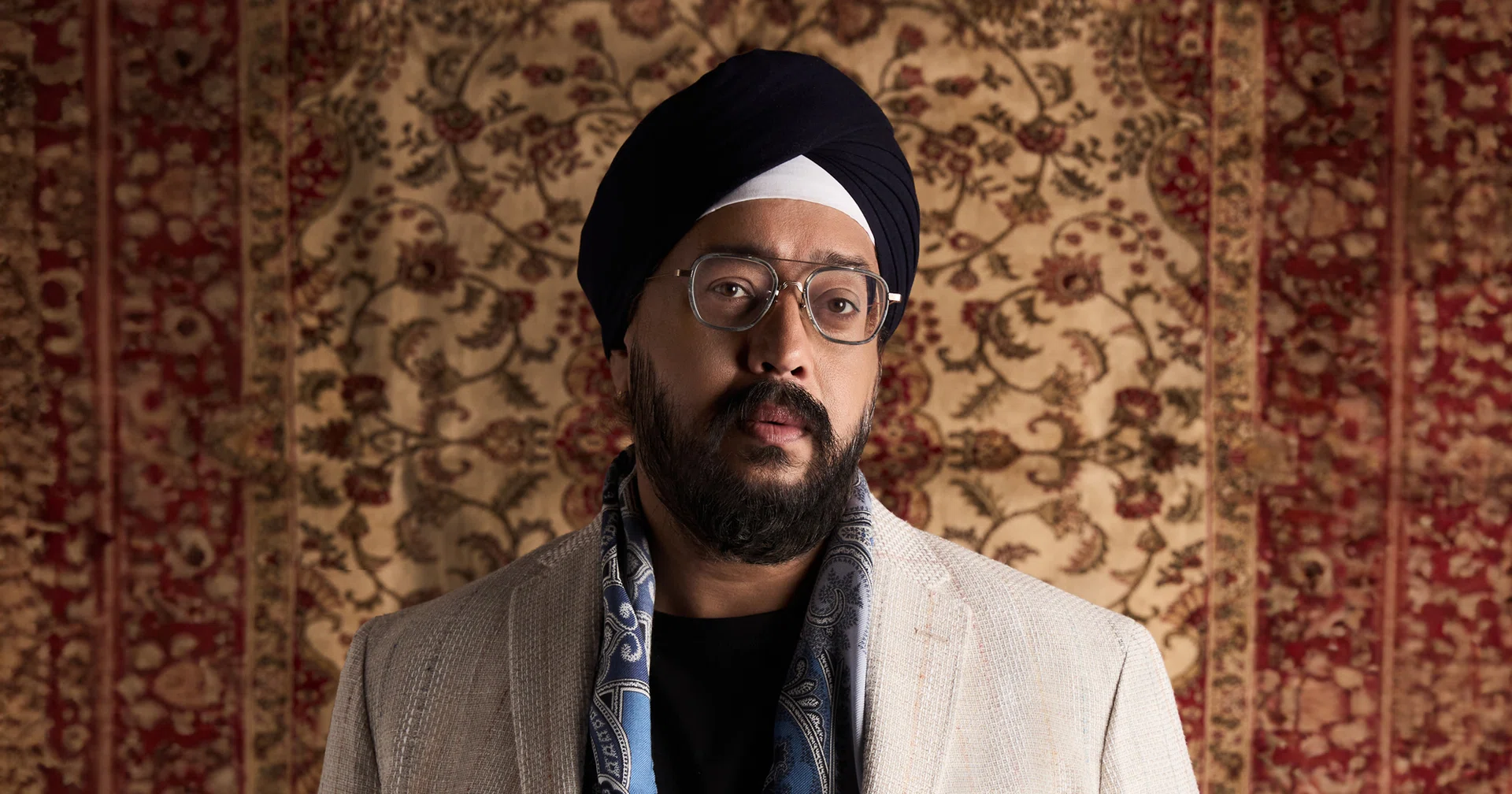
At 46, Malminderjit Singh does not claim mastery of a singular calling. He speaks instead of convergence, of curiosity, conviction, and a life made rich not by accumulation, but by alignment. “I’m a 46-year-old father of three who has found my ikigai,” he says, not boasting, but as a quiet declaration of orientation.
“I love and enjoy what I do. I do things I’m good at and things that the world needs, and I get remunerated for most of it.”
It’s an unusually centred thing to say in a world hooked on reinvention and personal branding. But Singh isn’t performing self-assurance. He has spent two decades moving between journalism, civil service, strategic communications, interfaith dialogue, and community leadership — never once abandoning one domain for another.
Instead, he threads them into a mosaic that he insists is less calculated than it is intuitive. “They may all seem separate,” he says, “but actually they’re all extensions of my identity. They all bring out my inner desire to value-add.”
This desire, however, wasn’t born in polished boardrooms or from Ivy League privilege. It was formed at the hard edges of early life — a small two-room HDB flat, schoolmates whose parents’ drivers were better off than his own family, and an education in societal adaptation long before the term entered popular discourse.
“From a young age, I had to code-switch to fit in,” he recalls. “At school, it was one thing. At home, playing football with my neighbours, it was completely different. This code-switching made me multi-hyphenated — it became part of my dominant identity.”
Harmony, not hustle
To describe Singh as a multi-hyphenate feels both accurate and insufficient. In recent years, the term has become aspirational shorthand for personal diversification — a nod to the volatility of modern life and the growing gig economy. For Singh, it is neither a survival strategy nor a status symbol. It is simply who he has always been.
“My wife says I’m a dabbler,” he laughs. “It’s true. I’m very, very curious. Wherever I see something, I’m curious about it. ‘How can I value-add here? How can I help there? Something’s wrong here? How can I fix this?’”
What others might consider a distraction, Singh reframes as a source of resilience. “Because I wear so many hats and have so many roles, I think disappointment affects me less. Success is more spread out, and I have multiple peaks or pathways to success.”

This plurality, he asserts, is a form of future-proofing, especially in a world increasingly disrupted by automation, economic flux, and institutional breakdowns. “I’ve seen friends last year who lost their jobs, and for two, three months, they were just on the floor — completely devastated. They couldn’t function. But for me, I have a safety net. If I lose my job, never mind. I’ll find money somehow, and I have so many other things to derive meaning and relevance from.”
Relevance, to Singh, is not an abstract pursuit. It is a social and spiritual necessity. “Everybody in the world needs to find relevance somewhere or other,” he reflects. “By being multi-hyphenated, you entrench your relevance in not just one but many domains.”
Discipline, disrupted
Predictably, this worldview has been misunderstood. At one point, Singh recounts a senior leader in Singapore telling him, “A rolling stone gathers no moss.” When Singh quipped back, “But I’m also a master of some,” the point wasn’t repartee — it was a defence of a life lived outside the logic of industrial-era efficiency.
“A lot of societies pushed for industrialisation back in the day,” he explains. “British political economist, David Ricardo, made this theory that everybody must specialise in one thing, and then we trade based on comparative advantage. That shaped entire societies’ mindsets to focus on doing only one thing and being good at that one thing.”
As a student of economics, Singh found that the theory lacked. Why only one thing? Why narrow one’s purpose to fit a single job title? The very nature of fulfilment — and even employability — has shifted, he argues.
“The myth is true,” he assures me. “When you do things you enjoy and love, you become good at them. And because I’m good at them, there’s an economic value to it.”

That idea is no longer hypothetical. Singh is now the founder of Terra Corporate Affairs, a strategic advisory firm. He’s also an appointed Justice of the Peace, chairman of the Sikh Advisory Board, a podcast host, and the Asia-Pacific consultant for KAICIID — the King Abdullah bin Abdulaziz International Centre for Interreligious and Intercultural Dialogue.
His trajectory proves how far a life can stretch when premature choices don’t confine it. It’s a message he now carries forward — not only through professional counsel but in how he raises his children.
Today, the notion that a child must choose a future at 16 still frustrates him. “At 17 years old or 16 years old, whenever you leave O levels for poly, you’re already supposed to choose a field to specialise in and build a career on. That’s crazy! Why would you do that?” It’s why he leans towards the IB system for his children.
“I feel it gives them a lot more breadth. Still, teenagers being teenagers, their career dreams change daily — a gymnast, a footballer, a policewoman. “I say, ‘Great, you can be all those. That’s good, wonderful.’”
There is a gentle rebellion in that affirmation. It cuts against the grain of Singapore’s tightly ordered education pathways. Singh believes in structure — but only if it allows room for drift, experimentation, and failure.
His journey, he’s quick to point out, wasn’t paved by mentors or industry insiders. “Nobody could be a good role model or guide me on what to do. So I just tumbled along the way.”
A soft kind of success
There’s no neat bow at the end of Singh’s story — and that feels right. Success, for him, isn’t static. It’s not a title, net worth, or LinkedIn headline. It’s something deeper, more elusive. “If one is in harmony with one’s many roles, then that person is also in harmony with their external environment,” he says. “It’s that harmony that we all — that I — seek.”
What keeps him moving isn’t hustle, but something more meaningful. “I think it’s a purpose for sure. And purpose can do wonders.” In that sense, the pursuit isn’t of happiness — “that never ends,” he notes — but of contentment. A life where one’s contributions speak for themselves.
Where one’s relevance is never in doubt, even when titles fade. And where a man can finally say, without irony or self-doubt, that he’s found his ikigai — and mean it.