%22%3E%0A%3Cpath%20d%3D%22M412%20101.2H393.7C393.1%20101.2%20392.3%20100.9%20391.8%20100.5C377.3%2087.6004%20362.9%2074.6004%20348.4%2061.6004C344.8%2058.4004%20341.3%2055.2004%20337.7%2052.0004C337.1%2051.5004%20336.2%2051.1004%20335.5%2051.0004C334.2%2050.8004%20333%2051.0004%20331.5%2051.0004V101.1H316.7V0.100391H331.4V44.3004C331.9%2044.3004%20332.2%2044.4004%20332.5%2044.4004C334.9%2044.4004%20337.2%2044.5004%20339.6%2044.4004C340.4%2044.4004%20341.3%2044.0004%20341.8%2043.5004C351.6%2034.4004%20361.4%2025.2004%20371.1%2016.0004C376.5%2010.9004%20381.9%205.90039%20387.3%200.800391C387.9%200.200391%20388.5%200.000390626%20389.3%200.000390626H400.9C384.2%2015.8004%20367.8%2031.3004%20351.2%2047.0004C371.5%2065.0004%20391.8%2082.9004%20412.1%20100.9C412.1%20101%20412.1%20101.1%20412%20101.2ZM180.9%20101.2C184.1%2094.9004%20187.2%2088.9004%20190.3%2082.8004C198.3%2067.3004%20206.2%2051.8004%20214.2%2036.2004C220.3%2024.4004%20226.4%2012.5004%20232.4%200.700391C232.7%200.100391%20233%20-0.0996094%20233.7%20-0.0996094H248.1C248.8%20-0.0996094%20249.2%200.100391%20249.6%200.800391C256%2013.3004%20262.4%2025.7004%20268.8%2038.2004C279.3%2058.6004%20289.8%2079.0004%20300.3%2099.5004C300.5%20100%20300.8%20100.4%20301.1%20101.1C300.5%20101.1%20300.1%20101.2%20299.7%20101.2H286.5C285.6%20101.2%20285.1%20100.9%20284.7%20100.2C280.1%2091.3004%20275.4%2082.4004%20270.8%2073.4004C270.1%2072.1004%20269.3%2071.6004%20267.8%2071.6004H209.9C208.7%2071.6004%20208.1%2072.0004%20207.5%2073.1004C202.9%2082.1004%20198.2%2091.0004%20193.6%20100C193.1%20101%20192.6%20101.3%20191.5%20101.3C188.4%20101.2%20185.3%20101.3%20182.3%20101.3C182%20101.2%20181.6%20101.2%20180.9%20101.2ZM239.1%2011.4004C230%2029.2004%20221.1%2046.7004%20212.1%2064.3004H266.4C257.2%2046.7004%20248.2%2029.2004%20239.1%2011.4004ZM0%200.000390626H43.4C51.2%200.000390626%2058.7%201.20039%2065.7%204.80039C75.9%2010.0004%2078.9%2018.0004%2078.6%2027.4004C78.3%2034.3004%2076%2040.5004%2071.2%2045.5004C67.3%2049.6004%2062.4%2052.3004%2057.1%2054.3004C50.6%2056.7004%2043.9%2058.0004%2037.1%2058.6004C30.1%2059.2004%2023.1%2059.4004%2016.2%2059.7004C15.8%2059.7004%2015.3%2059.8004%2014.8%2059.8004V101.1H0.1C0%2067.4004%200%2033.8004%200%200.000390626ZM14.8%207.10039V52.2004C23.7%2052.4004%2032.6%2052.3004%2041.2%2050.1004C44.4%2049.3004%2047.6%2048.2004%2050.6%2046.7004C58.4%2043.0004%2062.3%2036.7004%2062.7%2028.0004C63%2019.9004%2059.5%2014.1004%2052.4%2010.5004C47.6%208.00039%2042.5%207.10039%2037.2%207.10039H14.8ZM95.9%20101.1V0.100391H167.3V7.20039H110.7V44.7004H158.1V51.9004H110.8V93.9004H171.1V101C146.1%20101.1%20121%20101.1%2095.9%20101.1Z%22%20fill%3D%22black%22%2F%3E%0A%3Cpath%20d%3D%22M35.0004%2025.7996H42.5004V20.6996H44.8004V33.1996H42.6004V27.5996H34.9004V33.2996H32.7004V20.7996H35.0004V25.7996ZM54.4004%2025.8996V27.2996H48.9004V31.6996H55.9004C55.9004%2032.1996%2056.0004%2032.5996%2056.0004%2033.0996H46.5004V20.5996H55.5004V21.8996H49.0004V25.7996C50.7004%2025.8996%2052.5004%2025.8996%2054.4004%2025.8996ZM25.9004%2033.0996H23.5004V21.9996H17.9004V20.6996H31.6004V22.0996H27.1004C26.2004%2022.0996%2025.9004%2022.2996%2025.9004%2023.1996C26.0004%2026.0996%2025.9004%2028.9996%2025.9004%2031.7996V33.0996Z%22%20fill%3D%22black%22%2F%3E%0A%3C%2Fg%3E%0A%3Cdefs%3E%0A%3CclipPath%20id%3D%22clip0_388_462%22%3E%0A%3Crect%20width%3D%22411%22%20height%3D%22101.2%22%20fill%3D%22white%22%2F%3E%0A%3C%2FclipPath%3E%0A%3C%2Fdefs%3E%0A%3C%2Fsvg%3E%0A)
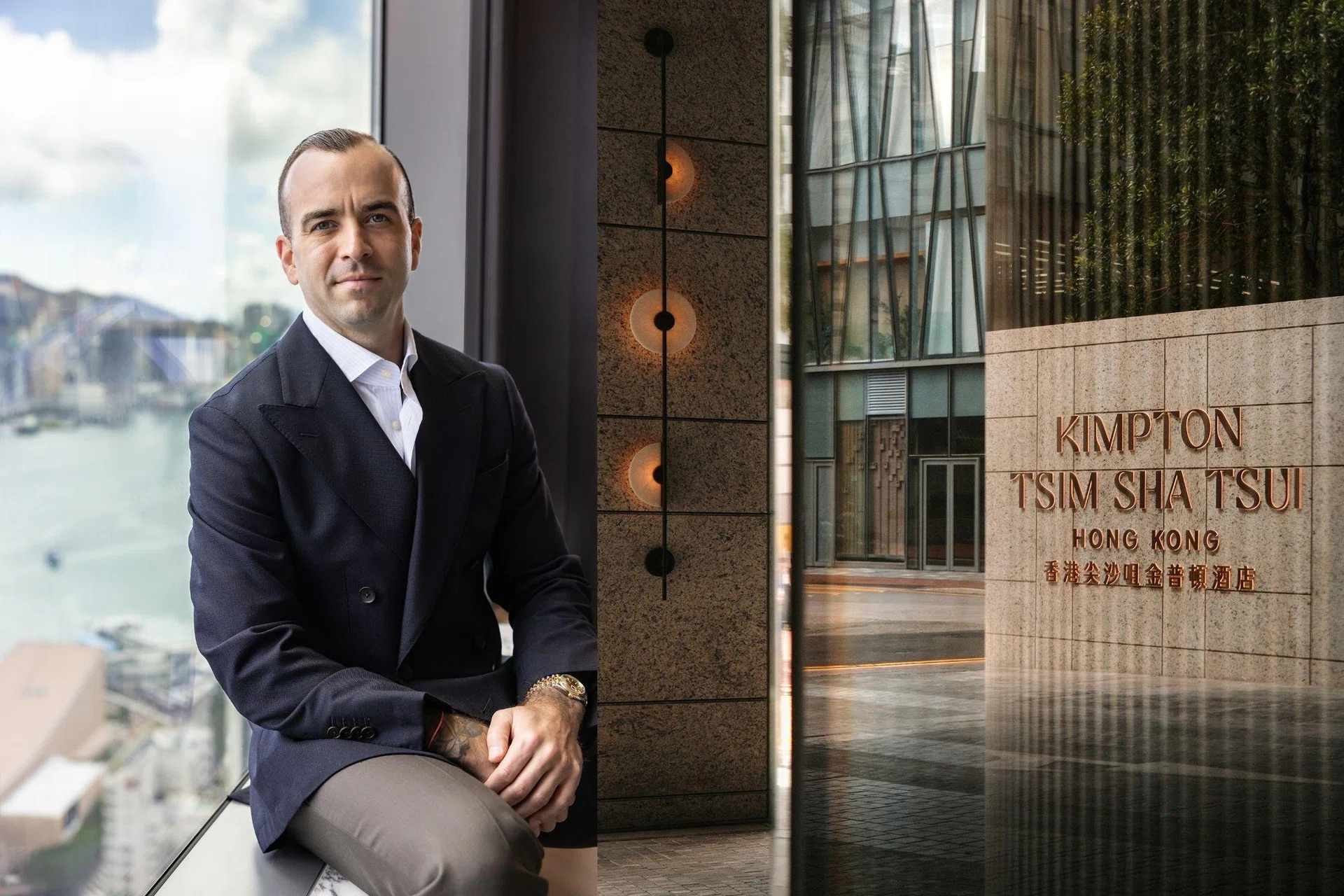
How They See It explores how leaders think when the work becomes less about momentum and more about meaning. In this instalment, Robinson reflects on what it takes to steward Kimpton TST, a hospitality brand within one of Hong Kong’s most layered neighbourhoods.
“When people ask what I do for a living, I usually give them the shorthand version: I manage Kimpton TST, the newest hotel in Hong Kong. It’s a neat answer, efficient and socially legible, but it barely scratches the surface of how I actually spend my days. What it leaves out is the quieter, more deliberate work of building something that feels deeply situated rather than simply well-run — working alongside my team to design hyper-curated experiences that feel instinctively local, experiences that only make sense because the hotel has learned how to listen to, contribute to, and integrate itself within the rhythms of its surrounding community.
That emphasis on working closely with my team, on shaping experiences together rather than imposing them, has become the most meaningful part of my work at this stage of my career.
I’ve opened international hotels for the Kimpton brand before, but each new opening sharpens my conviction that a hotel succeeds when it understands the neighbourhood it inhabits, not as a backdrop but as a living ecosystem. In Tsim Sha Tsui and in Hong Kong more broadly, the work matters because our presence should add something of value — culturally, socially, and emotionally — rather than merely occupy space.
Leadership that begins with listening
When I look back over my career, I can’t point to a single, dramatic decision that altered how I approach leadership or work. Instead, the shift happened cumulatively, shaped by nearly two decades with Kimpton and by a set of core values that consistently reinforced the same lesson: put people and community first.
Diversity, equity, and inclusion were never abstract principles to me; they formed the practical foundation for building trust, fostering collaboration, and creating a working environment where people feel seen. Over time, I learned that healthy business models emerge naturally from that foundation, not through force or urgency, but through care and consistency.
Earlier in my career, I carried the assumption that success required a solitary kind of resilience — that you had to make it on your own, prove your worth independently, and shoulder responsibility without leaning too heavily on others.
Experience dismantled that belief fairly quickly.
I learned that progress depends on collective effort, on building something together, and on allowing others to bring their strengths into the work. That realisation now sits at the centre of what I enjoy most about my role: achieving goals — whether personal, professional, or organisational — alongside a team that shares ownership of the outcome.
As my role and influence at Kimpton TST have grown, my understanding of responsibility has expanded in tandem. I still hold responsibility for the success of the business, but I now see that responsibility as inseparable from the growth and development of my team. Trusting others changed how I lead. It allowed me to shift from control to stewardship, from oversight to empowerment.
That trust doesn’t dilute accountability; it deepens it, because when people grow, the business grows with them, and the impact extends outward — to our guests, and to the communities we engage with at a very human level.
Why slowing down sharpens impact
One tension I navigate constantly comes from cultural difference. Working across regions and countries means encountering moments of friction, misunderstanding, or misalignment, often rooted in context rather than intent.
Over time, I’ve learned patience — the discipline of listening long enough to understand before reacting, and the humility required to adapt without losing oneself. I make space to learn new cultures while also sharing my own experiences, looking for common ground that allows collaboration to feel natural rather than forced.
On days that feel especially demanding or draining, I turn to physical fitness as a way of restoring mental clarity. A hard workout creates distance from the noise, allowing perspective to reassert itself. Movement helps me reset, refocus, and access a different register of creativity — one that often reveals what deserves immediate attention and what can wait.
As my career has progressed, I’ve also learned the value of restraint. Working with diverse teams and multiple stakeholders often requires me to slow down rather than accelerate, to listen rather than push. Leadership, I’ve realised, doesn’t live in constant motion. Speed can deliver results in isolation, but collaboration produces decisions with weight and longevity.
And if there is a single thread that runs through everything I do both professionally and at Kimpton TST, it is integrity. I built my career by trusting my judgement and standing behind the decisions I make, even when certainty feels elusive. That commitment to integrity — personal, professional, and collective — continues to guide how I work with my team, how we build trust, and how we allow the business to grow in ways that feel sustainable and grounded over time.”