%22%3E%0A%3Cpath%20d%3D%22M412%20101.2H393.7C393.1%20101.2%20392.3%20100.9%20391.8%20100.5C377.3%2087.6004%20362.9%2074.6004%20348.4%2061.6004C344.8%2058.4004%20341.3%2055.2004%20337.7%2052.0004C337.1%2051.5004%20336.2%2051.1004%20335.5%2051.0004C334.2%2050.8004%20333%2051.0004%20331.5%2051.0004V101.1H316.7V0.100391H331.4V44.3004C331.9%2044.3004%20332.2%2044.4004%20332.5%2044.4004C334.9%2044.4004%20337.2%2044.5004%20339.6%2044.4004C340.4%2044.4004%20341.3%2044.0004%20341.8%2043.5004C351.6%2034.4004%20361.4%2025.2004%20371.1%2016.0004C376.5%2010.9004%20381.9%205.90039%20387.3%200.800391C387.9%200.200391%20388.5%200.000390626%20389.3%200.000390626H400.9C384.2%2015.8004%20367.8%2031.3004%20351.2%2047.0004C371.5%2065.0004%20391.8%2082.9004%20412.1%20100.9C412.1%20101%20412.1%20101.1%20412%20101.2ZM180.9%20101.2C184.1%2094.9004%20187.2%2088.9004%20190.3%2082.8004C198.3%2067.3004%20206.2%2051.8004%20214.2%2036.2004C220.3%2024.4004%20226.4%2012.5004%20232.4%200.700391C232.7%200.100391%20233%20-0.0996094%20233.7%20-0.0996094H248.1C248.8%20-0.0996094%20249.2%200.100391%20249.6%200.800391C256%2013.3004%20262.4%2025.7004%20268.8%2038.2004C279.3%2058.6004%20289.8%2079.0004%20300.3%2099.5004C300.5%20100%20300.8%20100.4%20301.1%20101.1C300.5%20101.1%20300.1%20101.2%20299.7%20101.2H286.5C285.6%20101.2%20285.1%20100.9%20284.7%20100.2C280.1%2091.3004%20275.4%2082.4004%20270.8%2073.4004C270.1%2072.1004%20269.3%2071.6004%20267.8%2071.6004H209.9C208.7%2071.6004%20208.1%2072.0004%20207.5%2073.1004C202.9%2082.1004%20198.2%2091.0004%20193.6%20100C193.1%20101%20192.6%20101.3%20191.5%20101.3C188.4%20101.2%20185.3%20101.3%20182.3%20101.3C182%20101.2%20181.6%20101.2%20180.9%20101.2ZM239.1%2011.4004C230%2029.2004%20221.1%2046.7004%20212.1%2064.3004H266.4C257.2%2046.7004%20248.2%2029.2004%20239.1%2011.4004ZM0%200.000390626H43.4C51.2%200.000390626%2058.7%201.20039%2065.7%204.80039C75.9%2010.0004%2078.9%2018.0004%2078.6%2027.4004C78.3%2034.3004%2076%2040.5004%2071.2%2045.5004C67.3%2049.6004%2062.4%2052.3004%2057.1%2054.3004C50.6%2056.7004%2043.9%2058.0004%2037.1%2058.6004C30.1%2059.2004%2023.1%2059.4004%2016.2%2059.7004C15.8%2059.7004%2015.3%2059.8004%2014.8%2059.8004V101.1H0.1C0%2067.4004%200%2033.8004%200%200.000390626ZM14.8%207.10039V52.2004C23.7%2052.4004%2032.6%2052.3004%2041.2%2050.1004C44.4%2049.3004%2047.6%2048.2004%2050.6%2046.7004C58.4%2043.0004%2062.3%2036.7004%2062.7%2028.0004C63%2019.9004%2059.5%2014.1004%2052.4%2010.5004C47.6%208.00039%2042.5%207.10039%2037.2%207.10039H14.8ZM95.9%20101.1V0.100391H167.3V7.20039H110.7V44.7004H158.1V51.9004H110.8V93.9004H171.1V101C146.1%20101.1%20121%20101.1%2095.9%20101.1Z%22%20fill%3D%22black%22%2F%3E%0A%3Cpath%20d%3D%22M35.0004%2025.7996H42.5004V20.6996H44.8004V33.1996H42.6004V27.5996H34.9004V33.2996H32.7004V20.7996H35.0004V25.7996ZM54.4004%2025.8996V27.2996H48.9004V31.6996H55.9004C55.9004%2032.1996%2056.0004%2032.5996%2056.0004%2033.0996H46.5004V20.5996H55.5004V21.8996H49.0004V25.7996C50.7004%2025.8996%2052.5004%2025.8996%2054.4004%2025.8996ZM25.9004%2033.0996H23.5004V21.9996H17.9004V20.6996H31.6004V22.0996H27.1004C26.2004%2022.0996%2025.9004%2022.2996%2025.9004%2023.1996C26.0004%2026.0996%2025.9004%2028.9996%2025.9004%2031.7996V33.0996Z%22%20fill%3D%22black%22%2F%3E%0A%3C%2Fg%3E%0A%3Cdefs%3E%0A%3CclipPath%20id%3D%22clip0_388_462%22%3E%0A%3Crect%20width%3D%22411%22%20height%3D%22101.2%22%20fill%3D%22white%22%2F%3E%0A%3C%2FclipPath%3E%0A%3C%2Fdefs%3E%0A%3C%2Fsvg%3E%0A)
Inside Mohamed Haikkel Firdaus’ SGFR that turned TikTok hype into a sweet $4m candy machine
After a betrayal and a six-figure scam that nearly wiped out his business, Mohamed Haikkel Firdaus, SGFR’s Gen Z founder rebuilt it and unlocked the formula to whipping up frenzied demand.
By Azimin Saini /
Share this article
By the time the countdown begins at Bedok Mall, the queue is already hundreds of metres long. Thousands of teenagers are packed tightly along the corridor, some of them having arrived as early as six in the morning. When the final seconds are shouted out — five, four, three — the noise builds quickly, spilling over into cheers as the shutters lift and the line surges forward.
The crowd closes in almost immediately. Mohamed Haikkel Firdaus appears at the entrance with a microphone and is met with a wall of raised phones and outstretched hands. At one point, a box is lifted above the crowd and pulled apart for its candy contents.
This is the mania that surrounded SGFR’s latest outlet opening. It’s part of a fast-expanding homegrown brand selling snacks and candy that has, over the past two years, built a cult following amongst Gen Alpha. (Editor’s note: SGFR stands for SG Fishing Rigz, a fitting paean to the shop’s original premise.)
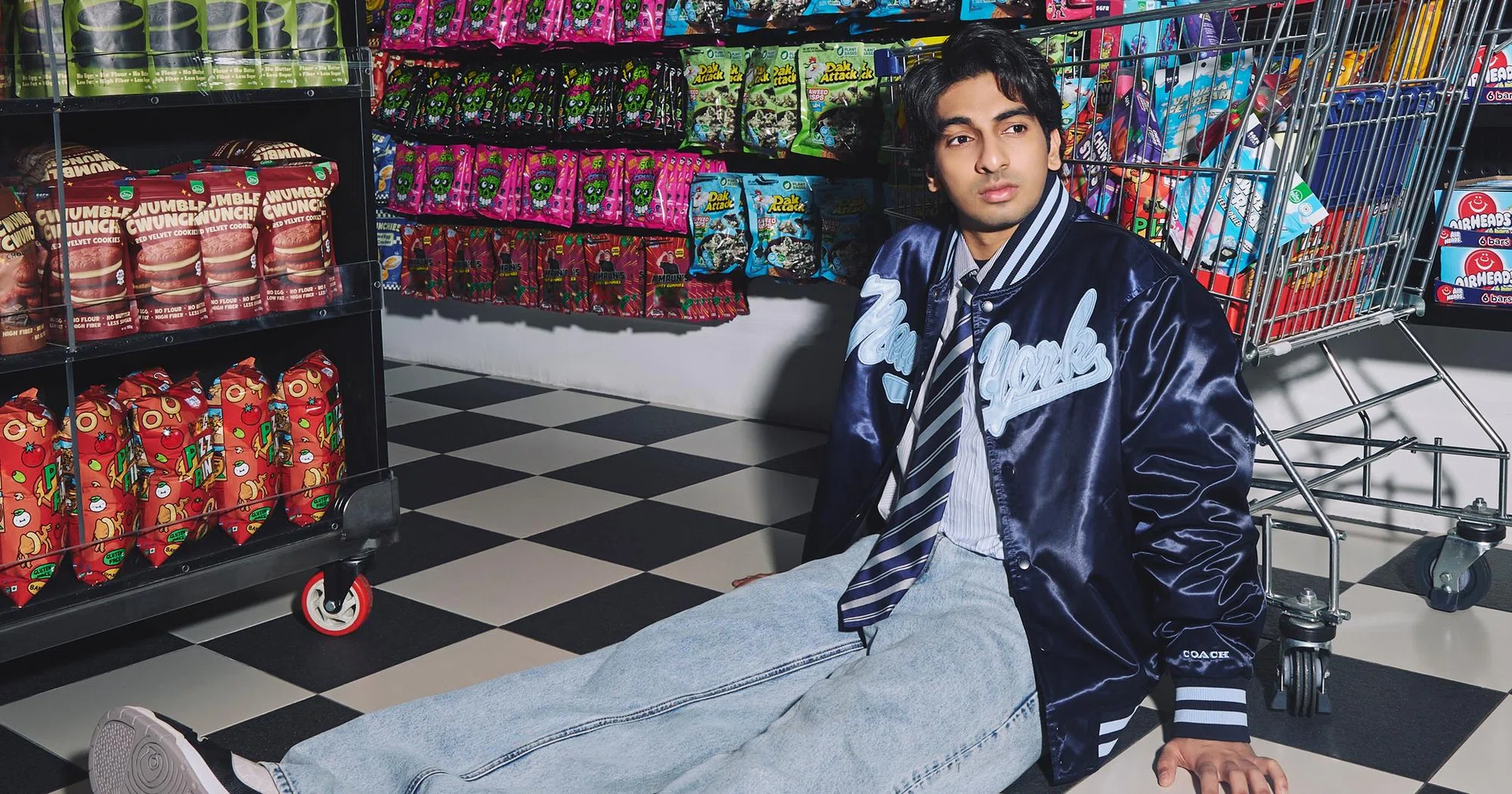
Yet what draws the crowd is not only what is being sold, but the sheer hype of it to witness, record, and post online. It is, in effect, an attention factory — one that crossed $4 million in revenue in 2025, and now operates 10 stores, with more than 200 products under its name.
From a distance, it would be easy to dismiss SGFR as a passing phenomenon, a TikTok-powered candy store catering to a young and easily excitable audience. Yet the astute will discern that it shows how a new generation of consumer businesses is being built in reverse.
Rather than starting with a product and attempting to manufacture demand, the process begins with capturing attention — identifying what is already circulating online, and moving quickly enough to supply it. In its early phase, SGFR operated by riding that demand. Today, it goes a step further, developing its own products designed to behave in the same way: immediate, visible, and primed for virality. In an age governed by social media algorithms, the new entrepreneurial skill is not simply making something to sell, but recognising what people will want before they can access it, and moving quickly enough to meet that moment.
For beneath the bright packaging and viral theatrics is a young founder who has already experienced a cycle that many entrepreneurs encounter much later in life — early success, sudden exposure, a near-total financial loss, and a deliberate attempt to rebuild on firmer ground.
How he learnt to read demand
At 23, Haikkel may be young but by the time he crossed millions in revenue, he has had several years under his belt as a budding entrepreneur. “I started doing business when I was 17,” he says, leaning back slightly, his recollection moving quickly. “I finished my O levels, and I was supposed to go to a polytechnic, but I broke my leg. So I missed my first year.”
The interruption forced a pause, and football — his go-to sport — was no longer possible. Instead, he picked up fishing, which helped fill the time. He quickly noticed that the hobby was difficult to begin and has a steep learning curve. There were no resources guiding the beginner on equipment to purchase, nor how to fish. “The uncles at the shop didn’t really want to help,” he says. “All my friends had the same issue.”
He began putting together beginner kits — rods, lines, basic equipment — sourcing parts from online retailer Alibaba and bundling them into a single purchase. Each came with a QR code which users can scan and be shown what to do. Before long, he opened his first shop at Tampines.
This knack for making money out of identifying market gaps, did not come out of nowhere. In fact, it was a way of thinking his father cultivated since he was young. “When I was 14, my dad cut off my allowance,” he recalls. “He took that money and put it into an Alibaba account.”
If he wanted money, he had to generate it himself by buying and reselling products. There were no instructions and the first attempt failed. “I tried to resell shoes. Nobody bought it,” he admits. “My dad just said, well, too bad.”
So he decided to pay closer attention to where people’s attention lay. Marvel films were dominating cinemas, and he began sourcing merchandise tied to upcoming releases — rings, necklaces, shirts — listing them on Carousell just before each premiere. “If a Spider-Man movie was coming out, I would buy Spider-Man stuff,” he recounts. “It would sell out in a few days.”
The strategy worked as demand could be anticipated. The fishing business benefited from similar conditions during the pandemic, when more people turned to solitary hobbies. Yet as restrictions eased and access to fishing areas narrowed, interest thinned out. “I kept the shop going for about a year and a half,” he says. “But it was clear things were going downhill.”
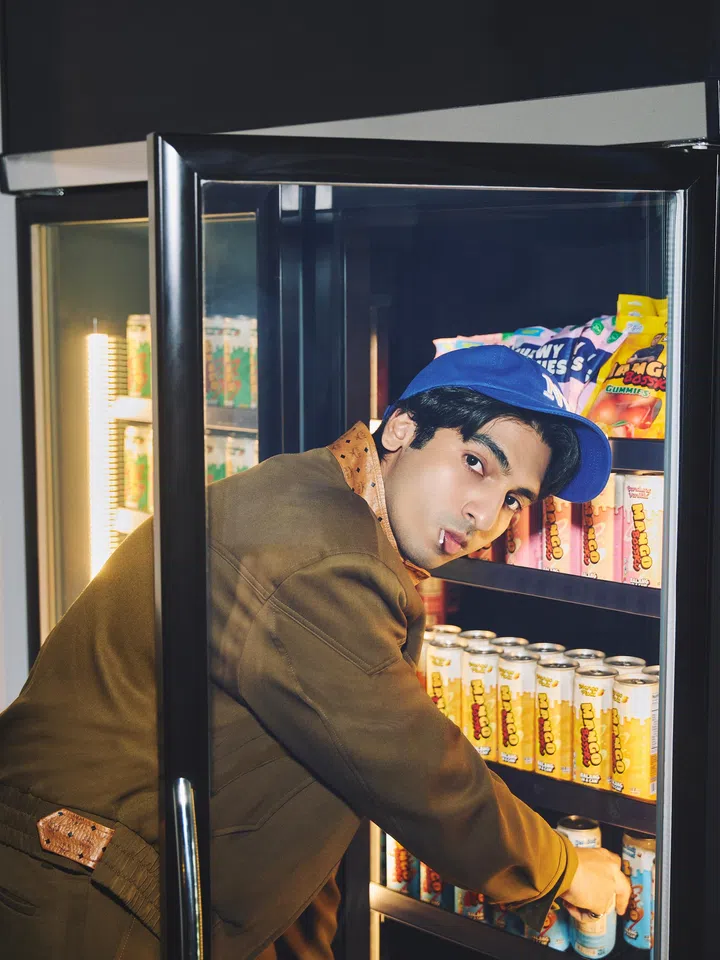
Blouson, shirt and pants, from MCM. Cap, stylist’s own.
Pivoting to food and drink
He knew he needed something else. On the lookout for a new product to sell, he noticed that the people around him were looking for a drink that went viral in the US. “Everyone around me was asking for Prime,” he notes. “No one in Singapore was selling it.”
Prime is an American sports drink launched in 2022 by YouTubers KSI and Logan Paul, with a fanatic following amongst younger audiences. People in Singapore knew what it was, long before they had ever tasted it. They had seen it on TikTok and YouTube, watched influencers try it, followed flavour drops, and formed opinions about it from afar. What they had not done, in most cases, was get their hands on it.
He sensed an opportunity and reached out to contacts in the United States who had previously supplied him with fishing equipment and asked them to do something simple: go to supermarkets, buy whatever stock they could find, and ship it over. The first shipment was small — about ten cartons and he posted about Prime’s availability online.
“It sold out in three hours,” he says.
The speed of it changed his business almost immediately. He began bringing in more — not just Prime, but other products that were already famous online: Sour Patch Kids gummies, Swedish Fish, snacks that were familiar to audiences through YouTube and TikTok but largely unavailable locally.
From there, the model expanded quickly, built on the same principle: identify products that people were already aware of through social media, but could not easily access in Singapore, and bridge that gap.
“When we watch US or UK YouTubers, we see them eating all these things,” he adds. “We always wonder how they taste. But here, you can’t get them.”
SGFR transformed into a conduit for that curiosity, translating digital exposure into physical consumption. On TikTok, the loop tightened: a product appeared in a video, people watched and shared it, asked where to get it, and within days it would arrive in his store, only to sell out within hours. “We just posted every day,” he says. “Everything became viral.”
It wasn’t long before that approach became untenable. The reliance on personal shoppers and shipping introduced multiple layers of markup, inflating prices. A single bottle of Prime for instance, could cost him $10-$11 before it even reached Singapore. He sold it at $15 and customers bought it anyway.
For a time, the system worked and sales were brisk but eventually, his advantage began to evaporate.
A mentor he had trusted — someone he had shared his supplier network with — went silent. Not long after, the same products began appearing in major supermarket chains where prices were much lower. What had once felt scarce became easy to find. The mentor had used those same contacts to bring SGFR’s best-selling products into larger retail chains, securing exclusive arrangements that cut Haikkel off from the same supply. When he reached out, the explanation was simple. “He told me, it’s just business,” Haikkel grimaces as he recounts the betrayal.
Worse, the demand he had helped generate no longer belonged to him. As his videos continued to circulate, customers were now getting them elsewhere, more cheaply, without the wait.
Then came the blow that nearly wiped out his fledgling business.
A supplier in Denmark he had worked with proposed scaling up operations by purchasing large quantities of stock, promising lower costs and better margins. It seemed like the logical next step for a business that was growing quickly but operating on thin control over its supply chain. Haikkel transferred close to $100,000.
At first, it was small things — delayed replies, messages left unanswered. Then calls stopped going through. What had seemed like a straightforward transaction began to unravel. “I think that was the lowest point,” he declares, his speaking pace noticeably slower now. They even went to Denmark and visited his listed address. “It was fake.” By then, the conclusion was unavoidable. The money — nearly everything the business had at that stage — was gone.
“That was when I realised,” he paused. “We got scammed.”
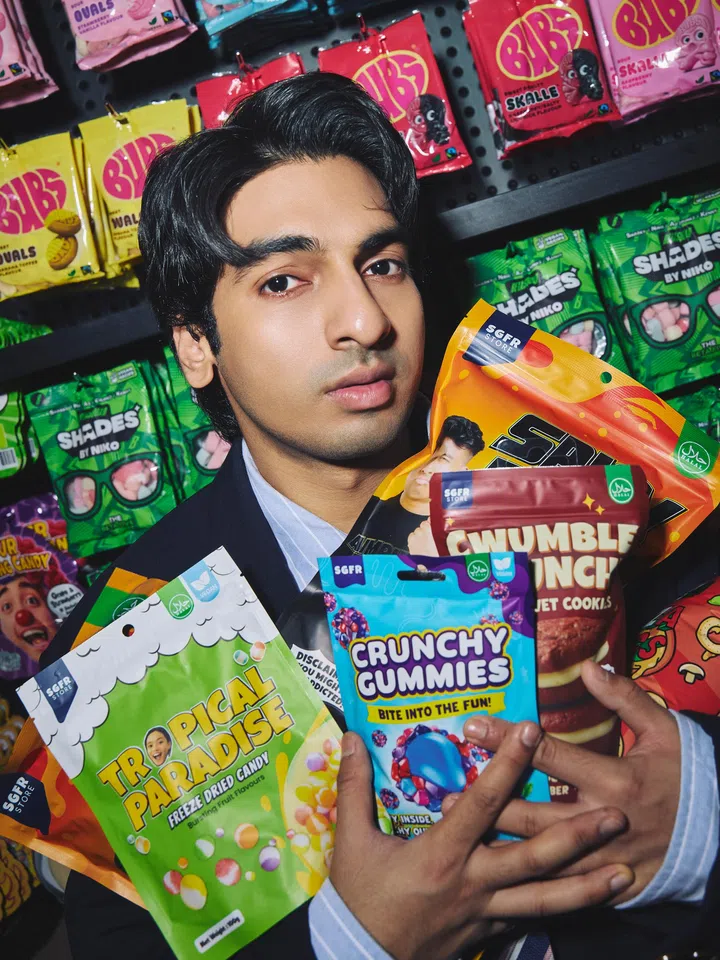
Jacket, shirt and jeans, from Coach. Tie, stylist’s own.
Building the attention factory
The loss represented almost everything the business had at that point, accumulated through selling one bottle of Prime, one pack of Sour Patch Kids at a time. Now, his capital vanished, inventory depleted and even if he did manage to restock, he no longer had a way to compete with supermarkets that were already undercutting him.
For all its visibility, SGFR did not control the products it depended on — and in a market where supply could be replicated overnight, that made the business fragile. The implication was straightforward: they needed to create their own products.
“I told my co-founder, maybe hype products can only be 20 per cent,” he adds. “Eighty per cent has to be our own.”
The months that followed were, by his account, financially difficult and operationally uncertain, marked by experimentation and a steady accumulation of knowledge about an industry he had entered without any experience. He attended trade fairs, met suppliers, learned how manufacturing worked, and began to understand the mechanics of FMCG in a more structured way.
From that period emerged Quench, his first original product. It was a shelf-stable canned drink inspired by flavours he had seen at local bazaars, but made with only four percent sugar. He dubbed it, “The world’s first ice cream drink”.
He pitched the idea to 32 investors. Most declined, unconvinced that the then 21-year-old with recent losses could build a viable product in a crowded market.
Eventually, one agreed to invest.
The launch, by his account, was immediate and significant. “In the first month, we sold over 70,000 cans,” he says. Still, more important than the number itself was what it represented: a move from riding demand to creating it. That effort has since redefined the business. The shelves, once dominated by imported goods, now carry a growing proportion of in-house products — gummies, cookies, drinks and collaborations — many developed with an understanding of how they will perform both in-store and on screen.
Much of it, he admits, is instinct formed by years of watching what explodes online. Over time, he has developed a rough internal sense of what might work. The product has to be immediately legible, visually striking, and easy to demonstrate within seconds. On TikTok, that window is brief.
“You need something in the first five seconds,” he explains. “If it doesn’t catch attention, it won’t go.”
He points to products with a clear visual payoff: a gummy that cracks open to reveal a liquid centre, a texture that breaks, stretches or pours in a way that invites replication. His latest is the Dubai Chocolate Mochi where a chewy, elastic chocolate ball encases a pistachio filling that can be stretched. These snacks represent highly visual moments — designed to be filmed, shared, and repeated.
That logic now sits at the centre of how SGFR develops new products. Some ideas originate overseas and are adapted locally. Others are built from scratch, refined through trial and error until they meet a certain threshold — not just of taste, but of visibility. Attention is the entry point.
Today, SGFR operates within a broader tension: it trades in indulgence — sugar, novelty, excess — at a time when public messaging increasingly emphasises moderation and health. Haikkel acknowledges the trade-off, but frames it pragmatically: “We don’t position it as something you eat every day,” he says. “It’s like a treat.”
At the same time, he is exploring alternatives — lower-sugar products, functional gummies, hydration drinks — though he is candid about the challenges involved. “Without sugar, it’s very hard to make things taste good,” he explains.
For now, the business continues to evolve incrementally, as Haikkel prefers to think in near-term adjustments rather than long-term projections. He has just closed the Tampines location which was with him since the days SGFR was a fishing shop and opening in Century Square. “I don’t think too far ahead,” he confesses. “I just focus on the next step.”
From the outside, SGFR still looks like a brand defined by hype — bright, noisy, ephemeral. But look more closely, and a different pattern begins to emerge: one of a young founder learning, in real time, how to turn fleeting attention into something that might just last the test of time. At just 23-years-old, one gets the feeling that he is just getting started.
Photography: Lawrence Teo
Art Direction: Fazlie Hashim
Styling: Dolphin Yeo
Grooming: Angel Gwee, using Clarins and Hanz de Fuko