%22%3E%0A%3Cpath%20d%3D%22M412%20101.2H393.7C393.1%20101.2%20392.3%20100.9%20391.8%20100.5C377.3%2087.6004%20362.9%2074.6004%20348.4%2061.6004C344.8%2058.4004%20341.3%2055.2004%20337.7%2052.0004C337.1%2051.5004%20336.2%2051.1004%20335.5%2051.0004C334.2%2050.8004%20333%2051.0004%20331.5%2051.0004V101.1H316.7V0.100391H331.4V44.3004C331.9%2044.3004%20332.2%2044.4004%20332.5%2044.4004C334.9%2044.4004%20337.2%2044.5004%20339.6%2044.4004C340.4%2044.4004%20341.3%2044.0004%20341.8%2043.5004C351.6%2034.4004%20361.4%2025.2004%20371.1%2016.0004C376.5%2010.9004%20381.9%205.90039%20387.3%200.800391C387.9%200.200391%20388.5%200.000390626%20389.3%200.000390626H400.9C384.2%2015.8004%20367.8%2031.3004%20351.2%2047.0004C371.5%2065.0004%20391.8%2082.9004%20412.1%20100.9C412.1%20101%20412.1%20101.1%20412%20101.2ZM180.9%20101.2C184.1%2094.9004%20187.2%2088.9004%20190.3%2082.8004C198.3%2067.3004%20206.2%2051.8004%20214.2%2036.2004C220.3%2024.4004%20226.4%2012.5004%20232.4%200.700391C232.7%200.100391%20233%20-0.0996094%20233.7%20-0.0996094H248.1C248.8%20-0.0996094%20249.2%200.100391%20249.6%200.800391C256%2013.3004%20262.4%2025.7004%20268.8%2038.2004C279.3%2058.6004%20289.8%2079.0004%20300.3%2099.5004C300.5%20100%20300.8%20100.4%20301.1%20101.1C300.5%20101.1%20300.1%20101.2%20299.7%20101.2H286.5C285.6%20101.2%20285.1%20100.9%20284.7%20100.2C280.1%2091.3004%20275.4%2082.4004%20270.8%2073.4004C270.1%2072.1004%20269.3%2071.6004%20267.8%2071.6004H209.9C208.7%2071.6004%20208.1%2072.0004%20207.5%2073.1004C202.9%2082.1004%20198.2%2091.0004%20193.6%20100C193.1%20101%20192.6%20101.3%20191.5%20101.3C188.4%20101.2%20185.3%20101.3%20182.3%20101.3C182%20101.2%20181.6%20101.2%20180.9%20101.2ZM239.1%2011.4004C230%2029.2004%20221.1%2046.7004%20212.1%2064.3004H266.4C257.2%2046.7004%20248.2%2029.2004%20239.1%2011.4004ZM0%200.000390626H43.4C51.2%200.000390626%2058.7%201.20039%2065.7%204.80039C75.9%2010.0004%2078.9%2018.0004%2078.6%2027.4004C78.3%2034.3004%2076%2040.5004%2071.2%2045.5004C67.3%2049.6004%2062.4%2052.3004%2057.1%2054.3004C50.6%2056.7004%2043.9%2058.0004%2037.1%2058.6004C30.1%2059.2004%2023.1%2059.4004%2016.2%2059.7004C15.8%2059.7004%2015.3%2059.8004%2014.8%2059.8004V101.1H0.1C0%2067.4004%200%2033.8004%200%200.000390626ZM14.8%207.10039V52.2004C23.7%2052.4004%2032.6%2052.3004%2041.2%2050.1004C44.4%2049.3004%2047.6%2048.2004%2050.6%2046.7004C58.4%2043.0004%2062.3%2036.7004%2062.7%2028.0004C63%2019.9004%2059.5%2014.1004%2052.4%2010.5004C47.6%208.00039%2042.5%207.10039%2037.2%207.10039H14.8ZM95.9%20101.1V0.100391H167.3V7.20039H110.7V44.7004H158.1V51.9004H110.8V93.9004H171.1V101C146.1%20101.1%20121%20101.1%2095.9%20101.1Z%22%20fill%3D%22black%22%2F%3E%0A%3Cpath%20d%3D%22M35.0004%2025.7996H42.5004V20.6996H44.8004V33.1996H42.6004V27.5996H34.9004V33.2996H32.7004V20.7996H35.0004V25.7996ZM54.4004%2025.8996V27.2996H48.9004V31.6996H55.9004C55.9004%2032.1996%2056.0004%2032.5996%2056.0004%2033.0996H46.5004V20.5996H55.5004V21.8996H49.0004V25.7996C50.7004%2025.8996%2052.5004%2025.8996%2054.4004%2025.8996ZM25.9004%2033.0996H23.5004V21.9996H17.9004V20.6996H31.6004V22.0996H27.1004C26.2004%2022.0996%2025.9004%2022.2996%2025.9004%2023.1996C26.0004%2026.0996%2025.9004%2028.9996%2025.9004%2031.7996V33.0996Z%22%20fill%3D%22black%22%2F%3E%0A%3C%2Fg%3E%0A%3Cdefs%3E%0A%3CclipPath%20id%3D%22clip0_388_462%22%3E%0A%3Crect%20width%3D%22411%22%20height%3D%22101.2%22%20fill%3D%22white%22%2F%3E%0A%3C%2FclipPath%3E%0A%3C%2Fdefs%3E%0A%3C%2Fsvg%3E%0A)
A bedroom, a laptop, and a leap of faith
Quantedge Capital CEO Suhaimi Zainul-Abidin on why building an investment firm that lasts has often meant turning down the money everyone else would take.
By Suhaimi Zainul-Abidin /
Share this article
20 years ago, on the 2nd of October, the founders of Quantedge Capital placed the first trades for their newly launched fund (Quantedge Global Fund) from a laptop on a bedroom desk in Singapore.
They were just a few years out of university and had somehow managed to convince about a dozen investors to trust them with slightly less than USD 3 million in capital. The pitch? A quantitative systematic investment strategy that would deliver both high volatility and high returns over the long term.
It was a concept and method of investing that was then not yet well known in these parts. In a letter sent by the founders the day before, they thanked those investors for backing a start-up, acknowledging that it must not have been an easy decision.
Twenty years on, the firm manages around USD 7.6 billion (as at the end of September 2026) and has close to a thousand direct investors, many of whom reside in Singapore. A substantial portion of that USD 7.6 billion under management reflects cumulative investment gains, validating the investment thesis and landing Quantedge numerous global fund management awards along the way.
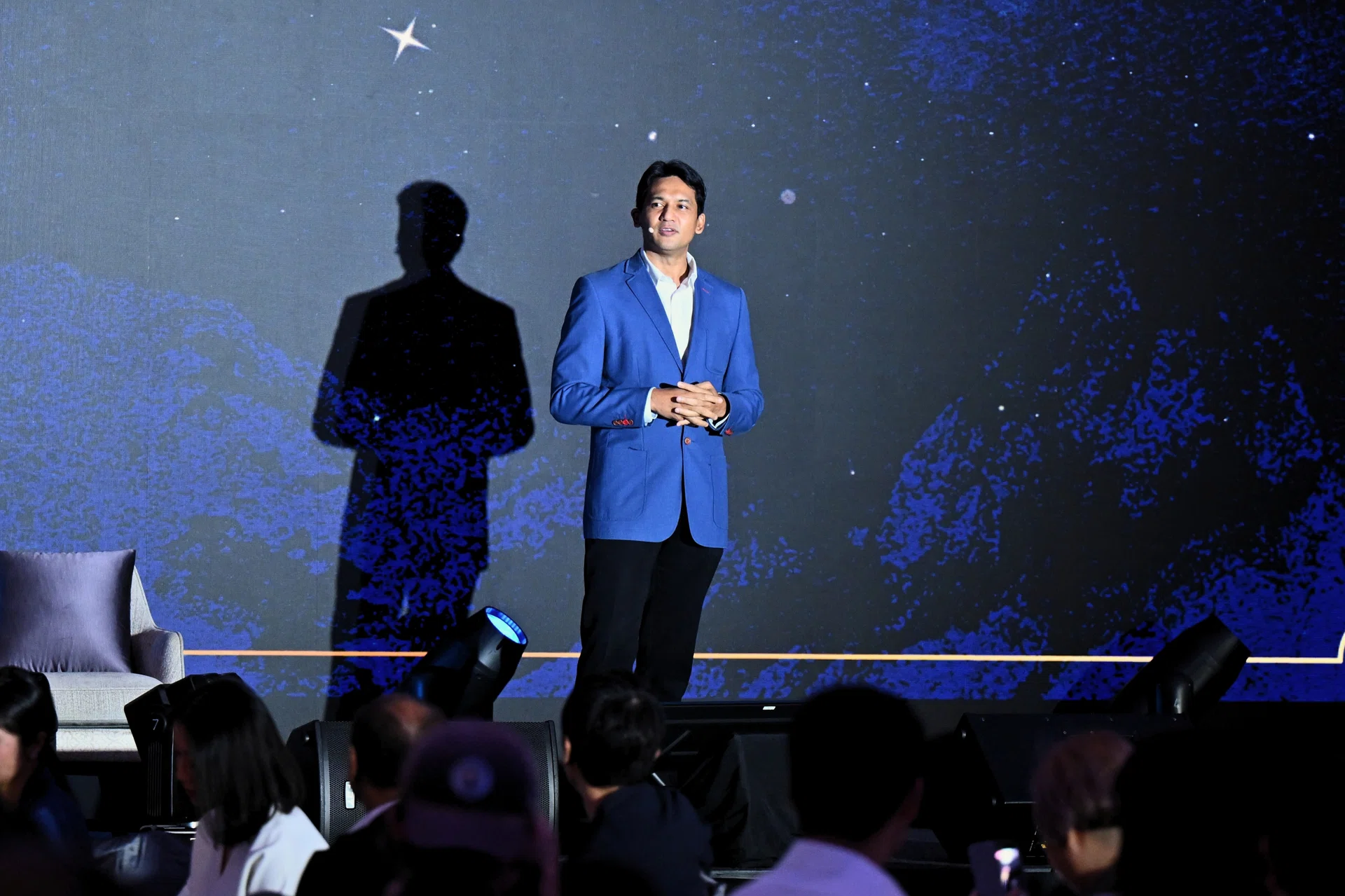
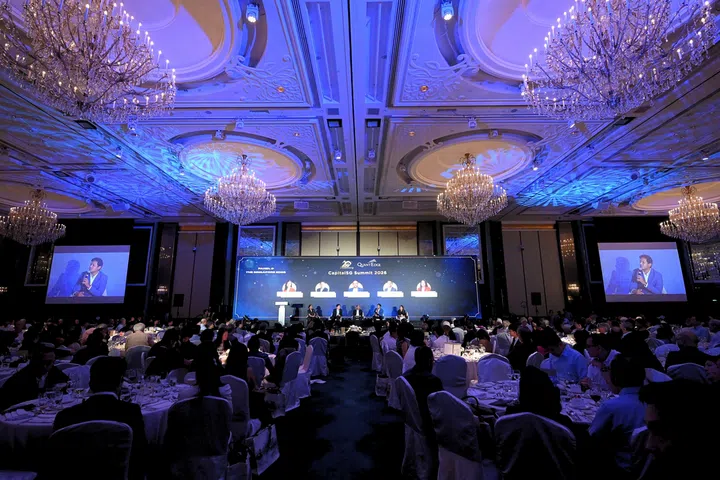
To mark the anniversary, Quantedge hosted the inaugural CapitalSG Summit, a gathering of some of Singapore’s best-known business leaders and entrepreneurs.
It is easy to look back with rose tinted glasses following such ascendance and forget the trials and tribulations that the firm navigated in the two decades past. But Quantedge has never hid the fact that its investment strategy and its path to growth would, from time to time, feel like a roller coaster ride.
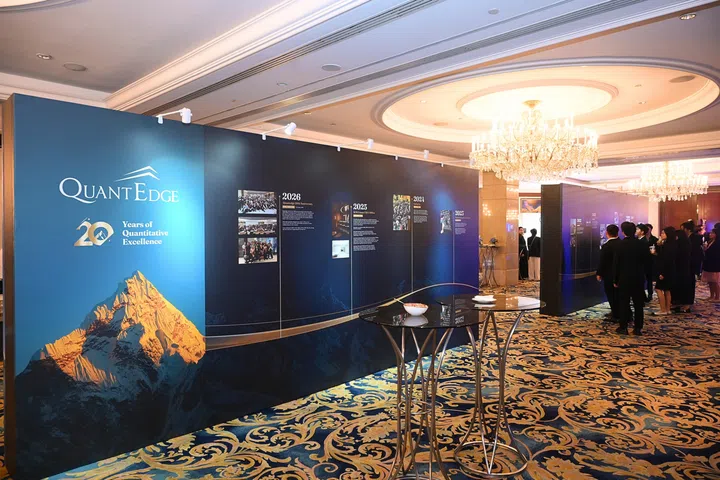
Its history wall placed in the foyer of the Shangri-La hotel Island ballroom at the CapitalSG Summit described the gory details of each significant decline in the fund, coinciding with global market events such as the Global Financial Crisis in 2008, the Taper Tantrum in 2013, the start of trade wars in 2018, the COVID-19 market meltdown in 2020 and the inflation-induced rate hikes in 2022 — declines that surely tested investors’ resolve. There is, after all, no reward without risk.
But it is the decisions made by Quantedge along the way that have paved the way to success.
Going against the grain
The conventional wisdom in any business is to give the customers what they want, and in the asset management industry, the pension funds of the world, being the biggest cheque writers, were all craving a stable fuss-free return slightly above the risk-free rate.
That didn’t align with Quantedge’s goal.
The founders were sure that they could utilize quantitative techniques to compound capital aggressively over the long term, and it made little sense to deliver an investment strategy that prioritized stability over compounded growth. But to achieve such market-beating returns, they had to target a high level of risk, and that meant not being able to attract the large pools of capital that sought the opposite. That made Quantedge’s start ever more challenging.
Even though the fund registered an amazing start in its first calendar year of operations, its first true test was just around the corner. The fund suffered two consecutive double digit negative months in July and August of 2007, in what is now known as the “Quant Quake”, declining more than 25% in total. But Quantedge rebounded to a new high before the year was out, delivering on its promise of both high volatility and high returns.
Unfortunately, that was just a precursor to even more turmoil to come.
The Global Financial Crisis hit the world in 2008. As the subprime crisis spread through the financial system, global markets suffered significant declines. Even so, the Fund held up better than most markets. At the end of October 2008, it was still positive since inception, while the MSCI World index had fallen 30.3% over the same period. 2008 marked the worst drawdown in the fund’s 20-year history, but true to form, the fund recovered to a new high faster than most major markets and went on a multi-year positive run that included its best ever year in 2010.
Saying no is hard to do
Through that period of growth, Quantedge steadily crossed the US$1billion mark, officially making it a large hedge fund, and putting it on the radar of pension funds and other large allocators.
Unfortunately, while such institutional investors liked the returns Quantedge delivered, they were not thrilled with the fund’s risk and liquidity profile. Instead, they made some tantalizing offers — for Quantedge to run hundred-million-dollar bespoke portfolios for them — with customized or tailored volatility and liquidity terms.
Quantedge declined each and every such offer, preferring to continue with their simple business of running a single combined investment portfolio, where investors and employees alike were invested. The founders had promised their early investors that they would devote all their time, energy and resources to managing this single investment portfolio, and they intended to keep to that promise. There was no better way to assure investors of the complete alignment of interests between management and external investors.
Quantedge still receives such offers today with even larger amounts of money on offer. But it has always declined easy money and merely gathering assets, wishing instead to prioritise compounding the capital of investors who are already invested.
Building an institution
In 2018, merely 12 years after inception, the founders made way for the next generation of leaders within the firm to take hold of the reins. It was a bold move in an industry dominated by eponymous founder-led firms. The goal had always been to create an institution that would transcend individuals, and this was the first big step in that direction.
In that same year, Quantedge launched its multi-year fixed-term share classes, requiring every single investor to commit to investing for the long term. It was, once again, a decision that contradicted what most investors craved — more liquidity.
The move was explained as an attempt to do what was best for existing investors, by ensuring the robustness of the fund. The industry initially did not see it that way, until other large hedge funds followed suit with their own versions of illiquid share classes.
Giving it all meaning
Just one day before Quantedge’s 20th anniversary celebrations, the Straits Times announced Quantedge Foundation’s collaboration with the ST School Pocket Money Fund to launch the Social Mobility Fund, a platform which gives lower-income families in Singapore S$3,000 a year to pick up a new sport, musical instrument or take part in enrichment programs via a curated range of opportunities and products. This was the latest initiative designed and supported by Quantedge Foundation in its quest to drive social mobility in Singapore.
Quantedge Foundation (Singapore) was established in 2015 and secured its status as an Institution of a Public Character just the year after. Since then, it has deployed over SGD 30 million towards innovative programs such as University Access, Circle of Care and Dreams, all premised on the belief that we can contribute to creating a more inclusive, resilient and sustainable society.
That is the whole point of what Quantedge Capital does: compounding capital in the financial markets to then deploy resources responsibly to create a better world.
That same belief — that capital should be built with purpose and institutions with longevity — also framed the conversations at CapitalSG Summit 2026. Rather than just a celebration, the summit rallied founders, investors and business leaders in Singapore around the question of what it takes to build something in Singapore that lasts. Much of what was said on stage by the panellists echoed the firm’s own story.
Singapore carved out its own path to success by embracing its disadvantages. When we gained independence in 1965, we had no resources and few friends. But that only served to drive and motivate us to create the kinds of institutions that today are the envy of the world. We had to play to our strengths and find our own edge.
Likewise, for Quantedge, we had to start small and battle the odds. The climb is never easy and the path is never smooth, but from time to time, it feels necessary to pause, reflect and celebrate — to rejoice in Singapore’s ability to punch above our weight on the global stage.
It feels like early days yet for Quantedge. There is a long way yet to go in our quest to be among the very best investment firms in the world, operating out of this little island of Singapore.
This article is published as part of The Peak Fellowship, a leadership publishing programme featuring perspectives from senior industry leaders.